
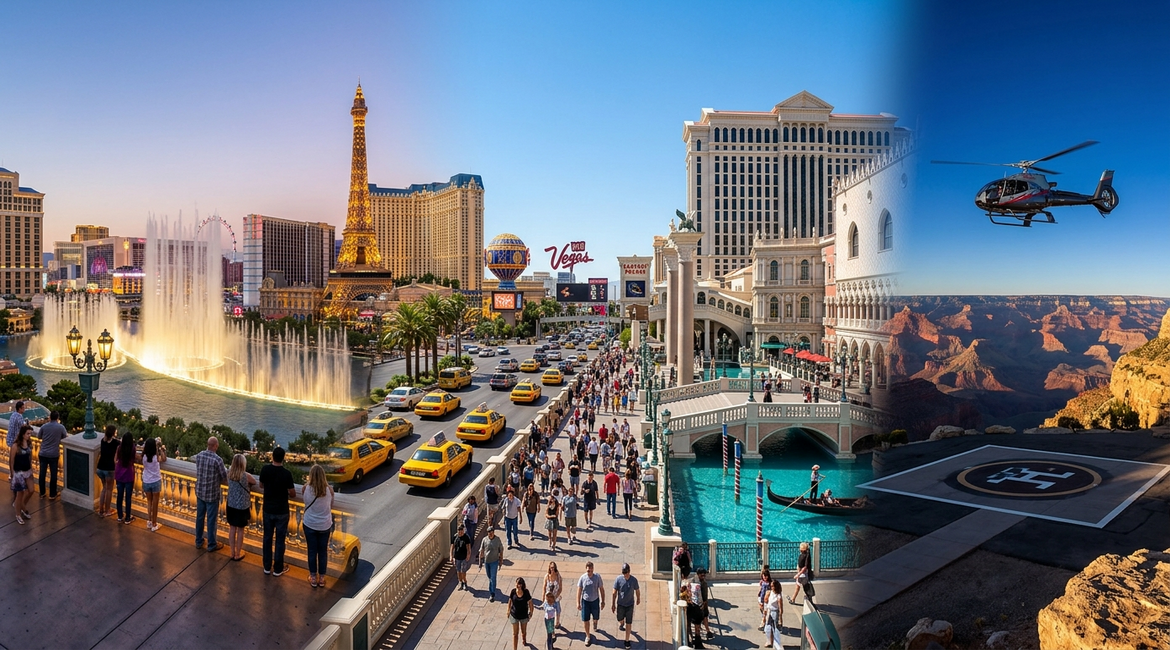
Three days in Las Vegas is enough to discover that the city is much more varied than it first appears. Most visitors naturally begin with the Las Vegas Strip, where enormous resorts, fountains, restaurants, entertainment venues and elaborate architecture create one of the most unusual urban landscapes in the United States. But spend all three days there and you will miss part of the story. Drive less than half an hour west and the neon disappears behind the dramatic red sandstone landscape of Red Rock Canyon. Travel north from the Strip and Downtown Las Vegas provides yet another atmosphere. This three-day Las Vegas itinerary combines all three. You will spend your first day exploring the Strip, escape into the Mojave Desert on Day 2 before visiting Downtown, and use Day 3 for viewpoints, shopping, restaurants and one final memorable evening. The itinerary is designed for first-time visitors and avoids trying to see every attraction in the city. Las Vegas is much more enjoyable when you leave enough time to look around.
3 Days in Las Vegas at a Glance
| Day | Area | Highlights |
|---|---|---|
| Day 1 | Las Vegas Strip | Resort architecture, Bellagio, fountains, evening lights |
| Day 2 | Red Rock Canyon + Downtown | Desert scenery, scenic drive, Fremont Street |
| Day 3 | Central Strip | Shopping, city views, restaurants, live entertainment |
Day 1 — The Las Vegas Strip
Your first day should be about understanding the Strip rather than racing through a list of attractions. Las Vegas Boulevard may look relatively compact on a map. In reality, the resorts are enormous. A destination that appears to be next door can involve walking through multiple buildings, pedestrian bridges and large outdoor plazas. Start slowly and divide the Strip into sections.
Morning — Start at the South Strip
Begin toward the southern end of the Strip. This allows you to work north rather than constantly backtracking. Spend the first part of the morning simply exploring the architecture and public spaces. Las Vegas resorts are designed almost like small neighborhoods. Moving through them takes longer than most first-time visitors expect. If the weather is pleasant, alternate indoor areas with short walks outside. This provides a much better sense of the Strip than staying indoors all morning. You can also stop near the famous Las Vegas sign area if it fits naturally into your route. From there, gradually move north toward the central Strip.

Afternoon — Explore the Center Strip
The center of the Strip contains some of Las Vegas’s most recognizable architecture. This is a good time to explore themed interiors, public spaces and shopping areas while avoiding the hottest part of the afternoon outdoors. Make Bellagio one of your main stops. Inside, the Bellagio Conservatory & Botanical Gardens transforms throughout the year with elaborate seasonal installations. The Conservatory covers roughly 14,000 square feet and is complimentary. It is normally accessible 24 hours a day, although short transition periods occur when displays are replaced. As of September 2026, the Summer display runs through September 12, followed by transition days from September 13–18 and the Harvest display beginning September 19. That is a good reminder to check the current display schedule before your trip. Afterward, continue exploring the central Strip at a comfortable pace. This is also a good point to stop for a late lunch rather than trying to fit restaurants around an aggressive sightseeing schedule.
Evening — Bellagio Fountains & Las Vegas at Night
Las Vegas becomes a completely different city after sunset. Return to the Bellagio lake area for one of the city’s best-known free attractions. The Fountains of Bellagio remain complimentary. As of September 2026, performances normally run every 30 minutes from 3:00 p.m. to 7:30 p.m. Monday through Friday and every 30 minutes from noon to 7:30 p.m. on weekends and holidays. From 8:00 p.m. until midnight, performances generally take place every 15 minutes. The schedule can change and outdoor shows can be affected by weather. Seeing the fountains after dark is particularly impressive because the surrounding Strip becomes part of the backdrop. Afterward, continue walking through the central Strip. Do not feel pressure to cover the entire boulevard tonight. You still have two days. Finish with dinner and enjoy the city lights at a slower pace. Overnight: Las Vegas Strip or nearby.
Day 2 — Red Rock Canyon & Downtown Las Vegas
Day 2 reveals how quickly Las Vegas disappears once you leave the city. Spend the morning surrounded by desert cliffs, then return for a completely different evening in Downtown Las Vegas.
Morning — Red Rock Canyon
Leave Las Vegas early for Red Rock Canyon National Conservation Area. It sits only about 17 miles west of the Strip, yet the scenery feels completely different. Red sandstone cliffs rise above open desert filled with Mojave vegetation. The centerpiece for many first-time visitors is the 13-mile Scenic Drive. That makes Red Rock particularly convenient when you want a nature experience without turning the day into a major expedition. Stop at established viewpoints and enjoy the landscape without trying to fit every possible activity into one morning. During hot weather, keeping this visit relatively early is especially sensible. There is also an important seasonal planning rule. From October 1 through May 31, timed-entry reservations are required for the Scenic Drive between 8:00 a.m. and 5:00 p.m. As of September 2026, those reservations are made through Recreation.gov. Outside that period, the timed-entry requirement does not apply in the same way, but you should always verify current BLM conditions shortly before visiting. For a first Las Vegas trip, even a few hours here creates valuable contrast with the city.
Afternoon — Return to Las Vegas
Return to your hotel around midday or early afternoon. Do not immediately schedule another major attraction. Las Vegas trips often become exhausting because visitors underestimate the combination of walking, desert heat and late evenings. Use a few hours to eat lunch and relax. If your hotel has a pool and weather conditions are comfortable, this is an ideal time to use it. Alternatively, explore a nearby indoor attraction or shopping area. The important point is to create a break between Red Rock Canyon and Downtown.
Evening — Fremont Street & Downtown
In the evening, head north to Downtown Las Vegas. Fremont Street feels very different from the Strip. Instead of enormous resorts separated by long walks, much of the activity is concentrated into a compact pedestrian area. The overhead Viva Vision canopy transforms the street after dark, while stages and street activity create a lively atmosphere. Fremont Street Experience regularly hosts free live entertainment, with no ticket required for many of its scheduled performances. Exact programming changes by date, so check the current calendar rather than planning around a specific performer months in advance. Walk through the main pedestrian area, explore the surrounding Downtown streets and stop for dinner. If you enjoy architecture and photography, Downtown also provides a different visual side of Las Vegas from the modern central Strip. After two days you will have seen three versions of the destination: the Strip, the Mojave Desert and Downtown Las Vegas. Overnight: Las Vegas.
Day 3 — Views, Shopping & a Final Vegas Evening
Your final day should be flexible. By now you will understand how large Las Vegas is and probably have discovered places you want to revisit. Instead of adding another long day trip, keep Day 3 relatively local.
Morning — A Slower Start
Begin with breakfast or brunch and return to any part of the Strip you moved through too quickly on Day 1. Morning is a useful time for photography because pedestrian areas can be calmer and temperatures are often more comfortable than later in the day. You could also spend the morning exploring one of the large shopping and dining complexes along the Strip. This itinerary intentionally leaves several hours unstructured. Las Vegas offers so many attractions that travelers have very different priorities. The extra time lets you personalize the trip rather than following someone else’s exact schedule.
Afternoon — See Las Vegas From Above
Seeing Las Vegas from above helps put the city into perspective. From street level, individual buildings can feel enormous. From an elevated viewpoint, you suddenly see how narrow the Strip is compared with the vast desert surrounding it. Choose one major observation experience rather than trying several. The important thing is the change in perspective. Late afternoon is an excellent time because the landscape is still visible in daylight. If you stay through sunset, the Strip gradually begins to glow as the mountains fade into the background. Another option is to use the afternoon for additional walking and save the elevated view for after dark. Both experiences are worthwhile.
Evening — Dinner & a Show
Use your final evening for something you did not do on the first two nights. Las Vegas has a huge live-entertainment scene with family productions, concerts, comedy, magic and large theatrical shows. Schedules change frequently, so choose based on what is available during your actual dates. For popular productions, booking ahead can be useful. Have dinner before or after the performance depending on the showtime. Then take one final walk along the Strip. You might return to Bellagio for another fountain performance or simply explore the illuminated boulevard. It is a much better final night than trying to squeeze in five additional attractions before departure.
Where to Stay in Las Vegas
For a first three-day trip, staying on or close to the Strip is usually the most convenient choice. Center Strip is particularly practical. You can reach many attractions on foot and reduce the amount of transportation needed each day. The trade-off is price. Rooms in popular central locations can become expensive during major events and busy weekends. South Strip can work well when accommodation prices are better and your itinerary includes attractions toward that end of Las Vegas Boulevard. Downtown provides a completely different atmosphere and may appeal to repeat visitors, but for a first trip focused primarily on Strip sightseeing it is less convenient. Always compare the final hotel cost rather than the advertised room rate alone. Additional property charges, taxes and parking can significantly change the total.

Do You Need a Car?
Not for most of the Strip. Walking, rideshare services and public transportation can cover the majority of sightseeing. The Las Vegas Monorail is particularly useful for some north-south journeys along the Strip. It currently serves seven stations along a 3.9-mile route. As of September 2026, trains normally begin at 7:00 a.m. Service runs until midnight on Monday, 2:00 a.m. Tuesday through Thursday and 3:00 a.m. Friday through Sunday. Trains generally arrive every four to eight minutes. A one-ride eTicket currently costs $5.50, while a three-day unlimited eTicket is listed at $29.95. Always verify current fares before purchasing. For Red Rock Canyon, having a car is much more useful. One practical option is therefore to rent a vehicle only for Day 2 rather than keeping one for the entire vacation.
Best Time to Visit Las Vegas
Las Vegas is a desert destination, so season matters. Spring and fall generally provide the easiest balance for sightseeing. Temperatures are often more comfortable for walking and visiting nearby desert landscapes. Summer can be extremely hot. If you visit during the hottest months, organize outdoor sightseeing for mornings and evenings and use indoor attractions during the middle of the day. This is particularly important at Red Rock Canyon, where the desert environment offers limited shade. Winter can provide comfortable daytime sightseeing, although mornings and evenings can feel surprisingly cool. Whatever the month, check the actual forecast shortly before departure rather than assuming Las Vegas is always hot.
What to Pack
A three-day Las Vegas trip involves more walking than many visitors expect. Bring:
- Comfortable walking shoes
- Reusable water bottle
- Sunglasses
- Sun protection
- Light layers
- Portable phone charger
- Small day bag
- A slightly nicer outfit for a show or dinner if desired
- Comfortable clothing for Red Rock Canyon
Do not assume you can spend three days in uncomfortable shoes because most attractions look close together. Walking distances inside and between resorts accumulate quickly.
Tips for Your First Las Vegas Trip
Do not try to walk the entire Strip every day. Group attractions geographically. Allow more travel time than the map suggests. Resorts themselves can take significant time to cross. Schedule outdoor activities early during hot weather. Reserve Red Rock Canyon’s Scenic Drive in advance when traveling during the seasonal timed-entry period. Book popular shows before arrival if attending a particular production is important to you. Use free attractions strategically. Bellagio’s fountains, Conservatory and several public areas can provide some of the trip’s most memorable experiences without adding another admission ticket. And keep at least part of your itinerary flexible. Las Vegas is filled with attractions you may not know you want to see until you are standing beside them.
FAQ About 3 Days in Las Vegas
Are 3 days enough in Las Vegas?
Yes. Three full days provide enough time for a first introduction to the Strip, Downtown Las Vegas and one nearby desert destination such as Red Rock Canyon. Trying to add several major day trips will make the itinerary considerably more rushed.
Can you visit Las Vegas without a car?
Yes. A car is unnecessary for most Strip sightseeing because you can combine walking, public transportation and rideshare services. A vehicle becomes much more useful when visiting Red Rock Canyon or other destinations outside the main city area.
Is Red Rock Canyon worth visiting?
Yes, particularly on a first trip of three days or longer. The conservation area is only about 17 miles west of the Strip and offers dramatic red sandstone scenery and a 13-mile Scenic Drive, creating a strong contrast with urban Las Vegas.
What are the best free things to do?
The Bellagio Fountains and Bellagio Conservatory are two of the strongest free attractions for first-time visitors. Walking the Strip, exploring public resort architecture and experiencing Downtown’s pedestrian entertainment area can also fill significant parts of a trip without paid admission.
How much walking should you expect?
A lot. Distances between neighboring resorts are larger than they appear on maps, and walking through the resorts themselves adds extra distance. Comfortable shoes and geographically grouped sightseeing can make the trip significantly easier.
What should you book in advance?
Book any specific show that is important to your trip and reserve popular restaurants when necessary. For Red Rock Canyon, a timed-entry reservation is required for the Scenic Drive from October 1 through May 31 for entry between 8:00 a.m. and 5:00 p.m., so arrange that ahead when your travel dates fall within the reservation season.
Recommended Next Steps
For your first trip, keep the itinerary simple: Day 1 — Las Vegas Strip Explore the famous central Strip, Bellagio Conservatory and the fountains, then experience Las Vegas after dark. Day 2 — Red Rock Canyon + Downtown Spend the morning surrounded by desert scenery, rest in the afternoon and explore Fremont Street after sunset. Day 3 — Views + Shopping + Entertainment Slow down, revisit your favorite part of the Strip, see Las Vegas from above and finish with dinner and a live show. This combination works because every day feels different. Day 1 gives you classic Las Vegas. Day 2 reveals the Southwest landscape surrounding it. Day 3 gives you enough flexibility to enjoy the city without turning the vacation into a checklist. Three days will not show you everything Las Vegas has to offer. But for a first visit, they are enough to experience the city’s lights, architecture, desert surroundings and entertainment — while still leaving a reason to return.