
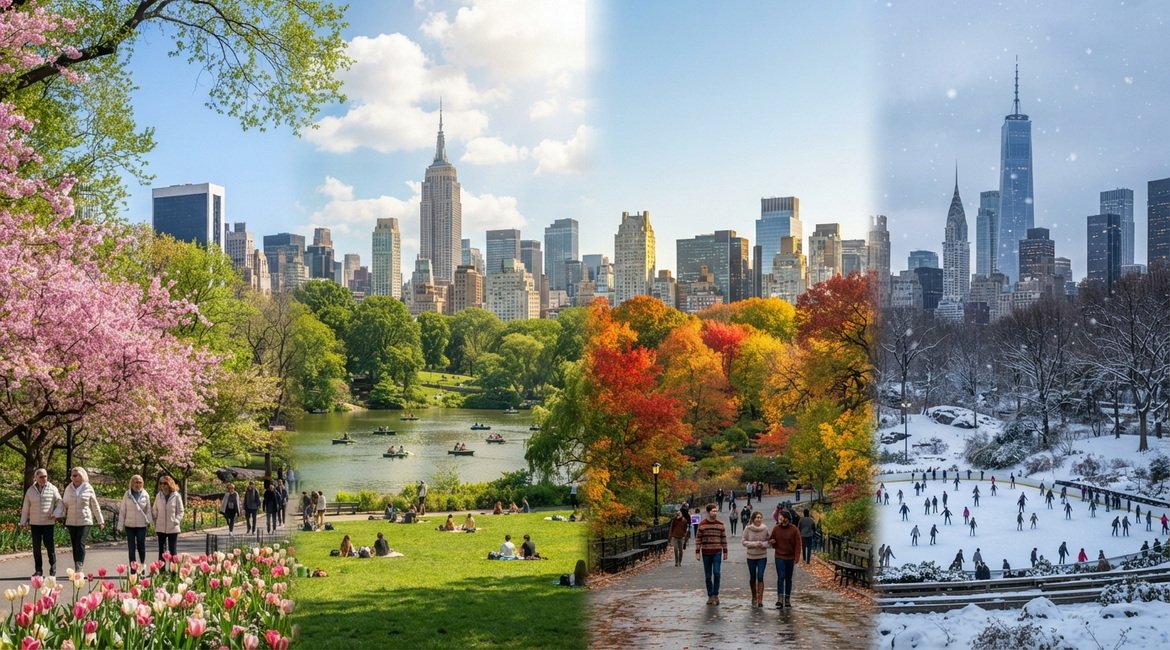
New York City changes dramatically throughout the year. A trip in May can mean comfortable afternoons in Central Park, blooming trees and long days for exploring Manhattan on foot. Visit in July and the same city can feel hot and humid. October brings cooler temperatures and autumn color, while December transforms Midtown with holiday decorations and seasonal events. That variety means there is no single perfect month for every traveler. For many first-time visitors, late April through May and September through October provide an appealing combination of comfortable temperatures and good conditions for walking. Summer provides long daylight hours and a packed calendar of outdoor activities, but heat and humidity can make long sightseeing days more tiring. Winter is colder and requires more preparation, yet January and February can work well for travelers interested in museums, restaurants, Broadway and indoor attractions. Then there is December, which deserves its own category. The holiday atmosphere can be memorable, but popular areas can also become extremely busy. The best time to visit NYC therefore depends on what you want to experience.
When Is the Best Time to Visit New York City?
For a first visit focused on sightseeing, May, September and October are particularly useful months to consider. May brings mild to warm temperatures and spring greenery. September remains warm but usually becomes more comfortable as the month progresses, while October brings cooler walking weather and the beginning of stronger autumn atmosphere. Late April is another attractive period, particularly if you want spring conditions without waiting until May. These months work well because New York is a city where visitors spend enormous amounts of time outside even when the attractions themselves are indoors. You may walk through Central Park, cross the Brooklyn Bridge, explore neighborhoods, wait for transportation and move between museums, observation decks and restaurants throughout the day. Comfortable outdoor temperatures make that easier.
| Travel Priority | Months to Consider |
|---|---|
| Overall sightseeing | May, September–October |
| Spring trip | April–May |
| Autumn atmosphere | October–early November |
| Long daylight hours | June–August |
| Potentially quieter periods | January–February |
| Holiday atmosphere | Late November–December |
NYC Weather at a Glance
New York experiences four distinct seasons. Winters can be cold, summers can be hot and humid, and spring and fall sit between those extremes. Long-term 1991–2020 climate normals for Central Park show how significant the seasonal difference can be.
| Month | Average High | Average Low |
|---|---|---|
| January | 40°F | 28°F |
| February | 42°F | 30°F |
| March | 50°F | 36°F |
| April | 62°F | 46°F |
| May | 71°F | 55°F |
| June | 80°F | 64°F |
| July | 85°F | 70°F |
| August | 83°F | 69°F |
| September | 76°F | 62°F |
| October | 65°F | 51°F |
| November | 54°F | 42°F |
| December | 44°F | 34°F |
These are averages rather than forecasts. Individual trips can experience temperatures well above or below normal, so check the short-term forecast before packing.
New York City by Season
Spring gradually changes New York from a cold-weather city into one of the most pleasant walking destinations in the United States. March remains unpredictable, but April and May bring warmer afternoons, flowering trees and increasingly active parks. Summer is energetic but hot. Long daylight hours create more time for sightseeing, outdoor dining and waterfront activities, while July and August can bring periods of uncomfortable heat and humidity.
Fall reverses the pattern. September begins warm, October becomes cooler and autumn colors gradually appear across parks and tree-lined neighborhoods. Winter transforms the city again. December brings holiday displays and crowds, while January and February are colder and often feel much quieter once the holiday period ends.
January
January is the coldest month on average in New York City. Central Park’s normal January high is around 40°F, while the average low is about 28°F. Wind can make outdoor sightseeing feel colder, particularly near the rivers, observation decks and open waterfront areas. Snow is possible but should never be assumed for a specific trip. January becomes more appealing if museums, Broadway, restaurants and indoor attractions are high priorities. After the major holiday period, parts of the city can also feel noticeably less intense than they did in December. Pack a proper winter coat and footwear suitable for cold or wet sidewalks.
February
February remains firmly in winter. Temperatures rise only slightly from January, and cold weather or snow remains possible. This is another month that can work well for travelers who are comfortable building indoor attractions into the itinerary. The Metropolitan Museum of Art, American Museum of Natural History and other major museums provide full indoor sightseeing days when the weather is uncomfortable. Clear winter days can still be excellent for skyline views. Dress appropriately and avoid assuming that a sunny forecast means warm conditions.
March
March is a transition month. Average temperatures increase noticeably, but winter-like conditions can still return. Early March and late March can feel like completely different seasons. This variability makes layers particularly useful. The advantage is that visitors can begin enjoying longer outdoor walks without the summer heat. By later in the month, parks and neighborhoods gradually begin to show signs of spring. Keep the itinerary flexible and combine outdoor sightseeing with indoor alternatives.
April
April is when spring becomes much more noticeable. Central Park’s normal daytime high rises to roughly 62°F, making walking substantially more comfortable than during winter. Trees begin filling out, flowers appear and parks become increasingly attractive.
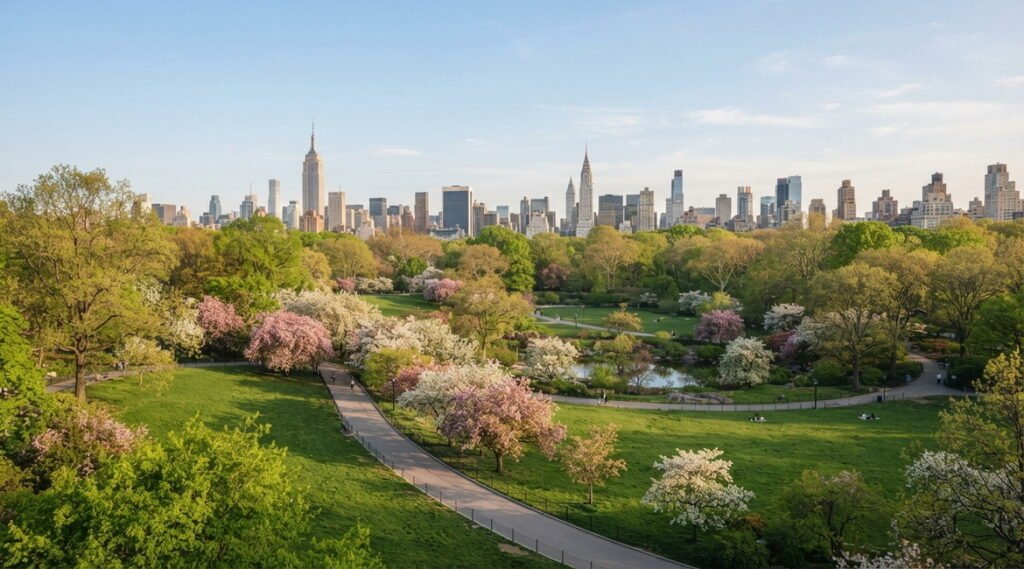
Rainy days remain possible, so a light waterproof layer is useful. April works particularly well for visitors who want to combine museums with long walks through Manhattan. Late April can provide an especially appealing balance of spring scenery and moderate temperatures.
May
May is one of the most comfortable months for exploring New York City. The normal Central Park high is around 71°F, with considerably milder evenings than earlier in spring. Parks are green, outdoor spaces are active and walking between neighborhoods becomes part of the experience.
May is excellent for combining Central Park, Brooklyn Bridge, waterfront parks and neighborhood exploration. Warmer days are possible, so lighter clothing should accompany a jacket or extra layer. Holiday weekends and major events can increase visitor numbers and hotel demand, so exact dates still matter.
June
June introduces summer conditions without necessarily bringing the strongest heat of July. The average high is around 80°F. Days are long, which gives visitors plenty of time for sightseeing before sunset. Outdoor dining, parks and waterfront areas become increasingly appealing. The tradeoff is increasing heat and humidity. By late June, some days can feel distinctly summery. Families should avoid packing every day with nonstop outdoor walking and leave room for indoor attractions during hotter afternoons.
July
July is New York City’s hottest month based on long-term Central Park normals. The average daytime high is around 85°F and the average low remains near 70°F. Humidity can make the city feel warmer, particularly when walking between attractions.
Summer also brings long days and a large number of outdoor activities. Plan strategically. Start outdoor sightseeing earlier, use museums and indoor attractions during the hottest part of the afternoon and return outside later. Carry water and take normal breaks during hot weather rather than trying to maintain the same walking pace you might use in spring or fall.
August
August remains hot and humid, although average temperatures begin to decline slightly from July. The normal daytime high is around 83°F. This is still very much summer. Air-conditioned museums and indoor attractions become useful for breaking up long outdoor sightseeing days. August can work well for families traveling during school vacation because long daylight hours provide flexibility. The key is not overscheduling. A morning in Central Park, an indoor afternoon and a waterfront evening can feel much more comfortable than spending the entire day walking through exposed city streets.
September
September is one of New York City’s strongest sightseeing months. The normal high drops to approximately 76°F, while evenings become more comfortable. Early September can still feel like summer. Later in the month, conditions increasingly shift toward fall.
This makes September particularly useful for travelers who want long walking days without the typical July heat. Central Park remains green through much of the month, so visitors specifically looking for strong fall color generally need to travel later. September works especially well for first-time visitors who want to see many parts of the city on foot.
October
October combines cooler temperatures with one of New York’s most distinctive seasonal transitions. Central Park’s normal high falls to around 65°F, while evenings average close to 51°F. That is excellent weather for long walks if you pack layers. Trees begin changing color, although the exact timing and intensity of fall foliage varies each year according to weather conditions.
October is particularly attractive for Central Park, neighborhood exploration, Brooklyn Bridge and outdoor observation decks. Temperatures can change significantly between the beginning and end of the month. Check conditions for your exact dates rather than packing according to monthly averages alone.
November
November moves New York toward winter. The normal daytime high is around 54°F, and nights become considerably cooler. Early November may still provide autumn scenery, while later November begins the transition toward the holiday season.
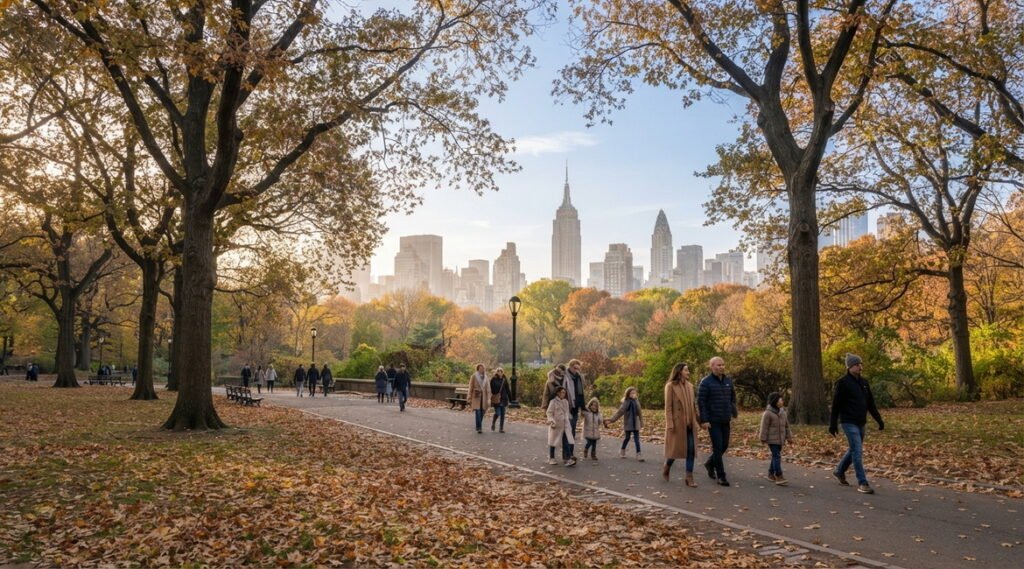
Thanksgiving week changes the atmosphere significantly. Seasonal decorations appear across the city, and major holiday events draw large crowds. If you want cooler sightseeing weather without focusing entirely on Christmas, early to mid-November can be worth considering. Bring layers and prepare for shorter daylight hours.
December
December is one of New York City’s most recognizable travel periods. Holiday decorations, seasonal markets, ice skating and illuminated streets create an atmosphere that is difficult to reproduce at another time of year.
The tradeoff is popularity. Areas around Rockefeller Center, Fifth Avenue and other major Midtown attractions can become extremely crowded. Weather is cold, with a normal Central Park high around 44°F and low around 34°F. Snow can occur, but a snowy Christmas trip is never guaranteed. Choose December because you want the holiday experience rather than because you expect ideal sightseeing weather.
Best Time for Sightseeing
May, September and October provide especially comfortable conditions for classic New York sightseeing. All three months generally allow visitors to spend substantial time outside without the typical cold of winter or peak summer heat. Late April can provide similar advantages. These periods are ideal when your itinerary includes Central Park, Brooklyn Bridge, neighborhoods and waterfront areas. New York requires a surprising amount of walking even when you use the subway frequently. Comfortable temperatures therefore have a meaningful impact on how much you can enjoy each day.
Best Time for Central Park
Central Park provides a different experience in every season. April introduces spring flowers and fresh greenery. May produces a lush green landscape and comfortable conditions for longer walks. Summer provides dense foliage and plenty of activity, but midday heat can be tiring.
October and early November are particularly appealing for travelers interested in autumn scenery. Peak foliage cannot be guaranteed for exact dates because it changes from year to year. Winter creates an entirely different atmosphere. Snow can transform the park, but snowfall timing is unpredictable, so do not plan a trip around the assumption that Central Park will be covered in snow.
Best Time for Families
Spring and early fall are particularly practical for family trips. May provides comfortable weather for Central Park, outdoor attractions and neighborhood exploration. September and early October offer similar advantages after the strongest summer heat begins to fade.
Summer remains popular because of school schedules and long daylight hours, but families should plan around heat. December can be exciting for children interested in holiday lights and seasonal attractions, although popular areas become crowded. Winter trips work best when you balance outdoor sightseeing with museums and other indoor attractions.
Best Time for Fewer Crowds
New York is busy throughout the year, and there is no truly empty tourist season. However, January and February outside major holiday weekends can feel quieter than December or the busiest spring, summer and fall periods. Weather is the tradeoff. Cold conditions can make extended outdoor sightseeing less comfortable. Parts of early spring can also provide a useful compromise before warmer-weather visitor demand increases. Crowds vary significantly by attraction and time of day. Times Square may feel busy while a neighborhood only a short subway ride away feels completely different.
Best Time for Lower Hotel Prices
Hotel prices in New York City change constantly according to demand, events, weekdays, holidays and neighborhood. No single month guarantees the lowest rate. However, January and parts of February can be worth comparing after the holiday travel period. Summer pricing varies, while fall and December can become expensive around high-demand dates. Do not compare room prices without considering location. A cheaper hotel far from the neighborhoods you plan to visit can increase transportation time every day. Flexible travelers should compare several date combinations before booking rather than assuming a particular season will always be cheaper.
Is Christmas a Good Time to Visit NYC?
Christmas season is one of the most atmospheric times to experience New York. Rockefeller Center, Fifth Avenue, holiday markets and decorated neighborhoods create a version of the city that is very different from spring or summer. The downside is crowds.
Popular Midtown areas can become extremely busy, especially during evenings and weekends. Accommodation demand can also be strong. If holiday atmosphere is the main reason for your trip, those tradeoffs may be worthwhile. If your priority is relaxed sightseeing and easy movement between attractions, May, September or October may create a simpler first NYC experience.
What to Pack by Season
Spring requires layers. April can shift between cool mornings and mild afternoons, while May is warmer but still benefits from a light jacket. Summer requires lightweight clothing and comfortable walking shoes. A light layer can still be useful for strongly air-conditioned indoor spaces. Fall again favors layers. September can remain warm, while October and November progressively require warmer clothing. Winter requires proper cold-weather clothing. A warm coat, layers, gloves and weather-appropriate footwear become important when temperatures fall. Regardless of season, comfortable shoes should be near the top of the packing list. Walking several miles during a full sightseeing day is common.
How Many Days Do You Need in NYC?
Three days provides enough time for a fast introduction to New York. You can see several major Manhattan attractions and add one or two iconic experiences, but the schedule will be relatively full. Four to five days works much better for many first-time visitors. It creates room for Central Park, Downtown Manhattan, Midtown, museums and at least some neighborhood exploration. Five to seven days provides a more relaxed trip and makes it easier to explore parts of Brooklyn or other boroughs without sacrificing Manhattan highlights.
| Trip Length | What It Works For |
|---|---|
| 2–3 days | Major highlights |
| 4 days | Focused first trip |
| 5 days | Comfortable first visit |
| 6–7 days | Slower exploration + more neighborhoods |
FAQ
What is the best month to visit New York City?
May, September and October are particularly attractive for many first-time visitors because they generally provide more comfortable conditions for walking and outdoor sightseeing than midwinter or the hottest part of summer.
What is the cheapest time to visit NYC?
Hotel prices vary according to demand and exact dates, so there is no guaranteed cheapest month. January and parts of February after the holiday period can be useful dates to compare if accommodation price is a priority.
When is fall foliage in New York City?
Autumn color usually develops during October and can continue into early November, but peak foliage timing changes each year. Travelers should avoid choosing one exact date based on the assumption that Central Park will reach peak color at the same time every year.
Is summer a good time to visit NYC?
Yes, especially if long daylight hours and outdoor activities are important. July and August can be hot and humid, so alternate outdoor sightseeing with museums and other indoor attractions during warmer periods.
How many days should you spend in New York City?
Four to five days provides a comfortable introduction for many first-time visitors. Three days works for major highlights, while six or seven days allows more time for neighborhoods, museums and areas outside central Manhattan.
Recommended Next Steps
Choose your NYC dates according to the experience you want rather than searching for one universally perfect month. For comfortable first-time sightseeing, start by comparing May, September and October. May provides spring greenery and mild-to-warm weather. September offers warm conditions with less intense average heat than July, while October adds cooler walking weather and the possibility of autumn colors. Choose summer when school schedules, long daylight hours and outdoor activities are more important than avoiding heat and humidity. Choose December specifically for the holiday atmosphere, understanding that popular Midtown attractions can become extremely busy. January and February can work well when indoor attractions are a major part of the trip and you are comfortable sightseeing in winter weather. For most first-time visitors, plan four to five days if possible. That gives you enough time to experience several sides of New York rather than spending the entire trip moving quickly between famous landmarks. Once you choose your month, build the itinerary around the season. Use parks and neighborhoods more heavily during comfortable weather, keep indoor alternatives for rainy or extreme-temperature days, and avoid scheduling every hour. New York rewards travelers who leave some room to explore.