
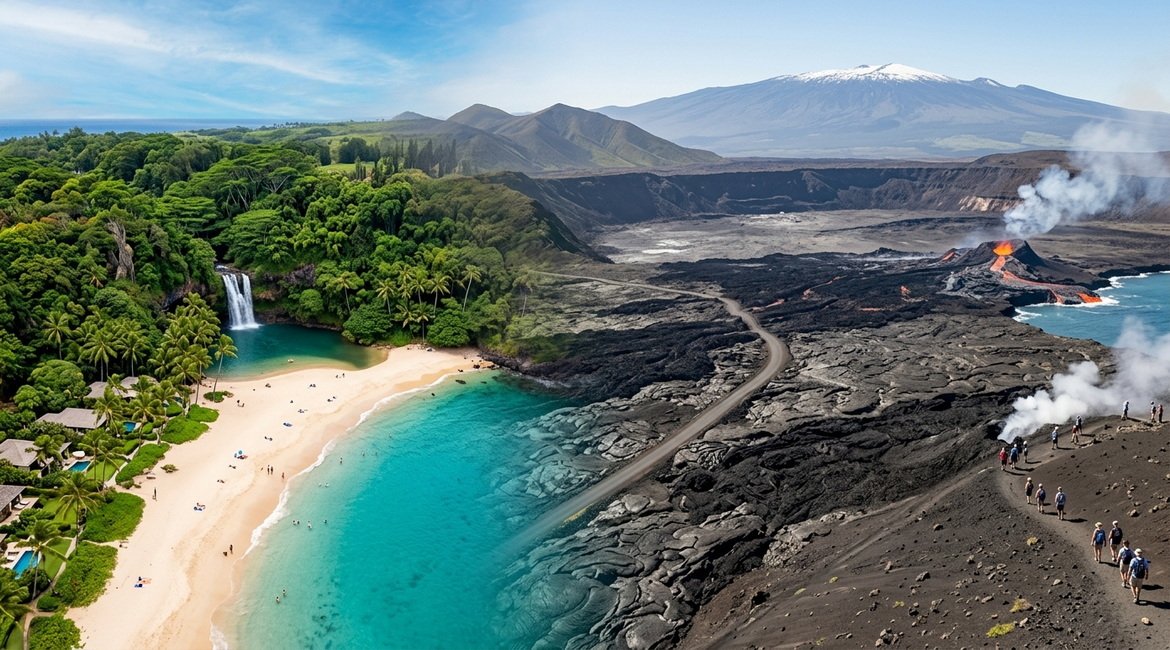
Maui and the Big Island are both spectacular Hawaiian destinations, but they create very different vacations. Maui is the easier island to understand at first glance. Its famous experiences include beautiful resort beaches, the Road to Hana, Haleakala, tropical scenery and relaxed towns spread across a relatively manageable island. The Big Island — officially the island of Hawaiʻi — feels much larger and more adventurous. Its landscape includes active volcanic terrain, black-sand beaches, white-sand resort beaches, rainforests, waterfalls, coffee country and enormous mountains. You can begin the morning beside the Pacific Ocean and spend the afternoon exploring volcanic landscapes that look almost completely different from the coast. That scale is what separates the islands. Maui is generally better for a classic Hawaii vacation built around beaches, resorts and scenic drives. The Big Island is generally better for travelers who want volcanoes, geographic variety and a road-trip-style adventure. Neither is better for everyone. The right island depends on whether you want your vacation to feel relaxing and polished — or expansive and exploratory.
Maui vs. Big Island at a Glance
| Category | Winner | Why |
|---|---|---|
| First-Time Hawaii Trip | Maui – slight edge | Easy mix of beaches, resorts and famous scenery |
| Beaches | Maui | More consistent classic beach-vacation experience |
| Volcanoes | Big Island | Hawaiʻi Volcanoes National Park and active volcanic landscapes |
| Landscape Variety | Big Island | Lava fields, rainforest, beaches, mountains and waterfalls |
| Families | Maui – slight edge | Shorter distances and easy resort days |
| Road Trip | Big Island | Huge island with dramatically changing environments |
| Scenic Drives | Tie | Maui for Hana; Big Island for scale and diversity |
| Resorts | Maui | Excellent concentration of beach resort areas |
| Unique Beaches | Big Island | White-, black- and other volcanic sand landscapes |
| Relaxed Vacation | Maui | Easier balance of resort days and excursions |
Quick answer: Choose Maui if you want beautiful beaches, resorts, the Road to Hana, Haleakala and a relatively easy first Hawaii vacation. Choose the Big Island if you want volcanoes, black-sand beaches, huge landscape changes and a trip where exploring by car is part of the experience.
What Is the Biggest Difference?
The biggest difference is scale. Maui is large enough to provide significant variety but compact enough that most travelers can choose one resort area and use it as a base for the entire vacation. The Big Island is different. At more than 4,000 square miles, the island of Hawaiʻi is the largest island in the Hawaiian chain. Destinations can be separated by hours of driving. Kona and the Kohala Coast occupy the drier western side. Hilo and the Hamakua Coast are much greener. Hawaiʻi Volcanoes National Park introduces an entirely different volcanic environment. The southern part of the island adds remote coastline and black-sand landscapes. This creates two very different travel styles: Maui = establish one base and take day trips. Big Island = road trip through several distinct environments. If you dislike changing hotels or long drives, Maui is easier. If you enjoy watching the landscape transform as you travel, the Big Island is one of the most interesting islands in Hawaii.
Which Island Is Better for First-Time Visitors?
For a traditional first Hawaii vacation, Maui has a slight advantage. It delivers many of the experiences people imagine before visiting Hawaii:
- Long sandy beaches
- Palm-lined resorts
- Tropical scenery
- Waterfalls
- Volcanic landscapes
- Scenic drives
- Ocean activities
You can stay around Wailea, Kihei, Kaanapali or another main visitor area and build the rest of the island around day trips. That makes planning straightforward.
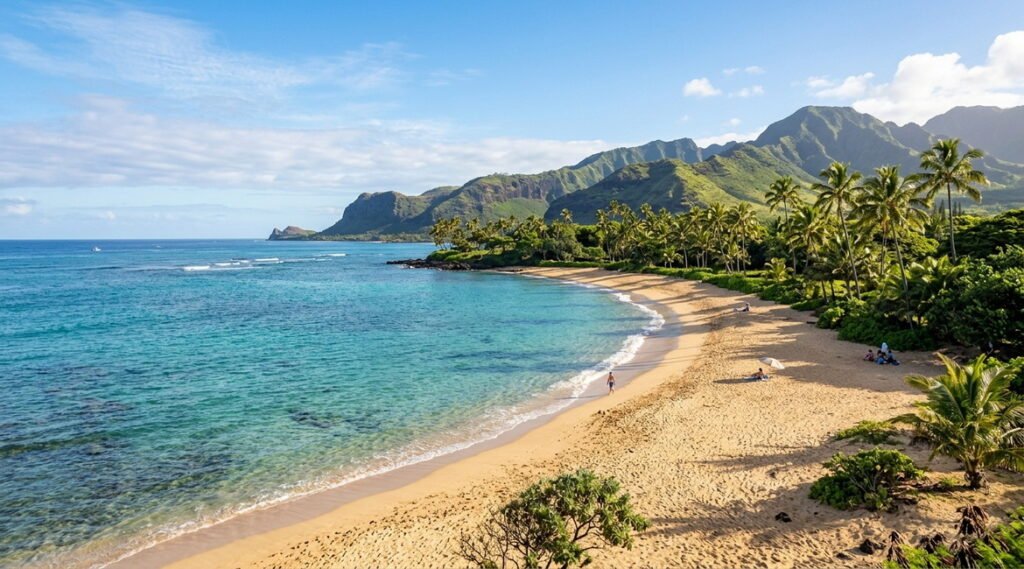
The Big Island takes slightly more planning. The distances are greater, and the attractions are much more spread out. But that is exactly why some first-time visitors will prefer it. If the idea of seeing an active volcanic landscape, black-sand beaches, tropical rainforest and huge mountains is more exciting than spending several days around a resort, choose the Big Island. Classic first Hawaii vacation: Maui. Adventure-focused first Hawaii vacation: Big Island.
Which Island Has Better Beaches?
For a conventional beach vacation, Maui wins. Maui has approximately 120 miles of coastline and more than 30 miles of beaches. South Maui and West Maui contain many of the beaches travelers imagine when planning Hawaii. Wailea combines beaches with upscale resorts. Kihei provides numerous beach parks and convenient places to stay. Kaanapali offers another classic resort coastline. Makena provides a broader and less urban beach setting. You can easily build entire Maui days around the beach.
Big Island Beaches
The Big Island has a different advantage: variety. Its approximately 266 miles of coastline include dramatically different beach environments. You can find white-sand beaches along the Kohala Coast and black-sand beaches created by volcanic activity. Hāpuna is one of the island’s best-known white-sand beaches. Punaluʻu provides one of Hawaii’s most recognizable black-sand landscapes.
The Big Island’s coastline often feels more rugged than Maui’s main resort areas. That can be an advantage if you want unusual scenery. But not every beautiful Big Island beach is ideal for casual swimming. Always check current ocean conditions and follow posted warnings. Best traditional beach vacation: Maui. Most unusual beach variety: Big Island.
Which Island Is Better for Nature & Scenery?
The Big Island wins for sheer variety. Maui is beautiful. The island moves from golden beaches to tropical East Maui and from green Upcountry landscapes to the high volcanic summit of Haleakala. That is already an extraordinary amount of diversity. But the Big Island takes those contrasts even further. In one trip you can experience:
- Fresh and historic lava fields
- Active volcanic landscapes
- Rainforest
- Waterfalls
- Black-sand coastline
- White-sand beaches
- Dry lava-covered western landscapes
- Coffee-growing regions
- High mountain terrain
Driving between Kona and Hilo makes the island’s scale especially obvious. The environment can change repeatedly during one day. Maui is prettier in a more immediately tropical way. The Big Island is more dramatic in its contrasts. Winner for landscape variety: Big Island.
Volcanoes: Haleakala vs. Hawaii Volcanoes National Park
Both islands offer major volcanic experiences, but they are fundamentally different.
Haleakala on Maui
Haleakala dominates Maui. The summit reaches 10,023 feet, creating a high-elevation volcanic environment far removed from the tropical coastline. Driving toward the summit is part of the experience. Vegetation gradually changes until the upper mountain opens into a vast volcanic landscape. Sunrise is especially famous. Anyone entering the Summit District between 3:00 a.m. and 7:00 a.m. for sunrise needs an advance vehicle reservation in addition to the park entrance fee. You do not need a sunrise reservation later in the day. Sunset and daytime visits can also provide exceptional views.
Hawaiʻi Volcanoes National Park
The Big Island provides a much more extensive volcanic experience. Hawaiʻi Volcanoes National Park protects landscapes around Kīlauea and Mauna Loa and is open 24 hours a day. Visitors can explore crater viewpoints, volcanic terrain, lava tubes and scenic roads. But active volcanic activity is unpredictable. An eruption should never be treated as a guaranteed attraction. Kīlauea can shift between active phases and pauses, sometimes over short periods. Always check official National Park Service and USGS information immediately before visiting.
If simply seeing a spectacular volcanic summit is enough, Haleakala is unforgettable. If volcanoes are one of your main reasons for traveling to Hawaii: Winner: Big Island.
Maui vs. Big Island for Families
For most families, Maui has a small advantage. The reason is convenience. You can choose one main resort area and alternate between:
- Beach mornings
- Pool time
- Scenic drives
- Maui Ocean Center
- Haleakala
- Short sightseeing excursions
That makes it relatively easy to change plans when children become tired. The Big Island can also be an excellent family destination. Hawaiʻi Volcanoes National Park can be fascinating for children, and the island’s different beaches and landscapes keep the trip varied.
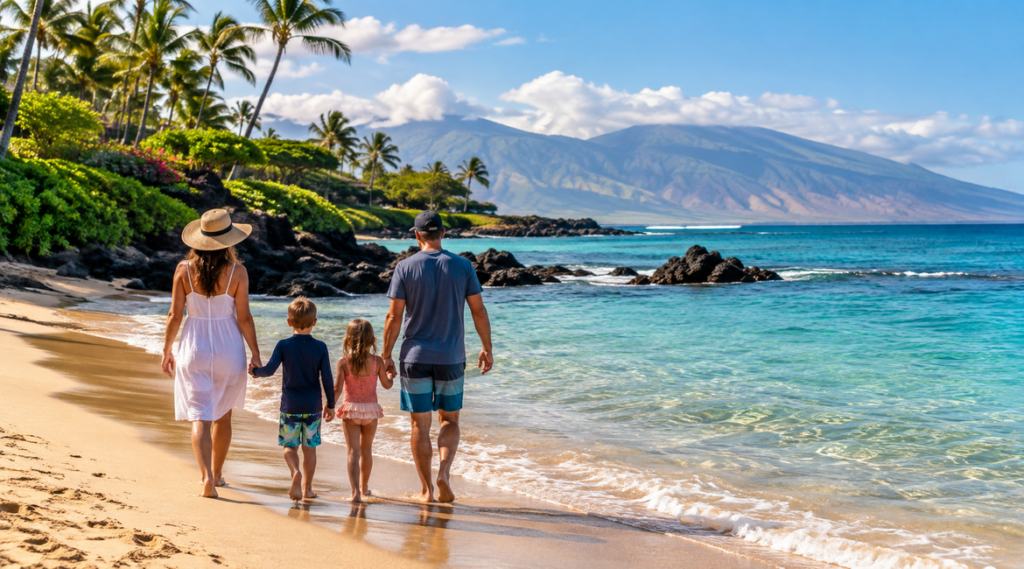
The challenge is distance. A day that combines several Big Island attractions can involve much more time in the car. For younger children, that matters. Best for easier family logistics: Maui. Best for families who enjoy road trips and nature: Big Island.
Which Island Has More Things to Do?
This depends on how you count activities. Maui has several extremely famous experiences:
- Road to Hana
- Haleakala
- Wailea
- Kaanapali
- Upcountry Maui
- Snorkeling and ocean excursions
- Beach days
The Big Island has fewer attractions concentrated together but arguably greater overall diversity. A trip can include:
- Hawaiʻi Volcanoes National Park
- Hāpuna Beach
- Punaluʻu Black Sand Beach
- Kona
- Hilo
- Waterfalls
- Coffee farms
- Puʻuhonua o Hōnaunau
- Hamakua Coast
- Manta ray ocean experiences
If you prefer a vacation where the days fit neatly into several major highlights, Maui feels easier. If you enjoy constantly finding completely different landscapes and destinations: Winner: Big Island.
Which Island Is Better for Scenic Drives?
This category is a tie for different reasons.
Maui — Road to Hana
Maui has the more famous individual road trip. The Road to Hana passes through lush East Maui with tropical vegetation, ocean cliffs, bridges and waterfalls. The drive is not simply transportation to Hana. The route itself is the attraction.
Do not treat it as a race to collect every stop. Use designated parking, respect private property and leave enough time for the return journey or an appropriate overnight plan.
Big Island — Island-Wide Road Trips
The Big Island does not rely on one famous road. Instead, almost every long drive can reveal major landscape changes. Driving north along the Kohala Coast feels completely different from traveling through Hilo’s greener surroundings. Cross-island drives introduce high volcanic terrain. Routes toward Hawaiʻi Volcanoes National Park shift again into lava landscapes and native forest. Best single scenic drive: Maui. Best overall road-trip island: Big Island.
Wildlife & Ocean Experiences
Both islands provide excellent ocean activities. Maui is known for snorkeling, boat trips and seasonal whale watching. The island’s resort regions make it easy to combine water activities with beach days. The Big Island offers one particularly distinctive experience: encounters with manta rays off the Kona side. Official Hawaii tourism information identifies manta ray night snorkeling among the island’s signature activities. That makes the Big Island especially interesting for travelers who want an ocean experience that feels very different from an ordinary beach day. Remember that marine life should be observed responsibly. Choose permitted or established operators where appropriate, maintain required distances from protected wildlife and never chase or touch animals. For easy beach-and-ocean vacation activities: Maui has the advantage. For unusual marine experiences: Big Island has the edge.
Food, Towns & Local Atmosphere
Neither island has the large urban environment of Oahu. That is part of their appeal. Maui’s main visitor areas include Kihei, Wailea and Kaanapali, while Upcountry adds a very different atmosphere. The island combines resort dining with smaller towns and agricultural areas. The Big Island has two important visitor centers on opposite sides of the island. Kona provides a drier, sunnier western base close to beaches, resorts, coffee country and ocean activities. Hilo feels greener and wetter, with access to waterfalls, tropical scenery and the eastern side of the island. This makes the Big Island feel less like one destination and more like several destinations combined. If you like settling into one region: Maui is easier. If you enjoy exploring different towns and changing environments: Big Island is more interesting.
Which Island Has Better Resorts?
Maui wins overall. Wailea is one of Hawaii’s major resort regions. Kaanapali is another. Both combine beaches with hotels, pools, restaurants and other visitor infrastructure. This makes it easy to plan days where you intentionally do very little.
The Big Island also has excellent resorts, especially along the Kohala Coast. These properties can provide beautiful beaches, golf courses, pools and expansive resort grounds. But resort areas are only one piece of the Big Island experience. If you spend the entire trip at the hotel, you miss much of what makes the island distinctive. Best dedicated resort vacation: Maui. Best resort + adventure combination: Big Island.
Which Island Is Easier to Explore?
Maui is easier. The island still requires driving, and attractions such as Hana and Haleakala can take substantial time to reach. But the overall geography is easier to organize around one accommodation base. The Big Island requires more decisions. The island covers more than 4,000 square miles. Kona and Hilo are on opposite sides. Hawaiʻi Volcanoes National Park is much closer to Hilo than to the major Kohala resorts. A poorly planned itinerary can create hours of unnecessary backtracking. That does not make the Big Island difficult. It simply rewards better planning. For a first Big Island trip, grouping attractions geographically is far more important than trying to visit them in order of popularity.
Do You Need a Rental Car?
For both islands, a rental car provides the greatest flexibility. On Maui, taxis, shuttles, tours and public buses exist. But official Hawaii tourism guidance recommends considering a rental vehicle if you want to properly explore destinations such as Haleakala, Upcountry and other parts of the island. The Big Island makes a car even more valuable. Because of the island’s size, the official tourism site specifically recommends renting a car for flexibility and ease. There is also a free county bus network, Hele-On, but public transportation is less convenient for building a typical multi-stop sightseeing itinerary.
For a Big Island road trip, also pay attention to rental vehicle rules. Do not assume a standard rental vehicle is suitable or permitted on every road simply because a map shows one. Car useful on Maui: Yes. Car highly recommended for the Big Island: Yes.
Which Island Is More Expensive?
There is no universal winner because Hawaii prices change substantially with travel dates. Maui is often associated with higher-end beach resorts, particularly around Wailea and parts of West Maui. That can push accommodation costs upward. The Big Island offers luxury resorts too, especially on the Kohala Coast, but travelers also have accommodation options around Kona, Hilo and Volcano. However, the Big Island’s size creates another cost: transportation. You are more likely to rent a car for the entire trip and drive longer distances. Fuel, additional nights in different parts of the island and organized activities can all affect the budget. Compare:
- Accommodation
- Rental car
- Fuel
- Parking
- Resort fees
- National park fees
- Food
- Ocean activities
For a resort-heavy vacation, Maui can become expensive quickly. For an exploration-heavy vacation, Big Island transportation and activities can add up. Winner: Depends on your travel style and dates.
Maui vs. Big Island for a Short Trip
If you only have three or four full days, choose Maui. The island is simply easier to experience within a limited schedule. A short Maui trip might look like: Day 1: Beach + South or West Maui Day 2: Haleakala + Upcountry Day 3: Road to Hana Day 4: Beach + slower island day This is still a busy itinerary, but it gives you a good introduction. The Big Island benefits much more from extra time. With only three days, you may have to choose between the Kona side, Hawaiʻi Volcanoes National Park and the Hilo side rather than experiencing all of them properly. For a short trip: Winner: Maui.
How Many Days Do You Need?
For most first-time travelers:
| Trip Type | Maui | Big Island |
|---|---|---|
| Quick Visit | 3–4 days | 4 days |
| First Trip | 5–6 days | 6–7 days |
| Relaxed Vacation | 7 days | 7–9 days |
Maui fits comfortably into five or six days. You can dedicate separate days to the Road to Hana and Haleakala while still protecting time for beaches and relaxation. For the Big Island, six or seven days is much better. That provides enough time to experience both sides of the island without making every day a long-distance drive. If you have seven nights or more, consider splitting your accommodation between two areas. For example: Kona / Kohala Coast + Hilo / Volcano area. This can dramatically reduce backtracking.
Can You Visit Maui and the Big Island on One Trip?
Yes. The two islands complement each other extremely well. Maui gives you a polished beach-and-scenery vacation. The Big Island then adds a completely different volcanic road-trip experience. But island hopping always uses more time than the flight alone suggests. You need to:
- Check out of your accommodation
- Travel to the airport
- Complete airport procedures
- Fly between islands
- Pick up another rental car
- Travel to your next hotel
Because of that, avoid splitting a very short vacation. If you have six or seven days, choose one island. If you have nine or ten days, combining the islands becomes possible. If you have 12–14 days, Maui and the Big Island make an excellent pair. A comfortable trip could be: Days 1–5: Maui Beaches, Haleakala, Road to Hana and Upcountry. Days 6–12: Big Island Kona, Kohala Coast, Hawaiʻi Volcanoes National Park, Hilo and scenic road-trip days.
Best Time to Visit
Both islands are year-round destinations. There is no universal best month because weather conditions vary by location and elevation.
Spring
Spring can provide an excellent balance for both Maui and the Big Island. It works well for a combination of beach time and sightseeing.
Summer
Summer offers long days and warm beach weather. Popular destinations can become busier around school holidays. On either island, check ocean conditions each day rather than assuming every beach is equally suitable.
Fall
Fall can work particularly well for road trips and sightseeing, depending on weather. It can also be a good period for travelers who want to avoid some peak holiday dates.
Winter
Winter remains a popular Hawaii season. Expect seasonal changes in ocean conditions and more variable weather in wetter regions. High-elevation destinations such as Haleakala can be dramatically colder than your beach resort. Bring layers rather than assuming tropical temperatures apply everywhere.
Which Island Should You Choose?
| If You Want… | Choose… |
|---|---|
| A classic first Hawaii vacation | Maui |
| The strongest beach-resort experience | Maui |
| Active volcano landscapes | Big Island |
| Maximum landscape variety | Big Island |
| A shorter 3–4 day visit | Maui |
| A true road-trip-style island | Big Island |
| Road to Hana | Maui |
| Black-sand beaches | Big Island |
| Easier vacation with children | Maui – slight edge |
| Manta ray experiences | Big Island |
| Resort relaxation | Maui |
| A longer exploration-focused trip | Big Island |
For travelers who still cannot decide, think about what your ideal morning looks like. If you picture walking from your resort to a beautiful sandy beach and deciding later whether to explore: Choose Maui. If you picture loading the car early and driving toward an entirely different landscape: Choose the Big Island.
Common Planning Mistakes to Avoid
Underestimating the size of the Big Island. At more than 4,000 square miles, it is not an island where every major attraction is a quick drive away. Staying only in Kona and trying to day-trip everywhere. For a longer Big Island vacation, splitting accommodation between west and east can reduce significant driving. Scheduling Road to Hana and Haleakala back-to-back without a break. Both can become long days. Leave space for an easier Maui day between major excursions when possible. Assuming volcanic activity will be visible. Kīlauea is active, but eruption activity can pause or change. Never build the entire trip around seeing visible lava. Assuming Haleakala is warm because Maui is tropical. The summit exceeds 10,000 feet and can be cold, wet and windy. Arriving for Haleakala sunrise without a reservation. Vehicle access to the summit between 3:00 a.m. and 7:00 a.m. requires an advance sunrise reservation. Ignoring current national park conditions. Storms, volcanic activity, fire risk and other conditions can cause temporary closures. Choosing a beach only because it looks beautiful online. Current surf, currents and weather matter more than photographs. Trying to split one week between both islands. You will lose useful vacation time to airport and hotel transfers and may end up seeing only a small portion of each island.
FAQ About Maui vs. Big Island
Is Maui or the Big Island better for first-time visitors?
Maui has a slight advantage for most first-time visitors because it combines famous beaches, resorts, Haleakala and the Road to Hana within a relatively easy vacation structure. Choose the Big Island instead if volcanoes, road trips and dramatically different landscapes are your main priorities.
Does Maui or the Big Island have better beaches?
Maui is generally better for a traditional beach vacation because excellent sandy beaches are concentrated near major resort areas. The Big Island has more unusual variety, including white- and black-sand coastlines shaped by volcanic activity.
Which island is better for families?
Maui has a slight advantage for families because travel distances are generally easier to organize and resort days can be mixed with sightseeing. The Big Island is excellent for families who enjoy road trips, national parks and nature-focused vacations.
Which island is better for volcanoes?
The Big Island wins for volcano-focused travel because Hawaiʻi Volcanoes National Park protects extensive landscapes around Kīlauea and Mauna Loa. Maui’s Haleakala provides a spectacular high-elevation volcanic summit experience but is different from visiting an active volcanic region.
How many days do you need on Maui or the Big Island?
Plan about five to six days for a first Maui trip and six to seven days for the Big Island. The Big Island benefits from extra time because major attractions are spread across a much larger area.
Should you split one week between Maui and the Big Island?
Usually not. One week is relatively short for two islands once airport, rental-car and hotel transfers are included. Most first-time travelers will have a better trip by spending the full week on one island. Around 10 days is more workable, while 12 to 14 days provides a much more relaxed Maui and Big Island combination.
Recommended Next Steps
Choose Maui if you want the easier and more traditional Hawaii vacation. Base yourself in South Maui or West Maui and alternate major sightseeing days with slower beach days. A strong first Maui itinerary looks like: Beach & resort day → Haleakala + Upcountry → beach day → Road to Hana → relaxed Maui day. This prevents your vacation from becoming a nonstop driving itinerary. Choose the Big Island if exploration is the main reason you are traveling. Instead of planning every day from one hotel, think geographically. A longer itinerary can work like this: Kona & coffee country → Kohala Coast → Hāpuna Beach → Hawaiʻi Volcanoes National Park → Hilo & Hamakua Coast. For six or seven days, consider using two accommodation bases. That allows you to experience both the drier western side and the greener eastern side without repeatedly crossing the entire island. The final choice is really about travel style. Maui is better for beaches, resorts, easier logistics and a shorter first trip. The Big Island is better for volcanoes, road trips, dramatic landscape changes and a longer exploration-focused vacation. If your perfect Hawaii day starts beside a resort pool and ends watching sunset from a sandy beach, choose Maui. If your perfect Hawaii day involves driving from lava fields to rainforest and discovering a completely different landscape every few hours, choose the Big Island. And if you eventually visit both, they complement each other extremely well. Maui shows why Hawaii became one of the world’s most famous tropical vacation destinations. The Big Island shows how extraordinary, wild and geologically diverse Hawaii can be.