
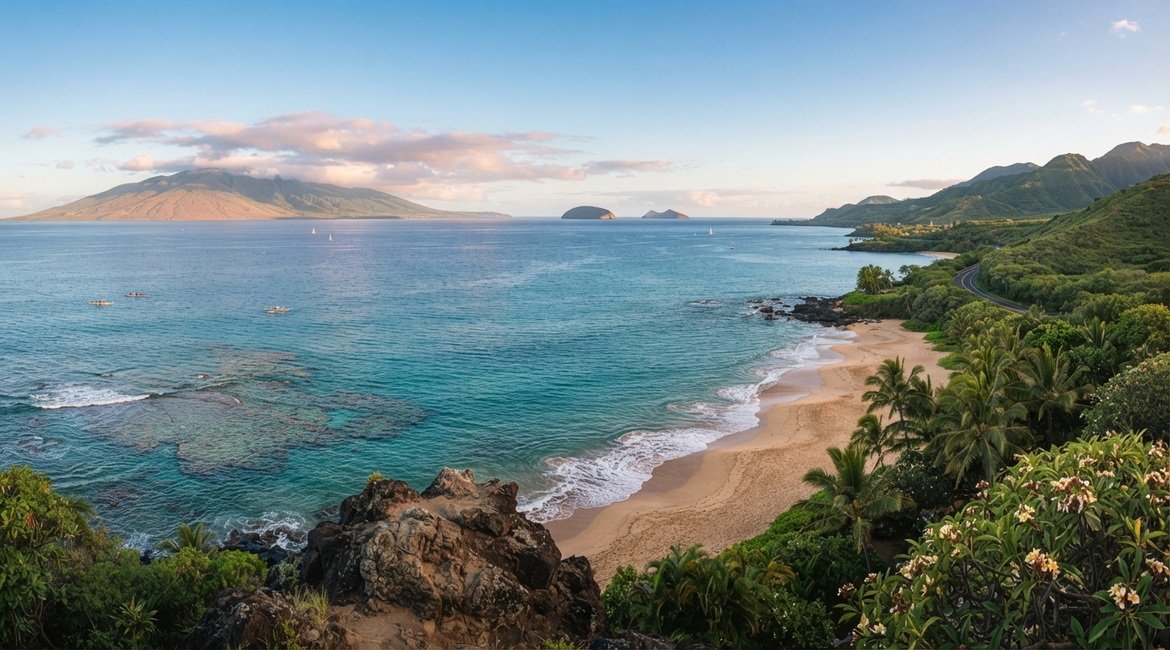
Five days in Maui gives you enough time to understand why the island is one of Hawaii’s most popular destinations. You can wake up beside a tropical beach, drive through rainforest toward Hana, explore the green landscape of ʻĪao Valley and stand high above the clouds at Haleakalā — all during the same trip. The challenge is not finding enough things to do. It is avoiding the temptation to do too much. Maui works best when sightseeing days are balanced with slower beach days. For a first visit, we recommend spending all five nights in one main accommodation area rather than changing hotels. Then use your rental car to explore different parts of the island. Our recommended 5-day Maui itinerary: Day 1: Arrival + beach + sunset Day 2: ʻĪao Valley + Upcountry Maui Day 3: Road to Hana Day 4: Relaxed beach day + coastal scenery Day 5: Haleakalā + Upcountry + final sunset
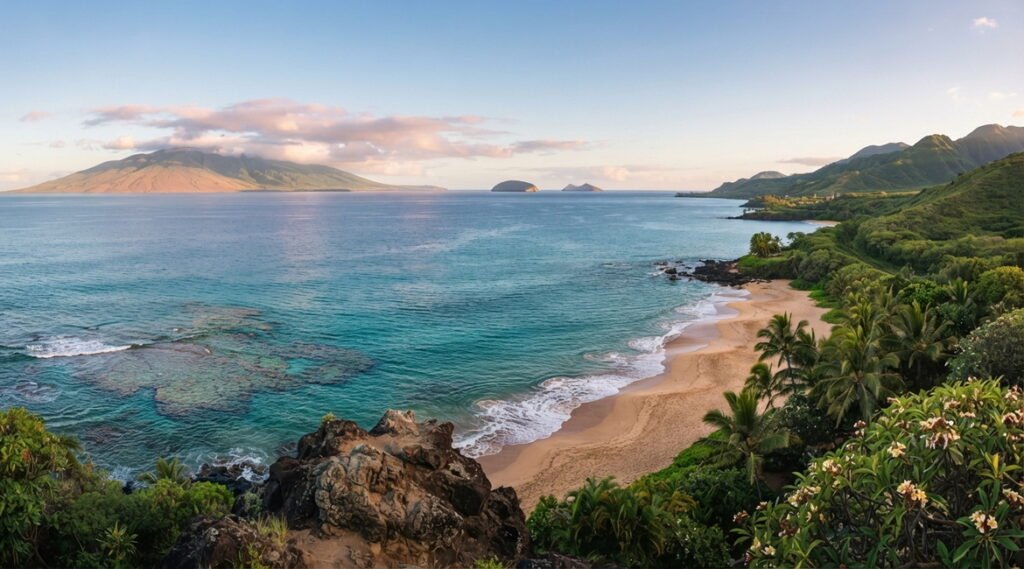
5 Days in Maui at a Glance
| Day | Main Area | Highlights |
|---|---|---|
| Day 1 | South or West Maui | Beach, resort area, sunset |
| Day 2 | Central & Upcountry Maui | ʻĪao Valley, Upcountry scenery |
| Day 3 | East Maui | Road to Hana, rainforest, Waiʻānapanapa |
| Day 4 | South or West Maui | Beach, snorkeling area, coastal scenery |
| Day 5 | Haleakalā & Upcountry | Volcanic scenery, viewpoints, final evening |
Quick answer: Five days is enough for an excellent first trip to Maui. Spend one full day on the Road to Hana, one day around Haleakalā and Upcountry, one day exploring Central Maui, and protect at least one full day for Maui’s beaches.
Is 5 Days Enough for Maui?
Yes — as long as you accept that you will not see everything. Five days allows you to experience Maui’s three biggest strengths: Beaches. Scenic road trips. Dramatic volcanic and tropical landscapes. You can explore the Road to Hana, visit Haleakalā, see ʻĪao Valley and still have meaningful time beside the ocean. Trying to add every beach, waterfall, town and viewpoint would make the trip worse rather than better. Seven days would allow more relaxation. But five days provides an excellent introduction. The key is limiting yourself to one major geographic area each day.
Day 1 — Arrive, Settle In & Enjoy the Beach
Your first Maui day should be simple. Do not land, collect a rental car, check into a hotel and immediately begin a major sightseeing loop. Instead, use the day to adjust to the island. If you are staying in South Maui, explore the beaches around Kihei or Wailea. If you are staying in West Maui, spend your first afternoon close to your accommodation.
Afternoon: Your First Maui Beach
Choose a beach close to the hotel. This is not the day to drive an hour simply because another beach appears higher on a travel list. Walk along the shoreline. Relax after the flight. Spend some time in the water only where current conditions are appropriate. If you are traveling with children, this easy first afternoon can make the entire trip feel less exhausting.
Evening: Maui Sunset
Stay near the western or southern coastline for sunset. Maui’s west-facing beaches provide beautiful evening views when conditions cooperate. Have dinner close to your accommodation and go to bed relatively early. You have much bigger days ahead. Day 1 works because: it starts the vacation like a vacation.
Day 2 — ʻĪao Valley & Upcountry Maui
Day 2 introduces Maui beyond its beaches. Start in Central Maui with ʻĪao Valley and then move into the island’s higher-elevation Upcountry region.
Morning: ʻĪao Valley State Monument
ʻĪao Valley is one of Maui’s most recognizable green landscapes. Steep tropical mountains rise around the valley while clouds frequently move through the ridges. It feels completely different from the sunny resort coastline.
The visit does not need to consume half the day. For many travelers, approximately an hour provides enough time to experience the main public area and scenery. Non-Hawaii residents currently need advance entry reservations, and parking should also be booked if arriving by car. Because entry is organized into reservation periods, build the morning around your confirmed time rather than simply arriving whenever you want.
Late Morning: Central Maui
After ʻĪao Valley, take a break before heading higher into Upcountry. This is a useful time for lunch rather than immediately adding another attraction.
Afternoon: Upcountry Maui
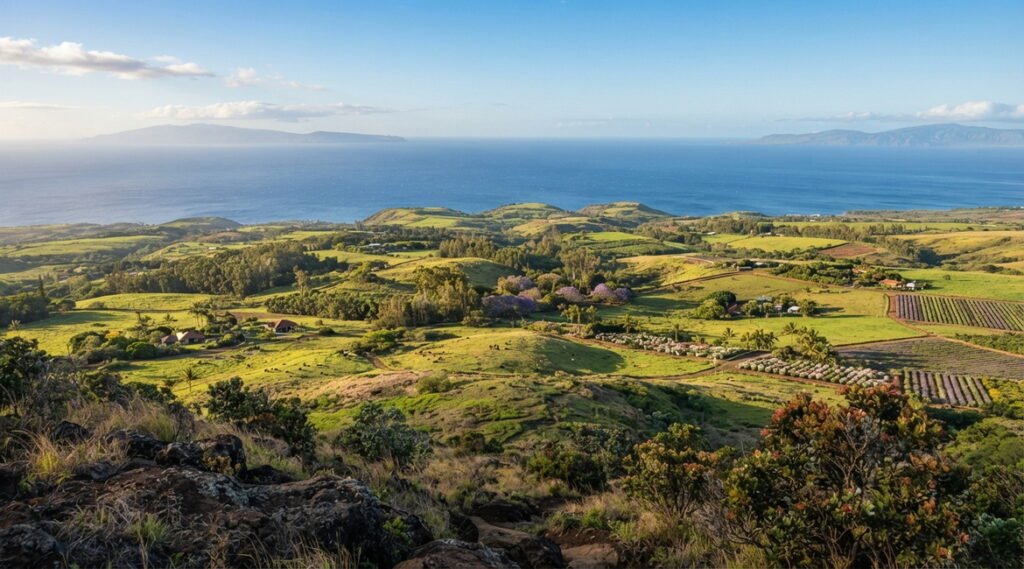
Continue toward Maui’s higher slopes. Upcountry provides another surprising change of scenery. The climate becomes cooler, ocean views open below you and the landscape feels far removed from the beach resorts. Explore the area at an easy pace. The goal is not to collect attractions. It is to experience another side of Maui.
Return to your hotel for the evening. Day 2 works because: ʻĪao Valley and Upcountry show how geographically diverse Maui is without requiring a full island road trip.
Day 3 — Road to Hana
This is the biggest driving day of the itinerary. The Road to Hana is not simply transportation to the town of Hana. The road itself is the experience. Rainforest, waterfalls, coastal views and dense tropical vegetation make East Maui feel very different from the resort areas. Start early enough that you do not feel pressure to race from stop to stop.
Morning: Begin the Road to Hana
Drive east at a comfortable pace. Do not stop at every waterfall or viewpoint you see. Instead, choose a small number of established stops where parking and public access are clear. Trying to photograph every section of the route is one of the easiest ways to turn a beautiful day into a stressful one.
Waiʻānapanapa State Park
Waiʻānapanapa is one of the most distinctive stops near Hana. The park combines rugged volcanic coastline, tropical vegetation and a small black-sand beach.
This stop requires planning. Non-residents currently need advance reservations for both entry and parking when arriving by vehicle. Reservations cannot be purchased at the park on the same day. Your Waiʻānapanapa reservation should therefore become one of the fixed points around which you organize the Road to Hana day.
Hana
Continue into the Hana area. Have lunch and deliberately slow down. Reaching Hana is not a competition. If you have already spent substantial time at several stops, it may be better to enjoy Hana and begin your return rather than adding increasingly distant destinations.
Should You Continue to Kīpahulu?
The Kīpahulu District of Haleakalā National Park lies beyond Hana and contains another extraordinary tropical landscape. However, adding it makes an already long day considerably longer. For a five-day first visit, consider it optional. If your Road to Hana day is already full, turn back without feeling that you missed the trip. If you do visit Kīpahulu, note that the Pools of ʻOheʻo are currently not accessible for swimming. They can still be viewed from the designated trail area. Day 3 works because: you dedicate the entire day to East Maui rather than trying to combine Hana with unrelated attractions.
Day 4 — Maui Beach Day & Coastal Scenery
After the Road to Hana, do less. This is one of the most important choices in the itinerary. A Maui vacation should contain at least one day where you are not constantly checking the time. Choose beaches near your accommodation and make the day flexible.
If You’re Staying in South Maui
Explore the Kihei and Wailea coastline. You can choose one beach for the morning, have lunch and move somewhere else only if you actually want to. There is no need to turn beach hopping into another road trip.
If You’re Staying in West Maui
Keep the day close to your accommodation and use current local access information when choosing beaches and businesses. Spend more time at fewer places.
Snorkeling & Ocean Time
If snorkeling is part of your trip, earlier hours can often fit better into the day before afternoon conditions change. But do not assume a popular snorkeling beach is appropriate on every visit. Ocean conditions vary. Check current conditions and follow lifeguard guidance where available. Never enter rough water simply because a location appears on an itinerary.
Afternoon: Do Almost Nothing
Return to the hotel. Use the pool. Take a long lunch. Walk along the coast. Watch the sunset. After three days of sightseeing, this slower day is not wasted time. It is part of the Maui experience. Day 4 works because: it gives you time to recover before Haleakalā.
Day 5 — Haleakalā & Final Maui Evening
Finish your trip with Maui’s most dramatic high-elevation landscape. Haleakalā rises to more than 10,000 feet above sea level and creates an environment that feels almost impossible to reconcile with the tropical beaches below. You have two main ways to visit.
Option 1: Haleakalā Sunrise
Sunrise is famous, but it requires serious planning. A vehicle reservation is currently required to enter the Summit District between 3:00 a.m. and 7:00 a.m. The reservation is separate from the national park entrance fee. Reservations are released up to 60 days ahead, with another portion released two days before the visit. They can sell out quickly.
It is also cold at the summit. Conditions before dawn can be windy, wet and even below freezing. Do not arrive dressed as though you are going to the beach.
Option 2: Visit Haleakalā Later in the Day
For many travelers, this is the better option. You can sleep normally, drive to the summit during daylight and experience the volcanic landscape without waking in the middle of the night. A sunrise reservation is not required after 7:00 a.m. The Summit District itself is currently open 24 hours a day. Weather can change rapidly at elevation, so the view is never guaranteed.
Afternoon: Upcountry Stop
On the way back toward the coast, spend some additional time in Upcountry Maui. Have lunch. Enjoy the cooler landscape. Then return toward your accommodation.
Evening: Final Maui Sunset
Do not schedule another major attraction. Return to the coast and enjoy your final evening.
Five days earlier, Maui may have looked like a beach destination. By your final evening, you will have experienced rainforest, volcanic landscapes, tropical valleys, high mountains and several very different coastlines. Day 5 works because: Haleakalā provides a memorable final contrast to the beaches below.
Where to Stay for 5 Days in Maui
For a five-day first trip, avoid changing hotels. The time lost packing, checking out and moving is rarely worth it. Two main regions work particularly well.
South Maui
Kihei and Wailea provide easy access to beaches, restaurants and resort areas. South Maui is an excellent choice for this itinerary because it creates a practical base for beach days while still allowing access to Central Maui and Haleakalā.
West Maui
West Maui is another major visitor region with beaches and resort accommodations. Depending on exactly where you stay, however, some itinerary days can involve longer drives. For a first five-day itinerary focused on seeing several parts of the island: South Maui gets our slight advantage. For a trip focused more heavily on a specific resort and beach: Choose whichever region has the property that best fits your vacation.
Do You Need a Rental Car in Maui?
For this itinerary, yes. Unlike a Waikiki-based Oahu vacation, Maui’s major attractions are spread across different parts of the island. A car gives you the flexibility to reach:
- ʻĪao Valley
- Upcountry Maui
- Road to Hana
- Haleakalā
- Different beaches
You could use tours for several major excursions, but that creates a different style of vacation. For independent travelers following this five-day route, renting a vehicle is the simplest approach. Do not choose a rental car solely based on appearance. A normal comfortable vehicle is appropriate for the standard paved itinerary described here. And always follow the rental company’s road restrictions.
What Should You Reserve in Advance?
Three places deserve special attention.
Waiʻānapanapa State Park
Non-Hawaii residents currently need advance reservations. If you are driving, you need both the appropriate entry tickets and parking reservation. Same-day reservations are not available. Reservations are currently released 30 days in advance. Because your entry is tied to a specific period, book Waiʻānapanapa before finalizing the exact timing of your Road to Hana day.
ʻĪao Valley State Monument
Non-residents need advance reservations and must purchase the appropriate entry and parking in advance. Reservations can currently be made up to 30 days ahead. Without a reservation, nonresident visitors can be turned away.
Haleakalā Sunrise
If you want sunrise, reserve it separately. A reservation is required for each vehicle entering the Summit District between 3:00 a.m. and 7:00 a.m. You do not need this special sunrise reservation if you arrive after 7:00 a.m. The park entrance fee still applies.
5 Days in Maui With Kids
This itinerary can work very well for families, but simplify it. Day 1 and Day 4 are deliberately easy. Protect them. Young children may not enjoy an extremely long Road to Hana day with constant stops. Choose fewer places and consider turning around earlier. At Haleakalā, a daytime visit can be much easier for families than waking children several hours before sunrise.
The biggest family mistake is assuming that children need more activities. Often they need fewer. A Maui day with breakfast, two hours at the beach, lunch, a pool and sunset can be just as memorable as a major excursion.
How Much Driving Is in This Itinerary?
Maui requires more driving than many first-time visitors expect. The itinerary deliberately alternates heavier and lighter days.
| Day | Driving Level |
|---|---|
| Day 1 | Low |
| Day 2 | Moderate |
| Day 3 | High |
| Day 4 | Low |
| Day 5 | Moderate to high |
Do not judge Maui driving by mileage alone. Curving roads, changing weather, local traffic and sightseeing stops can make short distances take much longer than expected.
Best Time of Year for This Maui Itinerary
This itinerary can work throughout the year. The better question is what kind of trip you want. Weather can vary significantly between Maui’s regions even on the same day. Resort areas may be sunny while clouds and rain affect East Maui. Haleakalā creates another climate entirely because of its elevation. Instead of expecting perfect weather for five consecutive days, keep Day 2, Day 4 and Day 5 somewhat flexible. If mountain conditions look poor on the day you planned Haleakalā, you may be able to swap it with your beach day. The Road to Hana requires more planning because your Waiʻānapanapa reservation is tied to a particular date and time.
What to Pack for 5 Days in Maui
Your packing list needs to account for both tropical beaches and Haleakalā. Bring:
- Lightweight everyday clothing
- Beachwear
- Comfortable walking shoes
- Reusable water bottle
- Sun protection
- Light rain layer
- Small day bag
- Phone charger or power bank
- Warmer layers for Haleakalā
If you are going to Haleakalā for sunrise, bring genuinely warm clothing. Temperatures and wind near the summit can feel nothing like conditions at your hotel. For Road to Hana, keep useful items easily accessible rather than buried beneath luggage.
Common Maui Itinerary Mistakes to Avoid
Trying to drive the Road to Hana immediately after arriving. Save it for when you are rested. Planning Road to Hana and Haleakalā on consecutive exhausting days. Put a beach day between them when possible. Trying to stop at every waterfall on the Road to Hana. Choose fewer established stops and enjoy them properly. Forgetting Waiʻānapanapa reservations. Nonresident visitors currently need advance reservations, and same-day reservations are not available. Showing up at ʻĪao Valley without a reservation. Nonresident entry is reservation-based. Assuming Haleakalā sunrise is the only worthwhile time to visit. Daytime can provide an excellent experience and avoids the special sunrise reservation. Going to Haleakalā in beach clothes. The summit is above 10,000 feet and conditions can be dramatically colder. Making all five days sightseeing days. Maui is a beach destination too. Protect at least one slow day. Ignoring ocean conditions. A beach that looked calm yesterday may not be appropriate today. Underestimating driving time. Road conditions and geography matter more than simple mileage.
FAQ About 5 Days in Maui
Is 5 days enough for a first trip to Maui?
Yes. Five days is enough to experience Maui’s beaches, Road to Hana, Haleakalā, ʻĪao Valley and Upcountry while still protecting one slower day. Seven days would allow more beach time, but five days provides an excellent first introduction.
Where should you stay for 5 days in Maui?
South Maui is an excellent all-around base for this itinerary, with Kihei and Wailea providing access to beaches, restaurants and resort areas. West Maui is another option, particularly if your preferred resort is located there. For only five days, avoid changing hotels.
Do you need a rental car in Maui?
A rental car is strongly recommended for this itinerary. Maui’s major attractions are spread across different regions, and a vehicle gives you much more flexibility for ʻĪao Valley, Upcountry, Road to Hana, Haleakalā and beach days.
Is the Road to Hana worth it on a 5-day trip?
Yes. For most first-time Maui visitors, the Road to Hana deserves one full day. The key is not trying to stop everywhere. Choose a limited number of established stops, reserve Waiʻānapanapa in advance if you plan to visit, and treat the drive itself as part of the experience.
Do you need a reservation for Haleakalā?
A special vehicle reservation is currently required to enter the Haleakalā Summit District between 3:00 a.m. and 7:00 a.m. for sunrise. You do not need that sunrise reservation when entering after 7:00 a.m., although the normal national park entrance requirements still apply.
Should you spend 5 days on Maui or visit another island?
Spend all five days on Maui. Adding another island means losing valuable vacation time to packing, airport transfers, a flight, another rental car and another hotel. Save island hopping for a longer Hawaii trip.
Recommended Next Steps
For a first five-day Maui trip, choose one hotel base and rent a car. South Maui is our slight preference for this particular itinerary. Start slowly: Day 1 — Beach + sunset. Then explore Maui’s greener interior: Day 2 — ʻĪao Valley + Upcountry. Make Day 3 your major road trip: Day 3 — Road to Hana + Waiʻānapanapa + Hana. After that, deliberately slow down: Day 4 — Beach + pool + coastal scenery. Finish with Maui’s most dramatic landscape: Day 5 — Haleakalā + Upcountry + final sunset. Reserve ʻĪao Valley and Waiʻānapanapa before the trip. If you want Haleakalā at sunrise, reserve that separately. If sunrise tickets are unavailable — or waking up before dawn simply does not sound enjoyable — visit Haleakalā later in the day instead. Most importantly, do not treat five days in Maui as a checklist. The Road to Hana is better when you stop fewer times. A beach day is better when you are not watching the clock. And Haleakalā is better when you have enough time to appreciate how dramatically the landscape has changed from the coast below. Five days will not show you every corner of Maui. But it is enough to experience what makes the island special: tropical beaches, green valleys, rainforest roads, volcanic landscapes and the freedom to slow down between them.