
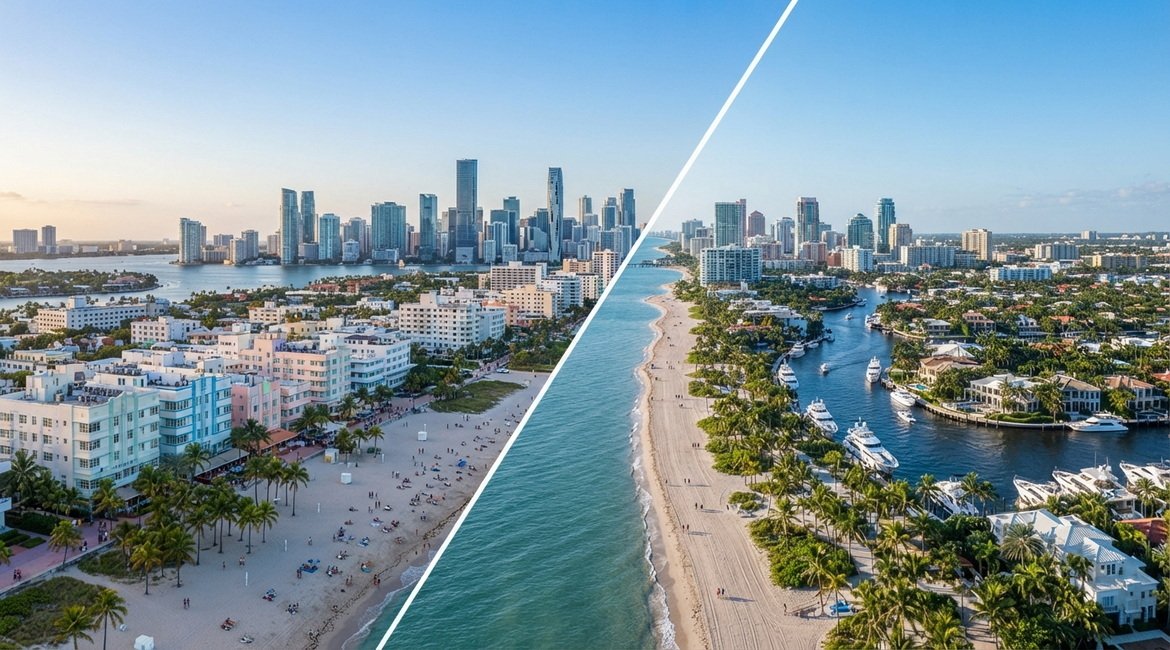
Miami and Fort Lauderdale sit only about 30 miles apart on Florida’s Atlantic coast. On a map, they can look like two versions of the same South Florida vacation. They are not. Miami is larger, busier and more diverse. It combines famous beaches with distinctive neighborhoods, museums, architecture, international food and a major urban skyline. Fort Lauderdale feels smaller and easier to understand. Its vacation experience revolves more heavily around beaches, waterways, Las Olas Boulevard and a relaxed coastal atmosphere. For most first-time South Florida visitors, Miami is the more complete destination. For travelers who primarily want a beach, waterfront scenery and a slower vacation, Fort Lauderdale may actually be the better choice.
Miami vs. Fort Lauderdale: Quick Answer
Choose Miami if this is your first South Florida trip and you want the biggest variety of beaches, neighborhoods, attractions, food and sightseeing.
Choose Fort Lauderdale if you want a more relaxed beach vacation, waterways, easier pacing and a destination that can feel more manageable for a short trip.
For families, the decision is closer. Miami has more major attractions. Fort Lauderdale can provide an easier and calmer vacation. For beaches, there is no clear loser. Both destinations have excellent Atlantic coastline, but the experience is different.
Miami vs. Fort Lauderdale at a Glance
| Category | Miami | Fort Lauderdale | Our Pick |
|---|---|---|---|
| First Visit | Huge variety | Easier & calmer | Miami |
| Beaches | Iconic & energetic | Relaxed & varied | Tie |
| Families | More attractions | Easier pace | Fort Lauderdale |
| Attractions | Much broader mix | Good smaller selection | Miami |
| Food | International variety | Strong waterfront dining | Miami |
| Waterfront Experience | Ocean + Biscayne Bay | Ocean + extensive waterways | Fort Lauderdale |
| Weekend Trip | More intense | Easy to organize | Fort Lauderdale |
| Longer Trip | More variety | More relaxed | Miami |
What Is the Biggest Difference?
The biggest difference is not the weather. It is the scale and style of the vacation. Miami feels like a major international city that happens to have spectacular beaches. You can spend the morning beside the Atlantic, have lunch in Little Havana, visit a museum in the afternoon and watch the skyline light up around Brickell in the evening. Fort Lauderdale feels more like a coastal vacation destination that also has a real downtown. Its identity is closely connected with the ocean, New River and Intracoastal Waterway. The city is often called the “Venice of America” because of its extensive network of waterways.
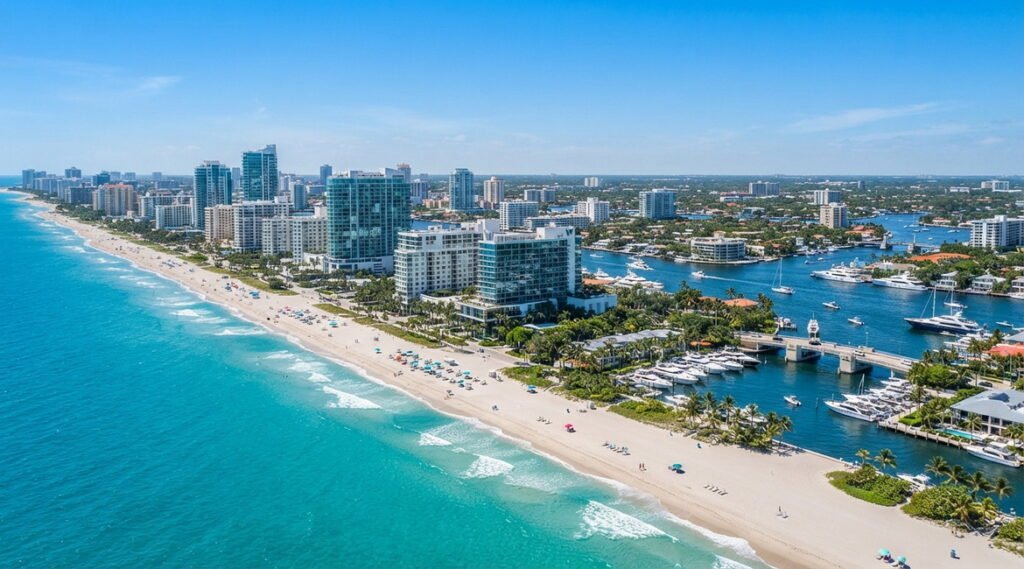
This difference affects almost every category in the comparison. Miami provides more variety. Fort Lauderdale provides easier pacing.
Which Has Better Beaches?
This is essentially a tie. The better destination depends on the type of beach atmosphere you want.
Miami Beaches
Miami Beach gives you the classic South Florida image:
- Turquoise Atlantic water
- Wide sandy beaches
- Colorful lifeguard towers
- Art Deco architecture nearby
- Tropical palms
- A busy city immediately behind the beach
South Beach is the obvious first-time choice. Mid Beach offers a quieter alternative. North Beach becomes more relaxed still.
Fort Lauderdale Beaches
Greater Fort Lauderdale has approximately 24 miles of beaches across its coastal communities. Fort Lauderdale Beach is the obvious central choice, while the broader area provides alternatives with different personalities. The overall beach experience often feels less tied to one globally famous district than Miami Beach.
Choose Miami if you want an iconic beach mixed with major-city sightseeing. Choose Fort Lauderdale if your vacation itself revolves around spending time beside the water.
Which Is Better for First-Time Visitors?
Miami wins. A first South Florida trip is often about variety. Miami gives you:
- South Beach
- Art Deco architecture
- Little Havana
- Downtown
- Brickell
- Museums
- Biscayne Bay
- Easy access toward the Everglades
The city provides more dramatically different experiences within the same vacation. If you have three or four days and have never visited either destination, Miami gives you a stronger introduction to South Florida. That does not make Fort Lauderdale less enjoyable. It simply means Miami has more recognizable experiences competing for your time.
Which Is Better for Families?
Fort Lauderdale gets a slight edge for families who want an easy beach vacation. The Greater Fort Lauderdale area combines beaches with parks, waterways and family attractions. The Museum of Discovery and Science in Downtown Fort Lauderdale, for example, has more than 200 interactive exhibits. The area also offers extensive beachfront recreation and several family-oriented coastal communities.
Miami wins if your family wants maximum variety. Miami Beach itself is highly usable for families, with beaches, parks, walking routes and free trolley transportation. Miami also provides a much broader selection of museums and attractions across the metropolitan area. So our recommendation is: Fort Lauderdale — easier family beach vacation. Miami — better family sightseeing vacation. For families with younger children who mainly want beach time and a slower schedule, we would lean Fort Lauderdale.
Which Has More Things to Do?
Miami wins clearly. A Miami itinerary can move between beaches, architecture, cultural neighborhoods, museums, shopping areas, parks and waterfront districts. You could spend several days in Miami without repeating the same type of experience. Fort Lauderdale still has plenty to do. Popular categories include:
- Beaches
- Las Olas Boulevard
- Riverwalk
- Waterway sightseeing
- Museums
- Parks
- Nature
- Nearby coastal towns
Fort Lauderdale’s Museum of Discovery and Science is one of its strongest family attractions, while the wider Greater Fort Lauderdale region includes gardens and nature attractions.
For a two-day vacation, Fort Lauderdale has more than enough. For five or six days of sightseeing, Miami’s greater variety becomes increasingly valuable.
Which Is Better for Food?
Miami wins for overall variety. The city’s multicultural character gives travelers access to an enormous range of cuisines and dining styles. A food-focused Miami itinerary can include Cuban-American flavors around Little Havana, seafood, Latin American influences and restaurants across Miami Beach, Downtown and Brickell. Fort Lauderdale’s strength is different. The city’s waterways create a particularly appealing setting for waterfront dining. Las Olas and the beach area also make it easy to combine restaurants with a compact sightseeing itinerary. For pure variety: Miami. For a slower dinner beside the water: Fort Lauderdale is extremely competitive.
Which Has the Better Evening Atmosphere?
Miami has more variety after sunset. South Beach, Downtown and Brickell all provide different evening environments. You can also simply walk along the beach, waterfront or illuminated city streets without needing a packed schedule. Fort Lauderdale is better suited to travelers who prefer a more relaxed evening. Las Olas Boulevard and waterfront areas provide restaurants, illuminated streets and places for an evening walk.

For a high-energy city atmosphere, Miami wins. For an easier waterfront evening, Fort Lauderdale may be more appealing.
Miami vs. Fort Lauderdale Without a Car
Both can work without a rental car, but you need to choose your hotel carefully. Miami has a larger transportation network. Downtown and Brickell have access to Metromover, which is free. Miami Beach has its own free trolley system. Metrorail and buses connect additional areas. Fort Lauderdale has fewer rail options within the tourist core, but the city provides local transportation alternatives and has several visitor areas that work well when explored individually. Free LauderGO services connect parts of Downtown, Las Olas and the beach. Water-based transportation is another distinctive Fort Lauderdale option. The important point is that neither city is universally walkable. Choose the right neighborhood first. Then organize sightseeing around it.
Which Is Easier to Get Around?
Fort Lauderdale can feel easier simply because a typical tourist itinerary is smaller. Las Olas, Downtown, Riverwalk and the beach create a relatively understandable visitor geography. Miami has stronger transportation infrastructure in some central areas, but the attractions are spread across a much larger urban environment. For example, South Beach and Downtown Miami are separated by Biscayne Bay. Little Havana is another distinct area. Add the Everglades and your geography expands dramatically. So there are two different winners: Best transit options: Miami. Simplest overall tourist geography: Fort Lauderdale.
Which Is Better for a Weekend Trip?
Fort Lauderdale gets the slight edge. With only two days, simplicity becomes valuable. You can build an easy weekend around: Day 1 — Fort Lauderdale Beach + waterfront + Las Olas Day 2 — Riverwalk + museum + another beach or water-based sightseeing
Miami works for a weekend too. But you will have to choose carefully between Miami Beach, Little Havana, Downtown, Brickell and other attractions. Miami becomes more rewarding once you have at least three full days.
Which Is Better for a Longer Vacation?
Miami wins. With four, five or six days, the city’s size changes from a disadvantage into an advantage. You have enough time to explore several neighborhoods without rushing. A longer Miami vacation could include:
- South Beach
- Art Deco District
- Little Havana
- Downtown
- Brickell
- Key Biscayne
- Museums
- Everglades day trip
Fort Lauderdale can certainly support a longer beach vacation. But if you want a new major sightseeing experience every day, Miami has the advantage.
Which City Is More Affordable?
There is no universal winner. Both destinations can become expensive, especially when beachfront hotels are in high demand. Miami gives you an enormous range of neighborhoods and accommodation styles, but staying in a prime South Beach location can be expensive. Fort Lauderdale may sometimes provide better value for travelers whose main priority is a beach vacation. But do not assume it will automatically be cheaper. Beachfront properties, seasonal demand and major events can change prices significantly. A better strategy is to compare the total trip cost:
- Hotel
- Parking
- Transportation
- Food
- Attractions
A cheaper hotel far from everything may not save money after transportation is added.
Hotels & Where to Stay
Your neighborhood can change the entire comparison.
Where to Stay in Miami
South Beach — best for first-time visitors who want the beach. Mid Beach — better for a quieter beach vacation. Downtown — best for public transportation and sightseeing. Brickell — best for a modern city atmosphere.
Where to Stay in Fort Lauderdale
Fort Lauderdale Beach — best for a classic beach vacation. Las Olas/Downtown — best for restaurants, walking and urban sightseeing. Near the Intracoastal — good for travelers who want waterfront atmosphere. For a first beach-focused vacation, staying near the beach in either city simplifies the trip enormously.
Which Is Better for Day Trips?
Miami has a slight edge because of the range of destinations to the south and west. Popular directions include:
- Everglades
- Biscayne National Park
- Florida Keys
- Key Largo
Fort Lauderdale works well as a base for exploring the broader Broward County coastline and destinations farther north. But there is another option: Use Miami and Fort Lauderdale as day trips from each other. They are close enough that you do not necessarily have to choose only one.
Can You Visit Miami & Fort Lauderdale on the Same Trip?
Absolutely. In fact, this is one of the easiest ways to solve the Miami vs. Fort Lauderdale question. The two downtown areas are only about 30 miles apart. Brightline provides direct rail service between MiamiCentral and Fort Lauderdale. Typical point-to-point train time is approximately 40 minutes.
That means you can stay in one destination and spend a day exploring the other. For example: Stay in Miami for 4 nights. Spend three days exploring Miami and one day in Fort Lauderdale. Or: Stay in Fort Lauderdale for a relaxed beach vacation. Take a day trip into Miami for sightseeing. For a trip of six days or longer, you could also split your accommodation between both cities.
How Many Days Do You Need?
For Miami: 3 days is a good first introduction. 4–5 days is better if you want beaches, neighborhoods and an Everglades day trip without rushing. For Fort Lauderdale: 2 days works for a weekend. 3 days gives you a much more relaxed visit. 4–5 days works well if the vacation is intentionally beach-focused.
| Trip Length | Better Choice |
|---|---|
| 1–2 Days | Fort Lauderdale for an easier short trip |
| 3 Days | Miami for sightseeing, Fort Lauderdale for relaxation |
| 4–5 Days | Miami |
| 6+ Days | Combine both |
Best Time to Visit
Because the cities are so close together, there is very little difference in the best season. For many travelers, winter through spring provides the most appealing combination of warm South Florida weather and lower humidity than summer. The tradeoff is demand. This is also a popular time to escape colder climates, so hotel rates can reflect that. Summer brings hotter, more humid conditions and a greater chance of afternoon rain. If visiting during warmer months:
- Plan beaches earlier in the day
- Keep afternoons flexible
- Include indoor alternatives
- Allow for changing weather
The weather should not be the deciding factor between Miami and Fort Lauderdale. Choose based on the type of vacation you want.
Miami or Fort Lauderdale: Which Should You Choose?
Use this simple decision table.
| If You Want… | Choose |
|---|---|
| Your first South Florida trip | Miami |
| The biggest variety of attractions | Miami |
| A relaxed beach vacation | Fort Lauderdale |
| A simple family beach trip | Fort Lauderdale |
| Museums & cultural neighborhoods | Miami |
| Waterways & waterfront atmosphere | Fort Lauderdale |
| International food variety | Miami |
| A two-day weekend | Fort Lauderdale |
| Four or five days of sightseeing | Miami |
There is no objectively better city. There is only a better match for your trip.
Common Planning Mistakes
Assuming Fort Lauderdale is simply a smaller Miami. Its waterways and more relaxed coastal atmosphere create a different experience. Choosing Miami when you only want to sit on a quiet beach. Fort Lauderdale may fit that vacation better. Choosing Fort Lauderdale when your priority is sightseeing variety. Miami has the stronger attraction mix. Comparing only hotel prices. Include transportation, parking and location. Staying far from the beach on a beach vacation. The money saved on a hotel can disappear into transportation costs. Renting a car automatically. Both destinations can work without one if you choose the right neighborhood. Trying to visit both cities every day. If combining them, dedicate a full or substantial part of a day to each rather than constantly moving back and forth. Forgetting that traffic affects road travel. The cities may be geographically close, but driving time can vary considerably.
FAQ About Miami vs. Fort Lauderdale
Is Miami or Fort Lauderdale better for a vacation?
Miami is better for travelers who want a large variety of attractions, neighborhoods, food and sightseeing. Fort Lauderdale is better for a more relaxed vacation centered on beaches, waterways and easier pacing.
Is Fort Lauderdale quieter than Miami?
Generally, yes. Fort Lauderdale still has busy beach and downtown areas, but the overall visitor experience can feel smaller and more relaxed than Miami. Travelers seeking an especially quiet trip can also explore the broader Greater Fort Lauderdale coastline.
Which is better for families?
Fort Lauderdale gets a slight edge for a simple family beach vacation because of its relaxed pace and family-friendly coastal environment. Miami is better for families who want a larger variety of museums, neighborhoods and activities alongside the beach.
How far is Fort Lauderdale from Miami?
Downtown Fort Lauderdale is approximately 30 miles north of Downtown Miami. Driving time varies with traffic, while Brightline provides direct rail service between the downtown stations in roughly 40 minutes.
Can you stay in Fort Lauderdale and visit Miami?
Yes. The cities are close enough for a day trip. Brightline connects their downtown areas, and driving is also possible. If Miami sightseeing is a major part of your vacation, however, spending at least part of the trip in Miami can reduce repeated travel.
Which city has better beaches?
Both have excellent Atlantic beaches. Miami Beach is better for travelers who want an iconic beach combined with architecture and city sightseeing. Greater Fort Lauderdale is better for travelers who want more of their vacation to revolve around a relaxed coastal and waterfront experience.
Recommended Next Steps
For a first trip to South Florida, our overall recommendation is: Choose Miami if you have 3–5 days and want to experience as much variety as possible. Stay around South Beach if the ocean is your priority. Stay Downtown or in Brickell if sightseeing and transportation matter more. Choose Fort Lauderdale if your ideal trip sounds more like: beach + waterfront + Las Olas + relaxed sightseeing. It is especially appealing for a two- or three-day vacation and for families who do not want every day to feel packed. If you have six days or longer, stop treating this as an either-or decision. Combine them. A simple South Florida itinerary could look like: Days 1–4 — Miami Explore South Beach, Little Havana, Downtown, Brickell and the Everglades. Days 5–6 — Fort Lauderdale Slow the trip down with the beach, Las Olas, Riverwalk and the waterways. That order works particularly well because Miami provides the more intensive sightseeing first, while Fort Lauderdale creates a relaxed finish. So which is better? Miami wins for variety. Fort Lauderdale wins for relaxed coastal atmosphere. And because the two cities are so close, the best South Florida trip may include both.