
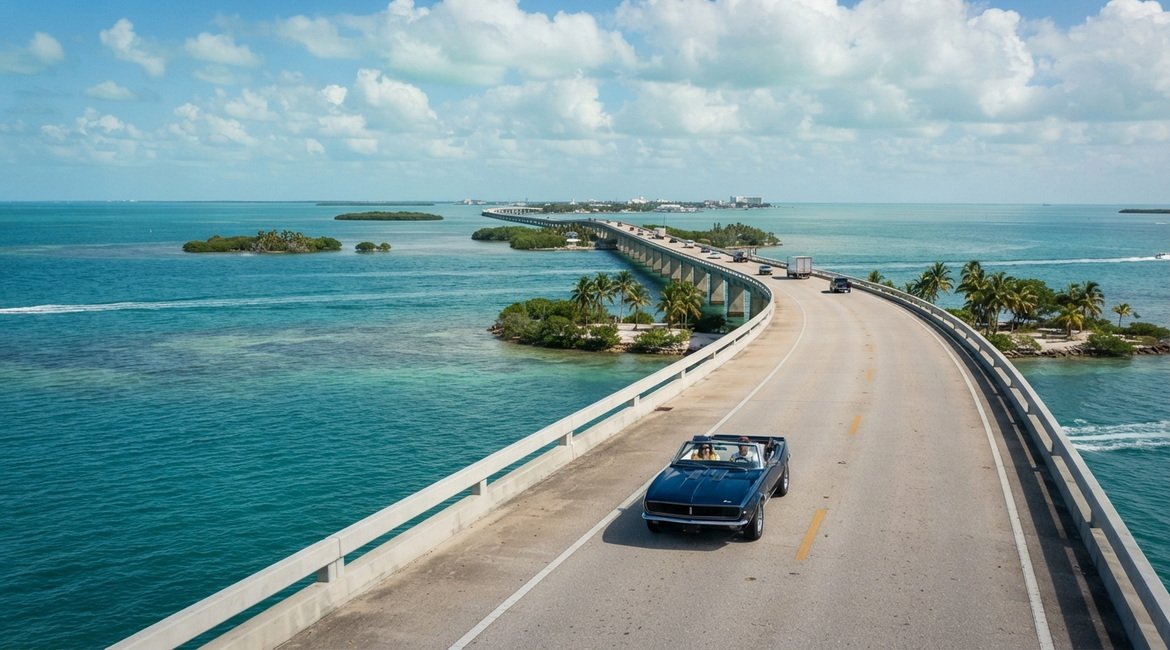
Driving from Miami to Key West is more than a way to get from one Florida city to another. It is one of the most memorable road trips in the state. The route follows U.S. Highway 1 through the Florida Keys, gradually leaving the mainland behind as bridges connect a chain of tropical islands surrounded by the Atlantic Ocean and Florida Bay. If you drove directly from Miami to Key West without stopping, the journey would take roughly four hours under favorable traffic conditions. But doing that misses much of what makes the drive special. Key Largo, Islamorada, Marathon, Seven Mile Bridge, Bahia Honda and the Lower Keys are all part of the experience. For a first trip, allow a full day for the drive. Two days is even better if you want time for beaches, snorkeling, wildlife and relaxed stops without constantly watching the clock.
Miami to Key West Road Trip at a Glance
| Stop | From Miami | Why Stop |
|---|---|---|
| Homestead | About 45–60 min | Gateway to the Keys |
| Key Largo | About 1.5 hours | Reefs & first island stop |
| Islamorada | About 2 hours | Island scenery & waterfront |
| Marathon | About 2.5–3 hours | Middle Keys & wildlife |
| Seven Mile Bridge | About 3 hours | Iconic Florida Keys drive |
| Bahia Honda | About 3–3.5 hours | Beach & turquoise water |
| Big Pine Key | About 3.5 hours | Lower Keys atmosphere |
| Key West | About 4 hours | Final destination |
These times are approximate and assume normal traffic without long stops. Weekends, holidays, road work and congestion can make the drive considerably longer.
How Long Is the Drive From Miami to Key West?
Miami and Key West are roughly 160 road miles apart, depending on where you start in the Miami area. A nonstop drive can take around four hours under favorable conditions, but you should not plan the road trip around the minimum possible travel time. U.S. 1 through the Keys is not an interstate highway. Long stretches are relatively slow, and traffic can build behind other vehicles. For a proper road trip, leave Miami early and plan to arrive in Key West in the late afternoon or early evening. That gives you enough time for several meaningful stops without turning the journey into a race. If you want to snorkel, spend several hours at a beach or visit multiple attractions, split the drive across two days.
1. Homestead & Florida City
Homestead and Florida City mark the transition between metropolitan South Florida and the Florida Keys. You are still on the mainland here, but this is the final major area before U.S. 1 continues toward Key Largo. For most travelers, Homestead does not need to become a major sightseeing stop on the way south. It is more useful as a place to have breakfast, buy anything you forgot, refuel and make sure you have everything you need before entering the Keys. Homestead is also the gateway to the southern entrance of Everglades National Park, which creates an interesting option if you are building a longer South Florida road trip.
2. Key Largo
Key Largo is the first major Florida Keys destination you reach from Miami. This is where the road trip begins to feel distinctly different from mainland Florida. Water appears on both sides of the route, boats become part of the landscape and the atmosphere shifts toward the relaxed island character associated with the Keys.
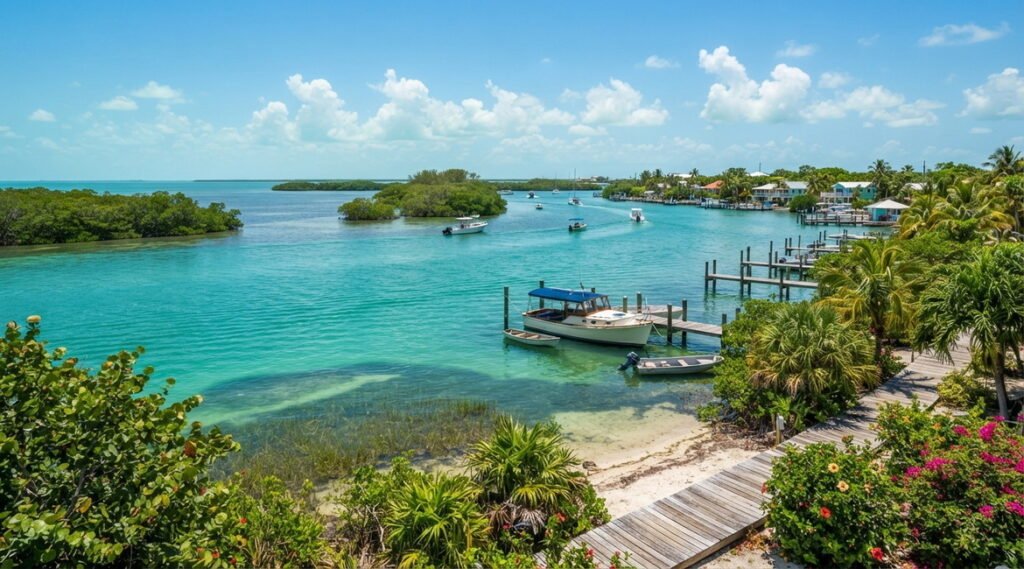
Key Largo is particularly well known for its marine environment. If your itinerary allows only a short stop, enjoy the waterfront and continue south. If you have more time, this is one of the best places along the route to turn the road trip into a water-focused experience. That is especially true if you are spending a night in the Upper Keys rather than trying to reach Key West the same afternoon.
3. John Pennekamp Coral Reef State Park
John Pennekamp Coral Reef State Park is one of the most important natural stops in Key Largo. The park protects coral reefs, mangrove environments and marine ecosystems rather than functioning simply as a conventional roadside park. Depending on your schedule, you can make this a relatively short stop or dedicate several hours to the area.
As of September 2026, the park is open from 8 a.m. until sunset throughout the year. Current admission for a vehicle with multiple occupants is $8 plus a small per-person surcharge. Some facilities and services are temporarily limited because of improvement work, so check current conditions if you plan to use specific facilities. If you want to spend substantial time snorkeling or exploring the marine environment, consider making Key Largo an overnight stop. Trying to combine a long water activity here with every other major stop and still reach Key West early is too much for one day.
4. Islamorada
Continue south and you reach Islamorada, one of the most attractive areas of the Upper Keys. The community spreads across several islands, so the experience is less about reaching one compact downtown and more about enjoying a series of waterfront stops. This is a good place for lunch on a one-day road trip.
If you are not in a hurry, allow enough time to get away from the car and enjoy the water views. Islamorada also works very well as an overnight base on a slower Miami to Key West road trip. Staying here divides the route naturally and gives you more time for Key Largo on the first day and the Middle and Lower Keys on the second.
5. Robbie’s of Islamorada Area
The southern part of Islamorada provides another convenient place to pause before continuing toward Marathon. This part of the Keys is known for waterfront activity and the famous Robbie’s area. Even if you do not plan a longer activity, the surrounding waterfront scenery makes this a useful break in the drive. On a one-day itinerary, keep the stop relatively short. The temptation on the Miami to Key West route is to stop everywhere, but too many 30-minute stops can quickly push your arrival in Key West well into the evening. Choose the places that interest you most rather than trying to complete every possible stop.
6. Marathon
Marathon sits roughly in the middle of the Florida Keys and is one of the most practical places to take a longer break. The city stretches across several islands and provides restaurants, waterfront areas and family-oriented attractions. It is also a natural overnight location if you want to divide the drive roughly between Miami and Key West.
Families may want to spend more time here because Marathon has wildlife-focused attractions that can add something different to a road trip dominated by beaches and scenic viewpoints. If you are making the drive in one day, Marathon is also a convenient lunch stop before one of the route’s most famous sections.
7. Seven Mile Bridge
Seven Mile Bridge is one of the defining experiences of the Miami to Key West road trip. Leaving Marathon, the highway stretches across open blue water with the Gulf of Mexico and Atlantic surroundings creating some of the most dramatic scenery on the entire route.
This is one of those parts of the road trip where the drive itself is the attraction. Keep your attention on driving rather than trying to photograph the scenery from a moving vehicle. Use appropriate designated stopping areas when you want to get out and enjoy a view. The historic Old Seven Mile Bridge also forms part of the visual landscape around this section of the Keys. Do not rush through this part of the route. Even if you make no formal stop, it is likely to be one of the moments you remember most.
8. Bahia Honda State Park
Shortly after the Seven Mile Bridge area, Bahia Honda State Park provides one of the best opportunities to stop for classic Florida Keys scenery. The park is known for clear water, sandy shoreline, tropical vegetation and views of the historic bridge.
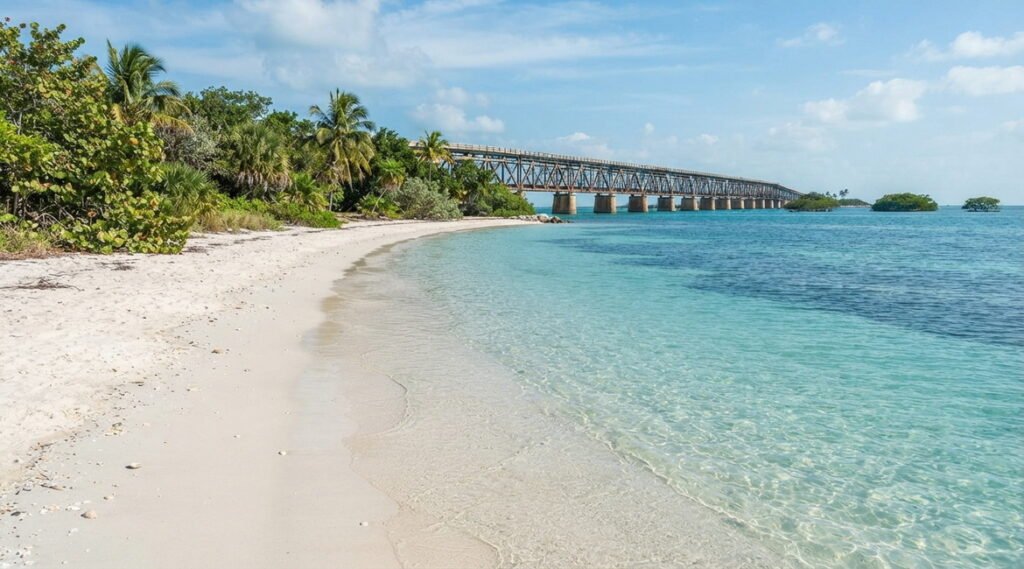
As of September 2026, Bahia Honda is open from 8 a.m. until sunset every day. Current admission is $8 per vehicle for two to eight occupants, plus the applicable Monroe County surcharge. If you have time for only one beach stop between Miami and Key West, Bahia Honda is a strong candidate. On a one-day drive, allow around an hour rather than attempting to spend half the day here. On a two-day road trip, you can slow down and give the park considerably more time.
9. Big Pine Key
Big Pine Key introduces you to the quieter atmosphere of the Lower Keys. Development becomes less concentrated, vegetation feels more prominent and the journey starts to feel increasingly removed from mainland South Florida. The area is also known as habitat for the Key deer. If you happen to see wildlife, observe it from a respectful distance and never stop unsafely in the road.
Big Pine Key works especially well for travelers who enjoy nature more than commercial attractions. You do not necessarily need a long formal stop. Sometimes simply slowing the pace of the trip and appreciating the Lower Keys landscape is enough.
10. Lower Keys Scenic Drive
The stretch between Big Pine Key and Key West is one of the parts of the trip where you should stop thinking about individual attractions and simply enjoy the journey. The Overseas Highway moves between small islands, mangrove landscapes and stretches of open water. Traffic may slow your progress, but on a road trip that is not necessarily a problem.
Avoid filling this section with too many scheduled stops. By this point, you may already have spent several hours visiting Key Largo, Islamorada, Marathon and Bahia Honda. Leaving some unplanned time makes the final approach to Key West much more enjoyable.
11. Stock Island
Stock Island sits immediately before Key West and signals that your road trip is almost finished. Many travelers simply pass through on their way into Key West, which is perfectly reasonable on a first visit. If you are spending several days in the area, however, Stock Island can be worth exploring separately for its waterfront atmosphere and more local character. For the road-trip day itself, continue toward Key West unless you still have plenty of daylight and energy. The final destination deserves more of your time.
12. Key West
Eventually U.S. 1 brings you into Key West, the southern destination that makes the entire drive worthwhile. Do not plan to arrive, spend two hours sightseeing and immediately drive back to Miami. Key West works much better as an overnight destination.
For a first visit, stay at least two nights if your schedule allows. That gives you time to explore Old Town, see the waterfront, enjoy sunset and experience the city after the day-trip crowds begin to leave. Three nights creates an even more relaxed trip and gives you time for a water-based activity or a slower beach day. The road trip gets you to Key West, but reaching the island should not be the end of the experience.
Should You Add the Everglades?
Everglades National Park looks like an obvious addition because its Homestead entrance is close to the beginning of the route. Geographically, it makes sense. From a time-management perspective, it is more complicated. The Homestead entrance leads toward the Ernest F. Coe Visitor Center, Royal Palm and eventually Flamingo. The park is enormous, and driving distances inside it are longer than many first-time visitors expect. If you have only one day to travel from Miami to Key West, do not try to add a substantial Everglades visit as well. You will end up rushing both experiences. With two or more days, the Everglades becomes much easier to include. Spend part of the first day there, stay around Homestead or the Upper Keys, and continue south the following morning.
One-Day Miami to Key West Itinerary
A one-day road trip requires selectivity. Leave Miami early in the morning and drive toward Key Largo. Make Key Largo your first short stop, then continue to Islamorada for waterfront views and an early lunch. After Islamorada, continue through Marathon and across Seven Mile Bridge. Use Bahia Honda State Park as your main longer scenic stop before continuing through Big Pine Key and the Lower Keys. Aim to reach Key West by late afternoon. A practical route looks like this:
| Part of Day | Plan |
|---|---|
| Early morning | Leave Miami |
| Morning | Key Largo |
| Late morning | Islamorada |
| Early afternoon | Marathon & Seven Mile Bridge |
| Afternoon | Bahia Honda |
| Late afternoon | Arrive in Key West |
The biggest mistake is turning every stop in this article into a mandatory stop. Pick four or five. Save the rest for another trip or the return drive.
Two-Day Miami to Key West Itinerary
Two days changes the experience completely. On the first day, leave Miami and take your time through the Upper Keys. Stop in Key Largo and give John Pennekamp Coral Reef State Park enough time to be worthwhile. Continue to Islamorada later in the day and spend the night in either Islamorada or Marathon. On day two, explore the Middle Keys before crossing Seven Mile Bridge. Spend more time at Bahia Honda, continue through Big Pine Key and then enjoy the Lower Keys drive without constantly checking your arrival time. Reach Key West in the afternoon and stay overnight. If your overall Florida itinerary allows it, this is the version of the road trip that gives the Keys room to become a destination rather than simply a scenic highway.
Best Stops With Kids
The Miami to Key West drive can work very well for families, but children are unlikely to appreciate stopping at every scenic viewpoint. Build the day around a few longer breaks instead. John Pennekamp Coral Reef State Park gives families a chance to experience the marine environment rather than simply sitting in the car. Marathon works well as a substantial midway break. Bahia Honda provides beach time before the final stretch to Key West.
For younger children, a two-day road trip is much easier than trying to combine the entire drive with many attractions in a single day. Remember that the road itself is part of the experience. You do not need an organized attraction every hour.
Best Time for the Road Trip
Winter and early spring provide some of the most comfortable conditions for driving through the Florida Keys. Temperatures are generally pleasant for walking and outdoor stops, while the region is in its drier part of the year. Spring can also provide an excellent balance of warm weather and warm water. Summer is hotter and more humid, with a greater chance of showers and thunderstorms. The Atlantic hurricane season runs from June through November, so trips during this period require more attention to current weather forecasts. Regardless of season, leave Miami early. An early departure gives you more daylight for stops and reduces the pressure to rush through the Lower Keys late in the day.
Driving Tips for the Overseas Highway
Do not plan the trip based entirely on the fastest driving time shown on a map. Traffic can slow significantly, and there are limited alternatives to U.S. 1 once you are deep into the Keys. Refuel before you are close to empty rather than waiting for a particular station. Download anything important before the drive and keep your itinerary flexible. Use designated parking and stopping areas rather than pulling over somewhere unsafe for a photograph. Allow extra time around weekends and holidays. Most importantly, resist the urge to turn the road trip into a checklist. The appeal of the Overseas Highway comes from the changing water views, bridges and island landscape as much as from individual attractions.
FAQ About Driving From Miami to Key West
Is the drive from Miami to Key West worth it?
Yes. The Overseas Highway passes through the Upper, Middle and Lower Keys and includes ocean views, long bridges, tropical islands and several worthwhile stops. For many travelers, the drive becomes one of the highlights of visiting South Florida.
Can you drive from Miami to Key West in one day?
Yes. The direct drive takes roughly four hours under favorable conditions, so a one-day road trip is realistic. Leave Miami early, limit yourself to a few major stops and stay overnight in Key West rather than immediately driving back.
What are the best stops between Miami and Key West?
Key Largo, Islamorada, Marathon, Seven Mile Bridge and Bahia Honda State Park provide a strong first-time route. Big Pine Key and the Lower Keys are also worth enjoying as part of the scenic drive toward Key West.
Where should you stop overnight?
Islamorada is a good choice if you want more time in the Upper Keys, while Marathon divides the overall route more evenly. Either works well for a two-day Miami to Key West road trip.
How many days do you need for a Miami to Key West road trip?
One day is enough to drive from Miami to Key West with several selected stops. Two days is better if you want beaches, snorkeling or longer stops along the way. Add at least two nights in Key West if you want enough time to explore the destination itself.
Do you need a car once you reach Key West?
Not necessarily. Much of central Key West is compact enough that visitors can explore many popular areas on foot. If Key West is the final destination of your road trip, you may use the car much less once you arrive.
Recommended Next Steps
For a first Miami to Key West road trip, do not try to stop everywhere. If you have one day, prioritize Key Largo, Islamorada, Seven Mile Bridge and Bahia Honda before continuing to Key West. If you have two days, spend more time in John Pennekamp Coral Reef State Park and stay overnight in Islamorada or Marathon. Save a full Everglades visit for a separate day unless your road-trip schedule has enough time to include an additional overnight stop. Once you reach Key West, stay for at least two nights rather than treating the city as a turnaround point. That gives you time to explore Old Town, enjoy the waterfront and experience the island at a much slower pace. The Miami to Key West drive is not a road you should try to finish as quickly as possible. The islands, bridges and changing shades of blue along the Overseas Highway are the reason to take the road in the first place.