
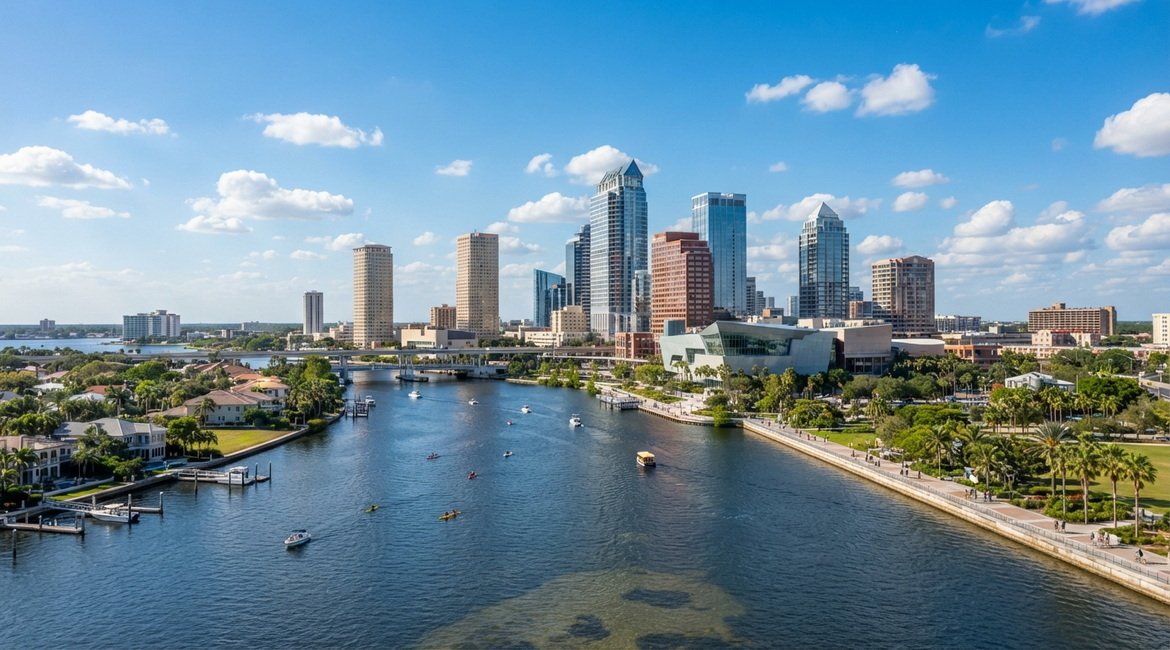
Tampa is a year-round destination, but the experience changes significantly depending on when you visit. Winter brings mild temperatures and relatively dry weather. Spring becomes warmer while remaining much drier than summer. From June through September, Tampa is hot, humid and much wetter, with frequent afternoon showers and thunderstorms. Fall gradually brings lower humidity and less rain, making October and November attractive months for outdoor sightseeing. For many first-time visitors, March and April offer one of the strongest combinations of comfortable temperatures, relatively low rainfall and good conditions for exploring Tampa Bay. Travelers who want warmer beach weather may prefer April or May, while visitors who prioritize cooler sightseeing weather may prefer February or March.

When Is the Best Time to Visit Tampa?
For most first-time visitors, March through May provides an excellent window for visiting Tampa. Spring temperatures are warm enough to enjoy the waterfront and nearby Gulf Coast beaches, while rainfall is dramatically lower than during summer. March is particularly comfortable for sightseeing. Days are warm without the persistent heat and humidity that arrive later in the year. April is warmer and works especially well if you want to combine Tampa attractions with beach days around Clearwater or St. Pete Beach. May brings increasingly tropical conditions. It is warmer, more humid and better suited to travelers who want summer-like weather without being in the middle of the wettest part of the year. October and November provide another attractive window. By late fall, rainfall decreases substantially and outdoor sightseeing becomes more comfortable again.
Tampa Weather at a Glance
Tampa has a humid subtropical climate with mild winters and hot, humid summers. The difference in rainfall between seasons is particularly important when planning a trip.
| Month | Typical Weather | Avg. Rainfall | Trip Style |
|---|---|---|---|
| January | Mild & relatively dry | 2.65 in | Sightseeing |
| February | Mild & dry | 2.62 in | Outdoor activities |
| March | Warm & dry | 2.52 in | Excellent overall |
| April | Warm & sunny | 2.55 in | City + beaches |
| May | Hotter & more humid | 2.60 in | Beach weather |
| June | Hot, humid & rainy | 7.37 in | Summer vacation |
| July | Hot, humid & rainy | 7.75 in | Beach + indoor mix |
| August | Very hot & wet | 9.03 in | Flexible itinerary |
| September | Hot & rainy | 6.09 in | Flexible itinerary |
| October | Warm & becoming drier | 2.34 in | Excellent fall option |
| November | Comfortable & dry | 1.40 in | Sightseeing |
| December | Mild & relatively dry | 2.56 in | Winter escape |
These rainfall figures are long-term climate normals rather than forecasts for a specific trip. Weather can vary considerably from one year to another, but the seasonal pattern is clear: Tampa’s summer is much wetter than its winter and spring.
Tampa Seasons Explained
Tampa’s travel year can be divided into four practical periods. Winter is mild and relatively dry. It is excellent for sightseeing, outdoor dining and exploring the Tampa Riverwalk, although occasional cool fronts can make some days less suitable for swimming. Spring becomes steadily warmer while rainfall generally remains moderate. This is one of the easiest seasons for combining city attractions with beaches. Summer is hot, humid and wet. Afternoon showers and thunderstorms become common, but mornings can still provide good conditions for outdoor activities. Fall begins hot and gradually becomes drier and more comfortable. October and November can be particularly attractive once the summer rainfall pattern starts easing.
January
January is one of Tampa’s coolest months, but “cool” in Tampa is relative. Daytime conditions are often mild enough for walking, sightseeing and outdoor attractions. Evenings and early mornings can feel considerably cooler, particularly when a cold front moves through Central Florida. Rainfall averages around 2.65 inches, making January much drier than the summer months. This is a strong month for visitors who want to explore Tampa without dealing with intense heat. The tradeoff is beach weather. You may get beautiful sunny beach days, but Gulf water and air temperatures can be cooler than many travelers expect from Florida. Think of January primarily as a sightseeing month rather than a guaranteed swimming vacation.
February
February remains mild and relatively dry. The combination works particularly well for Tampa’s outdoor attractions, neighborhoods and waterfront areas. You can comfortably spend much of the day outside without planning your itinerary around summer heat. Rainfall remains low compared with summer. For travelers escaping colder northern climates, February can feel almost spring-like. Beach conditions remain variable, however. Warm sunny days are possible, but visitors who want consistently warm Gulf swimming may prefer later in spring.
March
March is one of the strongest months for a first visit to Tampa. Temperatures become noticeably warmer while average rainfall remains around 2.5 inches. That combination is useful because a Tampa vacation often mixes very different activities. You may spend one day exploring the city, another at an outdoor attraction and another visiting Clearwater Beach or St. Pete Beach.
March weather generally makes that kind of varied itinerary easier. The main consideration is spring travel demand. If your dates overlap with school breaks or major events, accommodation and attraction demand can be different from quieter weeks.
April
April may provide the best overall balance for travelers who want both Tampa and the Gulf Coast. Days are warm, rainfall remains relatively low and summer’s persistent humidity has not fully taken over. This is an excellent month for combining downtown Tampa, outdoor attractions and nearby beaches. The Gulf also becomes increasingly inviting as spring progresses.
If your ideal Tampa vacation includes sightseeing in the morning and beach time in the afternoon, April deserves serious consideration.
May
May feels increasingly like summer. Temperatures rise, humidity becomes more noticeable and beach conditions become more appealing for travelers who prefer warm weather. Interestingly, long-term rainfall at Tampa International Airport still averages only about 2.6 inches in May. The dramatic increase in average rainfall arrives in June. That makes May an interesting transition period. You get much of the warmth associated with a Florida summer vacation without yet being in the heart of Tampa’s wettest season. For beach-focused travelers who are comfortable with hotter afternoons, May can work very well.
June
June marks a major seasonal shift. Average rainfall jumps to more than seven inches, and hot, humid conditions become established. That does not mean Tampa experiences continuous rain. Summer rainfall often arrives through showers and thunderstorms rather than steady rain lasting from morning until night. A flexible itinerary becomes important. Plan outdoor activities earlier in the day when possible and keep indoor alternatives available for later.

June can still work well for families traveling during school vacation, particularly if you mix outdoor attractions with museums, aquariums and other indoor activities.
July
July is hot, humid and wet. Tampa’s average summer high is around 91°F, and warm nights provide relatively little relief from daytime heat. Rainfall averages around 7.75 inches in July. Visitors should avoid building an itinerary that requires walking outdoors for hours every afternoon. Instead, use the morning for outdoor sightseeing, take a break during the hottest part of the day and remain flexible if thunderstorms develop. For beach trips, mornings can be particularly valuable. Summer can still be enjoyable, but the daily rhythm should be different from a March or April trip.
August
August is Tampa’s wettest month based on 1991–2020 climate normals. Average rainfall is just over nine inches, and measurable rain occurs on roughly half of the month’s days. Temperatures remain very warm and humidity is high. For travelers tied to the summer school calendar, August is still possible, but itinerary flexibility matters.
Avoid assuming a rain icon in the forecast means an entire vacation day will be lost. At the same time, do not schedule every important outdoor activity without an alternative plan.
September
September remains hot and humid, but average rainfall begins decreasing from the August peak. This month still belongs firmly to Tampa’s summer weather pattern. It also falls within the more active part of the Atlantic hurricane season, making weather flexibility particularly important. September can appeal to travelers who do not mind heat and want to explore Tampa outside the traditional winter and spring travel periods. However, it is not the strongest choice if predictable outdoor weather is your highest priority.
October
October is one of Tampa’s most interesting months. Temperatures remain warm, but average rainfall drops dramatically compared with September. Long-term October rainfall is only about 2.34 inches. That transition makes October attractive for visitors who want warm Florida conditions without the rainfall levels associated with midsummer. The Gulf also retains warmth from summer, which can make October appealing for combining Tampa with nearby beaches. Early October can still feel quite hot. Later in the month generally moves closer to the more comfortable conditions associated with fall.
November
November is the driest month of the year in Tampa based on current 1991–2020 climate normals, averaging about 1.4 inches of rain. Humidity is typically lower than during summer, and conditions become very comfortable for outdoor sightseeing.
This can be an excellent month for travelers who care more about sightseeing than having the warmest possible beach water. The weather also works well for day trips around the wider Tampa Bay area. Holiday periods can create their own demand patterns, so compare exact dates rather than assuming the entire month will feel equally quiet.
December
December returns Tampa firmly to its mild winter pattern. Days are generally comfortable for sightseeing, while mornings and evenings can be cool. Rainfall averages around 2.56 inches, far below summer levels. December can be particularly appealing for travelers who want to escape genuinely cold winter weather elsewhere without dealing with Florida’s summer heat. As in January, beach expectations should remain flexible. Some days can be warm and sunny enough for the coast, while cooler periods make sightseeing a better use of your time.
Best Time for Good Weather
March and April provide one of Tampa’s strongest combinations of temperature and rainfall. Spring averages around 83°F for daytime highs across March, April and May, while total seasonal rainfall is less than eight inches. Compare that with summer, when average daytime highs are around 91°F and June through August receive more than 24 inches of rain combined. November is another excellent weather month. It is considerably drier than summer and usually comfortable for spending long periods outdoors. For travelers who dislike heat, February and March are particularly attractive. For travelers who prefer warmer weather, April and early May provide a better balance.
Best Time for Beaches
Tampa itself sits on Tampa Bay rather than directly on the open Gulf of Mexico, but some of Florida’s most popular Gulf Coast beaches are within the wider Tampa Bay region. Clearwater Beach and St. Pete Beach are common additions to a Tampa itinerary. Late spring through fall generally provides warmer conditions for swimming. April can work particularly well because air temperatures are already warm while rainfall remains much lower than in summer. May provides even warmer conditions.
Summer offers very warm water but brings greater heat, humidity and afternoon thunderstorm potential. October can provide another useful balance, with warm conditions and much lower average rainfall than August or September.
Best Time for Families
For families with flexible school schedules, March, April and November are particularly convenient because the weather supports long outdoor days without peak summer heat. April works especially well for a mixed Tampa itinerary. You can combine family attractions, waterfront areas and Gulf beaches without designing every afternoon around extreme heat or frequent thunderstorms. Summer remains practical for families tied to school vacations. The key is adjusting expectations. Schedule outdoor activities earlier, allow time for breaks and include indoor attractions so that a passing thunderstorm does not disrupt the entire day.
Best Time for Fewer Crowds
Crowd levels in Tampa are influenced by much more than weather. School vacations, weekends, major events, holidays and beach demand can all affect how busy the region feels. Winter and spring bring attractive weather, which naturally increases demand during certain periods. Summer brings family travel because schools are out, even though weather conditions are hotter and wetter. If avoiding crowds is important, look at the shoulder periods rather than choosing solely by season. May and portions of fall can provide useful alternatives, depending on your exact dates. Always check the local event calendar before booking because a major event can have more impact on hotel demand than the month itself.
Best Time for Lower Prices
There is no single month when Tampa is guaranteed to be inexpensive. Hotel prices change according to events, holidays, weekends, school breaks and demand across the wider Tampa Bay region. The best strategy is to compare several travel windows. If you have flexible dates, look at late spring, summer and portions of fall as well as the more popular winter and early spring periods. But price should not be considered separately from weather. A lower hotel rate during August may come with much higher humidity and rainfall than an April trip. Think about overall value rather than simply choosing the cheapest nightly rate.
Hurricane Season in Tampa
Tampa is on Florida’s Gulf Coast, so tropical weather deserves attention when planning a summer or fall vacation. The Atlantic hurricane season officially runs from June 1 through November 30. That does not mean Tampa experiences a hurricane every year or that you should automatically avoid the entire six-month period. Most days during hurricane season are ordinary Florida days. The important difference is that tropical weather becomes another variable to monitor, particularly from late summer into fall. If traveling during hurricane season, keep your plans flexible and check official forecasts as your departure approaches. Do not make decisions about a specific travel week months in advance based on individual long-range storm predictions.
How Many Days Do You Need in Tampa?
Three days is a good minimum for a first Tampa trip. That gives you enough time to explore central Tampa, spend a day at a major attraction and use another day for either additional sightseeing or the Gulf Coast. Four or five days provides a more comfortable experience. You can explore Tampa without rushing and still dedicate meaningful time to Clearwater, St. Petersburg or another part of the wider Tampa Bay region.
| Trip Length | What It Works For |
|---|---|
| 2 days | Quick Tampa city break |
| 3 days | Good first-time introduction |
| 4–5 days | Tampa plus Gulf Coast beaches |
| 6–7 days | Relaxed Tampa Bay vacation with day trips |
For families, four or five days can be particularly useful because it prevents the itinerary from becoming too crowded.
FAQ About Visiting Tampa
What is the best month to visit Tampa?
March and April provide one of the strongest overall combinations for first-time visitors. Temperatures are warm, average rainfall remains relatively low and conditions work well for both city sightseeing and trips toward the Gulf Coast. November is another excellent option for travelers who prioritize dry, comfortable weather.
When is the rainy season in Tampa?
Summer is Tampa’s wettest period. Rainfall rises sharply in June and remains high through September. July and August are particularly wet, with August averaging just over nine inches of precipitation based on 1991–2020 climate normals.
Is Tampa too hot in summer?
Summer is hot and humid, with average daytime highs around 91°F across June, July and August. Many travelers still visit successfully by scheduling outdoor activities earlier in the day, taking breaks and keeping indoor alternatives available for rainy afternoons.
When is hurricane season in Tampa?
Atlantic hurricane season runs from June 1 through November 30. Travelers visiting Tampa during this period should follow official forecasts as their travel dates approach, particularly during late summer and fall.
Can you swim at Tampa beaches in winter?
Swimming is possible on warm winter days, but Gulf water is much cooler than during late spring, summer and early fall. Travelers planning a beach-focused vacation usually find warmer swimming conditions later in spring.
How many days are enough for Tampa?
Three days provides a good introduction to Tampa. Four or five days is better if you also want to visit nearby Gulf Coast beaches or spend time exploring other parts of the Tampa Bay area.
Recommended Next Steps
For a first Tampa vacation, start by comparing March and April. Choose March if comfortable sightseeing weather is your main priority. Choose April if you want a stronger balance between city attractions and Gulf Coast beach time. May is worth considering if you prefer hotter weather and warmer water but want to travel before the dramatic increase in summer rainfall. For a fall trip, October and November are particularly interesting. October remains warm enough for a beach-oriented itinerary, while November is much drier and usually better suited to long sightseeing days. Winter works especially well if you want to escape colder weather elsewhere and your trip is focused more on attractions than swimming. Summer is entirely possible, particularly for families traveling during school vacation, but plan differently. Start outdoor days earlier, leave room for afternoon weather changes and include indoor attractions in the itinerary. For most first-time visitors who want Tampa attractions, outdoor sightseeing and at least one Gulf Coast beach day, March through April provides one of the easiest periods to build a balanced trip.