
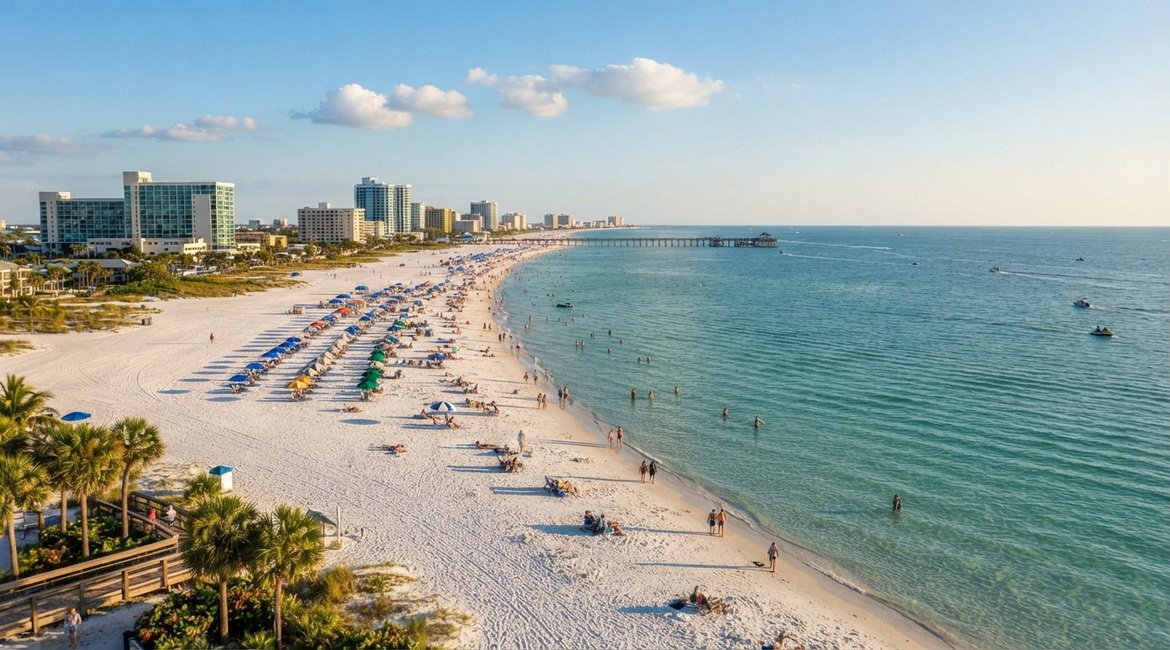
Clearwater Beach can be visited throughout the year, but choosing the right month can completely change the experience. Winter brings mild temperatures, relatively dry weather and cooler Gulf water. Spring combines warmer days with increasingly comfortable swimming conditions, although spring-break periods can bring more visitors. Summer offers the warmest water of the year, but it also brings Florida heat, humidity and frequent afternoon thunderstorms. Fall gradually becomes quieter while Gulf water remains surprisingly warm. For travelers planning a traditional beach vacation, April, May and October offer particularly attractive combinations of warm weather and comfortable water. If swimming is less important and you mainly want sunshine, walking on the beach and exploring the Tampa Bay area, winter can also be an excellent time to visit.
When Is the Best Time to Visit Clearwater Beach?
For many travelers, April and May provide one of the easiest periods for a Clearwater Beach vacation. April typically brings daytime highs around 81°F, while average Gulf water temperature reaches about 73°F. By May, daytime highs are around 86°F and the water averages approximately 78°F. That makes late spring particularly useful for travelers who want actual beach weather rather than simply escaping winter. October provides another attractive option. Average daytime highs remain around 83°F, while Gulf water averages approximately 81°F. At the same time, the summer vacation period has ended and beaches can feel less crowded than during major school breaks. March has excellent sightseeing weather but cooler water, while June through September offers extremely warm Gulf temperatures at the cost of greater heat, humidity and rain. There is therefore no single perfect month for every traveler. The right season depends on whether you prioritize swimming, comfortable temperatures, quieter beaches or lower accommodation rates.
Clearwater Beach Weather at a Glance
Clearwater Beach has warm weather for much of the year, but Gulf water temperatures vary considerably between winter and summer.
| Month | Avg. High | Avg. Gulf Water | Trip Style |
|---|---|---|---|
| January | 69°F | 64°F | Winter escape |
| February | 70°F | 64°F | Walking & sightseeing |
| March | 75°F | 67°F | Spring weather |
| April | 81°F | 73°F | Excellent balance |
| May | 86°F | 78°F | Warm beach trip |
| June | 87°F | 82°F | Summer swimming |
| July | 88°F | 85°F | Very warm water |
| August | 88°F | 87°F | Warmest water |
| September | 86°F | 85°F | Warm & quieter |
| October | 83°F | 81°F | Excellent fall option |
| November | 76°F | 75°F | Comfortable & quieter |
| December | 71°F | 69°F | Mild winter trip |
These figures are long-term regional averages rather than a forecast for a particular vacation. Daily conditions can vary, especially during winter cold fronts and the summer thunderstorm season.
January
January is one of the coolest months at Clearwater Beach. Average daytime highs are around 69°F, while Gulf water averages approximately 64°F. That can feel wonderful compared with winter in colder parts of the country, but it is not guaranteed tropical swimming weather. Some visitors will happily enter the water, while others will find it too cool. January works better for long beach walks, sunsets, outdoor dining and exploring the wider St. Pete-Clearwater region. Cool fronts can occasionally produce noticeably colder days, so packing a light layer for mornings and evenings is useful.
February
February remains mild, with average highs around 70°F and Gulf water still close to 64°F. The advantage is comfortable weather for activities that would feel much hotter during summer. Walking along the beach, exploring nearby coastal communities and spending time outdoors can be very pleasant. Swimming remains more dependent on personal preference. Travelers specifically planning a warm-water beach vacation should generally look later in spring.
March
March is the beginning of a major seasonal transition. Average daytime highs climb to around 75°F, while Gulf water averages approximately 67°F. Conditions become increasingly attractive for spending full days outside. The major consideration is demand. Spring vacation periods can bring substantially more visitors to Clearwater Beach, especially around spring break and Easter.
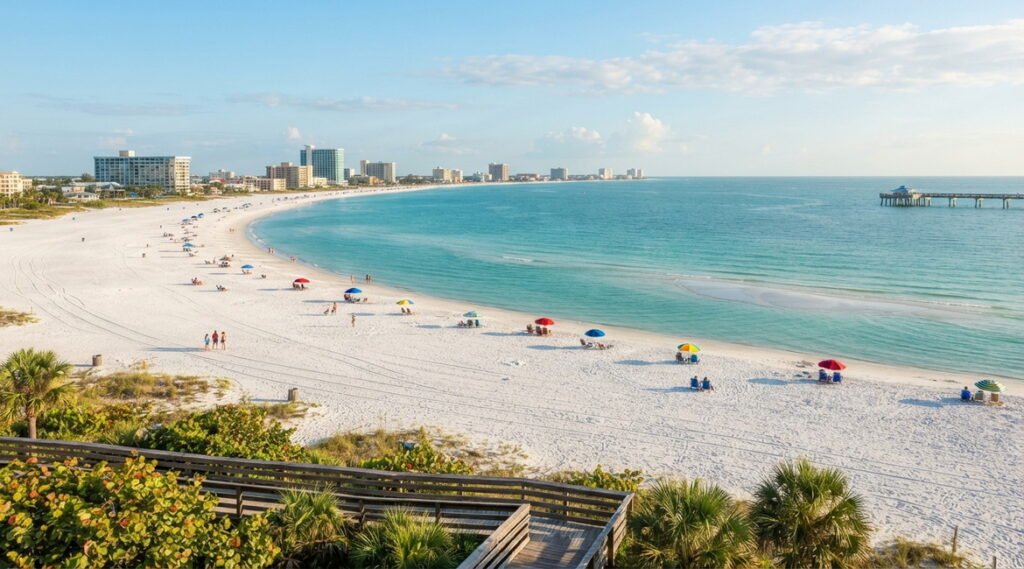
If traveling in March, exact dates matter almost as much as the month itself. A quieter week and a major school-break week can feel very different.
April
April is one of the most balanced months for Clearwater Beach. Average daytime highs reach around 81°F, creating genuinely warm beach conditions without midsummer heat. The Gulf averages approximately 73°F. Some travelers will find that comfortable for swimming, while those who prefer very warm water may want to wait until May. April also works particularly well if Clearwater Beach is only one part of a Tampa Bay vacation. You can comfortably combine beach days with Tampa, St. Petersburg and other outdoor activities. The main consideration remains spring-break and Easter timing, which can affect crowds and accommodation demand.
May
May is an excellent month for travelers who want warmer water. Average daytime highs reach around 86°F, and the Gulf averages approximately 78°F. That is a substantial difference from March.
May also sits between the busiest spring vacation period and the heart of summer. The weather is becoming hotter and more humid, but summer’s typical rainy pattern is not yet as established as it becomes in June and later. For travelers whose ideal vacation means swimming, beach time and warm evenings, May deserves serious consideration.
June
June brings true summer conditions. Average highs reach around 87°F and Gulf water warms to approximately 82°F. Swimming conditions are extremely comfortable for travelers who enjoy warm water. The tradeoff is weather variability. Florida’s summer rainy season brings frequent afternoon showers and thunderstorms. This does not necessarily mean rain from morning until night. A practical summer strategy is to begin beach days early, enjoy the morning and remain flexible later in the afternoon.
July
July is hot and humid, with average daytime highs around 88°F. The Gulf averages approximately 85°F, making the water exceptionally warm. For families traveling during school vacation, July can still provide an enjoyable traditional beach trip. The key is not expecting spring-style weather.
Plan important outdoor activities earlier in the day and pay attention to changing weather conditions. When thunderstorms approach, leave the water and follow local beach safety guidance.
August
August provides the warmest Gulf water of the year, averaging approximately 87°F. Air temperatures remain around 88°F during the day, and humidity can make conditions feel considerably warmer. This is ideal for travelers who dislike cold water. It is less appealing for visitors who prefer spending hours walking outdoors in mild temperatures. Afternoon weather can also change quickly during Florida summer. A good August itinerary should therefore include flexibility rather than scheduling every hour around outdoor activities.
September
September remains very warm. Average highs are around 86°F, while Gulf water stays near 85°F. One advantage is that the main summer school vacation period begins to end, which can make parts of fall feel less crowded. However, September falls within the climatological peak of Atlantic hurricane activity. That does not mean a tropical system will affect Clearwater Beach during your trip. It simply adds another weather variable that travelers should monitor as departure approaches.
October
October is one of the most interesting months for Clearwater Beach. Average daytime highs remain around 83°F, and Gulf water averages approximately 81°F. In other words, the water can still feel like summer even as the atmosphere begins moving toward more comfortable fall conditions.
Families have largely returned to school, and regional tourism information notes that fall beaches tend to be less occupied than during the busy spring vacation period. For travelers who have flexible schedules, October can offer an appealing balance between swimming conditions and crowd levels.
November
November brings cooler but still pleasant conditions. Average highs are around 76°F, while Gulf water averages approximately 75°F. Swimming remains realistic for many visitors, particularly early in the month and on warm sunny days. November can also be comfortable for travelers who want to spend more time exploring beyond the beach. Tampa, St. Petersburg and nearby coastal communities are easier to explore when you are not dealing with midsummer heat.
December
December is mild rather than tropical. Average daytime highs are around 71°F and Gulf water averages approximately 69°F. Warm sunny days can still be excellent for sitting on the beach, walking along the shoreline and watching the sunset. Swimming depends heavily on personal tolerance and the weather pattern during your visit. If warm-water swimming is essential, late spring through fall provides more reliable conditions. If you simply want to trade snow and freezing temperatures for palms and Gulf views, December can be very appealing.
Best Time for Swimming
Water temperature is one of the most important differences between seasons at Clearwater Beach. In January and February, average Gulf water temperature is around 64°F. By April it reaches approximately 73°F, followed by 78°F in May and 82°F in June. July through September brings the warmest water, averaging roughly 85°F to 87°F. October remains surprisingly warm at around 81°F.
| Period | Water Experience |
|---|---|
| January–February | Cool for many swimmers |
| March–April | Gradually becoming more comfortable |
| May–June | Warm swimming conditions |
| July–September | Very warm Gulf water |
| October | Warm despite fall season |
| November–December | Cooling but still swimmable for some visitors |
If swimming is central to the vacation but you want to avoid the hottest part of summer, May and October are particularly useful months to investigate.
Best Time for Families
Clearwater Beach works well for families throughout much of the year. The better season depends largely on school schedules and how important swimming is. Families with flexible dates may find late April, May and October particularly convenient. These periods can provide warm beach weather without necessarily requiring a trip during the heart of summer.
Families traveling during June, July or August should expect much hotter conditions. Start beach days earlier, allow time for breaks and keep plans flexible around afternoon thunderstorms. Winter works well for families interested in outdoor sightseeing and beach walks, although children expecting very warm swimming water may find the Gulf cool.
Best Time for Fewer Crowds
The busiest periods do not depend solely on temperature. School calendars, spring break, Easter, holiday weekends and major events can all affect visitor numbers. Spring vacation is an especially busy period for beaches throughout the St. Pete-Clearwater area. Fall can provide a noticeably different experience after children return to school. September and October can therefore appeal to travelers who want warm water with fewer vacation-period crowds. Weather risk needs to be part of that calculation because both months remain within Atlantic hurricane season. November provides another alternative if you prefer cooler temperatures and are less concerned about having very warm Gulf water.
Best Time for Lower Prices
Accommodation prices at Clearwater Beach can change significantly from week to week. Weather is only one factor. Spring breaks, Easter, holiday weekends, school vacations, special events and weekend demand can all influence rates. For this reason, there is no month that is guaranteed to provide the lowest prices. Travelers with flexible schedules should compare multiple periods and pay particular attention to the weeks between major vacation dates. Fall can sometimes create useful opportunities because family travel demand decreases after school resumes. However, never evaluate price without considering weather. A less expensive September booking may involve different weather risks than a more expensive April vacation.
Rainy & Hurricane Season
Summer in the Clearwater Beach area is hot, humid and prone to afternoon rain and thunderstorms. A summer forecast can show rain on multiple days without meaning that every day will be completely washed out. Morning beach time can still be excellent. The more important rule is to remain flexible and pay attention to current conditions rather than assuming the weather will remain unchanged throughout the day. Atlantic hurricane season officially runs from June 1 through November 30. Historically, Atlantic tropical cyclone activity is most concentrated from August through October, with the climatological peak occurring in September. For travelers, this does not mean avoiding Florida for six months. It means monitoring official forecasts as your trip approaches and maintaining greater flexibility during the more active part of the season.
How Many Days Do You Need?
Two days is enough for a quick Clearwater Beach getaway. That works particularly well when the beach is an extension of a larger Tampa or Central Florida vacation. Three days provides a more relaxed experience. You have enough time for the beach without feeling that every hour depends on perfect weather. Four or five days works well for a dedicated beach vacation or a trip combining Clearwater with other parts of the St. Pete-Clearwater area.
| Trip Length | Good For |
|---|---|
| 1 day | Day trip from Tampa |
| 2 days | Quick beach getaway |
| 3 days | Relaxed first visit |
| 4–5 days | Beach vacation + nearby exploring |
| 6–7 days | Tampa Bay + multiple Gulf Coast destinations |
A longer stay also gives you more flexibility if one day has unfavorable beach conditions.
FAQ About Clearwater Beach
What is the best month to visit Clearwater Beach?
April is an excellent option for comfortable air temperatures and pleasant beach weather, while May provides warmer Gulf water. October is another attractive choice because the water remains warm even as the main summer vacation period has ended.
When is the water warm enough to swim?
Swimming preferences vary, but Gulf water averages about 73°F in April, 78°F in May and 82°F in June. July through September brings the warmest water, while October still averages around 81°F.
When is Clearwater Beach busiest?
Spring vacation periods, particularly around spring break and Easter, are among the busiest times on beaches in the St. Pete-Clearwater region. Summer school vacations and major holiday weekends can also increase demand.
Does it rain all day in summer?
Not necessarily. Summer often brings brief afternoon rainstorms and thunderstorms rather than continuous all-day rain. Starting beach activities earlier and keeping the afternoon flexible can make summer trips easier to manage.
Can you visit Clearwater Beach in winter?
Yes. Winter can be excellent for beach walks, sunsets and outdoor sightseeing. Gulf water is cooler, averaging around 64°F in January and February, so travelers wanting consistently warm swimming conditions may prefer late spring through fall.
How many days should you spend at Clearwater Beach?
Two or three days works well for a first visit. Four or five days is better for a dedicated beach vacation, especially if you also want to explore other coastal communities in the Tampa Bay area.
Recommended Next Steps
Start by deciding what matters most: warm water, comfortable air temperatures, fewer crowds or the lowest available accommodation rate. For a classic first Clearwater Beach vacation, April offers an excellent balance of warm days and comfortable conditions. Choose May if swimming is more important and you prefer warmer Gulf water. Consider October if you want water that still feels like summer while traveling after the main summer vacation period. January through March works well for travelers escaping cold weather who care more about sunshine, beach walks and sightseeing than very warm swimming water. June through August provides the warmest water but requires more flexibility around heat, humidity and afternoon thunderstorms. If Clearwater Beach is part of a larger Florida trip, three nights is a practical starting point. It gives you enough time to enjoy the beach without rushing and leaves room to combine the coast with Tampa, St. Petersburg or other destinations around Tampa Bay. Whatever month you choose, check current beach and weather conditions shortly before your trip. Seasonal averages are useful for planning, but actual Gulf conditions can change from day to day.