
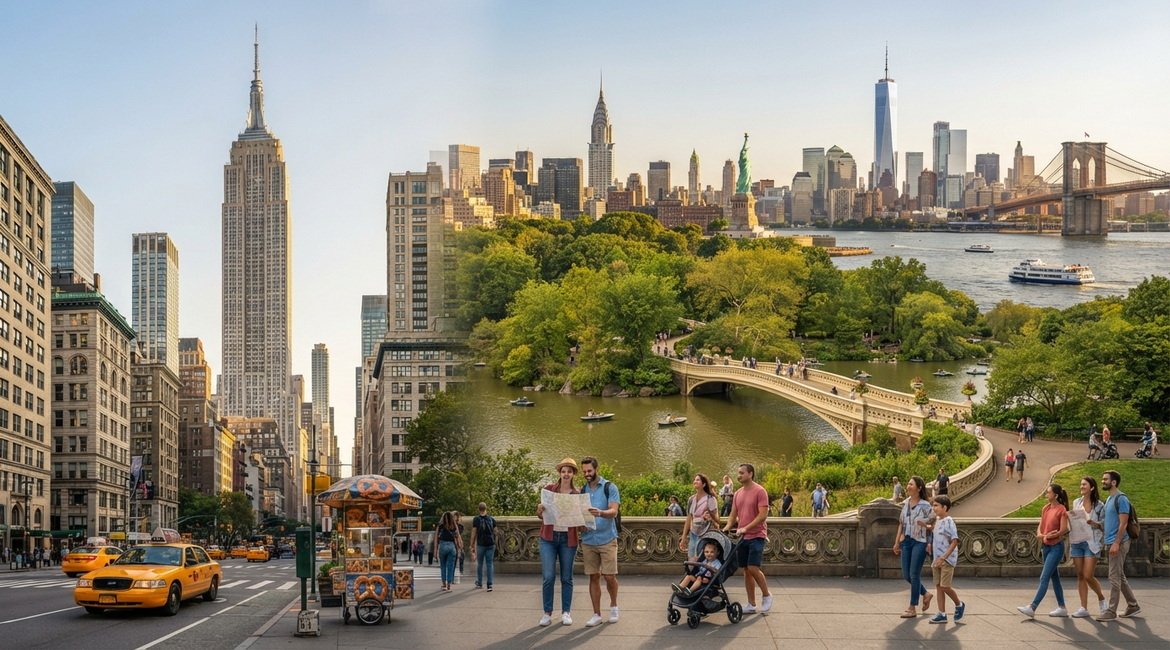
Three days in New York City is not enough to see everything — and that should not be the goal. For a first trip, three well-planned days are enough to experience many of the places that define New York: Times Square, Central Park, Rockefeller Center, the Statue of Liberty, Lower Manhattan, Brooklyn Bridge and several of Manhattan’s most interesting neighborhoods. The biggest mistake is trying to visit attractions simply because they are famous without considering where they are located. New York becomes much easier when each day is organized geographically. This itinerary does exactly that. Day 1 concentrates on Midtown Manhattan and Central Park. Day 2 moves south to New York Harbor and Lower Manhattan before crossing into Brooklyn. Day 3 follows Manhattan’s West Side before exploring Greenwich Village and SoHo. You will still see a lot, but you will spend less time unnecessarily crossing Manhattan.
Is 3 Days Enough for New York City?
Three days works well for a focused first visit. It gives you enough time to experience several major areas without turning the entire trip into transportation between attractions. You will not see every major museum, neighborhood or observation deck. Trying to do that would make the trip unnecessarily rushed. Instead, think of these three days as an introduction. You will experience Midtown’s skyscrapers and bright streets, Central Park’s greenery, New York Harbor, Lower Manhattan’s historic core, Brooklyn’s waterfront and several neighborhoods where the city feels very different from its famous tourist landmarks. If you can extend your trip to four or five days, you will have more time for museums and additional neighborhoods. But if three days is all you have, careful geographic planning makes a substantial difference.
3-Day NYC Itinerary at a Glance
| Day | Area | Main Experiences |
|---|---|---|
| Day 1 | Midtown + Central Park | Times Square, Rockefeller Center, Fifth Avenue, Central Park, skyline views |
| Day 2 | Lower Manhattan + Brooklyn | Statue of Liberty, Financial District, 9/11 Memorial, Brooklyn Bridge, DUMBO |
| Day 3 | West Side + Lower Manhattan neighborhoods | High Line, Chelsea, Greenwich Village, SoHo |
This schedule is intentionally flexible. Weather, reservations, your hotel location and personal interests may justify changing the order.
Day 1: Midtown Manhattan & Central Park
Begin with the version of New York many first-time visitors have imagined before arriving. Midtown contains skyscrapers, famous avenues, Times Square, Rockefeller Center and some of Manhattan’s most recognizable architecture. Central Park then provides a complete change of scenery without requiring a long trip across the city.
Morning: Times Square & Rockefeller Center
Start around Times Square. You do not need to spend several hours here to understand why it is one of New York’s most recognizable places. Walk through the main pedestrian areas, take in the scale of Midtown and then continue east toward Rockefeller Center. The walk between these attractions is short enough that there is little reason to use transportation. Around Rockefeller Center, explore the plazas and surrounding architecture before continuing toward Fifth Avenue. If you plan to visit Top of the Rock, consider saving the observation deck for later in the day rather than using your first morning indoors.
Late Morning: Fifth Avenue
Walk along Fifth Avenue toward Central Park. This route passes through one of Manhattan’s most famous commercial and architectural corridors. St. Patrick’s Cathedral provides a dramatic contrast with the surrounding skyscrapers. Continue north toward the southeastern corner of Central Park. The goal is not to stop at every store or landmark. Three days in NYC requires choosing what deserves your time and what is better experienced as part of the walk.
Afternoon: Central Park
Give Central Park several hours rather than treating it as a quick photo stop. The park covers 843 acres, so seeing everything in one afternoon is neither realistic nor necessary. For a first visit, concentrate on the southern and central sections.
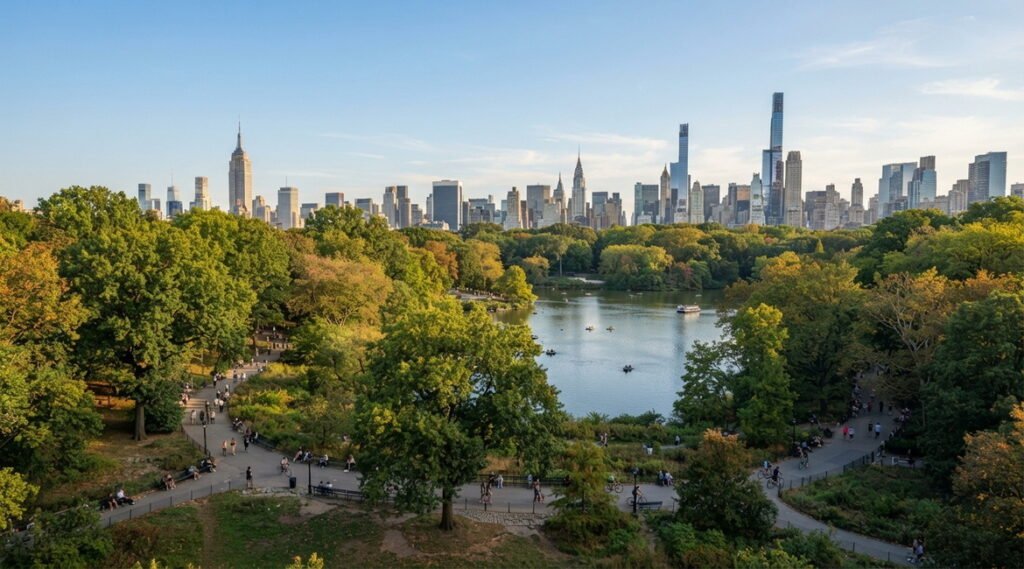
You can walk past the Pond, continue toward Bethesda Terrace and Bethesda Fountain, explore the Mall and spend time around the Lake. Bow Bridge can also fit naturally into this route. The park provides an important break from Midtown’s dense streets. If your trip is already physically demanding, do not feel obligated to walk from one end of Central Park to the other. Choose a section and enjoy it slowly.
Evening: Observation Deck & Midtown
Finish the first day with a view over Manhattan. New York has several observation decks, so there is little reason to visit all of them during a three-day trip. Choose one according to the view and experience you prefer. An evening reservation around sunset can provide daylight, sunset and nighttime views during one visit when timing and weather cooperate.
Afterward, have dinner around Midtown or another neighborhood convenient to your hotel. If you only saw Times Square during daylight, you can briefly return after dark to experience how different it feels when the area is illuminated.
Day 2: Statue of Liberty, Lower Manhattan & Brooklyn
Day 2 focuses on New York Harbor and Lower Manhattan before ending across the East River in Brooklyn. This is the day where advance planning matters most. If you want to land on Liberty Island rather than simply see the Statue of Liberty from the water, allow a significant portion of the morning for the ferry experience.
Morning: Statue of Liberty & Ellis Island
Start early at The Battery in Lower Manhattan. Official ferries travel from The Battery to Liberty Island and Ellis Island. General admission provides access to the islands and their museums, while pedestal and crown access require limited reservations. For a three-day itinerary, an early departure is particularly useful because the complete Liberty Island and Ellis Island experience can occupy much of the day.
If immigration history is important to you, include Ellis Island rather than rushing immediately back to Manhattan. If your main goal is simply to see the Statue of Liberty and preserve more time for the rest of New York, keep the island portion more focused. Do not schedule another timed attraction immediately after the ferry. Security screening, boarding and ferry timing can make the experience longer than expected.
Afternoon: Financial District & 9/11 Memorial
After returning to Lower Manhattan, continue on foot through the Financial District. Walk through The Battery and toward Wall Street. This compact part of Manhattan contains some of the city’s oldest streets alongside modern skyscrapers. Continue toward the World Trade Center area and the 9/11 Memorial. Allow time to experience the memorial respectfully rather than treating it as another quick photo stop. If you want to visit the 9/11 Memorial & Museum, you will need substantially more time. On a three-day trip, decide in advance whether the museum is a priority because adding it can change the rest of Day 2.
Late Afternoon: Brooklyn Bridge
Continue toward Brooklyn Bridge when you are ready to leave Lower Manhattan. Walking across the bridge is one of the easiest ways to combine sightseeing with transportation between Manhattan and Brooklyn.
The crossing provides changing views of Lower Manhattan, the East River and Brooklyn. Take your time, but stay aware that the bridge is a functioning transportation route rather than only a sightseeing attraction. Late afternoon can create attractive light for skyline photography.
Evening: DUMBO & Brooklyn Heights
Once in Brooklyn, explore the waterfront around DUMBO. Brooklyn Bridge Park provides some of the classic Lower Manhattan skyline views.
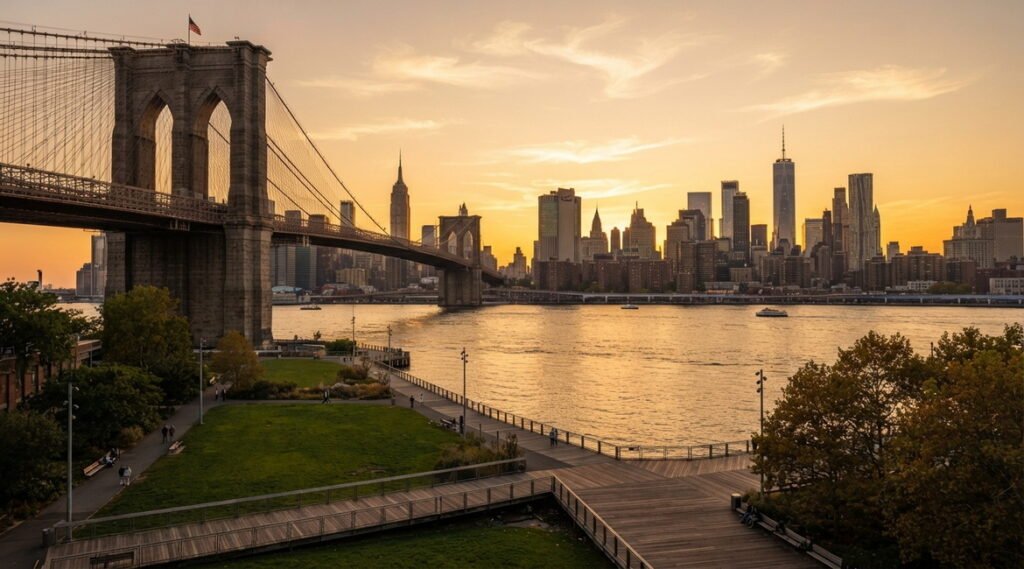
Continue along the waterfront or into Brooklyn Heights if you still have energy. This is a good evening to slow down. You have already covered the Statue of Liberty, Lower Manhattan and Brooklyn Bridge, so there is no need to add another major attraction simply because the day has a few hours remaining. Dinner in Brooklyn can provide a relaxed finish before returning to your hotel.
Day 3: High Line, Chelsea & Greenwich Village
The final day shifts away from the biggest first-time landmarks and toward neighborhoods. This provides a more balanced picture of New York. Instead of moving between famous monuments, much of the day is about walking through areas where architecture, parks, restaurants and street life become the attraction.
Morning: High Line & Hudson Yards
Begin around Hudson Yards and enter the High Line. The elevated park runs along Manhattan’s West Side through a landscape of gardens, contemporary architecture and views between city blocks.
Walking south naturally moves you toward Chelsea, making this a useful attraction that also connects different parts of the day’s itinerary. Do not rush through it. The experience is in the changing perspectives over streets, buildings and the Hudson River rather than reaching a single landmark.
Lunch: Chelsea
Leave the High Line around Chelsea and take a break for lunch. Chelsea Market is one possible stop, but the surrounding neighborhood also provides plenty of alternatives. After two full days of sightseeing, this is a useful point to slow the pace. If the weather is poor, you can also use this part of the day for an indoor attraction before continuing south.
Afternoon: Greenwich Village & SoHo
Continue toward Greenwich Village. This is where the trip begins to feel very different from Midtown. Smaller streets, brownstones and neighborhood parks replace the large avenues and skyscrapers of your first day. Washington Square Park provides a natural focal point for exploring the Village.
From there, continue south toward SoHo if you have time and energy. SoHo is known for cast-iron architecture, shopping and distinctive streets. You do not need a rigid attraction-by-attraction schedule here. Allow yourself time simply to walk. One of the most important lessons from a first New York trip is that not every memorable part of the city requires a ticket or reservation.
Evening: Final NYC Experience
Use the final evening for something you deliberately left out of the daytime schedule. A Broadway show is one possibility. Another option is returning to a favorite neighborhood for dinner or choosing a skyline viewpoint if weather prevented you from visiting one on Day 1.
You could also keep the evening completely unstructured. After three busy days, walking through a neighborhood you enjoyed earlier may be more rewarding than adding one final attraction simply to complete a checklist.
Where to Stay for This Itinerary
For a first three-day trip, location can save substantial time. Midtown is one of the most practical bases because it places you close to Day 1 attractions while providing extensive subway access for Lower Manhattan and other neighborhoods. Areas around Times Square, Bryant Park, Rockefeller Center and Midtown East can all work depending on your budget and preferred atmosphere. Travelers who want a more neighborhood-oriented stay can consider areas farther south, including Chelsea or Greenwich Village. The tradeoff is that you will travel farther for Central Park and some Midtown attractions. For only three days, prioritize convenient subway access over choosing a hotel based purely on room price. Saving a small amount on accommodation may not feel worthwhile if you spend significantly more time commuting every morning and evening.
Getting Around NYC
You do not need a rental car for this itinerary. Walking and the subway cover almost everything in the schedule. New York’s subway and local bus base fare is $3.00 as of 2026. OMNY allows riders to tap a contactless card, phone or other supported payment method at the reader.
Use the same payment method consistently if you want eligible trips to count toward OMNY’s weekly fare cap. Walking remains equally important. The subway is excellent for moving between distant neighborhoods, but many nearby attractions are faster and more enjoyable to connect on foot. Before entering a station, check whether you need to travel uptown or downtown. That simple habit prevents many unnecessary detours on a first NYC trip.
How Much Walking to Expect
Expect to walk a lot. A first-time itinerary naturally includes parks, bridges, neighborhoods and attractions that are best experienced on foot. Comfortable shoes are more important than trying to look perfectly dressed for every photo. Do not assume every distance that appears short on a map will feel short after eight hours of sightseeing. Use the subway for larger jumps between areas and save your walking energy for places where walking is actually part of the experience. Central Park, Brooklyn Bridge, the High Line, Greenwich Village and the Brooklyn waterfront are good examples.
What to Book in Advance
The Statue of Liberty deserves the most attention when planning this itinerary. If you want to land on Liberty Island, use the authorized ferry service and consider booking before your trip. Pedestal and crown access have limited availability and require specific tickets. If you want to visit both Liberty Island and Ellis Island, an early ferry departure makes the schedule easier. Observation decks are another attraction where advance reservations can simplify planning, particularly if you want a specific sunset time. Broadway performances should also be planned ahead when seeing a particular show is important to you. Museums vary. Some can be added more spontaneously, while others may benefit from timed reservations during busy periods. Do not pre-book every hour of the trip. Too many fixed reservations remove the flexibility that makes exploring New York enjoyable.
How to Adjust This Itinerary
This itinerary is a framework rather than a requirement. If museums are your main interest, shorten Central Park and add the Metropolitan Museum of Art or American Museum of Natural History. If you are traveling with children, reduce the amount of neighborhood walking and give Central Park more time. If you do not want to spend several hours visiting Liberty and Ellis Islands, use that morning for additional Lower Manhattan sightseeing and see the Statue of Liberty from the harbor instead. Rain also changes priorities. Move museums and indoor attractions to poor-weather periods and save Central Park, Brooklyn Bridge and the High Line for better conditions. New York works particularly well when you adjust plans according to weather and energy rather than following an itinerary minute by minute.
Common First-Time NYC Mistakes
Trying to see too much is the most common problem with a three-day itinerary. New York looks compact on a map, but attractions, walking, subway trips, meals and waiting times quickly fill a day. Another mistake is repeatedly traveling between Uptown and Downtown because attractions were chosen without considering geography. Group destinations together. Do not schedule a Midtown attraction, followed by Lower Manhattan, followed by Central Park and then Brooklyn simply because all four appear on your must-see list. Also avoid filling every evening before the trip begins. New York days can be physically tiring, and having the option to finish early is useful. Finally, allow time for the city itself. A neighborhood walk, unexpected view or quiet park can become as memorable as a famous attraction.
FAQ
Is 3 days enough for a first trip to NYC?
Yes. Three days is enough for a focused introduction covering Midtown, Central Park, Lower Manhattan, Brooklyn Bridge and several neighborhoods. Four or five days provides a more relaxed pace and more time for museums.
Do you need a car for 3 days in New York?
No. Walking and public transportation are much more practical for this itinerary. A rental car adds parking and traffic complications without providing a meaningful advantage for the attractions covered here.
Where should first-time visitors stay?
Midtown is particularly convenient for a short first trip because many major attractions are nearby and subway connections make reaching Lower Manhattan and other neighborhoods straightforward. Chelsea can be a useful alternative for travelers who prefer a more neighborhood-oriented base.
Should you visit the Statue of Liberty on a 3-day trip?
Visit Liberty Island if seeing the Statue of Liberty up close is one of your main priorities. The ferry experience can occupy much of a morning, so travelers more interested in neighborhoods and city sightseeing may prefer to see the statue from the harbor and use those hours elsewhere.
How much should you plan each day?
Plan one geographic area for each part of the day rather than creating a long list of individual attractions. Leave additional time for meals, subway travel, walking, queues and spontaneous stops.
Recommended Next Steps
Start by booking only the experiences that genuinely require advance planning. If Liberty Island is important to you, organize Day 2 around an early ferry. If you want a specific observation deck at sunset or a particular Broadway performance, reserve those next. Then leave the rest of the itinerary relatively flexible. Use Day 1 for Midtown and Central Park, Day 2 for Lower Manhattan and Brooklyn, and Day 3 for the High Line, Chelsea and Greenwich Village. Choose accommodation near useful subway connections rather than trying to stay beside every attraction. Pack comfortable walking shoes and expect to combine the subway with substantial walking each day. Most importantly, do not judge your first New York trip by how many attractions you manage to check off a list. Three days is enough to experience several very different versions of the city: the skyscrapers of Midtown, the open landscape of Central Park, New York Harbor, historic Lower Manhattan, Brooklyn’s waterfront and the smaller streets of Greenwich Village. If you finish the trip wanting to return and explore more, your first three days in New York have done exactly what they should.