
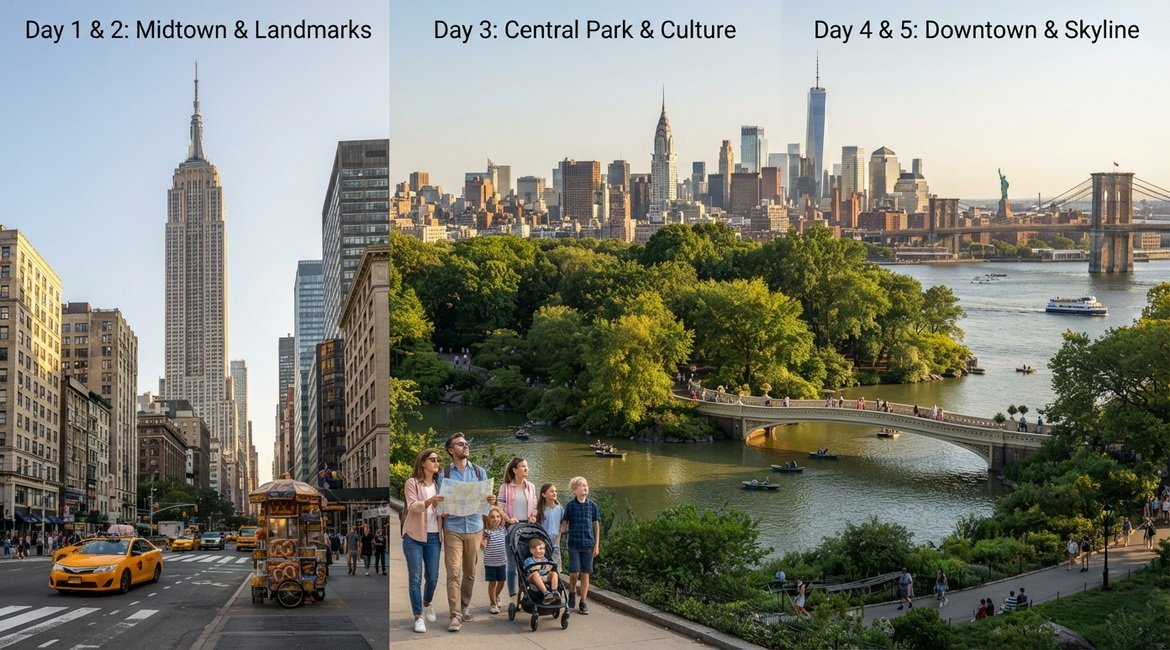
Five days is an excellent amount of time for a first trip to New York City. You still will not see everything — New York is far too large for that — but five days gives you something a shorter visit cannot: enough time to experience the famous landmarks without spending the entire vacation rushing between them. You can explore Midtown Manhattan and Central Park, devote meaningful time to the Statue of Liberty and Ellis Island, cross the Brooklyn Bridge, spend an afternoon discovering Brooklyn, walk the High Line, explore Greenwich Village and still reserve time for one of New York’s major museums. The key is geography. Instead of jumping between attractions simply because they appear on a list of NYC must-sees, this itinerary groups nearby experiences together. That reduces unnecessary subway rides and gives you more time to actually experience each neighborhood.
Is 5 Days Enough for New York City?
Five days provides a comfortable introduction for most first-time visitors. A three-day trip usually requires choosing between major attractions. With five days, you can slow the pace and experience more of the neighborhoods between those attractions. You also gain flexibility. If rain changes your Central Park plans, you have several other days available. If you want to spend longer at a museum or take an afternoon break, the entire itinerary does not collapse. Five days is also long enough to explore beyond Midtown Manhattan. Brooklyn, Greenwich Village, Chelsea and the Upper East or Upper West Side can become genuine parts of the trip rather than brief detours. The goal should not be seeing everything. A successful five-day trip gives you several different perspectives on New York while leaving enough unscheduled time to enjoy the city itself.
5-Day NYC Itinerary at a Glance
| Day | Main Area | Highlights |
|---|---|---|
| Day 1 | Midtown + Central Park | Times Square, Grand Central, Rockefeller Center, Central Park, skyline |
| Day 2 | Lower Manhattan | Statue of Liberty, Ellis Island, Wall Street, 9/11 Memorial |
| Day 3 | Brooklyn | Brooklyn Bridge, DUMBO, Brooklyn Heights, waterfront |
| Day 4 | West Side + Downtown | High Line, Chelsea, Greenwich Village, SoHo |
| Day 5 | Upper Manhattan | Major museum, Upper East or West Side, Broadway or skyline |
This route is designed for first-time visitors, but it should remain flexible. Weather, attraction reservations and your interests may justify changing the order of the days.
Day 1: Midtown Manhattan & Central Park
Start with the New York most first-time visitors immediately recognize. Midtown contains Times Square, Rockefeller Center, Grand Central Terminal and many of Manhattan’s famous skyscrapers. Central Park then provides a completely different experience only a short distance away. Keeping these places together creates a natural introduction to Manhattan.
Morning: Times Square & Bryant Park
Begin around Times Square. For most travelers, 30 to 60 minutes is enough to experience the area during daylight. Walk through the pedestrian plazas, take in the scale of the surrounding buildings and then continue toward Bryant Park. Bryant Park provides an immediate contrast. It is a relatively compact green space surrounded by Midtown architecture and sits beside the New York Public Library’s main building. This is also a good area for breakfast or coffee before continuing deeper into Midtown.
Late Morning: Grand Central & Rockefeller Center
Continue east toward Grand Central Terminal. Even if you are not catching a train, the Main Concourse is worth seeing for its architecture and atmosphere. From Grand Central, walk back toward Fifth Avenue and Rockefeller Center. You can also pass St. Patrick’s Cathedral along the way. Do not try to enter every attraction. One advantage of having five days is that you can enjoy Midtown as a neighborhood rather than turning every building into a separate scheduled stop.
Afternoon: Central Park
Continue north toward Central Park. The park covers 843 acres, so trying to see all of it in one visit is unnecessary. For a first afternoon, concentrate on the southern and central sections.

Walk past the Pond and continue toward Bethesda Terrace, the Mall and the Lake. Bow Bridge can also fit naturally into the route. Allow time to sit rather than continuously moving between landmarks. Central Park is most enjoyable when it feels like a park rather than another sightseeing checklist. If you are visiting with children, this is also a good day to reduce the pace after a busy Midtown morning.
Evening: Midtown Skyline
Finish the first day with an observation deck. New York has several major viewpoints, and you do not need to visit all of them. Choose one based on the skyline perspective you prefer. A reservation around sunset can allow you to see Manhattan transition from daylight to illuminated nighttime streets when weather and seasonal sunset timing cooperate.
Afterward, have dinner around Midtown. If you visited Times Square only in daylight, return briefly after dark to see how different the area feels at night.
Day 2: Statue of Liberty & Lower Manhattan
Day 2 is intentionally less crowded with unrelated attractions. Visiting Liberty Island and Ellis Island can take a substantial portion of the day. Instead of rushing through both islands and immediately crossing Manhattan, keep the rest of the schedule around Lower Manhattan.
Morning: Liberty Island & Ellis Island
Start early at The Battery. Liberty Island and Ellis Island are reached by authorized ferry service, and security screening occurs before boarding. If you want to experience both islands, an early departure gives you much more flexibility.
Spend time around Liberty Island and visit the Statue of Liberty Museum. Continue to Ellis Island if immigration history interests you. The Ellis Island National Museum of Immigration deserves enough time to explore rather than being treated simply as another ferry stop. If you have reserved pedestal or crown access, allow additional time. Do not schedule another timed attraction immediately after the islands because ferry queues, security and visitor numbers can affect how long the trip takes.
Afternoon: Financial District
After returning to Manhattan, explore the Financial District. The streets here feel very different from Midtown. Walk through The Battery and continue toward Wall Street, Federal Hall and the surrounding historic streets. You can also walk toward the waterfront for views across New York Harbor. Because the neighborhood is compact, much of this part of the day works best on foot.
Evening: 9/11 Memorial & Lower Manhattan
Continue toward the World Trade Center area. Allow time to experience the 9/11 Memorial respectfully. If you want to visit the 9/11 Memorial & Museum, consider moving it earlier in the afternoon and reducing the amount of Financial District sightseeing. The museum deserves more than a rushed final hour. Finish the evening with dinner in Lower Manhattan or return toward your hotel. After a morning involving ferries and several hours of walking, there is little benefit in forcing another major attraction into the schedule.
Day 3: Brooklyn Bridge, DUMBO & Brooklyn
A five-day itinerary gives Brooklyn its own day instead of squeezing it into the end of a Lower Manhattan schedule. That makes the experience much more relaxed. Start with one of New York’s most recognizable walks and then spend the rest of the day exploring the waterfront and nearby neighborhoods.
Morning: Brooklyn Bridge
Begin on the Manhattan side and walk toward Brooklyn. Morning is a good time to experience the bridge before the day becomes busier.
Take your time. The bridge itself is part of the attraction, with changing views of Lower Manhattan, Brooklyn and the East River. Stay within designated pedestrian areas and remain aware that the bridge is an active transportation route. Once you reach Brooklyn, continue toward DUMBO rather than immediately taking transportation elsewhere.
Late Morning: DUMBO
DUMBO sits between the Brooklyn and Manhattan bridges and has become one of Brooklyn’s most recognizable visitor areas. Cobblestone streets, converted industrial buildings and waterfront views create a strong contrast with Midtown Manhattan. Walk toward Brooklyn Bridge Park and explore the waterfront.
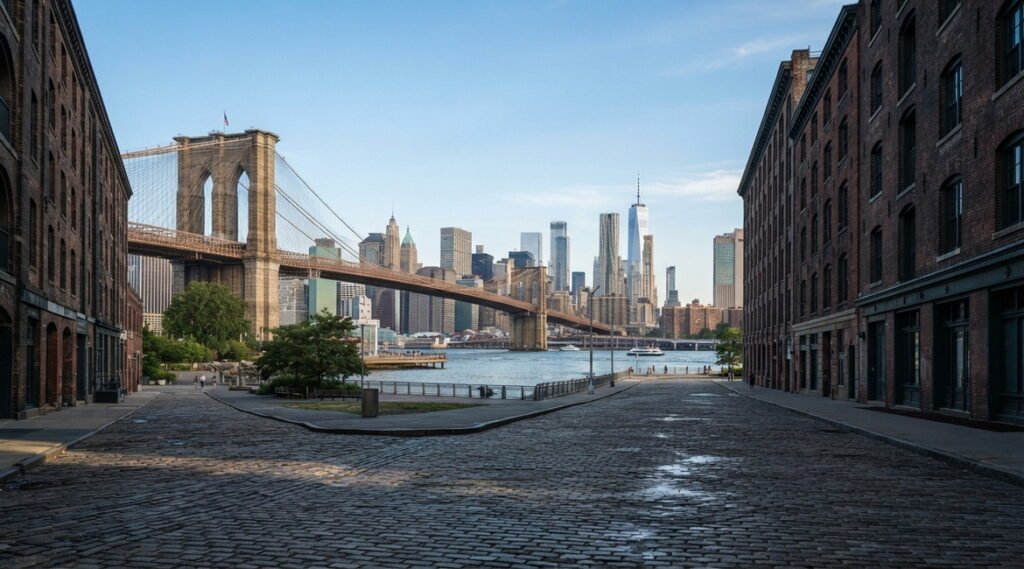
There is no need to schedule every minute here. Part of the appeal is simply moving between the streets, parks and river viewpoints.
Afternoon: Brooklyn Heights & Waterfront
After lunch, continue toward Brooklyn Heights. The neighborhood provides tree-lined residential streets and historic brownstones within easy reach of the waterfront. Walk along the Brooklyn Heights Promenade for another perspective on Lower Manhattan. Then return toward Brooklyn Bridge Park if you want more time beside the river.
Because this day contains fewer fixed attractions, it is also useful for slowing the pace after two busy Manhattan days.
Evening: Brooklyn Skyline Views
Stay near the waterfront into the evening if the weather is good. Brooklyn Bridge Park and surrounding areas provide excellent views toward Lower Manhattan.
Sunset followed by blue hour can create a completely different view from the daytime skyline. Have dinner in Brooklyn before returning to Manhattan. This is one of the advantages of a five-day itinerary: you can experience Brooklyn as part of the trip rather than simply crossing the bridge and immediately leaving.
Day 4: High Line, Chelsea, Greenwich Village & SoHo
Day 4 is about neighborhoods rather than monumental attractions. Start on Manhattan’s West Side and gradually move south. The route connects naturally on foot and gives you a chance to experience several different versions of Manhattan within one day.
Morning: Hudson Yards & High Line
Begin around Hudson Yards and enter the High Line. The elevated park transforms a former rail corridor into a landscaped walking route through Manhattan’s West Side.
Walk south rather than treating the High Line as an attraction that requires returning to your starting point. This naturally brings you toward Chelsea. Stop at viewpoints and gardens along the route. The High Line is particularly enjoyable when you give yourself enough time to notice the architecture and changing street views around it.
Lunch: Chelsea
Leave the High Line around Chelsea. Chelsea Market is one option for lunch, but there are many alternatives throughout the neighborhood. Use this as a genuine break rather than eating while rushing toward the next attraction. By Day 4, most travelers appreciate a slightly slower pace. After lunch, continue south toward Greenwich Village.
Afternoon: Greenwich Village
Greenwich Village feels dramatically different from Midtown. Smaller streets, brownstones and neighborhood parks replace the skyscraper corridors of the first day. Washington Square Park makes a useful starting point.
From there, explore surrounding streets without trying to follow one exact route. This is a good place to leave some space in the itinerary. New York neighborhoods are often most memorable when you stop following a list and simply explore for an hour.
Evening: SoHo
Continue south toward SoHo. Cast-iron architecture and distinctive streets make this another interesting walking neighborhood. Shopping is a major part of the area, but you do not need to be interested in shopping to enjoy the architecture. Finish with dinner in SoHo, Greenwich Village or nearby. If everyone is tired, skip another attraction. Four days of New York sightseeing adds up quickly, and Day 5 will still give you plenty to experience.
Day 5: Museum, Upper Manhattan & Your NYC Favorites
Use the final day differently from the previous four. Instead of covering another long sequence of landmarks, choose one major museum and spend more time exploring the surrounding part of Manhattan. Then leave the final evening open for something you particularly want to experience.
Morning: Choose One Major Museum
New York’s major museums can easily occupy several hours. For art, the Metropolitan Museum of Art fits naturally with the Upper East Side and Central Park. For natural history and science, the American Museum of Natural History fits naturally with the Upper West Side.
Trying to visit several enormous museums in one day usually means rushing through all of them. Choose the one that matches your interests and give it enough time. If museums are not a priority, use this morning for another neighborhood or attraction you deliberately left out earlier.
Afternoon: Upper West Side or Upper East Side
Let your museum choice determine the neighborhood. After the American Museum of Natural History, explore the Upper West Side and the western edge of Central Park. After the Metropolitan Museum of Art, spend time on the Upper East Side and the eastern side of the park. This reduces unnecessary transportation. You can also use the afternoon to revisit Central Park. Five days gives you enough time to experience the park more than once without repeating exactly the same route.
Evening: Broadway or a Final Skyline View
Keep the final evening for something memorable. A Broadway show fits naturally here if theater is important to you. Another option is an observation deck if you did not visit one on Day 1 or poor weather blocked the views.
You could also return to your favorite neighborhood for dinner. Do not feel obligated to add one final major attraction simply because it is your last night. Ending the trip somewhere you already know you enjoy can be a better final memory than another rushed stop.
Where to Stay for 5 Days in NYC
Midtown remains one of the easiest bases for first-time visitors. It provides convenient access to Day 1 attractions and extensive subway connections to Lower Manhattan, Brooklyn and other parts of the city. Areas around Bryant Park, Midtown East and Rockefeller Center can work particularly well. Times Square is convenient but considerably busier. Chelsea is another useful option. It places you closer to the High Line, Greenwich Village and Lower Manhattan while remaining well connected to Midtown. Travelers who prefer a more residential atmosphere can consider the Upper West Side. For a five-day itinerary, prioritize subway access and location over finding the absolute lowest hotel rate. An inconvenient hotel can add substantial travel time across five mornings and evenings.
Getting Around New York City
Do not rent a car for this itinerary. Walking and public transportation are the practical combination for most visitors. The subway handles longer distances, while walking connects attractions within individual neighborhoods. As of 2026, the base subway and local bus fare is $3.00. Contactless OMNY payment makes it possible to tap a compatible card, phone or device when entering the system. Use the same payment method consistently if you want eligible rides to count toward the weekly fare cap. Before entering a subway station, check whether you need an uptown or downtown train and whether the line is local or express. That small habit can save significant time.
What to Book in Advance
Prioritize the Statue of Liberty. The National Park Service recommends purchasing ferry tickets in advance, and pedestal and crown access require limited reservations. If you want to visit both Liberty Island and Ellis Island, choose an early departure. Observation decks are also worth reserving ahead when you want a specific sunset period. A Broadway performance should be planned in advance if there is a particular show you do not want to miss. Major museums can be more flexible depending on the attraction and travel period. Avoid reserving every hour of every day. A five-day itinerary works best when you have enough structure to avoid wasting time but enough flexibility to respond to weather, energy and unexpected discoveries.
How Much Walking to Expect
Expect substantial walking throughout the trip. Even with frequent subway use, Central Park, Brooklyn Bridge, DUMBO, the High Line and Greenwich Village are experiences that make the most sense on foot. Wear comfortable shoes from the first day. Do not wait until your feet hurt before using the subway for longer distances. A five-day itinerary is a marathon rather than a sprint. Reducing unnecessary walking on Day 1 can make Days 4 and 5 much more enjoyable. Plan breaks for meals, parks and cafés rather than treating every hour as sightseeing time.
How to Adjust This Itinerary With Kids
Five days works particularly well for families because you can reduce the number of attractions each day without missing entire sections of the city. Give Central Park additional time. Children may enjoy the open space more than another hour of walking through Midtown. On the Brooklyn day, keep the afternoon flexible rather than attempting to explore several distant Brooklyn neighborhoods.
Consider the American Museum of Natural History for Day 5 if its exhibits match your children’s interests. Most importantly, build breaks into each day. New York can be stimulating and tiring even for adults, and children usually benefit from having at least one part of every day without a strict schedule.
What to Do If It Rains
Five days gives you enough flexibility to reorganize around poor weather. Move your museum day to the rainiest forecast. Save Central Park, Brooklyn Bridge and the High Line for better conditions whenever possible. Grand Central Terminal and museums provide obvious indoor alternatives. The 9/11 Memorial & Museum can also occupy a significant indoor portion of a Lower Manhattan day if you planned to visit it anyway. Do not completely rebuild the itinerary because of light rain. New York weather can change throughout the day, and many neighborhoods still work well when you combine short outdoor walks with indoor stops.
Common Mistakes on a 5-Day NYC Trip
The first mistake is assuming that five days means you can see everything. You cannot, and trying usually makes the trip worse. Another mistake is organizing attractions by popularity instead of geography. A morning in Central Park followed by lunch in DUMBO, an afternoon in SoHo and an evening back on the Upper West Side creates unnecessary travel. Group nearby areas together. Do not visit multiple observation decks unless skyline views are one of your main interests. The views are different, but a first-time visitor can usually use those hours for another neighborhood instead. Avoid scheduling every dinner, museum and evening months in advance. A few important reservations are useful. A completely fixed five-day schedule is not. Finally, leave space for New York itself. Some of the most memorable moments happen between attractions rather than inside them.
FAQ
Is 5 days enough for New York City?
Yes. Five days provides enough time for a strong first introduction to Midtown, Central Park, Lower Manhattan, the Statue of Liberty, Brooklyn and several neighborhoods without requiring an extremely rushed schedule.
How should a first-time visitor divide 5 days in NYC?
Organize the trip geographically. Use one day for Midtown and Central Park, one for Liberty Island and Lower Manhattan, one for Brooklyn, one for the West Side and downtown neighborhoods, and one for a major museum and Upper Manhattan.
Do you need a car in New York City?
No. A rental car is unnecessary for this itinerary. Walking and public transportation are more practical for moving between the neighborhoods and attractions included in the five-day route.
Where should first-time visitors stay for 5 days?
Midtown is convenient because of its attractions and subway connections. Chelsea can work well for travelers wanting easier access to the West Side and downtown neighborhoods, while the Upper West Side provides a more residential alternative.
Should you visit the Statue of Liberty during a 5-day trip?
A five-day itinerary provides enough time to visit Liberty Island without sacrificing an entire section of New York. Add Ellis Island if immigration history interests you and reserve an early ferry so you have enough time for both islands.
Recommended Next Steps
Start by choosing where you will stay. For most first-time visitors following this itinerary, Midtown or Chelsea provides a practical balance between attractions and subway connections. Next, reserve the experiences where timing matters. Book your Statue of Liberty ferry in advance if you intend to visit Liberty Island. If pedestal or crown access is important, plan even earlier because availability is limited. Then choose one observation deck and one major museum rather than trying to visit every famous option. Keep the five-day structure simple: Midtown and Central Park on Day 1, Liberty Island and Lower Manhattan on Day 2, Brooklyn on Day 3, the High Line and downtown neighborhoods on Day 4, and a museum plus Upper Manhattan on Day 5. Within those days, leave room for changes. Move outdoor activities when rain is expected. Slow down when you find a neighborhood you enjoy. Skip an attraction when everyone is tired. Five days gives you enough time to stop treating New York like a checklist. By the end of the trip, you will have experienced skyscrapers and quiet park paths, New York Harbor and historic Lower Manhattan, Brooklyn’s waterfront, Manhattan’s neighborhood streets and at least one of the city’s major cultural institutions. That variety is what makes five days such a useful length for a first New York City trip.