

A one-night escape works best when the destination fits your real schedule, not just a search result’s idea of “nearby.” To find weekend road trips near me that feel worthwhile, start from where you will actually leave, set a firm driving limit, and compare what each destination offers between arrival and checkout.
Set your starting point and one-night limits
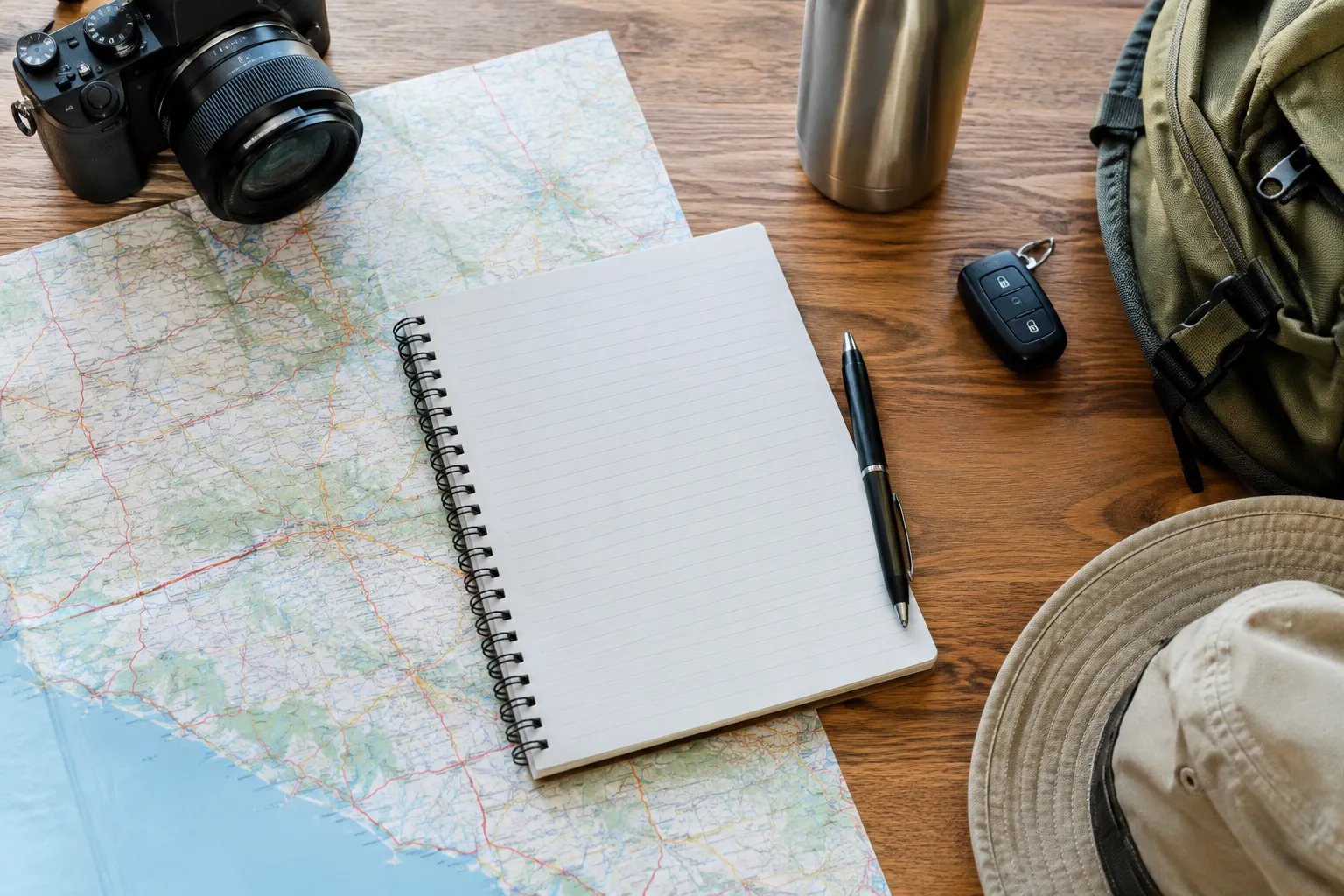
Before collecting ideas for road trips, decide how much time you can spend away and what a comfortable drive means for your group. A destination can look close on a map but take longer once traffic, stops, and the route itself are factored in.
Search from your real departure location
Use the address or neighborhood you will leave from, rather than the center of your city or a broad search for “road trips near me.” That small change can produce more useful results in a search engine or road trips map, especially if you live outside the city center or plan to pick someone up first.
Set your destination search around a one-night stay: nearby towns, parks, waterfronts, historic districts, scenic areas, or other places you would genuinely like to spend time. Keep a short list of three to five candidates rather than opening dozens of tabs. For each one, note the estimated drive, likely overnight area, and one main reason to visit.
Then check whether the starting point you entered reflects the real trip. If you will leave after work, for example, search from work and consider the time of day. If you will leave Saturday morning from home, use that location instead. These are different trips, even if the destination stays the same.
A broad map search can help you discover options, but treat its suggestions as leads, not a finished itinerary. Check whether the route begins where you will be and whether the destination has places to stay and things to do within a practical area.
For a broader method of finding destinations close to home, see our guide to finding better local road-trip routes.
Choose a driving-time cap that leaves room to enjoy the trip
Set a maximum drive time before picking a destination. For a one-night trip, your limit should account for both the outbound and return drives, not just the time it takes to reach the hotel. Consider how much of Saturday you want to spend traveling and how rested you need to be for the drive home.
A useful way to set the cap is to work backward:
- Decide what time you want to arrive and begin enjoying the destination.
- Reserve time for food, fuel, traffic, and a stretch break.
- Set an outbound driving limit that still leaves time for the main activity.
- Check that the return drive feels manageable after an overnight stay.
A map estimate is not a promise. Traffic, construction, weather, and road closures can change the journey, so build some slack into the plan. If a candidate only works when you drive straight through without stopping, it may be a poor fit for a relaxed one-night escape.
Find destinations that make the drive worthwhile

Once you have a starting point and a driving cap, compare destinations that fit both. The goal is not to find the farthest place you can reach. It is to find a destination where the drive, overnight, and limited time on the ground add up to a trip you want to take.
Use a road trips map to spot nearby options
Open a road trips map and scan in more than one direction from your departure point. Look for clusters of possible stops rather than choosing a destination based only on its distance. A town with a walkable center, a scenic route with a worthwhile stop, or a park near a place to stay may make better use of an overnight than a longer drive to a single attraction.
For each candidate, trace the likely route and ask:
- Is the drive within your cap at the time you expect to travel?
- Are there appealing stops along the way, or would stopping add too much time?
- Is the overnight area close to the activity you want to do?
- Can you take a different route home without making the return tiring?
Check the scale and route details before relying on a map. A straight-line distance does not show actual driving time, and a scenic detour may use more of your weekend than you expect. If you are still at the “where should we look?” stage, our local route-finding guide offers another way to narrow your search.
Check what you can do between arrival and checkout
A one-night trip has a short activity window: you may arrive Saturday, stay overnight, and head home Sunday. Look for one main experience that gives you a clear reason to go, then check whether there is a second, optional activity nearby. That might be a short walk, a museum, a scenic viewpoint, a local food stop, or a historic site. Confirm opening days and hours before you build the schedule around them.
Think about the whole visit, not just the headline attraction. Can you get dinner without a long extra drive? Is there somewhere pleasant to spend an hour if you arrive before check-in? Will Sunday morning have something to do before checkout, or is the plan better if you leave early?
This is also where quirky stops can make a short trip feel more personal. Look for a roadside attraction, unusual local landmark, or independent food stop that fits naturally on the route. Keep it optional: a stop should add to the trip, not force you to rush the destination or extend the drive beyond your limit.
Score each route before you choose

When two or three destinations seem promising, use the same worksheet to compare them. A simple score helps separate a route that looks appealing in a photo from one that fits the weekend you actually have.
Rate each category from 1 to 5, where 1 means “weak fit” and 5 means “strong fit.” Score what matters to your group; the numbers are a comparison tool, not an objective rating of a place.
| Category | Route A | Route B | Route C |
|---|---|---|---|
| Scenery and enjoyable driving | |||
| Food options that fit the plan | |||
| Convenient overnight lodging | |||
| Weather backup options | |||
| Return-day fatigue and drive time | |||
| Total |
Rate scenery, food, and overnight lodging
For scenery, consider whether the route or destination offers views or surroundings you would enjoy, and whether taking them in requires a major detour. A scenic road is not automatically the best choice if it adds too much time or leaves little room at your destination.
For food, check practical options for both arrival day and the morning after. Think about opening hours, location, and whether you need reservations or a plan for a late arrival. You do not need a fully scheduled dining itinerary, but knowing where a meal could fit can prevent a short trip from turning into a search for an open place when you are tired.
For lodging, score convenience as well as appeal. A place that is far from the activity may add driving at the start and end of a tightly timed visit. Check whether its location makes the route easier, whether the dates are available, and whether the arrival and checkout arrangements fit your schedule. Do not give a destination a high lodging score until you have checked actual options for your dates.
Check for a weather backup and a manageable return
Weather can affect outdoor plans and driving conditions. Before choosing a route, find one alternative activity that still works if your first choice is uncomfortable, closed, or unsuitable in the weather. An indoor attraction, a walkable town center, or a shorter visit to a nearby site may be enough. Check current forecasts closer to departure and confirm any seasonal hours or access details directly.
Give return-day fatigue its own score instead of assuming the drive home will feel like the drive out. You might be leaving after a busy morning, a late night, or a full day of activities. Ask whether you can start the return earlier, add a break, or shorten the final day without losing the trip’s main point.
If the return drive feels like the route’s biggest drawback, compare a closer destination or a different overnight location. The highest total score is not always the right choice if one category is a dealbreaker for your group.
Verify the route, stay, and timing
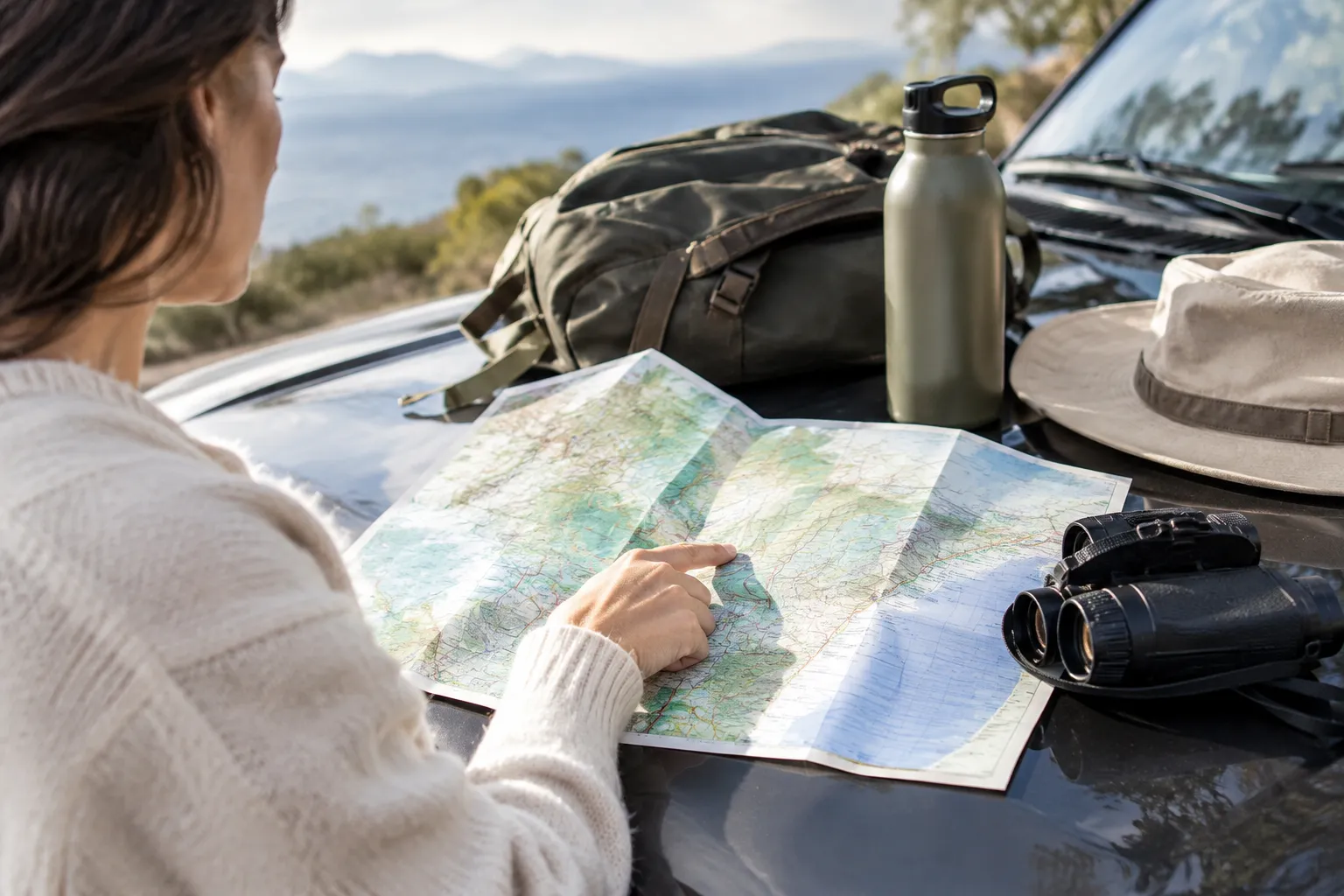
Before booking, take your top-scoring option and check the details that could change the plan. Search estimates and general destination information are useful for comparing ideas, but the final decision needs current information for your specific dates.
Check live drive times, road conditions, and stops
Enter your actual starting point, destination, and planned stops into a map tool. Check the drive time for the day and approximate departure window, then look for current roadwork, closures, weather alerts, or other conditions that could affect the route. Recheck near departure, since conditions can change after you plan.
Add each stop one at a time and see how it changes the schedule. A quick meal or stretch break may fit; several detours could use up the hours you set aside for the destination. Keep a note of the main route and an alternate where practical, but do not plan on an alternate being faster unless current conditions support that choice.
Our checklist for planning a road trip next weekend can help you review trip details as the departure date gets closer.
Confirm lodging location, availability, and arrival details
Check lodging options for your exact night and confirm the location on the map before committing. Look at how far it is from your main activity and whether you will need to drive again for meals or other plans. Then review the booking details for arrival time, check-in instructions, checkout time, cancellation terms, and any other conditions that affect your schedule.
A listing can appear close to an attraction without being convenient for your particular route. Check the actual drive between the stay and the places you plan to visit. If you expect to arrive late, confirm that late arrival is allowed and that you know how to get access. If the lodging choice is not available or does not fit your plans, return to your shortlist rather than stretching the trip to make it work.
Build a simple one-night itinerary and go

A one-night itinerary should be clear enough to keep the trip on track but loose enough to absorb a delay. Protect time for the main experience, meals, and rest instead of filling every open hour with another stop.
Plan the drive, one main activity, and meals
Write down a departure window, your planned route, one main activity, and where meals might fit. For example:
- Saturday morning: leave within your chosen window, with one planned break.
- Saturday afternoon: arrive, settle in, and do the main activity.
- Saturday evening: eat near your overnight stay.
- Sunday morning: choose one short activity or a relaxed breakfast.
- Sunday: begin the drive home at a time that leaves room for a break.
Adjust the sequence to your destination and opening hours. If the main activity is best in the morning, shift it to Sunday and keep Saturday simple. If your arrival is later than expected, you should still be able to enjoy the overnight without racing to complete a list.
Estimate the full trip cost before you commit. Include fuel, tolls, lodging, meals, admission fees if applicable, and any planned stops. If you are working with a fixed budget, compare the total for each candidate rather than looking only at the drive or the room. Costs depend on your route, dates, vehicle, and choices, so check current rates and terms as you make the plan.
Keep a backup plan and adjust if the day runs late
Choose a fallback for your main activity and a point where you are willing to drop optional stops. If traffic or weather delays your arrival, keep the overnight and the most important experience; skip an extra detour rather than driving tired or turning the schedule into a race.
Save the address of your lodging, the route, reservation details, and backup activity somewhere accessible before leaving. Download or note essential directions if you expect to be in an area with unreliable service. A flexible plan is still a plan: knowing what can be cut makes it easier to enjoy the parts you keep.
Weekend Road Trip FAQs
Is $1000 enough for a road trip?
Yes, $1,000 can cover a short road trip for some travelers, but the total depends on lodging, distance, fuel, meals, and activities. Estimate those costs for your dates before choosing a destination.
What is the 3-3-3 rule for a road trip?
One common version is to drive no more than about three hours, arrive by 3 p.m., and stay for at least three nights. The rule has variations, so adapt it to your schedule and comfort.
What are good road trip places?
Good road trip places offer a worthwhile experience within your driving limit, convenient lodging, and enough nearby options for your available time. Compare scenery, food, activities, and a weather backup before deciding.
Where should I go for a 3 day weekend?
Choose a destination close enough to preserve time on the ground, with lodging near one main activity and a manageable return drive. Search from your real starting point and compare total travel time, not distance alone.
What is the perfect road trip?
The perfect road trip fits your time, budget, interests, and comfort behind the wheel. For one night, a realistic route with one memorable activity and an easy backup often beats an overpacked schedule.
How can I estimate fuel and toll costs before a one-night road trip?
Map the full route, including planned stops, then estimate fuel from your vehicle’s usual efficiency and current local fuel prices. Check the route for tolls and confirm current charges before you leave.
When should I book lodging for a weekend road trip?
Book once you have confirmed the destination, dates, and approximate arrival time, especially if your plans depend on a particular place to stay. Check availability and cancellation terms before finalizing the itinerary.
What should I pack for an overnight road trip?
Pack one change of clothes, sleepwear, toiletries, medications, chargers, and anything needed for your main activity. Check the forecast and lodging details so you can add weather layers or items the stay does not provide.
Choose your best-fit route and make the overnight plan
Compare your scores, then check whether the top route still works for your dates, budget, lodging, and return drive. If two options are close, choose the one with the easier logistics or the activity you are most excited to do. A slightly less scenic route can be the better weekend if it leaves more time to enjoy the destination.
Confirm the overnight stay and arrival details, review current drive information, and save the main route and backup plan. Keep one activity as the priority and treat extra stops as optional. That gives you a practical way to turn weekend road trips near me into a one-night escape that fits the time you have, rather than a packed itinerary that only works on paper.