

A memorable American road trip is not the one that squeezes in the most places. It is the one that fits your available days, arrival point, interests, and preferred pace. To figure out how to choose a US road trip route, start with those limits, then narrow the map and test each idea against real travel details.
Set the limits that make a route realistic

Before comparing travel destinations in the USA, write down what the trip must work around: your dates, where you arrive and depart, how many full days you have, and how much driving feels comfortable. These boundaries quickly rule out routes that look appealing on a map but leave little time to enjoy the places along the way.
Also decide what kind of trip you want. A point-to-point journey can cover more ground but may involve a one-way rental and extra logistics. A loop that starts and ends in the same city can simplify the plan, though it may require retracing some roads.
Start with your dates and arrival point
Count usable travel days, not just nights away. An evening arrival may leave little time for sightseeing or driving, while a morning departure can effectively end the trip the day before. Allow for getting your rental car, reaching your first overnight stop, and returning to the airport.
Your arrival and departure cities shape the route. If you fly into one city and out of another, you may be able to follow a natural line through the region. If you need to return to your starting point, choose a loop that gives the return leg a purpose, or keep the route compact enough that backtracking is manageable.
Set aside time for the parts of travel that maps do not show well: picking up a car, checking in, finding meals, taking breaks, and dealing with delays. A route that uses every available hour on the road can quickly feel like a transfer schedule instead of a vacation.
A useful first draft might read:
- Arrival city and time:
- Departure city and time:
- Full days available:
- Places you most want to visit:
- Maximum comfortable driving on a typical day:
- Any fixed commitments or must-do activities:
This simple outline helps you choose the right scope of guide. A broad United States travel guide can help with early inspiration, but once your dates and airport are set, a regional or route-focused resource is usually easier to apply.
Choose a comfortable driving pace
Mileage alone does not tell you how a day will feel. A short distance on a winding road, through a busy city, or with several planned stops may take longer than the same distance on an open highway. Check estimated drive times, then add room for breaks, meals, traffic, and the places you want to explore.
Plan overnight stays around the experience you want, not just the halfway point on a map. If you want to visit a museum, hike, or explore a historic district, staying nearby may give you more usable time than driving onward after the activity.
A practical itinerary usually includes a mix of:
- Travel days, when the main task is getting to the next area.
- Base days, when you stay in one place and explore nearby.
- Buffer time, for a slower morning, an unexpected delay, or a stop you decide to make along the way.
For instance, a route with three regions in four days may be technically possible but leave little time beyond driving and checking in. Choosing one region and adding a relaxed overnight can make the same trip more rewarding.
Narrow the map to one region
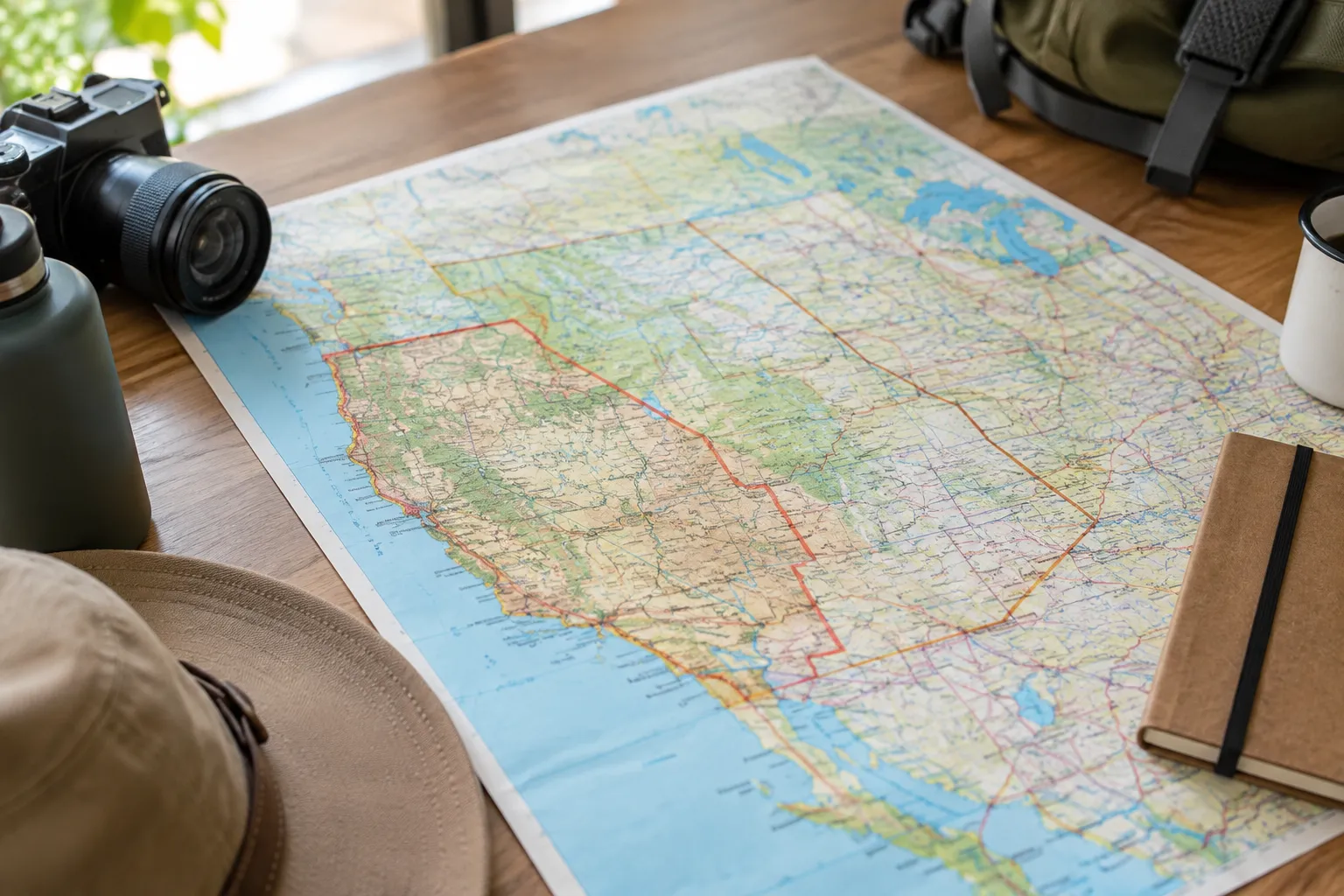
The United States is too large to treat as one compact road-trip area. For a first visit, begin with a region rather than trying to connect far-apart highlights in a single itinerary. Fewer long transfers generally make it easier to spend time at attractions and understand the places you visit.
If you are still comparing broad options, Travel Destinations USA: A Practical Planning Guide can help you build a destination shortlist before committing to a route. The goal here is not to cover every state or landmark; it is to find a cluster of places that works with your dates and travel style.
Compare regions by scenery and travel style
Start with the landscape and experiences you want most. A coastal route may suit travelers interested in ocean views, waterfront towns, and city stops. A desert route may appeal if you want distinctive landscapes and open-road travel. Mountain routes can connect outdoor areas and small towns, while a city-focused trip can emphasize neighborhoods, food, museums, and cultural sites.
These are starting points, not guarantees about conditions or access. Within any region, the experience can change substantially between cities, rural areas, and public lands. Make a shortlist of a few places that genuinely interest you, then see whether they connect naturally.
Use three questions to compare candidate regions:
- What do I most want to see or do?
- Are the places I like close enough to combine without exhausting travel days?
- Does this region suit the dates and pace I have available?
If history and local context are central to your trip, the culture and history destination guide can help you identify relevant places. For a longer trip, it can also be useful to compare different approaches to in-depth road-trip guides and look for practical route detail alongside background information.
Check distances between the places you want to see
Put your candidate stops on a map and look at the driving legs between them. A map can reveal that two appealing destinations are not close neighbors, or that a smaller town or attraction makes a useful overnight break between them.
Do not plan only from one major attraction to the next. Mark the places where you will sleep, then check each day’s full drive, including any local detours. If a proposed leg feels too long, consider dropping a stop, adding a night, or selecting a closer alternative.
Watch for route patterns that create unnecessary backtracking. A loop may work well if the starting and ending city are the same; a one-way route may be better if the places form a clear line and your travel arrangements allow different arrival and departure points. Neither shape is automatically best. Choose the one that gives you more useful time for the stops you care about.
Match the route to the season

Your dates can change which route makes sense. Weather, daylight, road conditions, seasonal operating schedules, and local events can all affect what is practical. A destination that fits beautifully on a map may be a poor choice if key access or activities do not align with your travel window.
Check the season at the level of the specific places you plan to visit. Conditions can vary across a large region, especially between higher elevations, coastlines, deserts, and cities. For public lands and other managed attractions, confirm current information with the official site before finalizing your itinerary.
Consider how much daylight you will have for driving and sightseeing, and whether your plan depends on an outdoor activity that could be affected by weather. If an attraction has seasonal hours or access, build the route around those details rather than assuming it will be available.
For a broader comparison of timing considerations, see US Travel Destinations by Season: What to Know. Use it to shape your shortlist, then check current conditions and operating details for the specific stops you choose.
Choose stops around your interests

A route feels more coherent when its stops serve a few clear interests. Pick the experiences you most want from the trip, then use them to decide which destinations earn a place on the map. This makes it easier to cut stops that are famous but do not fit your plans.
Try a short priority list:
- Two or three experiences you would be disappointed to miss.
- One or two themes you want to explore, such as food, history, wildlife, or hiking.
- A few optional stops that can be added if the route and timing allow.
Your list can include different kinds of places. A city, a small town, a scenic drive, and a historic site may fit together well if they are close enough and match the pace you want.
Balance major sights with smaller stops
A headline attraction can anchor a route, but it does not have to fill every day. Nearby towns, local museums, markets, roadside landmarks, and scenic pullouts may add variety without requiring a major detour.
Look for stops that fit naturally between the places you already want to visit. A quirky attraction can be a good break on a travel day, but check its location and opening details before building the day around it. If reaching it adds a long detour, decide whether the experience is worth the extra time.
Leave some space for spontaneous discoveries, too. A full schedule can make even a good itinerary feel rigid, while a flexible afternoon gives you room to stay longer somewhere that catches your interest.
Leave room for the kind of trip you want
Think about how much time each interest needs. A hiking-focused day might require an early start and enough time at the trailhead; a city visit may be better with an overnight than as a quick stop between long drives. History and culture often benefit from slowing down enough to visit more than one site or neighborhood.
For a trip centered on historic places, Historic and Cultural Travel Destinations USA can help connect possible stops to a broader theme. The key is to choose activities that fit your route and available time, rather than treating every interesting place as a required stop.
If you are planning a longer journey, look beyond a destination’s headline attraction. Useful guidance should help you understand what is nearby, how long to allow, what context makes the visit meaningful, and whether the place works as a day trip or an overnight stop.
Check the details behind each route idea
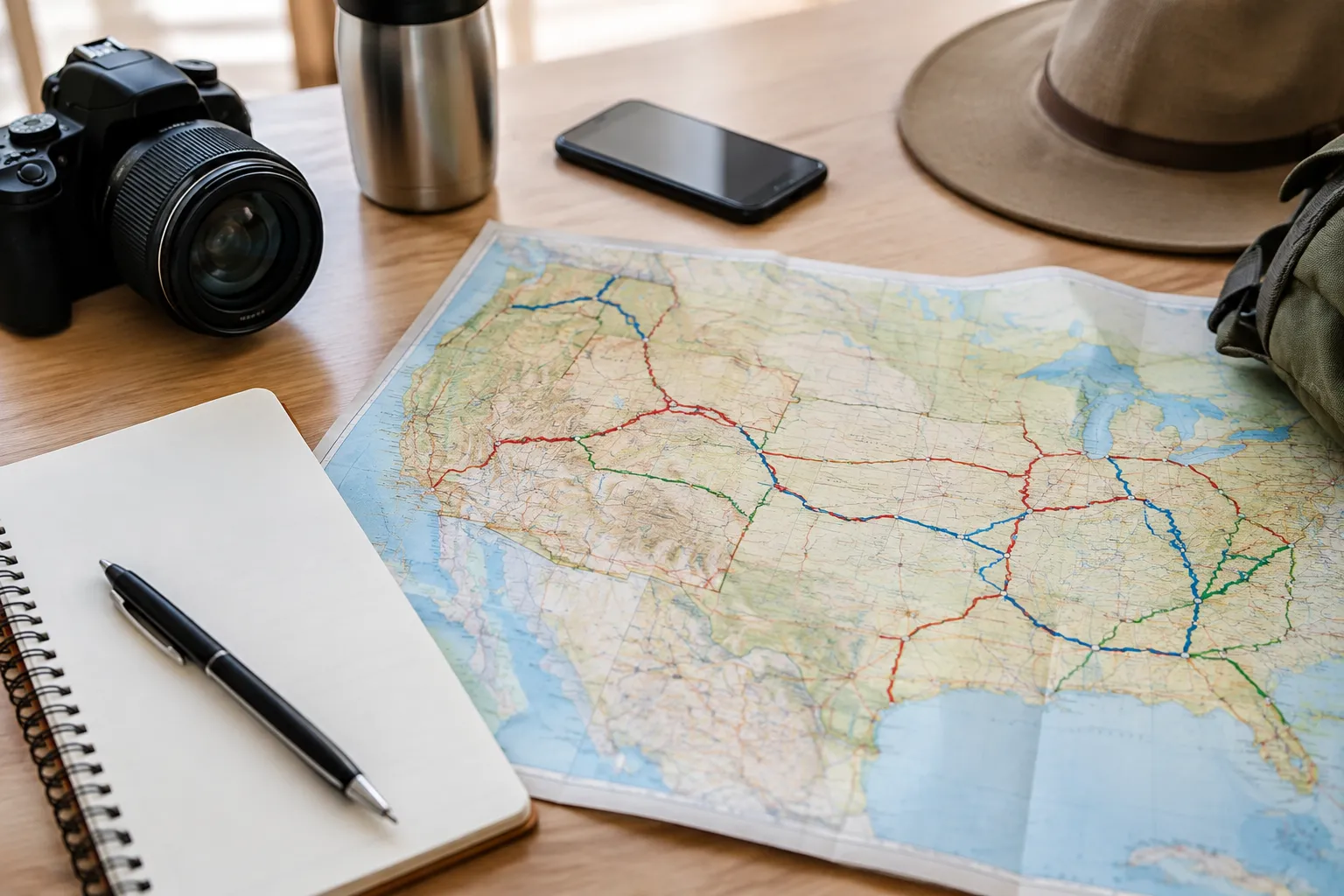
A promising route is only a shortlist candidate until the practical details work. When reviewing travel guides for the United States, look for more than attractive descriptions: useful information should help you decide how to travel between places, what to do there, and what you need to confirm before you go.
A strong planning resource does not need to answer every question in one place. It should make its scope clear, provide enough detail to assess the route, and point you toward current information where conditions or schedules can change.
Verify drive times, opening dates, and access
Use a current mapping service to check estimated drive times and compare more than one possible route where helpful. Treat estimates as planning aids, not promises: traffic, roadworks, weather, and stops can change the day.
Then confirm the details that could affect your plans:
- Whether the attraction or service is open on your intended visit date.
- Whether access requires a reservation, timed entry, permit, or advance booking.
- Whether the route depends on a road, ferry, or facility with seasonal operations.
- Whether parking, visitor access, or local transportation changes the timing.
- Whether the stop is close enough to include without turning the day into a rushed transfer.
For parks, museums, attractions, and transportation providers, check the relevant official source close to your travel dates. A guide can help you identify what to investigate, but current schedules and access rules should come from the organization responsible for them.
Look for useful maps and clear stop-by-stop guidance
Before relying on a guide, check whether it is designed for your trip’s scope. A countrywide overview may be helpful for choosing a region, while a focused regional guide may provide more useful detail once you know where you are going.
Look for information that supports decisions:
- Maps that show how destinations relate to one another.
- Clear descriptions of routes and the places along them.
- Suggested time allowances or practical explanations of what a stop involves.
- Nearby attractions and overnight options that help shape each travel day.
- Historical and cultural context when it adds meaning to a visit.
- Clear notes about the guide’s coverage and what it leaves out.
A polished list of attractions can inspire ideas, but it does not necessarily help you build an itinerary. If a guide offers opinions without explaining logistics, nearby options, or how stops connect, use it as a starting point and fill the gaps with current destination information.
Digital resources can be useful for comparing schedules, checking access, and finding recent updates. A print or static guide may still help organize background and route ideas, but details can change. Use each resource for what it does well, and confirm time-sensitive information before you travel.
Road Trip Planning FAQs
What is the best road trip in the United States?
The best road trip is the one that fits your dates, starting point, interests, and driving pace. Choose a manageable region first, then compare routes by the time they leave for the places you want to visit.
What is the 3-3-3 rule for a road trip?
The 3-3-3 rule is a flexible planning guideline: drive no more than about 300 miles a day, arrive by 3 p.m., and stay at least three nights in each stop. Treat it as a pacing aid, not a requirement.
Build a shortlist and test it against your plans
Choose two or three route ideas and compare them using the same questions:
- Does the route fit my arrival and departure cities?
- Are the driving days comfortable, with time for planned stops?
- Do the destinations match my main interests?
- Does the season suit the places and activities I want?
- Have I checked current access, opening dates, and reservation requirements?
- Is there enough flexibility if a day takes longer than expected?
If one route works on paper but depends on a chain of long drives and tightly timed visits, simplify it. Remove a stop, add an overnight, or choose a smaller cluster of destinations. If the route leaves no time for the experiences that matter most, it is not the right fit yet.
The clearest answer to how to choose a US road trip route is to begin with your limits, focus on one region, and test each stop against both your interests and the practical details. That process turns a broad idea into a route you can actually enjoy.