
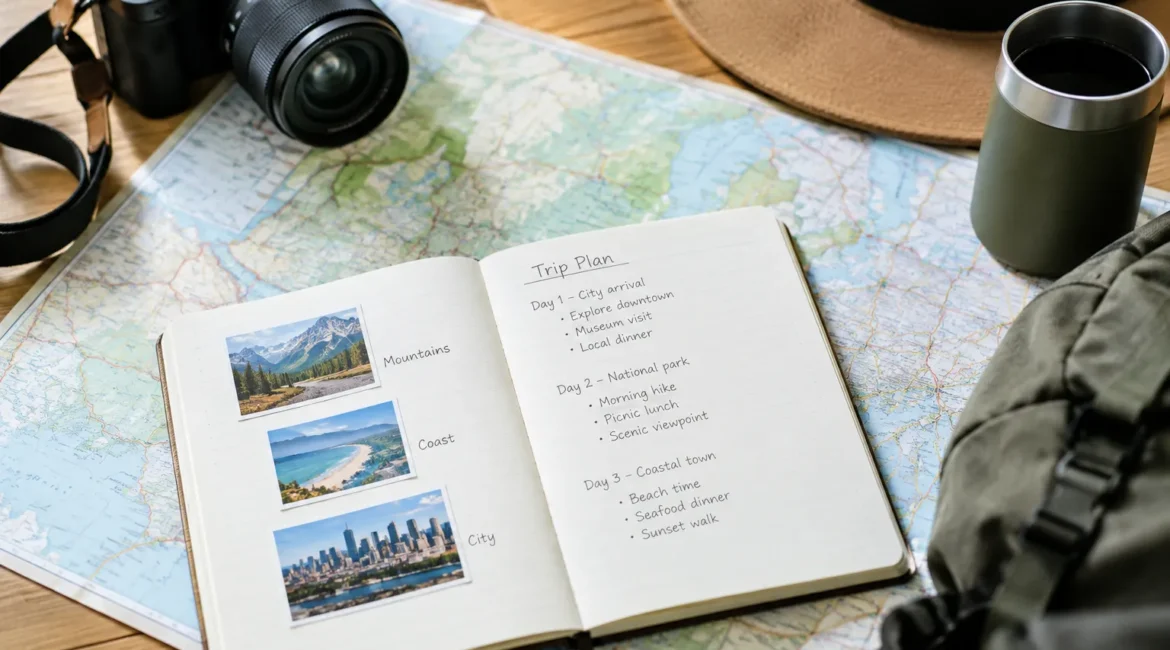
A useful itinerary turns a broad trip idea into a workable sequence of places, travel days, and overnight stops. These five US trip examples show different ways to organize a weekend, a city stay, or a longer drive while leaving room to change plans.
What an itinerary does—and what it doesn’t
An itinerary is a plan for how a trip might unfold. It usually lists destinations, the order of stops, travel between them, overnight bases, and a few activities or practical notes. If you’re asking what are itineraries in everyday terms, think of them as a trip’s route and rhythm—not a promise to follow every detail.
A wish list might say “see the Grand Canyon, Zion, and Bryce Canyon.” An itinerary puts those places in an order, estimates the time needed to reach each one, and identifies where to sleep. A rigid schedule goes further, assigning every hour. Most trips need the middle ground: enough structure to make the days realistic, with space to pause or change course.
For a fuller introduction to what are travel itineraries and how they work, see What Are Travel Itineraries? A Simple Planning Guide. Online travel guides can help you research places and compare options; an itinerary arranges your chosen stops into a usable plan. For an itinerary meaning example, a route with two nights in one base and a day trip nearby is more actionable than a list of attractions alone.
What are examples of itineraries for US trips?
The examples below use different trip lengths and travel styles. Treat them as starting points: opening hours, road conditions, event schedules, and personal pace can change what fits into a day.
A weekend in Washington, DC
For two days, choose a compact area each day rather than crossing the city repeatedly. On day one, explore the National Mall, selecting a few monuments or museums and leaving time for a meal and a break. On day two, visit another museum or neighborhood, such as Georgetown, depending on your interests and how much walking you want.
This simple plan works because it groups nearby sights. Check museum hours and any entry requirements before committing to a specific order.
Three days around New Orleans
Spend the first day getting oriented in the French Quarter, with time for a meal and a relaxed walk. On the second day, explore another neighborhood, such as the Garden District, and leave space for music or a longer dinner. For day three, choose between more time in the city and a nearby day trip; the best fit depends on transport, availability, and your interests.
This is a flexible example of what travel itineraries can do: protect time for the main reason you came without filling every hour.
Five days in the Southwest
A regional trip can work better with a few overnight bases than with a new hotel every night. For example, spend one night in Las Vegas, then travel to a base near Zion for two nights. Continue toward Bryce Canyon for one night, and use the final day to return toward Las Vegas or another departure point.
This sequence leaves time to explore rather than treating every destination as a quick stop. Confirm current park access, lodging, and drive routes before setting dates.
A week in California
A week could combine Los Angeles, the Central Coast, and San Francisco, but the distances make it important to count travel time as part of the trip. Spend the first two days in Los Angeles, then travel north and stay along the coast for a night or two before finishing in San Francisco.
The coast drive can take longer than a direct point-to-point estimate once you add stops. Choose a smaller number of places to explore, and check road conditions and route access before you go.
A sample road-trip itinerary with backup options
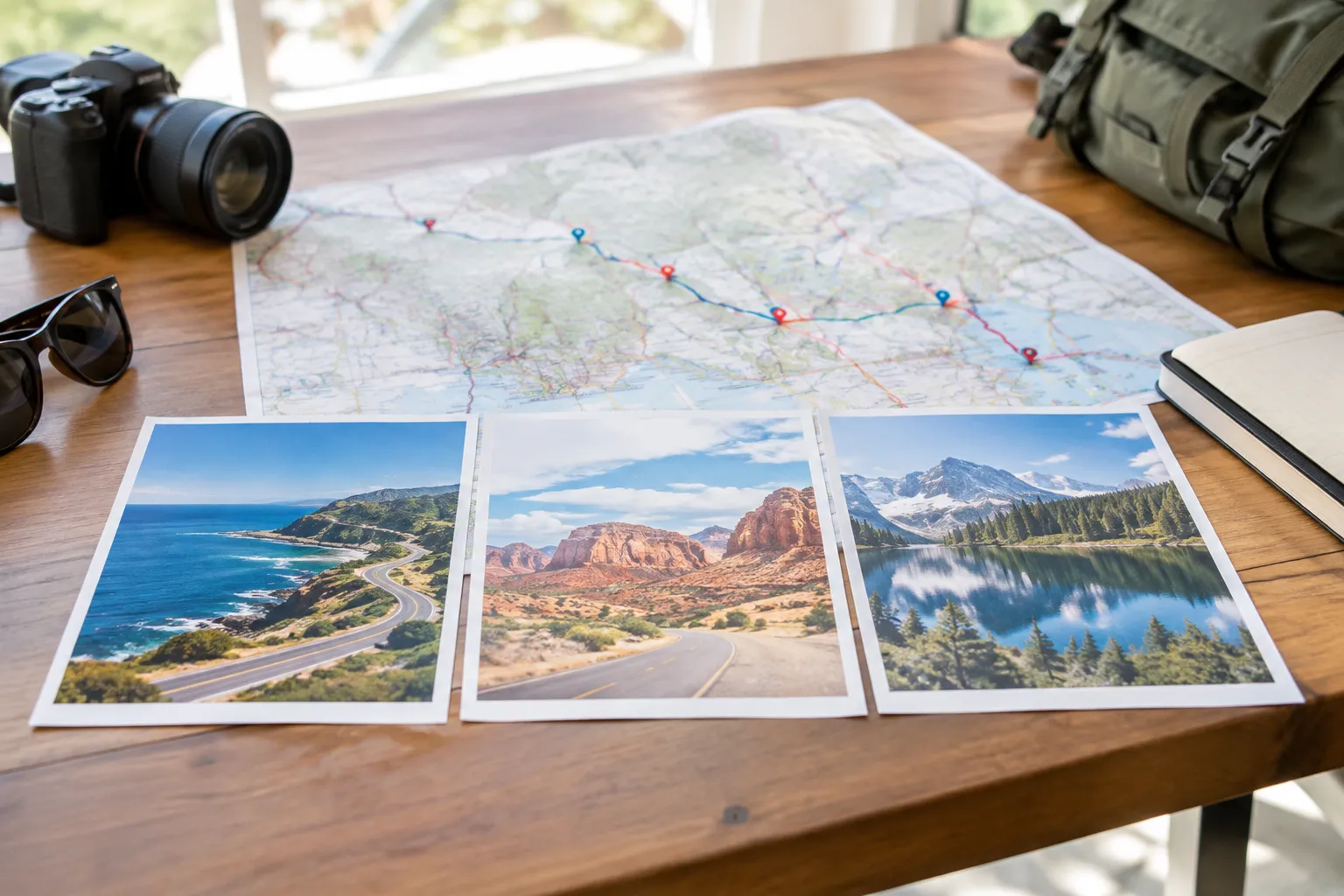
Here’s a four-day outline from Las Vegas to Zion and Bryce Canyon. Driving times are approximate and can vary with traffic, road conditions, and your exact start and end points. Check current routes and park information close to departure.
| Day | Plan | Overnight |
|---|---|---|
| 1 | Drive from Las Vegas to Springdale, near Zion; allow roughly three hours of driving, then keep the rest of the day light. | Springdale |
| 2 | Spend the day in Zion, choosing a manageable mix of scenic stops and walking. | Springdale |
| 3 | Drive from Springdale toward Bryce Canyon, roughly two hours, and explore after arrival if time and energy allow. | Bryce Canyon area |
| 4 | Spend the morning at Bryce, then drive back toward Las Vegas, roughly four hours or more depending on route and conditions. | Las Vegas or onward |
If the first day runs late, skip extra sightseeing and settle in near Zion. If weather, road access, or energy changes your plans on day two, spend more time in an accessible area or take a rest day rather than trying to make up every missed stop. If Bryce feels rushed, shorten the visit or add an overnight when your schedule allows.
That flexibility is part of a good itinerary: it gives you a main plan and a reasonable alternative. For help arranging days and distances, see How To Build A Realistic American Travel Itinerary.
How to shape an itinerary around your trip
Start with the trip’s fixed points: dates, arrival and departure locations, and any reservations you already have. Then choose a small number of priorities for each day. Group nearby activities together, and account for the time it takes to travel between them, park, eat, and take breaks.
For road trips, avoid treating the map’s shortest drive estimate as the full day’s plan. Add time for stops and unexpected delays, and consider whether a long drive leaves enough time to enjoy the destination after arrival. If the route feels crowded, remove a stop or add an overnight base.
Use destination guides and other online travel guides to research practical details, including access, opening hours, local context, and nearby attractions. A guidebook or website can support research, but it cannot make a route fit your dates automatically. Compare the scope of the information with your actual trip: a broad national guide may be useful for orientation, while a focused destination guide may be more relevant for detailed planning in one region.
Choose a plan that leaves room to explore
Examples of itineraries are most useful as frameworks, not templates to copy without checking. Keep the stops that matter to you, adjust the pace to suit your group, and identify one or two alternatives for days when weather, closures, or tiredness change the plan.
Before you go, confirm the details that could affect your route, such as lodging, attraction schedules, and current road or park access. For route-and-stop planning, What Is An Itinerary? Routes, Stops, And Timing offers another way to think through a trip’s structure.
Recommended next steps
Choose one example that resembles your trip, then write down your dates, overnight bases, and must-see stops. Check the distance between each stop and make a backup choice for any day with a long drive or several planned activities.