
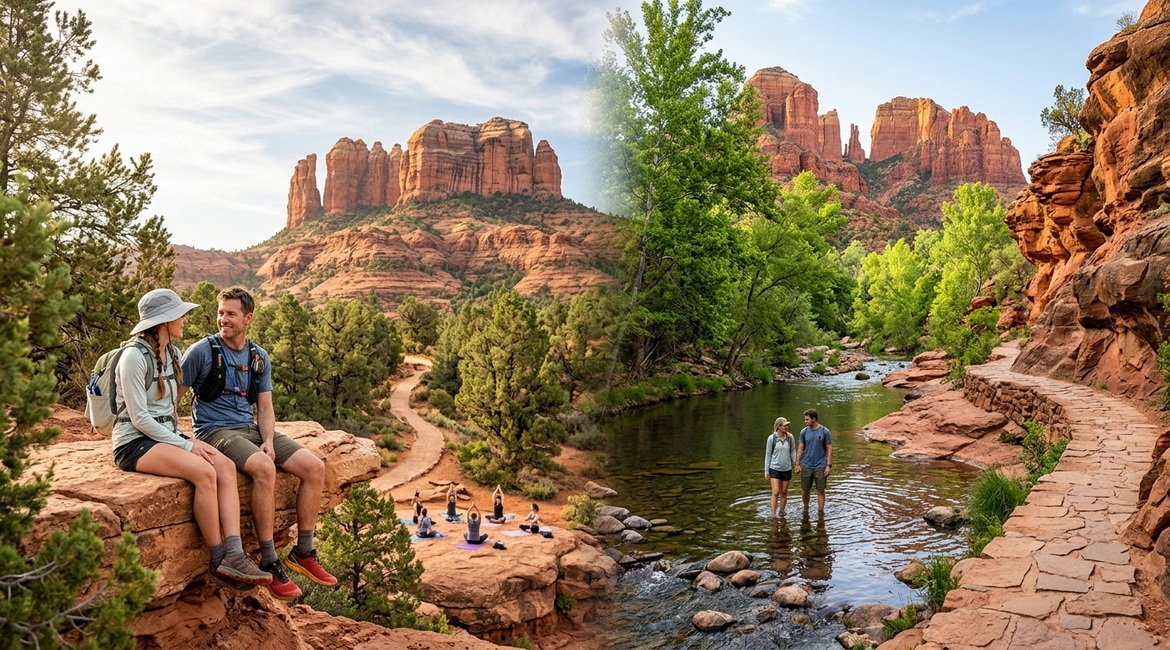
Sedona is one of those destinations where two days can feel surprisingly complete. The city is surrounded by towering red sandstone formations, pine-covered hills, scenic roads and more than 400 miles of trails spread across the surrounding Red Rock Country. Yet Sedona is not only about hiking. You can spend your weekend exploring scenic viewpoints, visiting the Chapel of the Holy Cross, walking through Tlaquepaque, driving through Oak Creek Canyon, enjoying local restaurants and watching the red rocks change color near sunset. That variety makes Sedona especially useful on a larger Arizona and Southwest road trip. Two days will not let you experience everything. But it is enough time to see the landscapes that make Sedona famous without spending your entire visit rushing between attractions. The key is dividing your trip into two different experiences. Use your first day for the central Sedona area, culture and an easy introduction to the red rocks. Use the second day for more of the famous formations, Uptown Sedona and Oak Creek Canyon.
2 Days in Sedona at a Glance
| Day | Morning | Afternoon | Evening |
|---|---|---|---|
| Day 1 | Red Rock scenery + Chapel of the Holy Cross | Tlaquepaque + Red Rock State Park | Sunset + dinner |
| Day 2 | Cathedral Rock + Bell Rock area | Uptown + Oak Creek Canyon | Final red-rock viewpoint |
Quick answer: Two days is enough for a strong first Sedona trip. Spend Day 1 around central Sedona, the Chapel of the Holy Cross, Tlaquepaque and Red Rock State Park. Use Day 2 for Cathedral Rock and Bell Rock scenery, Uptown Sedona and a drive through Oak Creek Canyon.
You do not need to complete a difficult hike to make this itinerary worthwhile. Sedona’s famous formations can be experienced from established viewpoints, scenic roads, state parks and easier recreation areas.
Day 1 — Red Rocks, Chapel & Sedona Sunset
Your first day should introduce you to what makes Sedona different from almost every other Arizona destination. Rather than immediately spending the whole morning on one activity, use Day 1 to experience several sides of the city. You will see the red rocks, one of Sedona’s most recognizable landmarks, local architecture and art, a protected natural area and your first sunset.
Morning — Start With Sedona’s Red Rock Scenery
Begin relatively early. Sedona becomes busier as the morning progresses, particularly on weekends and during popular spring and fall travel periods. A good first experience is simply driving through the red-rock landscape around State Route 179. The approximately 7.5-mile Red Rock scenic corridor provides views toward some of Sedona’s most recognizable formations, including Bell Rock, Courthouse Butte and Cathedral Rock. This gives you an excellent orientation before visiting individual areas. Stop only at established viewpoints and parking areas rather than constantly searching for roadside photo locations. If you want a gentle outdoor start, choose an established short walk appropriate for your group and current conditions. There is no need to schedule a long hike on your first morning. Sedona’s scenery begins almost immediately.
Late Morning — Chapel of the Holy Cross
Next, visit the Chapel of the Holy Cross. The building rises among Sedona’s red-rock formations approximately 200 feet above the valley floor and has become one of the city’s most recognizable landmarks. The architecture is striking, but the surrounding scenery is just as important. From around the chapel area, the red-rock landscape spreads in multiple directions. The site is popular, which means parking can become busy. Arriving earlier rather than later generally makes the experience easier. Allow enough time to appreciate both the building and the landscape instead of treating the chapel as a quick photo stop.
Lunch — Tlaquepaque & Central Sedona
After the morning scenery, head toward Tlaquepaque Arts & Shopping Village. The architecture was designed to resemble a traditional Mexican village, with shaded courtyards, stone details and pedestrian walkways. It creates a strong visual contrast with the open red-rock landscapes you experienced earlier. Tlaquepaque is one of the easiest places to combine several things in one stop. You can have lunch, walk through galleries, browse shops and take a break from driving. This is particularly useful in warmer weather. Do not schedule every hour of your Sedona weekend around outdoor sightseeing. A slower lunch in the middle of the day makes the afternoon much more enjoyable.

Afternoon — Red Rock State Park
Spend part of your first afternoon at Red Rock State Park. This protected area provides a quieter introduction to Sedona’s natural landscape. The park combines red-rock views, riparian habitat around Oak Creek, wildlife and a network of established trails. Arizona State Parks also offers guided nature walks, with times changing seasonally. These walks focus on topics such as geology, wildlife, plant life, history and archaeology. That makes Red Rock State Park particularly useful for families and travelers who want more context than they would get from simply driving between viewpoints. The park emphasizes conservation, so stay on established trails and follow current rules. Swimming and wading in Oak Creek are not permitted within Red Rock State Park.
You do not need to spend the entire afternoon walking. A relaxed visit that combines scenery, the visitor area and an established nature walk can be enough.
Evening — Sunset & Dinner
Sedona becomes especially beautiful near sunset. As the sun drops lower, the sandstone formations shift from orange to deep red. Instead of racing toward the most famous social-media photo location, choose an established viewpoint that fits naturally with where you are staying. Airport-area viewpoints are popular, but many parts of Sedona provide excellent evening scenery. Arrive before the final minutes of daylight. The landscape changes gradually, and watching that transition is more interesting than arriving only for the exact sunset time. Afterward, return to central Sedona or West Sedona for dinner.
Day 2 — Cathedral Rock, Uptown & Oak Creek Canyon
Day 2 focuses more heavily on Sedona’s famous landscapes. Start early again. Morning provides better light, cooler temperatures during warmer months and more flexibility before popular areas become busy.
Morning — Cathedral Rock Area
Cathedral Rock is one of Sedona’s defining formations. You do not need to climb to a high viewpoint to appreciate it. The formation can be seen from several surrounding areas, and this itinerary works perfectly well if you choose a lower, established scenic route or viewpoint instead of a strenuous hike. Parking and trail access are important here. Sedona’s free Trailhead Shuttle currently serves the Cathedral Rock and Little Horse trailheads. The regular trailhead service operates year-round Thursday through Sunday, with additional service days during some peak travel periods. When the shuttle is operating, parking restrictions apply at some popular trailheads. Check the current shuttle calendar before your visit instead of assuming you can drive directly to every trailhead.
If you plan any walking, stay on established routes appropriate for the weather and your group. Sedona’s scenery does not require taking unnecessary risks.
Late Morning — Bell Rock & Village of Oak Creek
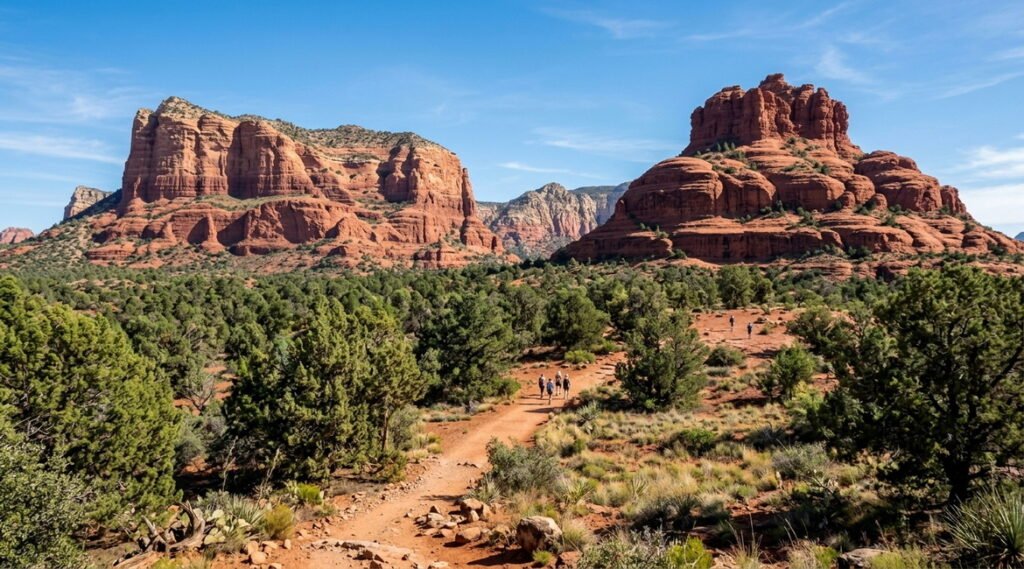
Continue toward Bell Rock and Courthouse Butte. These formations create one of the most recognizable views along the southern approach to Sedona. The Bell Rock area works well because you can adjust the visit to your schedule. Spend a short time at an established viewpoint or choose a longer walk on designated paths if conditions are comfortable. A Red Rock Pass or accepted recreation pass is required for parking at a number of Forest Service recreation sites around Sedona, including Bell Rock-area sites. Check the exact parking location you plan to use rather than assuming every lot follows the same fee rules.
Afterward, stop around the Village of Oak Creek for coffee or an early lunch if you want a slower morning.
Lunch & Early Afternoon — Uptown Sedona
Return north toward Uptown Sedona. This is the more commercial side of the city, with restaurants, galleries and shops packed into a walkable central area. It can become busy, but it deserves some time on a first visit. Sedona’s landscape is the main reason to come here, yet the town itself adds character to the trip. Spend a relaxed lunch here and walk for a while rather than using Uptown only as a place to drive through. If you are interested in learning more about the destination, the Sedona Visitor Center is located at 331 Forest Road in Uptown. It is a useful stop for current maps, local conditions and ideas for adjusting the rest of your itinerary. :contentReference[oaicite:0]{index=0}
Afternoon — Oak Creek Canyon Scenic Drive
Finish the main sightseeing portion of your trip with Oak Creek Canyon. State Route 89A runs north from Sedona toward Flagstaff through a landscape that feels very different from the open red-rock country south of town. The road follows Oak Creek through a narrow canyon surrounded by forested slopes and cliffs. As elevation increases, the vegetation becomes greener and denser. This contrast is one reason Oak Creek Canyon works so well at the end of a two-day itinerary. You have already seen the classic sandstone formations. Now the landscape shifts toward forest and canyon scenery.
You do not need to drive all the way to Flagstaff. Treat this as a scenic drive and turn around at a logical established stop based on your schedule and current road conditions. If you are continuing your Arizona road trip toward Flagstaff or the Grand Canyon, however, you can simply continue north rather than returning to Sedona.
Final Evening — One Last Red Rock View
For your final evening, resist the temptation to add another long list of attractions. Pick one scenic area close to your accommodation. Return to a favorite viewpoint from Day 1 or choose a different perspective on the red rocks. Sedona changes dramatically with the light. A formation that looked orange at midday can appear deep red near sunset. That makes revisiting an area worthwhile rather than repetitive. End your trip with dinner and a slower evening. Two days in Sedona should feel full, but they should not feel exhausting.
Where to Stay in Sedona
Where you stay affects how much driving you will do.
Uptown Sedona
Choose Uptown if you want to walk to restaurants, shops and galleries. It works especially well for first-time visitors who like being close to the center of activity. The tradeoff is that Uptown can feel busy during peak periods.
West Sedona
West Sedona provides convenient access to restaurants, grocery stores and several recreation areas. It is a practical choice for a road trip because you can reach many parts of town without staying directly in the busiest tourist center.
Village of Oak Creek
The Village of Oak Creek sits south of central Sedona near Bell Rock and Courthouse Butte. Choose this area if the red-rock landscape matters more to you than staying near Uptown. It can be particularly convenient for an early start around Bell Rock and the southern recreation areas.
Best first-time choice: West Sedona or Uptown.
Best for red-rock access: Village of Oak Creek.
Do You Need a Car in Sedona?
A car is useful for a two-day Sedona trip. The attractions are spread across several different parts of the area, and a vehicle makes it easier to combine the Chapel of the Holy Cross, Red Rock State Park, Uptown, Village of Oak Creek and Oak Creek Canyon. But having a car does not mean you should drive directly to every popular trailhead. Sedona has developed a shuttle system specifically to reduce congestion around several high-demand recreation areas. The best approach is often a combination:
- Use your car for scenic drives and attractions around town.
- Use the Sedona Shuttle for participating trailheads when it is operating.
- Walk around compact areas such as Uptown and Tlaquepaque.
This is easier than building your entire weekend around searching for trailhead parking.
How the Sedona Shuttle Works
The Sedona Shuttle is particularly important for first-time visitors. As of September 2026, the free Trailhead Shuttle serves five popular trailheads:
- Cathedral Rock
- Little Horse
- Soldier Pass
- Dry Creek Vista, with access toward Devil’s Bridge
- Mescal
Regular trailhead routes run Thursday through Sunday year-round, with expanded service during spring break and selected holidays. No reservation is required for the fixed-route Trailhead Shuttle. :contentReference[oaicite:1]{index=1} Free Park & Ride lots are used for the shuttle system. At certain trailheads, parking restrictions apply while shuttle service is operating. :contentReference[oaicite:2]{index=2} This is important when planning Day 2. Do not automatically drive to Cathedral Rock because an old travel guide tells you there is a parking lot. Check the current Sedona Shuttle service calendar first.
Best Time to Spend 2 Days in Sedona
Sedona works throughout the year, but every season changes the experience.
Spring
Spring is one of the most popular times to visit. Temperatures are generally comfortable for sightseeing, but popular areas can become crowded. Book accommodation early and make use of the shuttle system.
Summer
Summer can be hot during the middle of the day. Start outdoor sightseeing early and use midday for lunch, galleries, shops and other lower-intensity activities. Weather conditions can change, particularly during Arizona’s summer storm season.
Fall
Fall is another excellent season. Temperatures become more comfortable, while Oak Creek Canyon can add seasonal color to the landscape. Popular weekends can still be busy.
Winter
Winter is quieter and can produce beautiful contrasts between red rock and occasional snow. Days are shorter, nights are colder and winter weather can occasionally affect roads. Check the forecast rather than assuming Arizona means warm weather everywhere.
2 Days in Sedona With Kids
Sedona can work very well for families if you do not turn the weekend into two full days of hiking. The landscape itself provides much of the entertainment. A family-friendly version of this itinerary might look like:
| Time | Activity |
|---|---|
| Day 1 Morning | Red Rock scenic drive + Chapel of the Holy Cross |
| Day 1 Afternoon | Tlaquepaque + Red Rock State Park |
| Day 1 Evening | Sunset viewpoint |
| Day 2 Morning | Cathedral Rock scenery + Bell Rock |
| Day 2 Afternoon | Uptown + Oak Creek Canyon |
The official Sedona tourism guides also highlight Red Rock State Park, Bell Rock/Courthouse Butte, Oak Creek Canyon-area attractions and scenic experiences as major parts of a nature-focused Sedona itinerary. :contentReference[oaicite:3]{index=3} With children, prioritize variety. One scenic walk, one cultural attraction, one relaxed meal and one scenic drive can work better than scheduling multiple similar hikes.
What to Pack
For a two-day Sedona trip, bring:
- Comfortable walking shoes
- Reusable water bottles
- Sun protection
- Sunglasses
- Light layers
- A warmer layer for cool mornings and evenings
- Portable phone charger
- Offline map access
- Small daypack
Check the current weather before leaving your accommodation each morning. Conditions around Sedona can vary considerably by season and time of day. If your plans include Forest Service recreation areas, also confirm whether your chosen parking location requires a Red Rock Pass or America the Beautiful Pass. Some Sedona-area trailheads require one. :contentReference[oaicite:4]{index=4}
Common Sedona Planning Mistakes to Avoid
Trying to hike every famous trail in two days. You will spend more time dealing with parking and transportation than enjoying Sedona. Ignoring the Sedona Shuttle. Some of the most popular trailheads have parking restrictions when shuttle service is operating. Scheduling only outdoor activities. Use Tlaquepaque, Uptown, galleries or a long lunch to break up the day. Waiting until midday to begin sightseeing. Starting earlier usually means cooler temperatures and more flexibility. Stopping anywhere along the road for photos. Use established overlooks and parking areas. Underestimating traffic. Sedona is compact, but traffic around the main corridors can make short distances take longer during busy periods. Planning a difficult outdoor itinerary just because you only have two days. Sedona can be enjoyed through scenic drives, established viewpoints, state parks and easier walks. Forgetting that Oak Creek Canyon leads toward Flagstaff. If your next destination is Flagstaff or the Grand Canyon, arrange Day 2 so Oak Creek Canyon becomes part of your onward journey instead of driving north and then backtracking.
FAQ About Spending 2 Days in Sedona
Are two days enough for Sedona?
Yes. Two days is enough for a strong first Sedona trip. You can experience the major red-rock landscapes, Chapel of the Holy Cross, Tlaquepaque, Red Rock State Park, Uptown and Oak Creek Canyon without trying to see everything.
What should you not miss in Sedona?
For a first visit, prioritize the Cathedral Rock and Bell Rock landscapes, Chapel of the Holy Cross, a sunset viewpoint and at least one scenic drive. Tlaquepaque and Oak Creek Canyon add useful variety to a two-day itinerary.
Is Sedona worth visiting without hiking?
Yes. Sedona has scenic roads, established viewpoints, Red Rock State Park, Chapel of the Holy Cross, Tlaquepaque, Uptown and Oak Creek Canyon. You can experience the area’s famous scenery without building the entire trip around long hikes.
Do you need a car in Sedona?
A car is useful because Sedona’s attractions are spread across several areas. However, use the free Sedona Shuttle for popular participating trailheads such as Cathedral Rock when the trailhead routes are operating.
What is the best month to visit Sedona?
Spring and fall are popular because temperatures are generally comfortable for sightseeing. There is no single perfect month: spring and fall can be busy, summer requires more attention to heat, and winter offers fewer crowds but colder weather.
Can you combine Sedona and the Grand Canyon?
Yes. Sedona works very well before or after a Grand Canyon South Rim trip. One natural route continues north from Sedona through Oak Creek Canyon toward Flagstaff before heading toward Grand Canyon National Park. Give each destination enough time rather than trying to fully experience both in a single day.
Recommended Next Steps
For a first trip, keep your two days simple. On Day 1, concentrate on central Sedona. Start with the red-rock scenery along State Route 179, visit the Chapel of the Holy Cross, have lunch around Tlaquepaque and spend part of the afternoon at Red Rock State Park. Finish with sunset. On Day 2, begin around the Cathedral Rock area while the day is still young. Continue toward Bell Rock and Courthouse Butte, return to Uptown for lunch and finish with Oak Creek Canyon. If you are traveling onward to Flagstaff or the Grand Canyon, do not return to Sedona afterward unless your accommodation requires it. Continue north through Oak Creek Canyon and make the scenic drive part of your larger Arizona road trip. If you have a third day available, do not simply repeat this itinerary at a faster pace. Use the extra day to slow down, explore another established recreation area, join a guided experience or spend more time enjoying Sedona’s art, food and scenery. Two days gives you the highlights. Three days gives Sedona room to breathe. But for most first-time visitors on a Southwest road trip, two well-planned days is an excellent introduction to Sedona.