
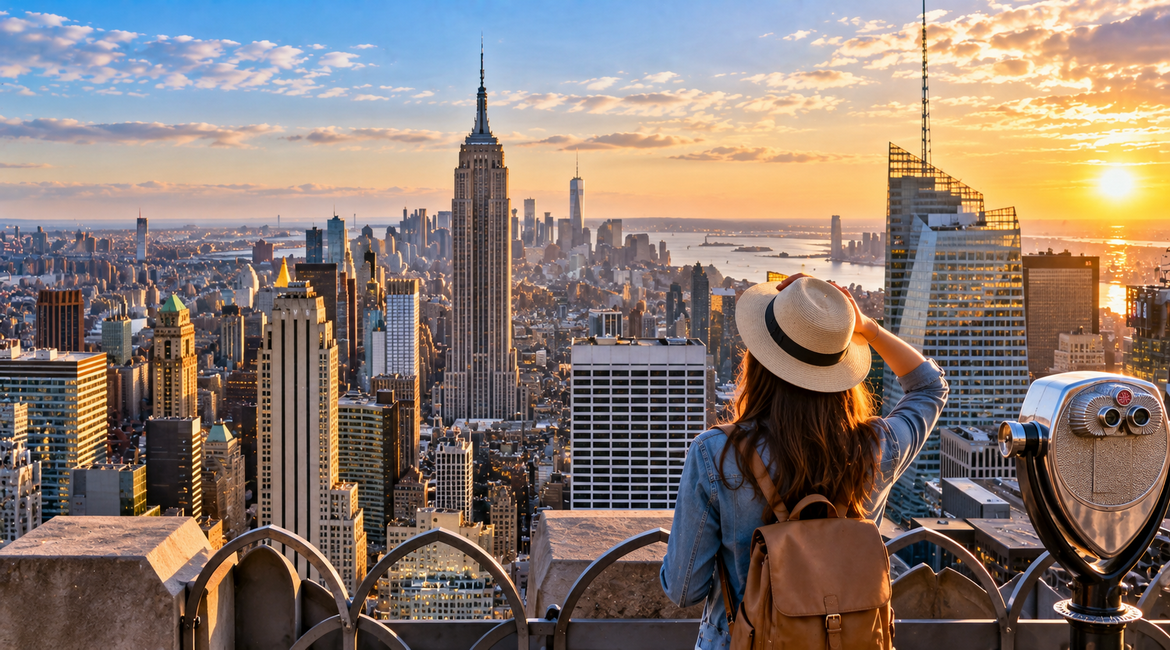
Choosing where to stay in New York City can be almost as difficult as deciding what to see. NYC is enormous, and its neighborhoods can feel like completely different destinations. Stay around Midtown and skyscrapers, Broadway theaters and famous landmarks surround you. Move toward Greenwich Village and the city becomes smaller, more atmospheric and more residential. Choose the Upper West Side and Central Park becomes part of your neighborhood. Cross the East River into Brooklyn and you can wake up to completely different views of the Manhattan skyline. There is no single best neighborhood for every tourist. The right choice depends on what you want to see, how much time you have and what type of New York experience you imagine. For a first trip, location matters enormously. A well-positioned hotel can reduce transportation time and make it easier to explore the city on foot. Here are eight NYC neighborhoods worth considering.
NYC Neighborhoods at a Glance
| Neighborhood | Best For | Atmosphere |
|---|---|---|
| Midtown | First visit | Busy & iconic |
| Upper West Side | Families | Residential & relaxed |
| Greenwich Village | Atmosphere | Historic & lively |
| Chelsea | Art & walking | Creative & urban |
| SoHo | Shopping | Stylish & energetic |
| Lower Manhattan | History & landmarks | Historic & modern |
| Williamsburg | Brooklyn experience | Creative & local |
| DUMBO | Skyline views | Scenic & waterfront |
1. Midtown Manhattan — Best for First-Time Visitors
For many first-time visitors, Midtown is the easiest place to understand. You are surrounded by the New York people recognize from movies and photographs. Times Square, Broadway theaters, Rockefeller Center, Grand Central Terminal and the Empire State Building are all in or around this enormous central section of Manhattan. That concentration of attractions is Midtown’s greatest advantage. You can leave your hotel in the morning and begin sightseeing immediately instead of spending the first part of every day traveling across the city. Transportation is another major advantage. Numerous subway lines and major transportation hubs make it relatively easy to reach neighborhoods farther downtown or uptown. The disadvantage is atmosphere. Parts of Midtown are extremely busy, and areas around Times Square can feel overwhelming. If you want convenient access without staying directly beside Times Square, look at hotels farther east or west within Midtown. Choose Midtown if: this is your first NYC trip and seeing famous landmarks efficiently is your priority.
2. Upper West Side — Best for Families
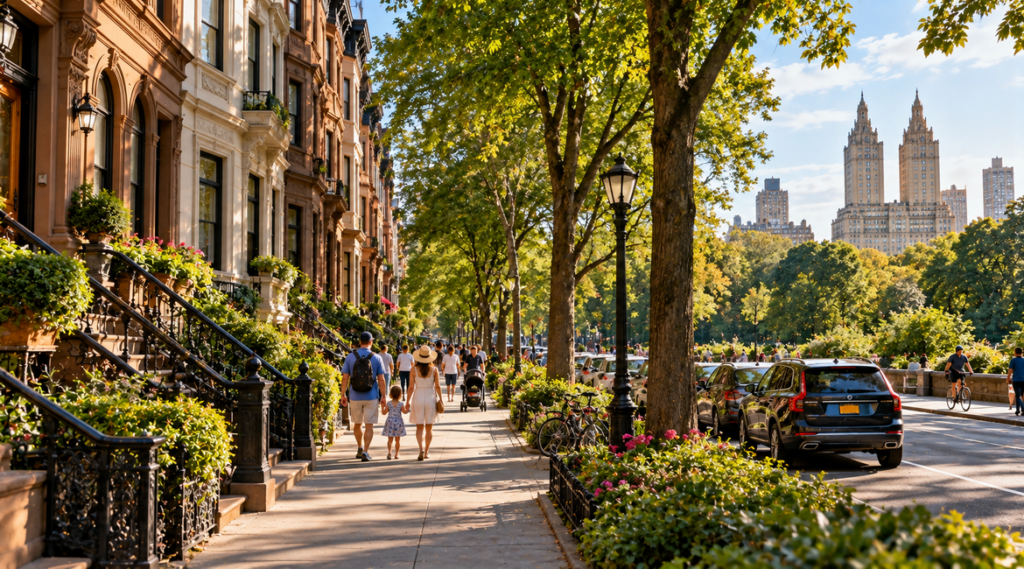
The Upper West Side provides a different New York experience. Instead of spending every moment beneath Midtown skyscrapers, you get residential streets, classic apartment buildings and easy access to Central Park. That combination makes the neighborhood particularly appealing to families. The American Museum of Natural History is located here, while Central Park provides an enormous outdoor alternative to museums and indoor attractions. The Upper West Side also gives you somewhere calmer to return to after sightseeing. You are still in Manhattan and still connected to the rest of the city by subway, but the atmosphere can feel considerably less intense than Times Square. For families staying several nights, that difference can matter. One possible disadvantage is distance. If most of your sightseeing is concentrated in Lower Manhattan, you will spend more time traveling. For an itinerary combining Central Park, museums, Midtown and general Manhattan sightseeing, however, the location works extremely well. Choose the Upper West Side if: you are traveling with kids or prefer a more residential Manhattan base.
3. Greenwich Village — Best for NYC Atmosphere
Greenwich Village is for travelers who want New York to feel like a neighborhood rather than a checklist of attractions. Its street pattern breaks away from Manhattan’s predictable grid. Walk around and you encounter historic buildings, smaller streets, restaurants, cafés and Washington Square Park. The neighborhood has long associations with writers, musicians, artists and cultural movements. That history is still part of its identity, even though modern Greenwich Village is one of Manhattan’s most desirable areas. The location is excellent for exploring downtown neighborhoods on foot. SoHo, Chelsea, the East Village and other parts of Lower Manhattan are within relatively easy reach. The trade-off is that Greenwich Village does not have Midtown’s enormous concentration of conventional hotels. Depending on your dates, accommodation choices can also be expensive. But for travelers who care as much about the streets around their hotel as the famous attractions, the Village is difficult to beat. Choose Greenwich Village if: atmosphere, restaurants and walking through classic NYC streets matter most.
4. Chelsea — Best for Art & the High Line
Chelsea sits in an excellent position on Manhattan’s west side. One of its biggest attractions is the High Line, the elevated former rail structure transformed into a landscaped public space. Walking the High Line gives you a different perspective on Manhattan. Instead of moving at street level, you pass gardens, architecture and elevated views while exploring the west side. Chelsea is also associated with galleries, restaurants and Chelsea Market. The neighborhood’s location makes it useful for travelers who want to divide their time between Midtown and downtown Manhattan. You can head north toward major Midtown attractions or south toward Greenwich Village and SoHo. Chelsea is particularly good for visitors who enjoy exploring on foot rather than moving directly from one major landmark to another. Choose Chelsea if: you want a central location with art, food and one of NYC’s most distinctive urban walks.
5. SoHo — Best for Shopping & Stylish Streets
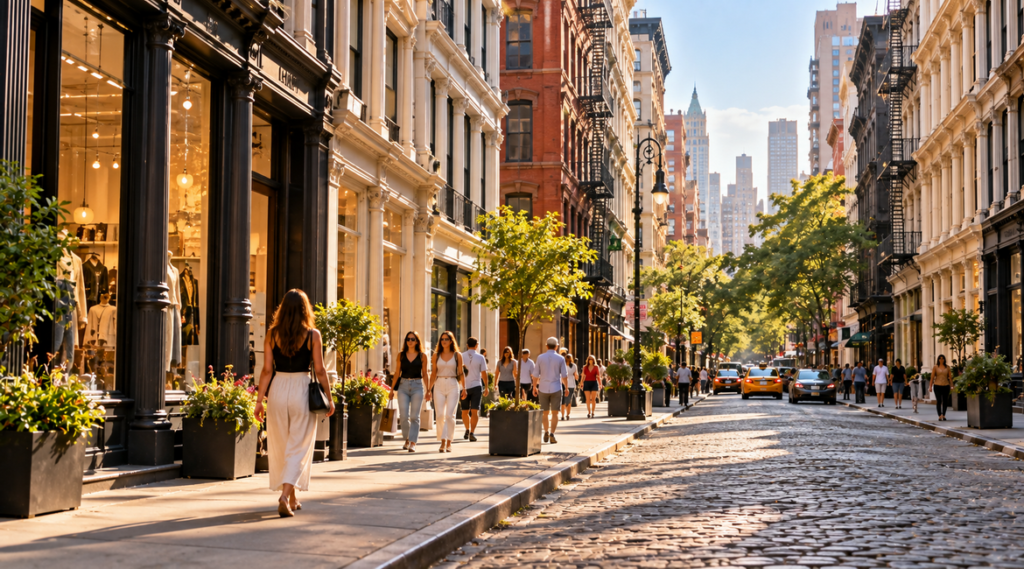
SoHo is one of Manhattan’s most recognizable shopping neighborhoods. But you do not need to spend the day shopping to enjoy staying here. Historic cast-iron architecture and distinctive streets give the neighborhood a visual identity very different from Midtown. The location is another major advantage. Greenwich Village, Nolita, Chinatown and Lower Manhattan can all be incorporated into walking-heavy sightseeing days. Restaurants and cafés are plentiful. SoHo can become extremely busy, particularly during popular shopping periods, so do not choose it expecting a quiet residential retreat. Accommodation can also be expensive. For travelers who want fashionable downtown Manhattan outside their hotel door, however, it is an excellent base. Choose SoHo if: shopping, architecture and downtown Manhattan are priorities.
6. Lower Manhattan — Best for History & Famous Sights
Lower Manhattan combines some of New York’s oldest history with some of its most modern architecture. Stay here and you are close to the Financial District, One World Trade Center, the 9/11 Memorial area, Battery Park and ferries around New York Harbor. The Brooklyn Bridge is also nearby. One major advantage is how much sightseeing can be grouped together. You can spend a morning exploring Lower Manhattan, continue toward the Brooklyn Bridge and cross into Brooklyn without needing to travel back and forth across Manhattan. The Staten Island Ferry also departs from Whitehall Terminal in Lower Manhattan. As of September 2026, the ferry remains free and operates every day, year-round. The trip between Manhattan and Staten Island takes approximately 25 minutes. Lower Manhattan can feel different after the workday compared with Midtown or Greenwich Village. Whether that is a positive or negative depends on the type of trip you want. Choose Lower Manhattan if: NYC history, harbor views and downtown landmarks dominate your itinerary.
7. Williamsburg — Best Brooklyn Experience
You do not have to sleep in Manhattan to have an excellent New York vacation. Williamsburg provides one of the most popular alternatives. The neighborhood combines residential streets, restaurants, shops, waterfront spaces and impressive views toward Manhattan. It feels noticeably different from Midtown. That can be exactly the point. After spending the day around Manhattan’s biggest attractions, crossing back into Brooklyn can make the evening feel like a separate part of the trip. Transportation is the main consideration. Check exactly where a hotel is located rather than assuming anywhere labeled Williamsburg will provide equally convenient access to Manhattan. Being close to a useful subway station can make an enormous difference. Williamsburg makes the most sense for travelers who have already seen some of the classic NYC attractions or who deliberately want a less conventional base. Choose Williamsburg if: you want Brooklyn atmosphere while retaining relatively easy access to Manhattan.
8. DUMBO — Best for Iconic NYC Views
Few neighborhoods give you a more dramatic sense of New York’s geography than DUMBO. Located beside the East River between the Brooklyn and Manhattan Bridges, the area combines converted industrial architecture with waterfront scenery. Brooklyn Bridge Park is one of the biggest reasons to spend time here. From the waterfront you can look across toward Lower Manhattan while the Brooklyn Bridge dominates parts of the view. This also creates a natural sightseeing route. Start in Lower Manhattan, walk across the Brooklyn Bridge and explore DUMBO afterward. Staying here lets you experience those views early in the morning and again after many day visitors have left. The downside is that DUMBO has fewer hotel choices than enormous areas such as Midtown. For a first NYC trip focused primarily on Manhattan, Midtown may still be more practical. For scenery and a distinctive Brooklyn experience, DUMBO is difficult to match. Choose DUMBO if: waterfront scenery, Brooklyn Bridge access and Manhattan skyline views are your priorities.
Which NYC Neighborhood Should You Choose?
The easiest way to choose is to forget about finding the universally “best” neighborhood. Instead, choose the area that fits your itinerary.
| If You Want… | Choose… |
|---|---|
| Maximum convenience on a first visit | Midtown |
| A family-friendly Manhattan base | Upper West Side |
| Classic neighborhood atmosphere | Greenwich Village |
| Art and the High Line | Chelsea |
| Shopping and architecture | SoHo |
| History and harbor attractions | Lower Manhattan |
| A Brooklyn neighborhood experience | Williamsburg |
| Brooklyn Bridge and skyline views | DUMBO |
Best Neighborhoods for First-Time Visitors
For a first trip, convenience should carry more weight than finding the most unusual neighborhood. Midtown is the simplest overall choice. You are close to many famous sights, transportation options are extensive and the neighborhood has an enormous hotel inventory. But Midtown does not mean you must stay directly in Times Square. Looking a few blocks away from the busiest part of the district can give you many of the same transportation advantages with a somewhat less intense atmosphere. Greenwich Village is the alternative for travelers who value neighborhood character more than being beside the most famous attractions. Lower Manhattan works particularly well if your sightseeing list emphasizes the Brooklyn Bridge, Statue of Liberty area, One World Trade Center and New York Harbor.
Best Neighborhoods for Families
For many families, the Upper West Side offers the best balance. Central Park gives children an enormous outdoor space, while the American Museum of Natural History provides one of the city’s major family attractions nearby. The neighborhood also feels more residential than Times Square. Midtown remains a strong option when convenience is the overriding priority. Shorter journeys back to the hotel can be useful when traveling with younger children. Lower Manhattan can also work surprisingly well for families planning to spend significant time around the harbor, Brooklyn Bridge and downtown attractions. Wherever you stay, prioritize transportation. A hotel a short walk from a useful subway station can be more convenient than a slightly nicer property in a less practical location.
Manhattan or Brooklyn?
For most first-time visitors with only a few days in New York, Manhattan is the easier choice. Many of the classic attractions are there, so staying in Manhattan generally reduces the amount of transportation needed. Brooklyn becomes especially attractive when you have more time. Williamsburg gives you a neighborhood-focused experience, while DUMBO places spectacular Manhattan views and the Brooklyn Bridge close to your hotel. There is also no rule saying you must choose only one borough. On a longer trip, some travelers divide their stay. For example, spend the first part of the vacation in Midtown or Greenwich Village and the final nights in Brooklyn. That approach gives you two different versions of New York without requiring a separate trip. For a short three- or four-day first visit, however, changing hotels usually creates more inconvenience than benefit.
How to Choose Your Hotel Location
Do not choose a NYC hotel based on price and star rating alone. First, open a map. Look at the attractions you actually plan to visit and identify which parts of the city appear repeatedly. Then check subway access. Being a few minutes from a useful station can save significant time over several days. Also consider what you want around your hotel in the evening. Some travelers want restaurants and busy streets immediately outside. Others prefer returning to a quieter residential neighborhood. Think about walking as well. New York is a city where you may spend hours on foot every day. Staying in a neighborhood you actually enjoy walking through adds value that is difficult to measure on a hotel booking page. Finally, compare the total cost rather than just the advertised nightly rate. Taxes and mandatory property charges can change the final accommodation cost, so review the complete booking total before paying.
FAQ About Where to Stay in NYC
What is the best neighborhood in NYC for first-time tourists?
Midtown Manhattan is the easiest overall choice for many first-time visitors. It puts you close to major landmarks and provides extensive subway connections to other parts of New York. Greenwich Village is a strong alternative if neighborhood atmosphere matters more than maximum sightseeing convenience.
Where should families stay in New York City?
The Upper West Side is an excellent family base because of its residential atmosphere and convenient access to Central Park and the American Museum of Natural History. Midtown can be better when being close to the largest number of famous attractions is the main priority.
Is Times Square a good place to stay?
Times Square is extremely convenient for Broadway, Midtown attractions and transportation, but it is also crowded and intense. First-time visitors who want convenience without being directly in the busiest area can look elsewhere in Midtown within walking distance of Times Square.
Is it better to stay in Manhattan or Brooklyn?
Manhattan is generally easier for a short first visit because many classic NYC attractions are located there. Brooklyn can be excellent for longer trips or travelers who want more neighborhood atmosphere, waterfront views and a different perspective on the city.
How important is staying near a subway station?
Very important. New York’s attractions are spread across a large area, and convenient subway access can reduce travel time every day. When comparing two similar hotels, the property with better transportation access can often be the more practical choice.
How many days should you spend in NYC?
Four or five days provide a useful amount of time for a first visit. You can explore several Manhattan neighborhoods, visit major attractions and spend some time in Brooklyn without making every day feel rushed. A longer stay makes it easier to explore neighborhoods beyond the major tourist areas.
Recommended Next Steps
If this is your first New York trip, start by looking for accommodation in Midtown Manhattan. It provides the simplest combination of famous attractions, transportation and hotel choice. Families should also compare the Upper West Side, particularly if Central Park and the American Museum of Natural History are already part of the itinerary. For travelers who want the streets around their hotel to feel like part of the experience, Greenwich Village is one of the most appealing choices. If your sightseeing focuses on the Brooklyn Bridge, New York Harbor and downtown landmarks, consider Lower Manhattan. And if you have already experienced Manhattan or simply want a different perspective, compare Williamsburg and DUMBO in Brooklyn. The best NYC neighborhood is not necessarily the one with the most attractions. It is the neighborhood that makes the trip you actually want to take easier. Choose the right base, stay close to useful transportation, and New York becomes much simpler to explore.