
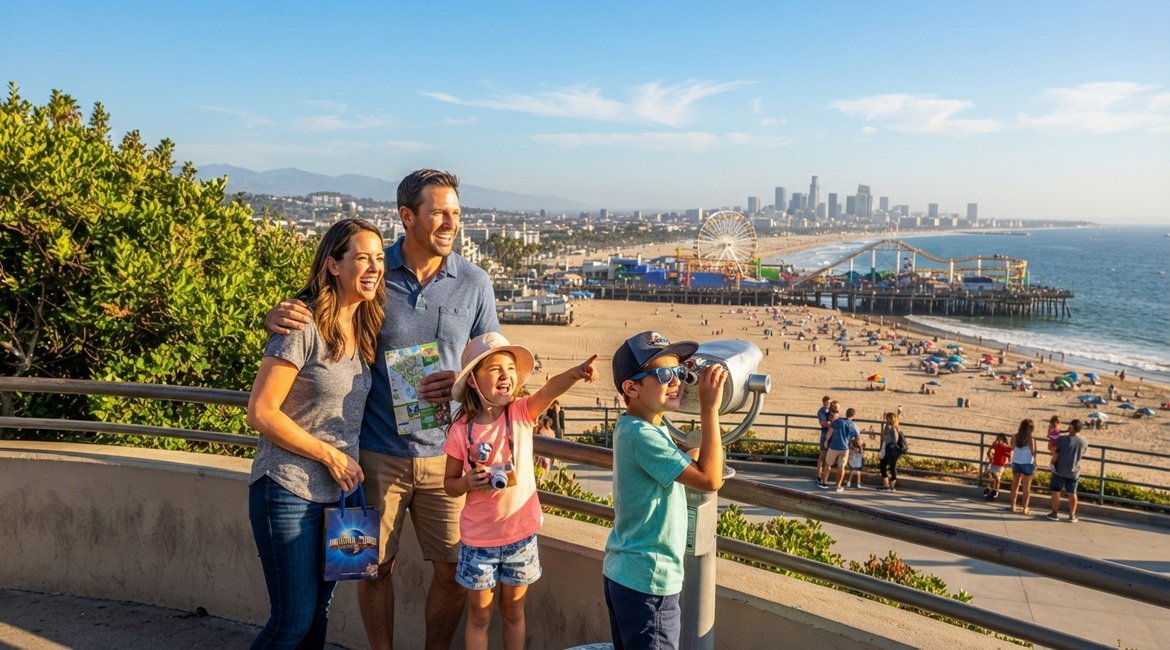
Los Angeles can be an excellent family destination once you stop trying to see the entire city in a single trip. The city combines beaches, science museums, dinosaurs, animals, movie attractions, parks, space exhibits and scenic viewpoints. That variety makes it possible to build very different itineraries for toddlers, elementary-age children and teenagers. The biggest challenge is distance. Los Angeles is enormous, and attractions that look reasonably close on a map can require considerable travel time. Families usually have a better experience when they group activities by area instead of driving back and forth across the city. A good first trip also mixes major attractions with easier days. One full theme park day followed by a beach or museum day is often more enjoyable than scheduling a major ticketed attraction every morning.
Los Angeles With Kids at a Glance
Los Angeles works particularly well for families because the city is not dependent on one type of attraction. You can spend one day learning about dinosaurs and science, another beside the Pacific Ocean and another exploring a major entertainment attraction.
| Interest | Places to Consider |
|---|---|
| Science & space | California Science Center, Griffith Observatory |
| Dinosaurs & fossils | Natural History Museum, La Brea Tar Pits |
| Animals | Los Angeles Zoo, Aquarium of the Pacific |
| Movies & entertainment | Universal Studios Hollywood, Academy Museum |
| Beaches | Santa Monica, Venice, Malibu |
| Outdoor time | Griffith Park, beaches, local parks |
| Younger children | Kidspace, Travel Town, zoo, beaches |
For most families, four or five days provides enough time for a varied introduction without making every day feel rushed.
1. Explore Griffith Observatory
Griffith Observatory combines science with one of the most recognizable views in Los Angeles. Children can explore astronomy exhibits while the entire family gets panoramic views across the city from Griffith Park. The observatory itself is free to enter, making it particularly useful when balancing expensive attraction days with lower-cost activities. Planetarium presentations require separate tickets, so families can decide whether to add one based on children’s ages and interest in astronomy.
The surrounding setting is a major part of the experience. Instead of treating the observatory as a quick photo stop, leave time to enjoy the views and explore the public areas at a relaxed pace.
2. Spend a Day at the California Science Center
The California Science Center is one of the most useful family attractions in Los Angeles because it combines hands-on learning with free general admission to its permanent exhibition galleries. Children can explore exhibits about ecosystems, engineering, biology and the physical world rather than simply walking past display cases. The Science Center is located in Exposition Park, which makes it especially easy to combine with other nearby attractions.
As of September 2026, the Science Center is generally open daily from 10 a.m. to 5 p.m. Special exhibitions and IMAX experiences may require paid tickets. The Samuel Oschin Air and Space Center is scheduled to open on November 13, 2026, expanding the complex with the Space Shuttle Endeavour displayed as part of a complete shuttle system in launch configuration. If your trip takes place after that opening, allow additional time for the Science Center.
3. See Dinosaurs at the Natural History Museum
The Natural History Museum of Los Angeles County is an easy choice for children interested in dinosaurs, fossils, animals and the natural world. Its Dinosaur Hall is one of the obvious family highlights, but there is enough variety to keep the museum interesting even for children who are not obsessed with dinosaurs. The Discovery Center adds more interactive experiences, including opportunities for children to pretend to work like paleontologists and explore the natural world.
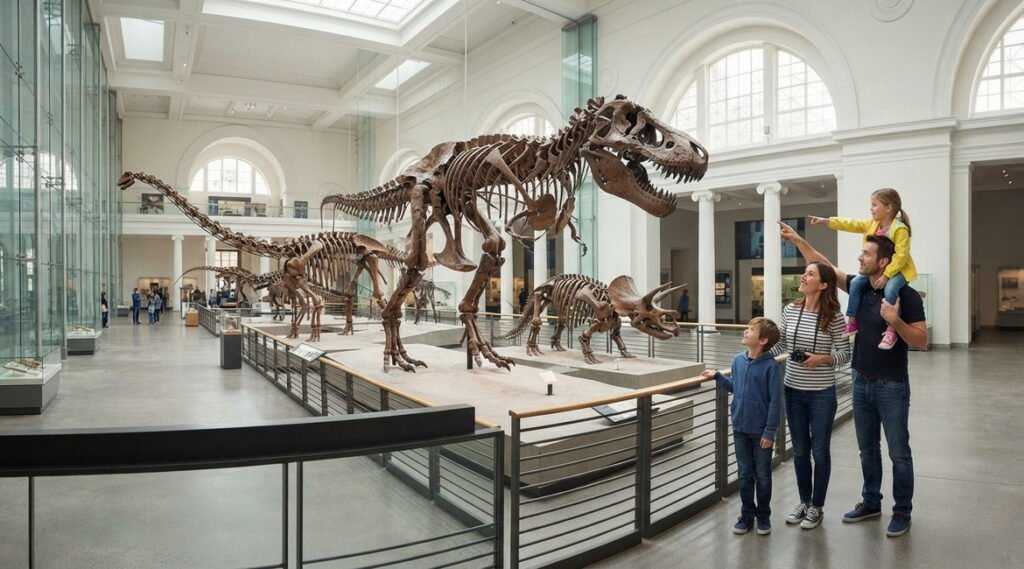
As of September 2026, the museum is generally open from 9:30 a.m. to 5 p.m. General admission is $18 for adults, $14 for ages 13–17 and $7 for children ages 3–12; children age two and younger enter free. Special exhibitions and experiences can cost extra. The museum is also in Exposition Park, close to the California Science Center. That makes this one of the easiest areas in Los Angeles for families to explore without spending much of the day moving between distant attractions.
4. Visit Universal Studios Hollywood
Universal Studios Hollywood can easily become a full family day. Unlike a traditional museum or sightseeing attraction, this is something to plan as one of the major days of the trip rather than squeezing between other stops. The park combines rides, themed environments and movie-related entertainment. Families with children of different ages should check current attraction requirements before visiting because not every ride will work for every child.
Arriving with a short list of priorities is usually easier than trying to experience everything. If Universal is one of the main reasons for visiting Los Angeles, consider staying in Hollywood, Universal City or another reasonably convenient area for part of the trip.
5. Enjoy Santa Monica Beach & Pier
Santa Monica gives families an easy introduction to the Los Angeles coast. You can spend time on the wide sandy beach, walk along the waterfront and explore the pier without needing to build the entire day around a formal attraction. The pier adds rides and entertainment, while the beach gives children room for a much less structured afternoon.
This makes Santa Monica particularly useful after a busy museum or theme park day. Younger children may be perfectly happy with sand and ocean views, while older kids may enjoy exploring the pier and surrounding beachfront area. Plan for cooler temperatures near the Pacific than in inland Los Angeles, especially in the morning and evening.
6. Explore Griffith Park
Griffith Park is much more than the area surrounding the observatory. The enormous urban park contains multiple family attractions, open spaces and recreation options. This is where families can combine the observatory with the Los Angeles Zoo or Travel Town, depending on children’s interests. The key is not trying to cover the entire park. Choose one or two destinations and leave enough time between them.
For younger children, a slower Griffith Park day can provide a welcome break from more intense sightseeing.
7. Visit the Los Angeles Zoo
The Los Angeles Zoo & Botanical Gardens is another family attraction inside Griffith Park. The zoo is home to more than 2,100 animals representing more than 270 species, giving families enough variety for several hours. For children, the attraction works particularly well when you avoid treating it as a race to see every animal. Choose favorite areas, take breaks and allow younger children time simply to watch.
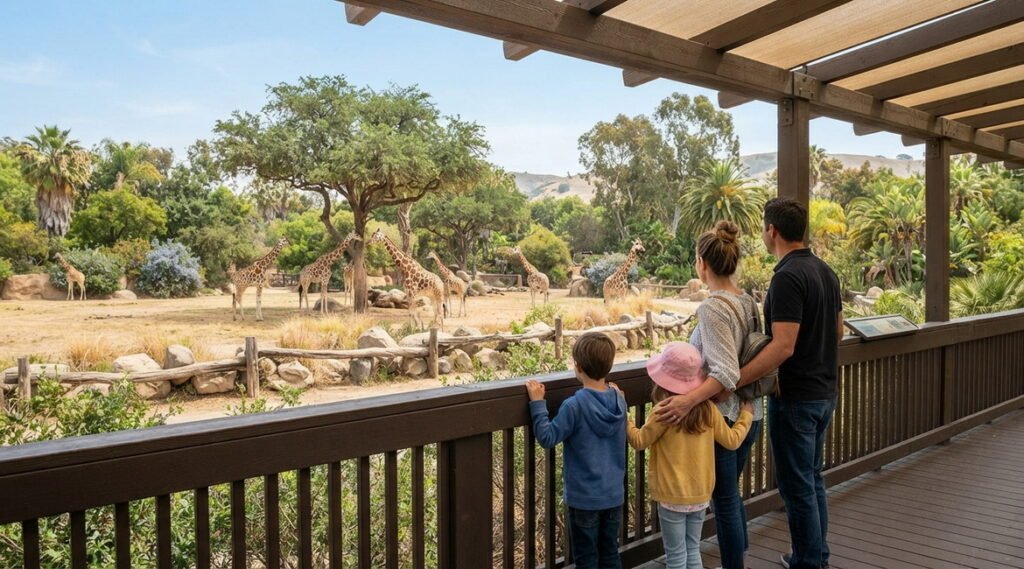
Because the zoo is outdoors, weather matters. During warmer months, mornings are usually more comfortable for walking than the hottest part of the afternoon.
8. Discover La Brea Tar Pits
La Brea Tar Pits offers something unusually specific to Los Angeles. The site preserves evidence of prehistoric life discovered in asphalt deposits in the middle of the modern city. Children interested in mammoths, saber-toothed cats, fossils or paleontology can see how scientists learn about animals that lived in the Los Angeles Basin thousands of years ago.
This can pair naturally with the nearby museum district rather than becoming an isolated cross-city trip. It also provides a useful alternative to another conventional art or history museum when traveling with children.
9. Explore the Academy Museum of Motion Pictures
Los Angeles is closely associated with movies, and the Academy Museum provides a way for families to explore that connection beyond a theme park. The museum focuses on filmmaking, movie history, costumes, technology and the creative process behind cinema. It is likely to appeal most to older children and teenagers who already enjoy movies and want to understand how they are made. Younger children may find the Science Center or Natural History Museum more immediately engaging. Because the Academy Museum is near other attractions along Museum Row, it can be grouped geographically with La Brea Tar Pits.
10. Spend Time at Venice Beach
Venice Beach offers a completely different side of Los Angeles. The broad beach, oceanfront path and active outdoor atmosphere make it interesting for families who want to see more of the coast after Santa Monica. You do not necessarily need a full day.
Santa Monica and Venice can be combined because they are neighboring coastal areas. Families with younger children may prefer spending more time on the beach itself rather than trying to cover every section of the waterfront.
11. Visit the Aquarium of the Pacific
The Aquarium of the Pacific is in Long Beach, south of central Los Angeles, so families should treat it as a destination rather than a quick stop between central-city attractions. The aquarium focuses on marine environments and provides opportunities to learn about ocean wildlife in a setting that works well for children. It is particularly useful for families looking for an indoor attraction or a change from museums centered on history and technology.
Because Long Beach is farther from many traditional Los Angeles sightseeing areas, avoid pairing the aquarium with an attraction on the opposite side of the city on the same day.
12. Explore Kidspace Children’s Museum
Kidspace Children’s Museum in Pasadena is especially useful for families traveling with younger children. Instead of asking children to quietly observe exhibits, children’s museums are designed around participation, play and discovery. This can make Kidspace a welcome change after attractions that require more structured sightseeing. Pasadena is northeast of central Los Angeles, so it makes sense to group Kidspace with other activities in that part of the region rather than crossing the city multiple times. For toddlers and younger elementary-age children, this can easily become one of the more age-appropriate stops on the trip.
13. Ride Trains at Travel Town
Travel Town Museum in Griffith Park is a simple option for younger children who like trains and transportation. Historic railroad equipment creates a very different experience from Los Angeles’ larger museums. Because it is located within Griffith Park, Travel Town can fit naturally into a day that already includes another attraction in the park.
Families do not necessarily need to schedule half a day here. It works particularly well as a shorter stop within a slower Griffith Park itinerary.
14. Have a Beach Day in Malibu
Malibu offers a more scenic beach-focused experience than spending every coastal day in Santa Monica. The drive northwest follows part of the Southern California coastline, and the area provides numerous ocean views and beaches. A Malibu day works best when the beach itself is the activity.
Avoid building an overly complicated schedule around multiple distant attractions afterward. Parking conditions, beach access and ocean conditions vary by location, so check current information for the specific beach before leaving. Families should also follow posted beach and lifeguard guidance and stay aware of changing surf conditions.
15. Slow Down at a Los Angeles Park
Not every family day needs an admission ticket. After several museums or major attractions, children may simply need space to run around. Los Angeles has parks throughout the metropolitan area, making it relatively easy to add a playground, picnic or open-space break to an itinerary. This is especially useful for families traveling with toddlers. A two-hour attraction followed by lunch and a park can sometimes work much better than scheduling another museum immediately afterward.
Things to Do With Toddlers
Los Angeles can work surprisingly well with toddlers if the itinerary is deliberately slower. Kidspace Children’s Museum, Travel Town, the Los Angeles Zoo, Santa Monica Beach and neighborhood parks are easier to adapt around naps and shorter attention spans. The California Science Center can also work, especially when you focus on a few interactive areas rather than trying to explore the entire complex. For younger children, avoid scheduling two large museums on the same day simply because they are nearby. Geographic convenience does not always mean children have the energy for both. A better pattern is one primary activity, lunch and a flexible afternoon.
Things to Do With Older Kids
Older children and teenagers can handle a much broader Los Angeles itinerary. Universal Studios Hollywood may become a major priority, while Griffith Observatory adds science and city views. The Academy Museum can appeal to children interested in movies, while the Natural History Museum and La Brea Tar Pits work well for science and fossil interests.
Beach days can also become more flexible because older children may enjoy exploring the coastal areas around Santa Monica and Venice rather than spending the entire day playing in the sand. Letting older children choose one or two priorities can make itinerary planning easier.
Free Things to Do With Kids
Los Angeles has several useful family activities that do not require general admission. Griffith Observatory is free to enter, although planetarium shows require tickets and parking or transportation can still add costs. The permanent exhibition galleries at the California Science Center also have free general admission, while IMAX and special experiences may cost extra. Beaches provide another obvious option. Families can spend a morning or afternoon at Santa Monica, Venice or another public beach without turning the day into an expensive attraction visit. Parks and scenic viewpoints can help balance the cost of Universal Studios, museums and other ticketed attractions.
How Many Days Do Families Need?
Three days can provide a good introduction, but families will need to be selective. Four or five days is more comfortable for a first visit. That gives you enough time for a major attraction, museums, the coast and a slower outdoor day without constantly changing areas.
| Trip Length | Family Trip Style |
|---|---|
| 2 days | Choose 2–3 major priorities |
| 3 days | Major highlights + beach or museum |
| 4–5 days | Comfortable first family trip |
| 6–7 days | City + beaches + several family attractions |
| 8+ days | Los Angeles plus surrounding Southern California |
For most families, five days is a particularly practical starting point.
Sample 5-Day Los Angeles Family Itinerary
| Day | Plan |
|---|---|
| Day 1 | Griffith Observatory + Griffith Park |
| Day 2 | California Science Center + Natural History Museum |
| Day 3 | Universal Studios Hollywood |
| Day 4 | Santa Monica + beach + relaxed coastal afternoon |
| Day 5 | Choose La Brea Tar Pits, zoo, aquarium or Malibu |
For younger children, consider turning Day 2 into only one museum and adding more downtime.
Where to Stay With Kids
There is no single family neighborhood that works for every Los Angeles itinerary. The most useful strategy is choosing accommodation near the activities that matter most. Santa Monica works particularly well for families prioritizing beaches and a walkable coastal environment. Hollywood or nearby areas can make sense when Universal Studios, Griffith Park and central sightseeing are major priorities. Families planning several museum days may prefer a more central location that reduces cross-city travel. Do not choose accommodation based only on the lowest nightly rate. Saving money on a hotel can become less attractive if the location adds long drives, parking costs and difficult daily transportation.
Tips for Visiting Los Angeles With Kids
The most important family travel strategy in Los Angeles is geographic planning. Group nearby attractions together. California Science Center and Natural History Museum belong naturally on the same part of the itinerary because both are in Exposition Park. La Brea Tar Pits and the Academy Museum can form another museum-area day. Santa Monica and Venice make sense together, while Griffith Observatory, the zoo and Travel Town are all associated with Griffith Park. Do not schedule every day from morning until night. Beach afternoons, hotel pool time, parks and relaxed meals provide useful breaks between larger attractions. Check attraction hours and reservation requirements shortly before traveling. Los Angeles museums and attractions can change schedules, prices and exhibition availability. For outdoor attractions, also check the local weather for the specific area you are visiting. Coastal Los Angeles can be much cooler than inland neighborhoods on the same day.
FAQ About Los Angeles With Kids
Is Los Angeles good for a family vacation?
Yes. Los Angeles combines beaches, museums, science attractions, animals, parks and movie-related entertainment, making it easy to create different itineraries for different ages. The main challenge is distance, so families should group attractions geographically.
How many days do you need in Los Angeles with kids?
Four or five days works well for most first-time family trips. This provides enough time for several major attractions, a museum day and the coast without forcing the family to rush between distant parts of Los Angeles every day.
What can you do in Los Angeles with kids for free?
Families can enter Griffith Observatory without general admission, explore the permanent galleries at the California Science Center without general admission, visit public beaches and spend time in city parks. Parking, transportation and optional experiences may still cost extra.
Do you need a car in Los Angeles with kids?
A car can be useful for a family itinerary spread across Los Angeles, especially when visiting Malibu, Griffith Park and attractions in different parts of the region. However, some itineraries can combine Metro, walking and rideshares. The answer depends heavily on where you stay and which attractions you choose.
What is the best age to visit Los Angeles?
There is no single ideal age. Toddlers can enjoy beaches, Kidspace, Travel Town and the zoo; elementary-age children gain more from science and natural history museums; older children and teenagers can add Universal Studios, movie-related attractions, coastal neighborhoods and more extensive sightseeing.
Recommended Next Steps
Start by choosing three or four family priorities rather than trying to cover every famous Los Angeles attraction. For younger children, build the trip around the zoo, Travel Town, Kidspace, the California Science Center and plenty of beach or park time. For elementary-age children, add the Natural History Museum, Griffith Observatory, La Brea Tar Pits and a major entertainment day. For older children and teenagers, Universal Studios Hollywood, the Academy Museum, Griffith Observatory and the coastal areas can become larger parts of the itinerary. For a five-day first trip, a useful rhythm is one Griffith Park day, one Exposition Park museum day, one major entertainment day, one beach day and one flexible day based on your children’s interests. Most importantly, organize the trip by geography. Los Angeles becomes much easier with kids when you spend each day exploring one part of the city instead of repeatedly crossing the metropolitan area.