
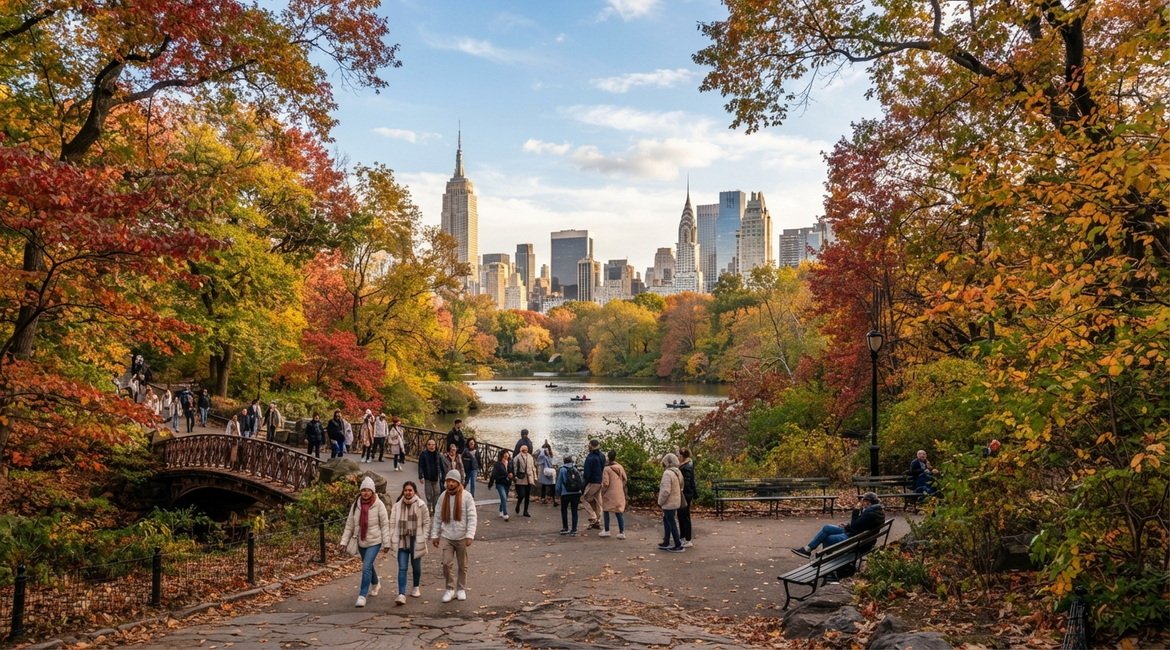
October is one of the most appealing months to experience New York City. Summer heat and humidity have usually faded, walking becomes more comfortable, and the city’s parks begin transitioning from green to shades of yellow, orange and red. The month also offers an interesting balance between seasons. Early October can still feel pleasantly mild during the afternoon, while late October often feels distinctly autumnal, especially after sunset. For visitors, that means October works particularly well for itineraries built around walking. Central Park, the High Line, Greenwich Village, Brooklyn Bridge and waterfront neighborhoods are generally more comfortable to explore than during the hottest part of summer or the coldest part of winter. October does have tradeoffs. It is not a secret season with an empty city. Popular attractions remain busy, hotel prices can be high, and fall foliage does not follow an exact calendar. This guide explains what October in New York is really like and how to plan around the weather, changing leaves, crowds and seasonal events.
Is October a Good Time to Visit New York City?
October is a particularly attractive month for travelers who want to spend significant time outdoors. Temperatures are generally more comfortable for long walks than during midsummer, while winter cold has not yet arrived. That matters in New York because walking is a major part of sightseeing. Even visitors who use the subway regularly may spend hours each day exploring parks, neighborhoods and waterfronts on foot. October also adds fall scenery. Central Park is the obvious destination, but autumn color appears in smaller parks, residential streets and other green spaces throughout the city. The biggest uncertainty is timing. Trees do not change color according to a fixed tourism calendar. Temperature, rainfall and other weather conditions influence the progression each year. If foliage is one of the main reasons for your trip, keep your expectations flexible.
NYC in October at a Glance
| Factor | What to Expect |
|---|---|
| Daytime Weather | Cool to mild, often comfortable for walking |
| Average High | Around 65°F (18°C) |
| Average Low | Around 51°F (11°C) |
| Fall Colors | Develop through the month; timing varies by year |
| Crowds | Popular attractions remain busy |
| Walking | Generally excellent conditions |
| Trip Length | 4–5 full days works well for a first visit |
October weather can change quickly, so monthly averages are useful for general planning but should never replace the forecast for your actual travel dates.
New York City Weather in October
October is a transition month in New York. Central Park’s long-term climate normals put the average October high around 65°F (18°C) and the average low around 51°F (11°C). Those averages hide a considerable difference between the beginning and end of the month. Early October can occasionally produce afternoons that feel almost like an extension of September. By late October, cool mornings and evenings become much more noticeable.
Rain is possible throughout the month. Instead of assuming every day will provide perfect fall weather, build an itinerary that includes both outdoor and indoor options. For many visitors, the biggest advantage is simply the absence of summer’s persistent heat. Long walks become considerably more pleasant.
Early October vs Late October
The first and final weeks of October can feel surprisingly different. Early October generally provides the better chance of mild afternoon temperatures and greener landscapes. You may see the first obvious patches of yellow and orange appearing in parks, but the city is not necessarily at its most colorful yet. Mid-October moves deeper into the transition. Cooler evenings become more common and fall colors become increasingly noticeable. Late October typically provides a stronger autumn feeling, with more changing foliage and cooler temperatures. It also brings Halloween activities toward the end of the month.
| Period | Typical Experience |
|---|---|
| Early October | Milder afternoons, more green foliage |
| Mid-October | Increasing autumn color and cooler evenings |
| Late October | Stronger fall atmosphere and Halloween season |
These are general patterns, not guarantees. Fall foliage and temperatures vary from year to year.
Fall Foliage in New York City
Autumn color is one of the biggest reasons to visit New York in October. But foliage in the city does not necessarily peak at the same time as destinations farther north in New York State. New York City’s warmer urban environment can keep some trees green later into fall. That means travelers visiting in early October should not assume they will find every park covered in red and orange leaves.
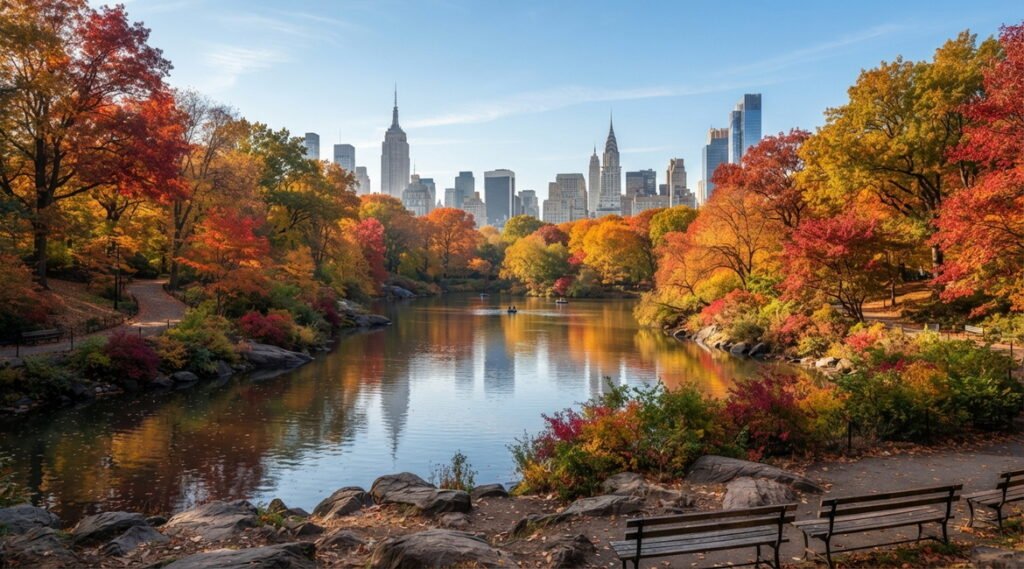
Color generally develops gradually. Different tree species also change at different times, so a park can contain green trees beside brilliant yellow or orange ones. This actually creates some of the most attractive autumn landscapes. Rather than planning around one supposed “peak foliage day,” treat fall color as something that evolves throughout your trip.
Central Park in October
Central Park is one of the best places to experience October in New York. The combination of autumn trees, lakes, bridges, rock formations and Manhattan buildings creates a landscape that feels very different from summer. You do not need to explore all 843 acres in one visit. For a first trip, concentrate on a manageable section of the park.
The Mall, Bethesda Terrace, Bethesda Fountain, Bow Bridge and nearby lake areas can form a natural walking route through the central and southern sections. If foliage is particularly good, leave more time than you normally would. October is a month when Central Park is not simply transportation between attractions. The park itself can become one of the main experiences of the trip. Morning can provide softer light and fewer visitors in some areas, while late afternoon creates warmer autumn tones.
What to Wear in NYC in October
Layers are the easiest solution to October’s changing temperatures. A comfortable afternoon can turn into a noticeably cooler evening once the sun goes down. For many days, a light jacket or medium-weight outer layer works well. Add sweaters or other layers that can be removed when temperatures rise. By late October, you may want a warmer jacket, particularly for mornings, evenings and waterfront walks. Comfortable walking shoes are essential regardless of the week. New York sightseeing can easily involve several miles of walking in a day. A compact umbrella or lightweight rain layer is also useful. Check the forecast shortly before departure before deciding exactly how much cold-weather clothing to bring.
How Crowded Is NYC in October?
October should not be treated as a low-season month with empty attractions. Pleasant weather makes it attractive for city breaks, and major sights remain busy. Times Square, Rockefeller Center, observation decks, the Statue of Liberty and popular museum exhibits can all attract substantial visitor numbers. Central Park can also become busy on pleasant weekends.
The advantage is that New York is large. Move away from a few famous locations and the experience can change quickly. Rather than worrying about avoiding crowds everywhere, plan the most popular attractions carefully and leave less structured time for neighborhoods and parks.
Best Things to Do in October
October favors activities that combine sightseeing with being outdoors. Central Park should be high on the list, particularly from the middle of the month onward when fall color may become more noticeable. The High Line is another good choice. Its landscaping changes with the season, and cooler temperatures make the elevated walk more comfortable than on hot summer afternoons. Brooklyn Bridge and Brooklyn Bridge Park can be combined into another outdoor day. Greenwich Village is particularly enjoyable on foot, with tree-lined streets and historic architecture adding to the fall atmosphere.
October is also a good month for an observation deck because clear fall days can provide excellent visibility. Keep at least one major museum in the itinerary as an alternative when the weather is less cooperative.
Halloween in New York City
Halloween adds another seasonal layer to late October. Decorations begin appearing around residential neighborhoods, shops and public spaces before October 31. Greenwich Village becomes especially associated with Halloween because of the annual Village Halloween Parade. If you are visiting specifically for October 31, expect parts of Greenwich Village to be much busier than on an ordinary evening.
Families can also find seasonal activities elsewhere in the city. Because individual events, dates and admission policies can change from year to year, check current schedules shortly before traveling if a particular Halloween event is important to you. Even without attending an organized event, walking through decorated residential streets can provide a distinctly different New York experience.
Best Parks for Fall Colors
Central Park is the obvious starting point, but it is not the only place to look for autumn scenery. Prospect Park in Brooklyn provides large wooded areas, lawns and a lake in a setting that can feel much farther from central Manhattan than it actually is. Fort Tryon Park in Upper Manhattan provides another very different environment, with elevated landscapes and Hudson River views. Smaller parks also contribute to the fall atmosphere. Washington Square Park, Bryant Park and neighborhood green spaces can add seasonal color without requiring a dedicated half-day visit. For first-time visitors with limited time, Central Park remains the easiest option because it combines fall scenery with an essential New York experience.
Walking the Brooklyn Bridge in October
October weather can be particularly well suited to walking Brooklyn Bridge. Cooler temperatures make the exposed crossing more comfortable than during a hot summer afternoon. One practical route is to combine Lower Manhattan with the bridge before continuing into DUMBO and Brooklyn Bridge Park.
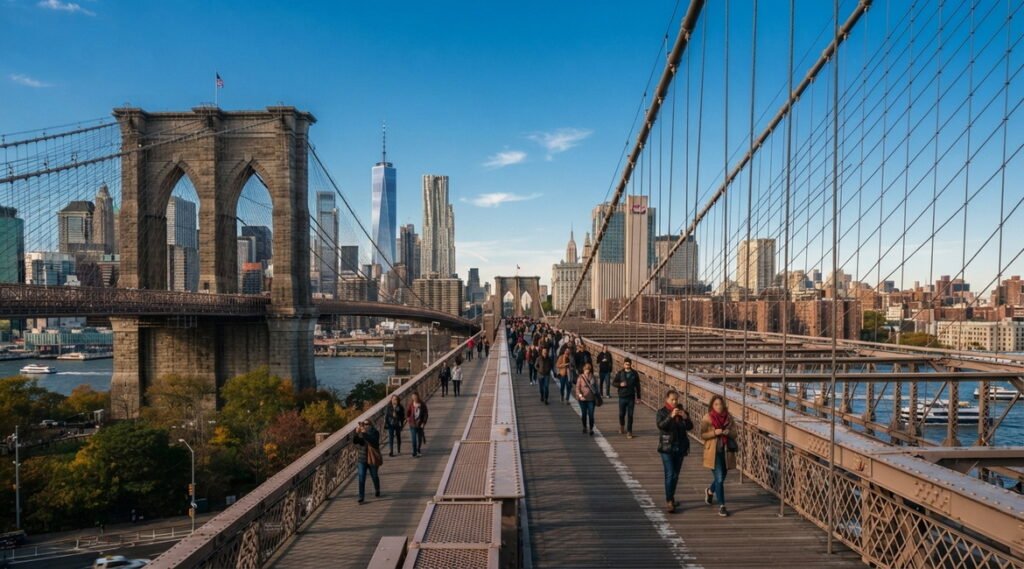
The waterfront provides classic views toward Lower Manhattan and makes a good place to finish the day around sunset. Remember that the bridge is exposed to wind. An afternoon that feels comfortable between Manhattan buildings may feel cooler once you are over the East River. Bring an extra layer when the forecast is breezy, especially later in October.
Best Free Things to Do in October
October is particularly good for travelers who want to combine New York sightseeing with free outdoor experiences. Central Park is the obvious choice. Walking across Brooklyn Bridge costs nothing, and Brooklyn Bridge Park provides excellent skyline views afterward. The High Line is another free outdoor attraction that works naturally with Chelsea and Greenwich Village. You can also explore neighborhoods such as SoHo, Greenwich Village and the Upper West Side without buying an attraction ticket.
Staten Island Ferry provides another free way to experience New York Harbor and see the Statue of Liberty from the water. Combining free outdoor experiences with a few carefully selected paid attractions can keep a New York trip more manageable without sacrificing the city’s highlights.
Visiting NYC With Kids in October
October can work especially well for a family trip. The cooler weather generally makes long sightseeing days easier than during midsummer, while temperatures are usually less challenging than in winter. Central Park provides a natural place to combine sightseeing with unstructured time. Families can walk through the autumn landscape, visit playgrounds and pair the park with the American Museum of Natural History.
The High Line and Brooklyn waterfront are also good outdoor options with older children. Late October adds Halloween atmosphere, which can make the city particularly fun for families. Avoid packing every day with timed reservations. Even in comfortable weather, children may enjoy the trip more when there is time for parks, snacks and slower neighborhood walks.
What to Do on a Rainy October Day
October does not guarantee clear weather. Fortunately, New York has enough indoor attractions that rain does not need to ruin a sightseeing day. Large museums are the easiest alternative. The Metropolitan Museum of Art and American Museum of Natural History can each occupy several hours. Grand Central Terminal and the New York Public Library fit naturally into a Midtown day.
You can also move a Broadway performance or other indoor experience onto a poor-weather day when your schedule allows. The easiest strategy is to avoid fixing every outdoor activity to a specific day months in advance. When the forecast becomes reliable, assign Central Park, Brooklyn Bridge and other long walks to the better-weather periods.
Where to Stay in October
Midtown remains one of the simplest bases for first-time visitors. Its central location provides convenient access to major attractions and useful subway connections. The Upper West Side becomes especially attractive in October because Central Park is immediately nearby. You can easily visit the park more than once rather than treating it as a single scheduled attraction. Chelsea is another strong option for travelers who want to divide their time between Midtown and Downtown. It also provides easy access to the High Line. Greenwich Village offers more neighborhood atmosphere, while Lower Manhattan can work well when Brooklyn and Downtown attractions are important parts of the itinerary. October is a popular travel period, so compare accommodation early if your dates are fixed.
How Many Days Do You Need?
Four to five full days works well for a first October trip. With four days, you can divide sightseeing between Midtown, Central Park, Lower Manhattan and Brooklyn, and the West Side. Five days creates more room for a museum and slower neighborhood exploration. October’s comfortable walking weather can make a longer stay particularly rewarding. Instead of moving directly between landmarks, you can spend more time exploring the streets connecting them. Families may also appreciate five days because it allows shorter sightseeing blocks without sacrificing major attractions. Three days can still work, but the itinerary needs to remain selective.
October NYC Planning Tips
Do not choose your travel dates based on an exact predicted foliage peak months in advance. Fall color varies from year to year. Instead, think of October as a progression from early autumn toward stronger fall conditions. Pack layers so you can adjust between warmer afternoons and cooler mornings or evenings. Keep Central Park and Brooklyn Bridge flexible until you have a reliable short-term weather forecast. If Halloween is important, late October provides the strongest seasonal atmosphere, but October 31 can also affect crowds and movement around Greenwich Village. Reserve high-priority timed attractions in advance, but do not schedule every hour. October is one of the months when simply walking through New York can be one of the best parts of the trip.
FAQ
Is October a good month to visit New York City?
Yes. October generally combines comfortable walking weather with autumn scenery and plenty of outdoor sightseeing opportunities. Popular attractions remain busy, but the weather can make exploring the city more comfortable than during summer or winter.
How cold is New York City in October?
Central Park’s long-term climate normals put the average October high around 65°F (18°C) and the average low around 51°F (11°C). Early October is generally milder than late October, and individual days can vary considerably.
Can you see fall colors in NYC in October?
Yes, fall colors develop across New York City’s parks during October, but timing varies each year. Early October may still have substantial green foliage, while stronger autumn colors often become more noticeable later in the month and can continue into November.
What should I wear in NYC in October?
Pack comfortable layers, a light or medium-weight jacket and supportive walking shoes. Later in October, a warmer outer layer can be useful for mornings, evenings and waterfront areas. Check the forecast before departure because temperatures can change significantly during the month.
Is New York crowded in October?
New York remains busy in October, particularly at major attractions and in Central Park on pleasant weekends. Crowds vary considerably by neighborhood, time of day and specific events, so they do not affect every part of the city equally.
Recommended Next Steps
For a first October visit, plan around four to five full sightseeing days. Give Central Park enough time to be an experience rather than simply another stop between attractions. Combine Midtown landmarks into one geographic cluster, then dedicate separate time to Lower Manhattan and Brooklyn. Use another day for the High Line, Chelsea and Greenwich Village, where October weather makes neighborhood walking particularly enjoyable. Keep at least one museum or other indoor attraction flexible so you have an easy alternative if rain arrives. If fall foliage is important, remember that the exact timing cannot be guaranteed. Late October generally creates a stronger autumn atmosphere than the beginning of the month, but conditions vary every year. Families can take advantage of the cooler weather by combining major attractions with parks and longer outdoor walks. Pack layers, bring comfortable shoes and avoid scheduling every hour of the trip. October is one of those months when New York itself becomes part of the attraction. The changing trees, cooler air and walkable weather make simply moving through Central Park, Greenwich Village or the Brooklyn waterfront one of the most enjoyable parts of the visit.