
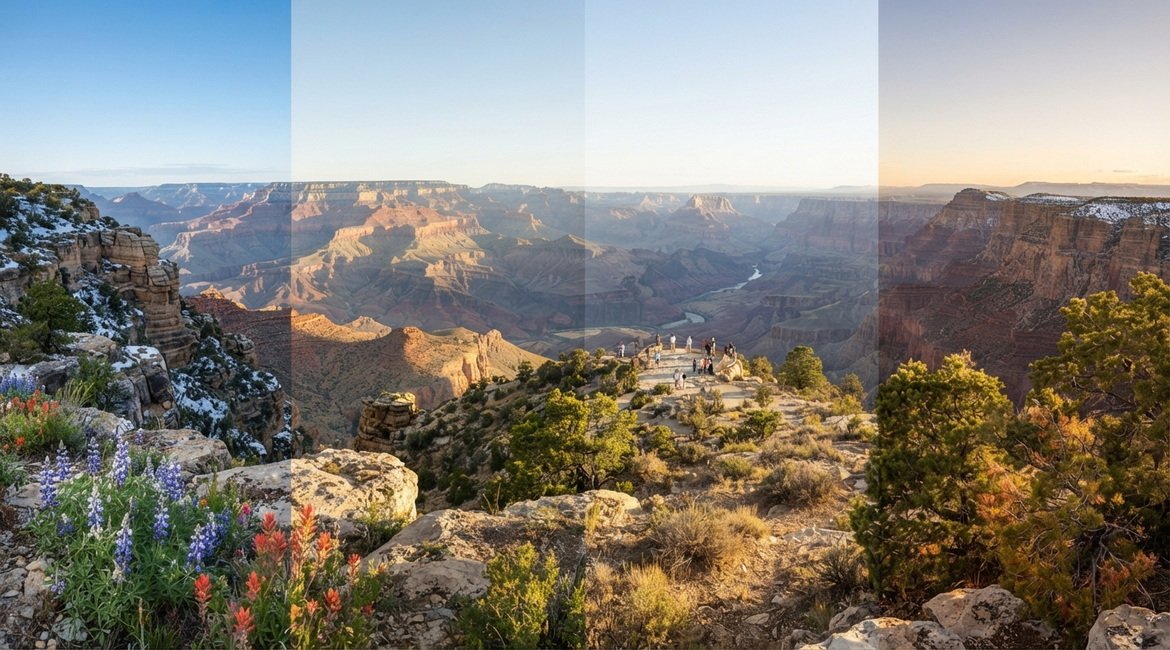
The Grand Canyon can be visited throughout the year, but choosing the right month makes a major difference. Spring brings increasingly comfortable temperatures and longer days, although snow and cold weather can remain possible along the rim. Summer provides reliable access to most viewpoints and the North Rim, but it also brings larger crowds, intense heat inside the canyon and seasonal thunderstorms. Fall combines cooler temperatures with generally favorable sightseeing conditions, making September and October particularly attractive for many visitors. Winter creates an entirely different Grand Canyon experience. Crowds decrease, snow can transform the landscape, and the South Rim remains open, but icy roads, cold temperatures and temporary weather-related disruptions become possible. The first decision is therefore not simply which month to visit. You also need to decide whether you are visiting the South Rim, North Rim or another part of the Grand Canyon region. For most first-time visitors, the South Rim is the simplest choice because it remains accessible throughout the year and provides the widest range of visitor services.
When Is the Best Time to Visit the Grand Canyon?
For many first-time visitors, late spring and early fall provide the easiest balance. May can offer pleasant rim conditions before peak summer, although cold weather and even late snow remain possible. September is another attractive period. Summer crowds begin to ease, temperatures gradually cool, and the South Rim remains fully accessible. October can be especially pleasant for sightseeing, but nights along the rim become considerably colder. April is another option for travelers comfortable with more variable weather. The best period also depends on elevation. Conditions along the rim can be mild while temperatures deep inside the canyon are dramatically warmer. That difference becomes especially important from late spring through early fall.
Grand Canyon Seasons at a Glance
| Season | What to Expect | Good For |
|---|---|---|
| Spring | Changeable weather, warming days | Scenic viewpoints and sightseeing |
| Summer | Mild rim temperatures, extreme inner-canyon heat | North Rim access and family vacations |
| Fall | Cooling temperatures, generally drier later in season | Sightseeing and road trips |
| Winter | Cold, snow and possible icy roads | South Rim scenery and fewer visitors |
Grand Canyon Weather by Month
Weather at the Grand Canyon varies dramatically because of elevation. The South Rim sits at roughly 7,000 feet above sea level, while the North Rim is even higher. The Colorado River at the bottom of the canyon is thousands of feet lower and can be dramatically hotter. That means there is no single Grand Canyon temperature that describes the entire park.
| Month | South Rim Conditions | Trip Style |
|---|---|---|
| January | Cold, snow possible | Winter scenery |
| February | Cold, winter conditions | Quiet South Rim visit |
| March | Cold to cool, variable | Early spring sightseeing |
| April | Cool to mild, changeable | Sightseeing with layers |
| May | Mild days, cold nights possible | Excellent general sightseeing |
| June | Warm, usually dry | Rim sightseeing |
| July | Warm at rim, very hot below | Viewpoints and early-day activities |
| August | Warm, thunderstorms possible | Rim sightseeing with weather awareness |
| September | Mild to warm | Excellent sightseeing |
| October | Cooler, cold nights | Excellent fall visit |
| November | Cold, snow possible | Quieter South Rim sightseeing |
| December | Winter conditions | Snowy scenery and fewer crowds |
Grand Canyon in Spring
Spring is one of the most interesting transition periods at the Grand Canyon. April can bring comfortable sunshine one day and much colder conditions another day. Snow remains possible at the higher elevations, while temperatures inside the canyon can already become significantly warmer. May generally provides more reliable conditions for sightseeing along the South Rim. Days become warmer and late spring is typically dry, although visitors should still arrive prepared for temperature changes.
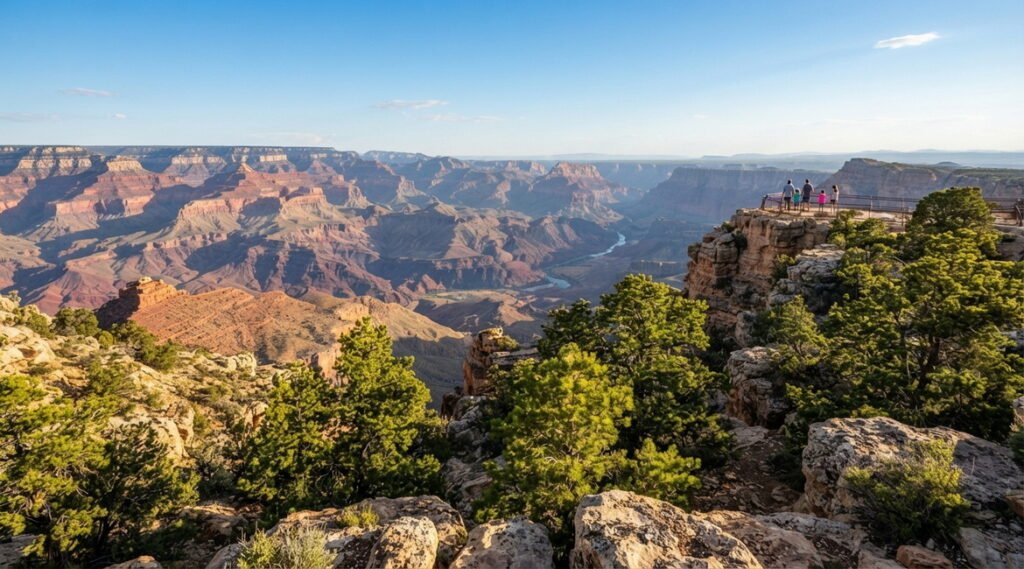
Spring can also be windy. Instead of packing according to the warmest afternoon forecast, bring layers that can handle a cold morning and warmer afternoon. For first-time sightseeing focused on overlooks, scenic roads and Grand Canyon Village, May is particularly attractive.
Grand Canyon in Summer
Summer is the busiest and most straightforward season for access, but weather varies dramatically depending on where you are in the canyon. South Rim daytime temperatures are often relatively pleasant because of the elevation. The situation is completely different thousands of feet below the rim. Temperatures near the Colorado River can exceed 100°F, or 38°C.
That difference is easy to underestimate when standing in comfortable weather at a viewpoint. Summer is also the primary season for visiting the North Rim. July, August and early September can bring thunderstorms associated with the Southwest monsoon. If your summer visit is mainly about viewpoints and rim sightseeing, the season can work very well. Plan around current weather conditions rather than assuming every day will be hot, dry and cloudless.
Grand Canyon in Fall
Fall is one of the most attractive periods for a Grand Canyon road trip. September remains relatively warm while gradually moving away from peak summer conditions. By October, daytime temperatures along the rim are cooler and mornings and evenings can feel cold. The late-summer thunderstorm pattern generally decreases as fall progresses.
October is particularly appealing when your trip includes long periods at viewpoints and scenic drives. The main tradeoff is temperature variation. A sunny afternoon can feel pleasant while sunset and early morning require substantially warmer clothing. Fall is also important for North Rim planning because its main visitor season is much shorter than the South Rim season.
Grand Canyon in Winter
Winter transforms the Grand Canyon. Snow along the rim can create some of the park’s most dramatic scenery, and visitor numbers are generally lower than during the main spring-through-fall travel season. But winter also introduces uncertainty. Snow and ice can affect roads, viewpoints and walking surfaces. Temperatures can fall well below freezing, particularly overnight.
The South Rim remains open year-round, although individual facilities and roads can be affected by weather. The North Rim is fundamentally different because normal vehicle access is seasonal. For a winter visit, keep the itinerary flexible and check current road and park conditions shortly before traveling.
South Rim vs North Rim Seasons
South Rim and North Rim should almost be treated as two different destinations when planning around the calendar. The South Rim is open throughout the year and is the more straightforward option for most first-time visitors. The North Rim sits higher, receives considerably more snow and has a much shorter visitor season.
| Factor | South Rim | North Rim |
|---|---|---|
| General access | Year-round | Seasonal |
| Elevation | About 7,000 ft | About 8,000 ft |
| Summer | Pleasant at rim, busy | Cooler and seasonal |
| Winter | Open, snow possible | Normal road access closed |
| First visit | Simpler choice | More remote experience |
As of 2026, North Rim access and services are also affected by ongoing recovery work, so visitors should verify current conditions before making plans.
Best Time for the South Rim
The South Rim works throughout the year, which gives travelers much more flexibility. For a first visit, May, September and October provide particularly useful combinations of weather and accessibility. April can also be attractive if you are prepared for variable spring conditions. June provides warmer and generally dry conditions but moves closer to the busy summer travel period. July and August are popular because of school vacations and generally pleasant rim temperatures, although thunderstorms and inner-canyon heat become important considerations. Winter offers fewer crowds and dramatic scenery but requires more flexibility. If this is your only Grand Canyon visit and you want straightforward sightseeing, late spring or early fall is an excellent place to start.
Best Time for the North Rim
The North Rim requires more careful seasonal planning. Its higher elevation makes it cooler than the South Rim and creates a much longer winter closure period. For 2026, the main North Rim season runs from May 15 through October 15, with limited visitor services as recovery and restoration continue.
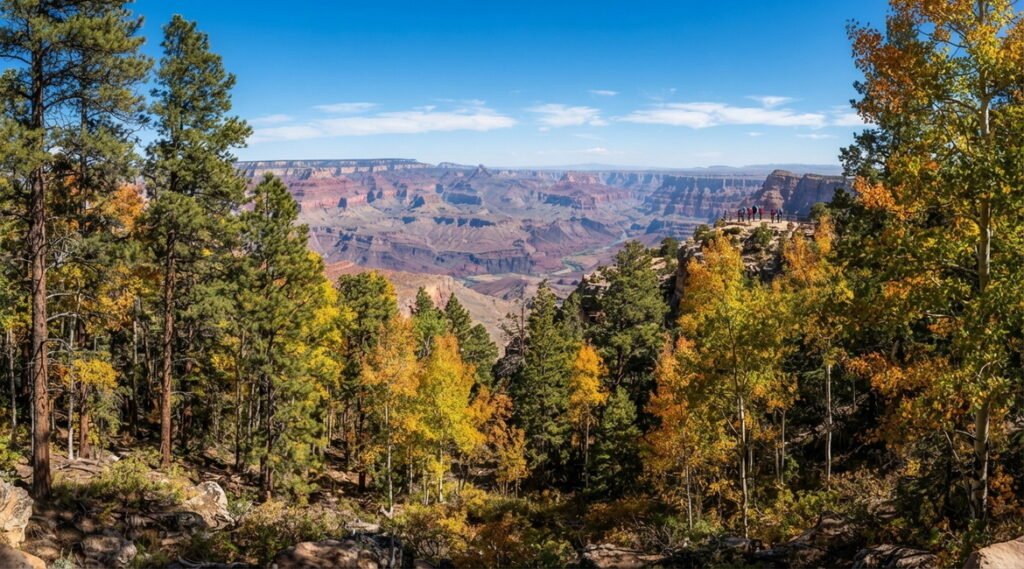
Summer provides the most reliable access. September can be particularly appealing because temperatures begin cooling while the seasonal roads are still normally accessible. October becomes more complicated as the main season approaches its end and colder weather becomes increasingly possible. Always check the current North Rim status before traveling because seasonal dates and available services are not identical every year.
Best Time for Fewer Crowds
Spring, summer and fall bring the largest visitor numbers. For travelers prioritizing fewer people, late fall and winter can provide a quieter South Rim experience. November through February generally sees fewer visitors, although the weather tradeoff is substantial. Snow, ice and cold temperatures can affect plans. Early spring can also provide lower visitor levels than peak summer, but weather remains unpredictable. Do not choose winter purely to avoid crowds unless you are comfortable with winter driving conditions and a more flexible itinerary. A useful alternative is visiting during a popular season but arriving at viewpoints earlier in the day and staying overnight near the South Rim rather than trying to fit everything into a rushed day trip.
Best Time for Families
Late spring and early fall are especially practical for family trips. May provides long daylight and generally improving weather. September offers another strong combination of accessible viewpoints and temperatures that are beginning to cool after summer. October can also be excellent when your family is comfortable with colder mornings and evenings.
Summer works well for families who need to travel during school vacation, but avoid planning the day as though temperatures are the same everywhere. Conditions at the rim and deep inside the canyon can be dramatically different. For a family sightseeing trip, focus on established viewpoints, scenic transportation and age-appropriate activities rather than trying to fit too much into one day.
Summer Heat at the Grand Canyon
The phrase “Grand Canyon weather” can be misleading. During summer, the South Rim may have daytime temperatures in the 80s°F, while temperatures near the river can exceed 100°F. The temperature generally increases as elevation decreases. That means conditions can change substantially over a relatively short horizontal distance. Visitors who only plan to explore established rim viewpoints will experience a very different summer day from people traveling into lower elevations. Do not use a South Rim forecast to assume conditions are equally mild everywhere within the canyon. For ordinary sightseeing, bring water, sun protection and check the current forecast before spending extended periods outdoors.
Grand Canyon During Monsoon Season
July, August and early September can bring powerful summer thunderstorms. Days may begin with clear skies before clouds build later. Storms can produce lightning, strong winds and intense localized rainfall.
Weather can also vary dramatically across such a large landscape. A storm affecting one section of the park does not necessarily mean identical conditions everywhere. Check the current forecast and park alerts on the day of your visit. If thunderstorms are developing, follow park guidance and avoid exposed areas.
Is Winter Worth It?
Winter can provide one of the most visually memorable versions of the South Rim. Fresh snow creates a striking contrast against the red and orange canyon walls. The season also brings fewer visitors. But winter is not simply a quieter version of summer. Roads and walking surfaces can become icy, storms may temporarily obscure canyon views, and individual roads or facilities can be affected. Temperatures can be very cold, particularly after sunset and early in the morning. A winter Grand Canyon trip works best when you can keep the schedule flexible. If conditions deteriorate, changing your sightseeing plan should be expected rather than treated as a ruined itinerary.
April–May vs September–October
Both periods can provide excellent conditions, but they feel different.
| Factor | April–May | September–October |
|---|---|---|
| Temperature trend | Getting warmer | Getting cooler |
| Snow possibility | Still possible at rim | Possible later in fall |
| Daylight | Increasing | Decreasing |
| North Rim | Normally opens in mid-May | Main season through mid-October |
| South Rim | Open | Open |
For South Rim sightseeing, both periods are strong choices. May provides more daylight and increasingly warm conditions. September and early October can provide a particularly comfortable combination after the peak summer period.
Best Time for a Las Vegas to Grand Canyon Trip
If Las Vegas and the Grand Canyon are part of the same Southwest vacation, spring and fall make the combination considerably easier. Las Vegas can be extremely hot during summer, while the South Rim remains much cooler because of its elevation. In winter, the situation reverses in another way: Las Vegas may have mild daytime conditions while the Grand Canyon South Rim has snow and freezing temperatures.
April, May, September and October provide a useful middle ground for combining the two destinations. Still, always check both forecasts separately. Las Vegas weather does not tell you what conditions will be like at the South Rim. If you are driving, check current road conditions before departure, particularly during colder months.
How Many Days Do You Need?
One full day provides a basic introduction to the South Rim if your goal is primarily scenic viewpoints. Two days creates a much better experience. An overnight stay allows you to see the canyon at different times of day and removes some of the pressure to rush between viewpoints. Two nights becomes particularly useful when the Grand Canyon is part of a larger road trip and you want a slower schedule. Season also matters. During winter, additional flexibility helps if weather affects part of your sightseeing day. During busy periods, staying overnight also allows you to experience early morning and evening after many day visitors have left. For most first-time South Rim visitors, one or two nights provides a practical balance.
Seasonal Planning Tips
Choose your rim before choosing your travel dates. The South Rim is open year-round, while the North Rim has a much shorter season. Do not assume Grand Canyon weather will match Las Vegas, Phoenix or other lower-elevation Southwest destinations. Check the forecast specifically for the area you plan to visit. Bring layers during spring and fall because temperature changes between morning and afternoon can be substantial. During summer, remember that the inner canyon can be dramatically hotter than the rim. During winter, check road conditions and allow flexibility for snow and ice. Reserve accommodation early when traveling during popular spring, summer and fall periods. Finally, check current park alerts shortly before your visit. Road access, shuttle operations, weather and individual facilities can change independently of the normal seasonal pattern.
FAQ
What is the best month to visit the Grand Canyon?
For many first-time South Rim visitors, May, September and October provide a useful combination of comfortable sightseeing conditions and full access. April can also work well if you are prepared for more variable weather.
Is the Grand Canyon too hot in summer?
Summer temperatures along the South Rim are generally much milder than temperatures deep inside the canyon. Near the Colorado River, daytime temperatures can exceed 100°F, while the higher South Rim can be considerably cooler.
Can you visit the Grand Canyon in winter?
Yes. The South Rim remains open year-round. Winter visitors should be prepared for snow, ice, freezing temperatures and possible temporary road or facility disruptions during storms.
When is the North Rim open?
North Rim access is seasonal. For 2026, the main season runs from May 15 through October 15, with limited services during ongoing recovery work. Future visitors should verify current seasonal dates and conditions before traveling.
What is the least crowded time to visit the Grand Canyon?
The South Rim generally receives fewer visitors from November through February. The tradeoff is winter weather, including possible snow, ice and temporary disruptions. Early spring and late fall can provide another compromise between visitor levels and weather.
Recommended Next Steps
For a first Grand Canyon trip, start with the South Rim unless another part of the park specifically fits your itinerary better. Then compare May, September and October. May provides longer days and warming spring conditions, while September offers comfortable sightseeing as summer begins to fade. October is excellent for cooler daytime exploration, but mornings and evenings can become cold. Choose summer when school schedules or North Rim access are important, but remember that temperatures inside the canyon are dramatically hotter than those along the rim. Choose winter when you are comfortable with cold weather, snow and a more flexible itinerary. If you are combining Las Vegas and the Grand Canyon, spring and fall provide the easiest overall balance because the temperature difference between the two destinations is less disruptive. Plan at least one full day for the South Rim. Whenever possible, stay one or two nights rather than treating the Grand Canyon as a rushed stop. Most importantly, check current weather, road conditions and park alerts shortly before departure. At the Grand Canyon, elevation can create dramatically different conditions within the same park, and the season on the calendar is only part of the story.