
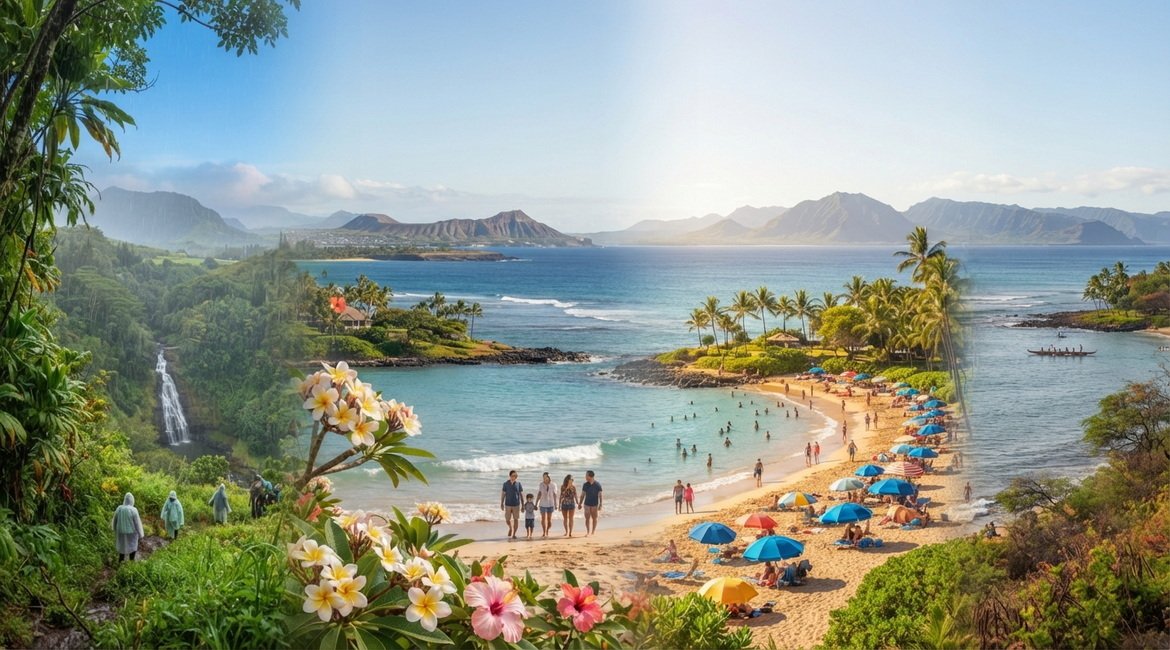
Hawaii is one of those destinations where there is no truly bad month to visit. Warm temperatures continue throughout the year, ocean temperatures remain comfortable, and the islands contain enough different microclimates that weather can vary considerably within a relatively short distance. Still, the experience changes depending on when you travel. Summer generally brings warmer and drier conditions. Winter is slightly cooler and wetter, especially on windward sides of the islands. Spring and fall sit between the two and can provide an appealing combination of pleasant weather and travel dates outside major holiday periods. For many first-time visitors, April, May, September and October are particularly useful months to consider. But choosing the best time for Hawaii is about more than temperature. Families may need to work around school calendars. Travelers hoping to see humpback whales should look toward winter. Beach-focused visitors may prefer the generally drier summer period, while travelers planning several islands need to consider that weather patterns can vary significantly from one coast to another. This guide explains Hawaii month by month and helps you choose a season based on the kind of vacation you want.
When Is the Best Time to Visit Hawaii?
April, May, September and October provide a useful starting point for many first-time visitors. These months sit outside the middle of winter and the main summer vacation period while still providing the warm conditions travelers expect from Hawaii. April and May offer increasingly warm spring weather. September remains warm after summer, while October provides another appealing transition month before the wetter winter period. However, there is an important difference between choosing the best month for Hawaii and choosing the best month for a particular island. Rainfall, surf and even temperature can vary depending on the island, elevation and which side of the island you visit. The western and southern leeward coasts are generally drier, while northeastern windward areas tend to receive more rain. For that reason, choosing your island and accommodation area can be just as important as choosing your month.
Hawaii Seasons at a Glance
Hawaii has much less seasonal temperature variation than most destinations in the continental United States. Instead of four dramatically different seasons, visitors can think in terms of a warmer, generally drier summer and a slightly cooler, wetter winter.
| Period | What to Expect | Works Well For |
|---|---|---|
| Spring | Warm, transitioning toward drier weather | First trips and island sightseeing |
| Summer | Warmest and generally drier | Beaches and family vacations |
| Fall | Warm, gradually transitioning wetter | Beach trips and flexible travel |
| Winter | Slightly cooler, wetter overall | Whales and winter escapes |
Hawaii Weather by Month
Hawaii’s temperatures remain relatively consistent throughout the year. At sea level, average daytime temperatures are around 85°F in summer and around 78°F in winter. That small temperature range is one reason Hawaii works as a year-round destination.
| Month | Typical Feel | Trip Style |
|---|---|---|
| January | Warm, wetter season | Whales and winter escape |
| February | Warm, occasional rain | Whale season and sightseeing |
| March | Warm, transitional | Beaches and sightseeing |
| April | Warm and increasingly dry | Excellent all-around month |
| May | Warm, generally drier | Beaches and island exploration |
| June | Warm and relatively dry | Summer vacations |
| July | Warm and dry in many resort areas | Families and beaches |
| August | Warm and humid at times | Beach vacations |
| September | Very warm | Excellent beach weather |
| October | Warm, transitional | Beaches and sightseeing |
| November | Warm, wetter pattern begins | Early whale season |
| December | Warm, wetter season | Winter escape and whales |
Hawaii in Spring
Spring is one of the easiest periods for a first Hawaii vacation. March still carries some characteristics of the wetter winter season, but conditions gradually transition as April arrives. April and May generally provide warm temperatures and increasingly dry conditions. This makes spring particularly useful when your itinerary includes beaches, scenic drives and outdoor sightseeing rather than spending every day in one resort.
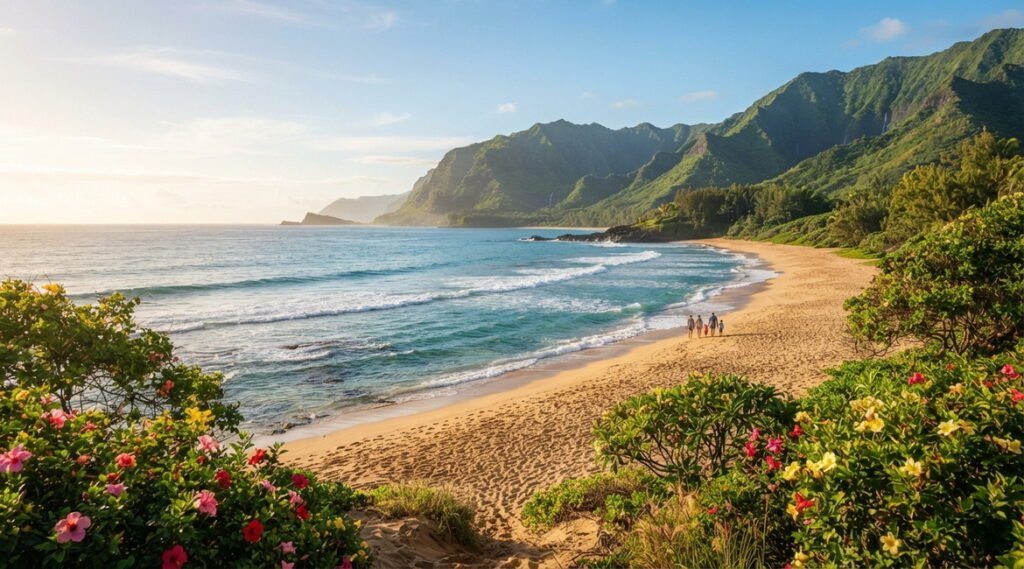
Spring also sits between the winter holiday period and the main summer vacation season. That does not mean every destination will be quiet or inexpensive. Hawaii remains popular year-round, and individual events and school breaks can affect demand. But April and May are excellent months to compare when your dates are flexible.
Hawaii in Summer
Summer in Hawaii is warm and generally drier. June, July and August work particularly well for travelers focused on beaches and families traveling during school vacations. At sea level, average daytime summer temperatures are around 85°F. The trade winds often help keep conditions comfortable, although periods with lighter winds can feel noticeably hotter and more humid.
Summer also brings differences in ocean conditions depending on the island and coastline. A beach that looks calm in one season can behave very differently in another. Always use current local beach and ocean information rather than assuming conditions will match photographs from a previous trip. Summer is also part of the Central Pacific hurricane season, although the existence of an official season does not mean a tropical cyclone will affect your particular vacation.
Hawaii in Fall
September and October are two of the most attractive months to consider for a Hawaii trip. Summer warmth remains, while the main summer vacation period has ended. September is particularly warm. October remains excellent for beaches while gradually transitioning toward Hawaii’s wetter winter pattern.
November is more transitional. Rainfall becomes more likely in many areas, but Hawaii’s localized weather patterns mean rain on one part of an island does not necessarily mean an entire day is lost. Fall also marks the beginning of the period when humpback whales return to Hawaiian waters. For travelers who want warm beach conditions but are not tied to summer vacation dates, September and October deserve particular attention.
Hawaii in Winter
Winter in Hawaii does not resemble winter across most of the mainland United States. At sea level, average daytime temperatures remain around 78°F. December through March are generally wetter than summer, but rainfall varies dramatically by location. Windward areas tend to receive more rain than leeward resort coasts.
Winter is also humpback whale season. Thousands of whales migrate into Hawaiian waters during winter and spring, making this a particularly interesting period for wildlife-focused travelers. The season can also bring larger surf to some north-facing shores. Ocean conditions should always be evaluated locally rather than assuming every beach has the same conditions.
Best Time for Beach Weather
Hawaii has beach weather throughout the year, but May through October generally provides the warmest and drier overall pattern. September can be particularly attractive because the ocean is warm and summer-like weather continues. April and May also provide a strong balance. The most important factor is not simply the month. Which coast you choose matters. Leeward resort areas generally receive less rain than windward areas. Ocean conditions also change seasonally. North-facing beaches can experience much larger surf during winter, while summer conditions may be calmer.
If swimming and beach time are your main priorities, check current conditions for the specific beach rather than relying only on an island-wide weather forecast.
Best Time for Fewer Crowds
Hawaii receives visitors throughout the year, so there is no completely quiet season across every island. The periods between major school vacations and holidays can provide a more relaxed experience. Late spring and early fall are useful places to look. May can provide warm, relatively dry conditions outside the main summer vacation period. September and parts of October can also work well after summer travel demand has eased. Winter requires more careful timing. The weeks around major holidays can be particularly popular. Instead of choosing a month based only on expected crowds, compare your exact dates and island.
Best Time for Families
Hawaii works for families throughout the year. Summer is the easiest period for many families because of school schedules and generally drier weather. But families with flexible travel dates should also consider April, May, September and October. These months can provide excellent beach weather while avoiding parts of the busiest vacation calendar.

Island choice matters as much as season. Oahu combines beaches with a large variety of attractions and services. Maui offers a strong mix of beaches and scenic landscapes. The Big Island provides especially varied environments and volcanic scenery. Kauai places a greater emphasis on lush landscapes and dramatic coastline. Families should therefore choose the island first and fine-tune the month afterward.
Best Time for Whale Watching
Humpback whales migrate to Hawaiian waters during winter and spring. They are generally present from November into May, although numbers vary considerably across the season. The main peak occurs from January through March.
January, February and March are therefore particularly attractive if seeing whales is one of your main reasons for visiting Hawaii. Whales can sometimes be seen from shore as well as during organized wildlife viewing. Wildlife sightings are never guaranteed. Visitors should also follow all current wildlife protection rules and maintain required distances.
Rainy Season in Hawaii
Hawaii’s wetter season generally runs from November through March. That does not mean it rains continuously. Rainfall is highly localized because mountains interact with the trade winds. The northeastern, or windward, sides of the islands generally receive more rainfall. Western and southern leeward areas tend to be drier.
This creates one of Hawaii’s most useful travel advantages. Clouds and rain in the mountains do not automatically mean poor beach weather everywhere on the island. Short tropical showers can also be followed by sunshine. When weather matters for a particular day’s plans, check the forecast for the specific coast rather than looking only at a statewide forecast.
Hurricane Season in Hawaii
The official Central Pacific hurricane season runs from June 1 through November 30. This overlaps with several months that otherwise provide excellent Hawaii travel conditions. The existence of hurricane season should therefore be understood as a planning consideration rather than a reason to automatically avoid Hawaii for half the year. Most vacations during this period are not directly affected by a tropical cyclone. Conditions vary from year to year, and individual storms can develop or change direction. If you travel during hurricane season, monitor official forecasts as the trip approaches. Flexible reservations and appropriate travel insurance can also be useful when weather disruption is a concern.
Best Time to Visit Oahu
Oahu works well throughout the year because it combines beaches, Honolulu, cultural attractions and sightseeing. April, May, September and October are particularly attractive for a first trip when you want warm weather and flexibility. Summer provides warm, generally drier conditions and works well for families. Winter brings a different experience to the North Shore, where seasonal ocean conditions can become dramatically more powerful. Waikiki and the leeward side have different conditions from the North Shore, so do not treat the entire island as one weather zone. For a first-time Oahu trip centered on sightseeing and beaches, spring and early fall provide an excellent balance.
Best Time to Visit Maui
Maui is also a year-round destination. Spring and fall provide an attractive combination of warm weather and dates outside the middle of the summer and winter holiday periods. Winter has another major advantage: whales. Maui’s surrounding waters are an important winter habitat for humpback whales, and January through March falls within the peak period for humpback abundance around Hawaii.
Summer is useful for travelers focused heavily on beaches. Remember that Maui contains several distinct microclimates, so weather around a resort area may be completely different from conditions on another part of the island.
Best Time to Visit the Big Island
The island of Hawaii contains some of the most dramatic climate differences in the state. The Kona and Kohala sides are generally drier than the Hilo side. Higher elevations can also be much colder than the coast. This means there is no single Big Island forecast that accurately represents an entire sightseeing day. Spring and fall provide good general conditions for combining beaches with island exploration. September and October remain warm along the coast, while April and May offer another useful window. Winter works well too, especially when you are prepared for greater rainfall on wetter parts of the island. Always check conditions separately for high-elevation destinations.
Best Time to Visit Kauai
Kauai is famous for its lush landscapes, and rainfall plays an important role in creating them. Weather varies substantially around the island. The North Shore is particularly green and can receive significant rainfall, while the southern Poipu area generally has a drier pattern. Late spring and summer can provide a useful combination for travelers who want to explore Kauai’s coastline and beaches. September can also be attractive.
Winter remains beautiful but can bring wetter conditions and larger surf on northern shores. If Kauai is your only island, choose your accommodation location carefully because the difference between the north and south sides can matter almost as much as the season.
April–May vs September–October
Both periods are strong choices for a first Hawaii vacation.
| Factor | April–May | September–October |
|---|---|---|
| Temperature | Warm | Very warm |
| Rain pattern | Moving toward drier summer | Moving toward wetter winter |
| Beach trips | Excellent | Excellent |
| Whales | Possible earlier in spring | Generally not peak season |
| Hurricane season | Outside official season | Inside official season |
April and May have an advantage if you prefer traveling outside the official Central Pacific hurricane season. September and October have an advantage if very warm ocean and beach conditions are a priority. For a normal sightseeing and beach vacation, both periods deserve comparison.
How Many Days Do You Need in Hawaii?
For a trip to one Hawaiian island, five to seven full days provides a practical amount of time. Five days works when you want a focused vacation and are comfortable with a fairly active itinerary. Seven days gives you more flexibility for beach time, weather changes and slower sightseeing. If you want to visit two islands, consider around 10 days or longer. Every island change uses part of a day once packing, hotel checkout, airport time, the flight and another check-in are included. Trying to visit three or four islands during a short vacation often creates more transportation than actual sightseeing. For most first-time visitors, experiencing one island properly is better than rushing through several.
Seasonal Planning Tips
Choose the island before focusing too heavily on the month. Weather differences between Oahu, Maui, Kauai and the Big Island can matter, but differences between opposite sides of the same island can also be substantial. For beach-focused trips, compare leeward resort areas where conditions tend to be drier. For winter trips, expect a greater chance of rain but do not assume every day will be wet. If whales are important, January through March provides the strongest general window. During the Central Pacific hurricane season, monitor official forecasts as your trip approaches. Check current ocean conditions every day before choosing a beach because surf and currents can change even when the weather looks perfect. Finally, do not over-plan an island vacation. Hawaii works particularly well when the itinerary leaves enough space for beaches, scenic stops and weather-related changes.
FAQ
What is the best month to visit Hawaii?
April, May, September and October are useful months to consider for a first trip. They combine warm weather with dates outside parts of the busiest summer and winter holiday periods. The ideal choice still depends on the island and activities you want.
What is the rainy season in Hawaii?
The wetter period generally runs from November through March. Rainfall varies significantly by island and location, with windward areas generally receiving more rain than leeward coasts.
When is Hawaii the least crowded?
Travel periods between major school vacations and holidays can feel less busy. May, September and parts of October are useful dates to compare, although visitor levels vary by island and exact week.
When is whale season in Hawaii?
Humpback whales are generally present in Hawaiian waters from November into May, with peak abundance typically occurring from January through March. Wildlife sightings are never guaranteed.
What is the best time for families to visit Hawaii?
Summer works well for families tied to school vacation schedules and generally provides warm, drier conditions. Families with flexible dates should also consider April, May, September and October.
Recommended Next Steps
For a first Hawaii trip, start by choosing your island before choosing an exact month. Oahu works particularly well when you want beaches combined with a large variety of sightseeing and city attractions. Maui provides a strong combination of beaches and dramatic landscapes. The Big Island is especially useful for travelers interested in varied scenery and volcanic environments. Kauai puts the greatest emphasis on lush landscapes and dramatic coastlines. Once you have chosen the island, compare April, May, September and October if your schedule is flexible. Choose April or May when you want warm conditions while moving into Hawaii’s generally drier summer pattern. Choose September or October when you prefer very warm beach weather after the main summer vacation period. Consider January through March when seeing humpback whales is an important part of the trip. For one island, five to seven full days provides a comfortable starting point. If you want two islands, around 10 days or longer makes the trip considerably easier. Whatever month you choose, check the weather and ocean conditions for the specific part of the island you plan to visit. In Hawaii, the difference between two coasts can sometimes matter more than the difference between two months.