
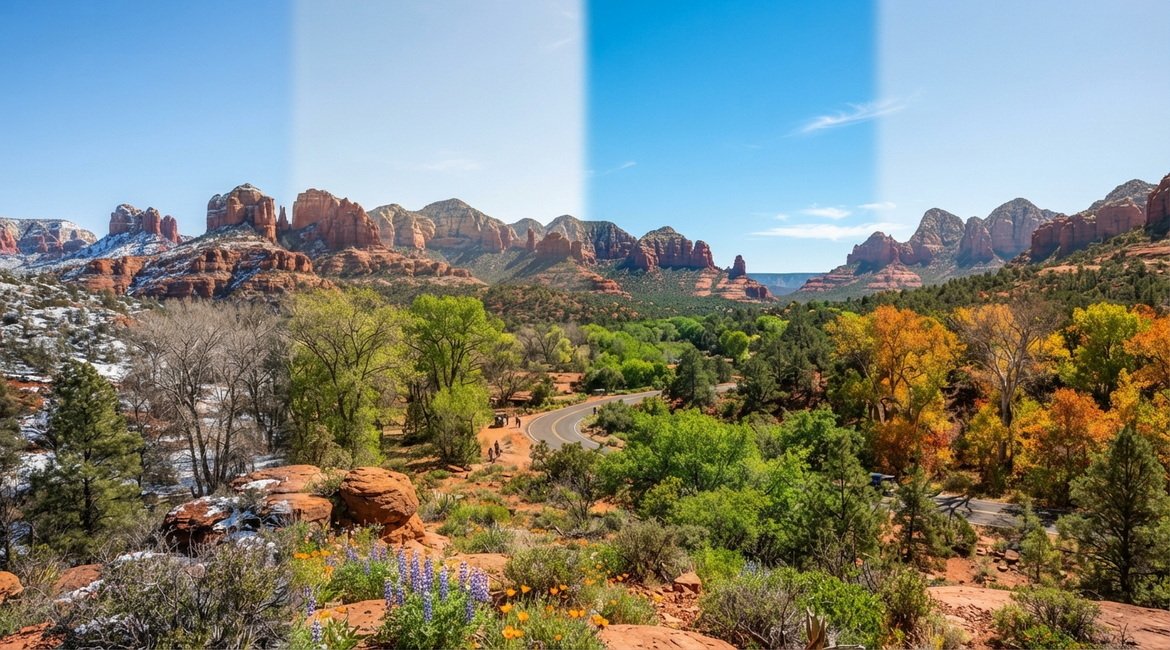
Sedona is a year-round destination, but the experience changes considerably with the seasons. Spring brings mild temperatures, longer days and excellent conditions for exploring the famous red rock landscape. Summer is warmer and requires more attention to the time of day, especially for outdoor plans. It also overlaps with northern Arizona’s monsoon season, when afternoon thunderstorms can change conditions quickly. Fall brings comfortable temperatures back to Red Rock Country and adds another attraction: changing leaves around Oak Creek Canyon. Winter is quieter and cooler. Occasional snow can create a spectacular contrast between white-covered ground and Sedona’s red sandstone formations. For many first-time visitors, spring and fall provide the easiest overall conditions. March through May and September through November offer a useful balance for scenic drives, viewpoints, town exploration and outdoor sightseeing. The ideal month still depends on what you want from the trip.
When Is the Best Time to Visit Sedona?
For most first-time visitors, April, May, October and early November are particularly useful periods to consider. April brings warmer spring conditions while avoiding the hottest part of the year. May is warmer again, with long daylight hours that make it easy to build a full sightseeing day. October offers a similar balance on the opposite side of summer. Days become more comfortable as temperatures fall, while the red rocks look especially impressive in the softer autumn light. Late October and early November can also bring fall color to Oak Creek Canyon and lower elevations around Sedona. March and September are good alternatives, although conditions can feel more transitional. The best choice ultimately depends on whether your priority is outdoor sightseeing, fall colors, fewer visitors, warmer weather or a quieter winter experience.
Sedona Seasons at a Glance
| Season | What to Expect | Works Well For |
|---|---|---|
| Spring | Mild to warm days, cool mornings | Outdoor sightseeing and first visits |
| Summer | Hot afternoons, monsoon storms possible | Early-day activities and creek areas |
| Fall | Warm to mild days, cooler evenings | Red rocks, fall color and road trips |
| Winter | Cool days, cold nights, occasional snow | Quieter sightseeing and photography |
Sedona sits at roughly 4,500 feet above sea level. That elevation helps moderate the climate compared with lower desert destinations in Arizona, but it also means nights can become much colder than visitors expect.
Sedona Weather by Month
Sedona has four distinct seasons rather than the consistently hot conditions visitors sometimes associate with Arizona. Spring warms gradually, summer brings the highest temperatures, fall cools quickly after sunset and winter nights can fall below freezing.
| Month | Typical Conditions | Trip Style |
|---|---|---|
| January | Cool days, cold nights | Quiet winter sightseeing |
| February | Cool, gradually warming | Scenic drives and viewpoints |
| March | Mild but variable | Spring sightseeing |
| April | Mild to warm | Excellent outdoor weather |
| May | Warm | Long sightseeing days |
| June | Hot and generally dry | Early-morning sightseeing |
| July | Hot, storms possible | Morning activities and flexible afternoons |
| August | Hot, monsoon pattern possible | Flexible summer sightseeing |
| September | Warm, gradually cooling | Late-summer and early-fall trips |
| October | Mild to warm | Excellent sightseeing |
| November | Cooler days and cold nights | Fall color and quieter travel |
| December | Cool, occasional winter weather | Winter scenery |
Sedona in Spring
Spring is one of Sedona’s most popular seasons for good reason. March begins the transition out of winter, with warmer afternoons but continued temperature changes. April provides a particularly useful balance for travelers who want to spend much of the day outdoors. May becomes warmer but still avoids the consistent heat of midsummer. The season works well for scenic drives, overlooks, town exploration and enjoying the red rock landscape.
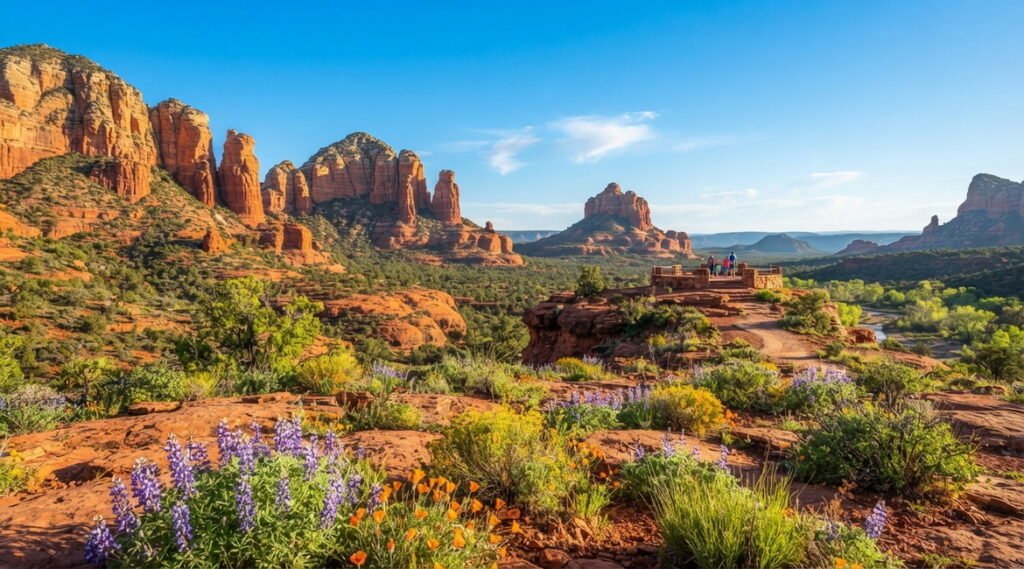
Spring’s main disadvantage is popularity. Popular trailheads, viewpoints and roads can become busy, particularly during weekends and holiday periods. If your dates are flexible, weekday sightseeing can make the experience easier.
Sedona in Summer
Sedona is cooler than Phoenix because of its higher elevation, but summer afternoons can still become very hot. June is typically hot and dry. By July, northern Arizona’s monsoon pattern becomes a more important part of trip planning. Afternoon thunderstorms can develop quickly during the summer monsoon period.
Summer works best when you adjust the day’s schedule to the conditions. Use cooler parts of the day for outdoor sightseeing and leave flexibility later in the day. Oak Creek also gives Sedona a different summer character from many desert destinations. The combination of red cliffs, green vegetation and water can be especially beautiful.
Sedona in Fall
Fall competes with spring as Sedona’s most appealing season. September can remain warm, particularly early in the month. October brings more comfortable daytime temperatures and increasingly cool evenings. Late October and early November add fall color to parts of Oak Creek Canyon.
The combination of red sandstone and yellow or orange leaves creates a very different landscape from Sedona’s classic desert appearance. Fall is also excellent for a broader Arizona road trip because temperatures are generally more manageable across much of the region than during midsummer. The tradeoff is popularity. October can be busy, especially during weekends.
Sedona in Winter
Winter is Sedona’s quietest-looking season and one of its most underrated. Daytime temperatures can be cool but comfortable for ordinary sightseeing when the weather is clear. Nights are much colder. Snow is possible, although Sedona receives far less than higher-elevation Flagstaff to the north.
When snow does fall, the contrast against the red rocks can be spectacular. Winter can therefore be particularly rewarding for photography. It also tends to be quieter than the main spring and fall travel periods. The tradeoff is greater weather uncertainty. Check conditions before driving, especially when your itinerary includes higher elevations around northern Arizona.
Best Time for Comfortable Weather
April, May and October provide some of the easiest conditions for a typical first trip. April is generally mild enough for long periods outdoors without summer heat. May is warmer but still works well for full sightseeing days. October brings comfortable conditions back after summer. Early November can also be excellent if you prefer cooler weather. March and September sit closer to seasonal transitions. Both can work well, but temperatures may be less consistent than during the middle of spring or fall.
Best Time for Red Rock Sightseeing
Sedona’s red rocks are beautiful throughout the year, so there is no single season when the landscape becomes unavailable. What changes is the light, vegetation and weather. Spring provides green vegetation and comfortable temperatures. Summer brings dramatic skies, particularly around the monsoon period. Fall adds golden foliage around creek and canyon areas. Winter occasionally adds snow.
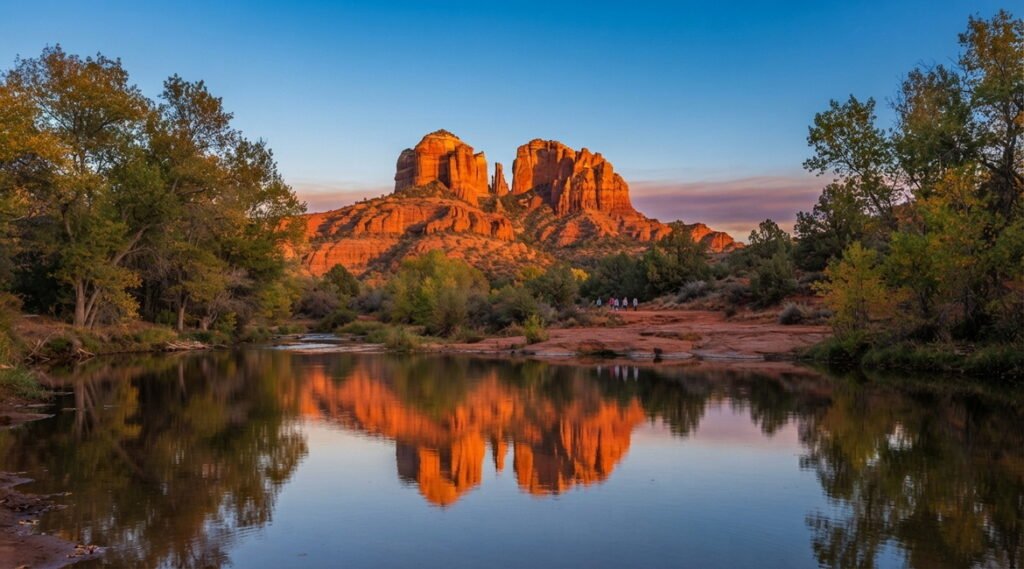
For general sightseeing, spring and fall provide the most flexibility because you can spend longer periods outside without planning the entire day around summer heat or winter cold. Photographers may prefer a completely different season because changing weather can create more dramatic conditions.
Best Time for Fewer Crowds
Spring and fall generally attract many visitors because of the comfortable weather. If avoiding the busiest periods matters more than having ideal temperatures, winter deserves consideration. December through February can feel noticeably quieter outside holiday periods. Summer can also have periods with less demand than peak spring and fall, although the tradeoff is hotter weather and monsoon-season uncertainty. Another option is keeping the popular season but changing your schedule. Visit midweek when possible and avoid building the entire trip around the most popular locations at the busiest times of day.
Best Time for Families
Spring and fall are particularly practical for families because moderate temperatures create more flexibility. April and October are strong options when your plans combine scenic viewpoints, short outdoor activities, town exploration and a broader Arizona road trip. May and early November can also work very well.
Summer requires more attention to heat and afternoon weather. Winter can be a good family option if outdoor water activities are unimportant and everyone is prepared for colder mornings and evenings. Avoid trying to fill every hour with activities. Sedona works particularly well when families leave time for scenic stops and simply enjoying the landscape.
Best Time for Fall Colors
Sedona is not usually the first destination travelers associate with autumn leaves, but Oak Creek Canyon can produce impressive fall color. The timing changes each year because elevation influences when trees turn. Higher sections toward Flagstaff generally change first. Color then moves into lower parts of Oak Creek Canyon and the Sedona area. Late October into early November is a useful general window to consider, but it should not be treated as a guaranteed peak date.
If fall foliage is the main reason for your trip, check current local conditions shortly before traveling rather than booking around an exact peak date months in advance. Even outside peak foliage, October remains an attractive month because of the combination of red rock scenery and comfortable weather.
Sedona During Monsoon Season
Northern Arizona’s official monsoon season runs from June 15 through September 30. The more noticeable monsoon pattern commonly develops in July. Instead of continuous rain, the season often produces afternoon and evening thunderstorms. A morning can begin sunny before clouds develop later.
This creates dramatic skies but also means travelers need flexibility. Check the day’s forecast and current local conditions before outdoor plans. If storms develop, follow official guidance and change plans when necessary rather than trying to maintain a fixed itinerary. Monsoon weather can be highly localized, so conditions can vary around the region.
Is Sedona Too Hot in Summer?
Sedona is cooler than Phoenix, but that does not mean summer heat is insignificant. July daytime highs are typically in the 90s°F. Long periods outdoors can therefore become uncomfortable during the hottest part of the afternoon. The easiest approach is to plan the day differently from a spring or fall visit. Schedule outdoor sightseeing for cooler periods and use midday for lunch, hotel time, galleries or other indoor activities. Do not assume dry air eliminates the effect of heat. Bring water, use sun protection and pay attention to current conditions.
Is Sedona Worth Visiting in Winter?
Yes, particularly if you prefer a quieter trip and do not need warm weather. Winter changes the atmosphere without removing Sedona’s main attraction: the landscape. Clear winter days can provide excellent visibility and crisp light. Occasional snow can make the red rock formations even more dramatic. Accommodation may also offer better value on some winter dates than during peak spring and fall periods. The main disadvantage is temperature. Mornings and nights can be cold, and winter weather can affect road conditions. Pack layers and keep some flexibility in your schedule.
March–May vs September–November
Both periods work extremely well for a first Sedona visit.
| Factor | March–May | September–November |
|---|---|---|
| Temperature trend | Getting warmer | Getting cooler |
| Outdoor sightseeing | Excellent | Excellent |
| Daylight | Increasing | Decreasing |
| Landscape | Spring vegetation | Possible fall foliage |
| Crowds | Popular period | Popular period |
Choose spring if longer daylight and warming temperatures are more appealing. Choose fall if you prefer cooling temperatures and the possibility of autumn color around Oak Creek.
Best Time for a Southwest Road Trip
Sedona combines naturally with the Grand Canyon, Las Vegas and other Southwest destinations, but these places do not share identical climates. Las Vegas sits at a much lower elevation and becomes significantly hotter during summer. The Grand Canyon South Rim is much higher and can be considerably colder, particularly in spring, fall and winter. Sedona sits between these extremes.
April, May, September and October are useful months for combining multiple Southwest destinations because temperature differences are generally easier to manage than in midsummer or midwinter. Still, check the weather separately for every major stop. A comfortable Sedona forecast does not tell you what conditions will be like at the Grand Canyon.
How Many Days Do You Need in Sedona?
Two full days provides a useful introduction to Sedona. That gives you time for the major red rock scenery, scenic drives, viewpoints and some time around town without trying to fit everything into a single rushed day. Three days provides a more comfortable pace. It also gives you flexibility when summer thunderstorms or another weather change affects part of one day. Four days can make sense when Sedona is the main destination rather than simply one stop on a larger road trip. For most first-time visitors, two or three full days is a practical target.
Seasonal Planning Tips
Spring and fall are popular, so reserve accommodation early when your dates are fixed. Do not plan every outdoor stop for the middle of the day during summer. Keep some flexibility during monsoon season because afternoon weather can change quickly. Pack layers in spring and fall. Sedona’s elevation means mornings and evenings can feel much cooler than midday. During winter, check current road and weather conditions before driving through higher terrain. If fall foliage is important, treat late October and early November as a general window rather than a guaranteed peak. Parking requirements also vary by recreation site. Some trailheads and recreation areas require a Red Rock Pass or another accepted recreation pass, so check the current rules for the specific location before arriving. Finally, do not judge Sedona by Phoenix weather. The elevation difference creates noticeably different conditions throughout the year.
FAQ
What is the best month to visit Sedona?
April, May and October are particularly useful months for a first visit because they generally provide comfortable conditions for outdoor sightseeing. Early November can also be attractive, especially when fall color is still present around Oak Creek.
What are the hottest months in Sedona?
June, July and August are the hottest part of the year. July temperatures commonly reach the 90s°F, although Sedona’s higher elevation keeps it cooler than lower desert cities such as Phoenix.
Does it snow in Sedona?
Yes. Sedona can receive occasional winter snow, although snowfall is much less substantial than in higher-elevation Flagstaff. Snow often creates a striking contrast with the red sandstone formations.
When are the fall colors in Sedona?
Fall color generally progresses from higher elevations toward Sedona. Late October into early November is a useful general window for Oak Creek Canyon and lower elevations, although exact timing changes from year to year.
What is the best time for families to visit Sedona?
Spring and fall provide the easiest conditions for most family trips. April, May and October are especially convenient because moderate temperatures give families more flexibility for sightseeing and outdoor activities.
Recommended Next Steps
For a first Sedona trip, start by comparing dates in April, May and October. Choose April when you want mild spring temperatures and comfortable outdoor sightseeing. Choose May when longer days and warmer weather are more important. Choose October when you want pleasant fall conditions and the possibility of seeing autumn color around Oak Creek Canyon. Consider late October into early November when fall foliage is a major priority, but check current conditions closer to the trip because peak color changes each year. Summer can still work well, but plan around hotter afternoons and keep the schedule flexible during monsoon season. Winter is a strong alternative when you prefer fewer visitors, cooler weather and the possibility of seeing snow against the red rocks. For most first-time visitors, plan two or three full days. If Sedona is part of a Las Vegas and Grand Canyon road trip, spring and fall provide the easiest overall combination of weather across all three destinations. Whatever season you choose, check the local forecast shortly before your trip. Sedona’s elevation, summer thunderstorms and large day-to-night temperature changes can make current conditions more important than the season alone.