

California can support several very different road trips: a coast-and-town route, a desert escape, a city-and-national-park combination, or a shorter beach-focused break. The best choice depends less on how many places you can name and more on how many driving days, weather changes, and overnight moves you can manage comfortably.
These ca road trips are designed as route frameworks rather than one overloaded itinerary. Choose the region that matches your time, then check current road, park, and reservation conditions before booking non-refundable plans.
How to choose among California road trip routes
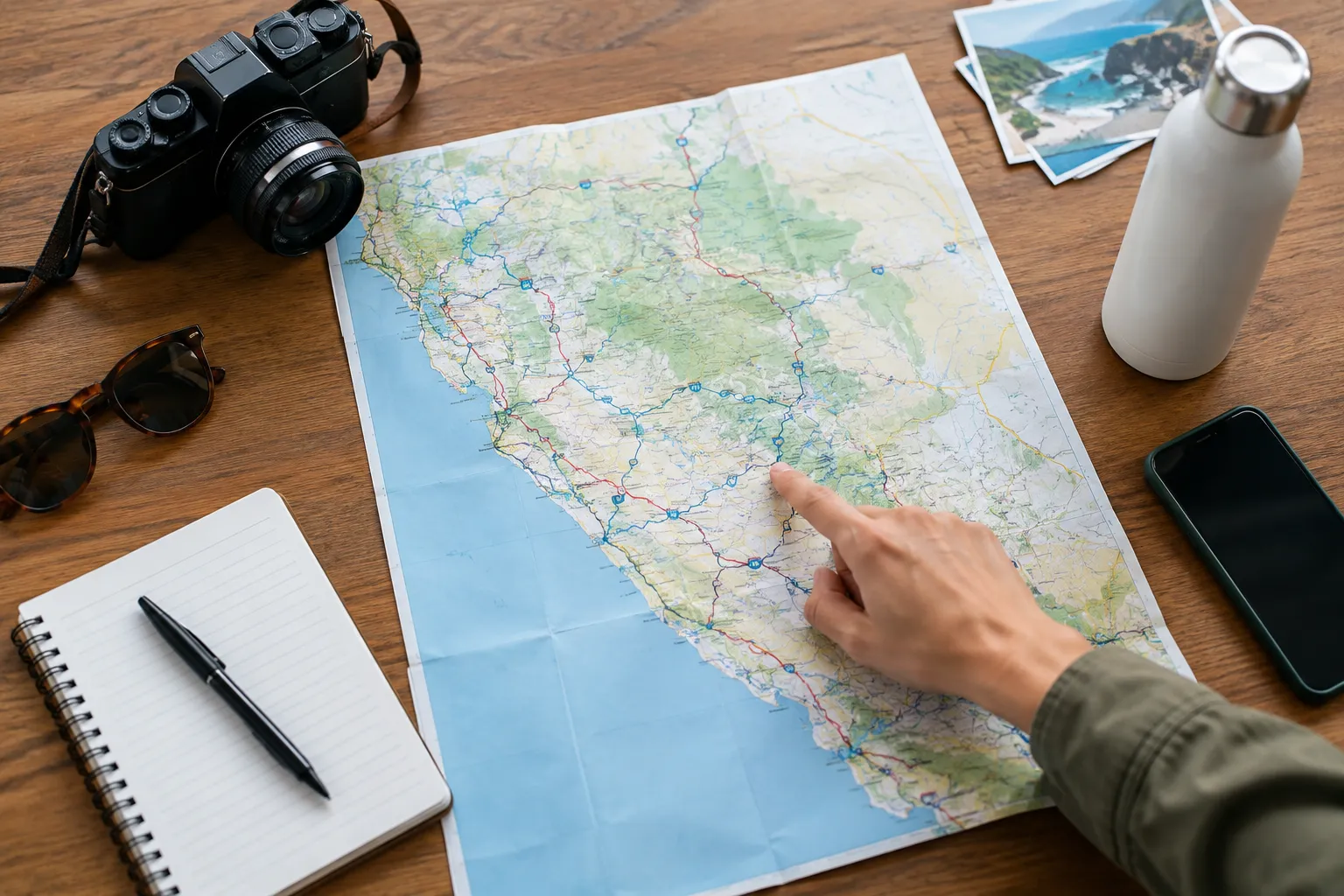
California is too large and varied for one practical itinerary to cover everything well. A trip that combines San Francisco, Big Sur, Los Angeles, Joshua Tree, Yosemite, and San Diego may look efficient on a map, but it can turn most of the holiday into packing, parking, and driving.
The most useful road trips ideas begin with a decision: do you want the coast, desert landscapes, national parks, cities, or a balanced mix? After that, choose an arrival airport and limit the number of overnight bases.
What to consider before choosing a route
Start with the number of full days available. A four- or five-day trip can work well for one compact region, such as Palm Springs and Joshua Tree, Los Angeles and San Diego, or San Francisco and Monterey. It becomes much harder to enjoy if it includes both northern and southern California.
Your starting point also matters. Flying into San Francisco and leaving from Los Angeles can make a coastal route more straightforward, while a return flight from the same airport may require retracing part of the route. One-way car rentals, airport fees, and vehicle availability can change the practical choice, so compare the full travel plan rather than only the map.
Think about your tolerance for driving:
- Low driving tolerance: choose one city base with nearby day trips.
- Moderate tolerance: use two or three overnight bases in one region.
- High tolerance: consider a longer coast, desert, or city-and-park route, with rest days included.
- Mixed preferences: alternate driving-heavy days with slow mornings and local exploration.
Road trips for couples often work best when the itinerary leaves room for unscheduled stops. A viewpoint, small town, beach walk, or unusual roadside attraction is easier to enjoy when every hour is not already assigned.
The vehicle should suit the route, not the image of the trip. A regular car is generally the practical choice for paved city and coastal routes, while a larger vehicle may be useful for luggage or camping equipment. Do not assume that a bigger vehicle is automatically better on narrow roads, crowded trailhead parking areas, or city streets.
When California roads and parks need extra planning
California’s conditions change by region and season. Coastal fog can affect visibility, mountain roads can face snow or restrictions, and desert heat can make midday sightseeing uncomfortable or unsafe. Check official road and park information shortly before departure, especially after storms, fires, or extreme weather.
Mountain routes need particular care. Access to Yosemite, Sequoia, and other high-elevation areas can change with snow, road work, or seasonal closures. A route that appears short may require a different entrance or a longer drive when a mountain crossing is unavailable.
The desert requires a different style of preparation. Carry enough water for your plans, fill the tank when services are available, and avoid treating a remote trail or viewpoint like a quick urban stop. Heat can affect both people and vehicles, so early starts and shorter midday walks are often sensible.
Reservations are another constraint. Popular park lodging, campgrounds, and accommodations in coastal towns can fill ahead of busy periods. Check whether your chosen park requires an entry reservation, timed activity booking, or other advance arrangement. If you cannot secure the key night or park access, change the route before booking the rest.
For broader planning help, compare this guide with our road trip ideas for every travel style before deciding which California route fits your trip.
Pacific Coast road trips from San Francisco to Los Angeles
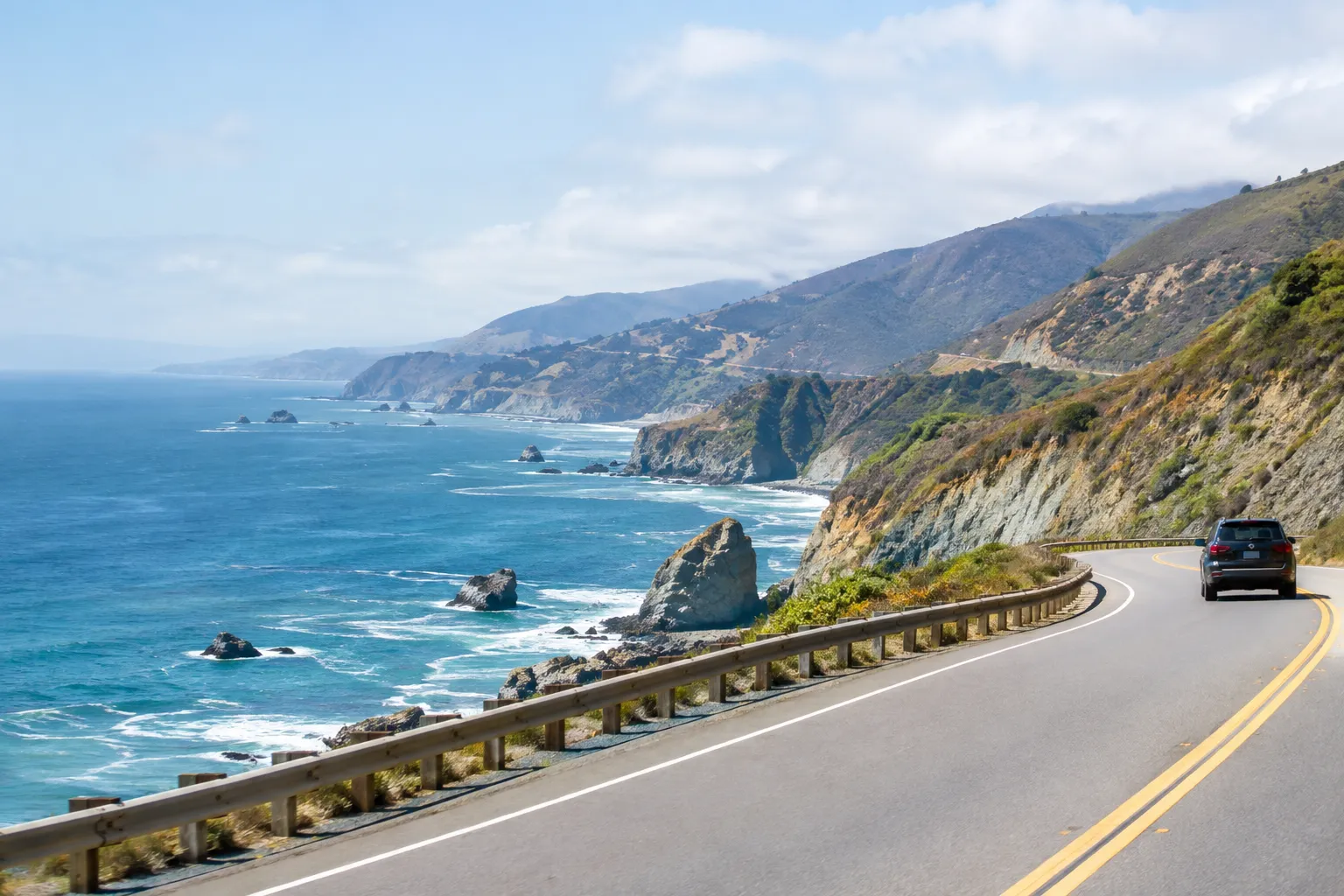
The Pacific Coast route is one of the most flexible California road trips because you can make it short, extend it with city stays, or focus almost entirely on coastal scenery. The mistake is treating the whole distance as one long transfer.
A comfortable version uses San Francisco, Monterey or Carmel, Big Sur or the Central Coast, Santa Barbara, and Los Angeles as broad stages. You do not need to stop in every town, but you do need to allow time for viewpoints, traffic, meals, parking, and changing road conditions.
Best coastal stops between San Francisco and Monterey
San Francisco deserves at least part of its own itinerary rather than being treated only as a car pickup point. Parking can be inconvenient, and many sights are easier to reach without moving the vehicle constantly. Consider collecting the car after your main city sightseeing if that fits your travel arrangements.
South of the city, the Peninsula offers coastal scenery and small-town stops before Monterey. You can make this a short transfer or spend more time exploring beaches and viewpoints. The important planning decision is whether you want to arrive in Monterey early enough for an afternoon and evening there.
Monterey and Carmel work well together but offer different experiences. Monterey provides a practical base for waterfront activities and nearby attractions, while Carmel is compact and suited to strolling, galleries, restaurants, and a slower evening. Staying in either place can work; changing hotels for a very short stay may not be worth the effort.
For a four-day coastal trip, a realistic outline could be:
- Arrive in San Francisco and explore without a long driving commitment.
- Drive to Monterey or Carmel, allowing time for coastal stops.
- Explore Monterey, Carmel, or a nearby section of the coast.
- Return from the Bay Area or continue south only if your transport plan allows it.
Trying to add Los Angeles to that four-day version usually turns the coast into a rushed transit route. If Los Angeles is essential, consider flying into one city and out of the other, then reserve enough nights for the middle sections.
Allow time for Big Sur and the Central Coast
Big Sur is not simply a point to pass on the way between San Francisco and Los Angeles. The road is winding, viewpoints take time to reach, and short distances can consume much of a day once you include parking and walks.
Check current road conditions before committing to a through-route. Closures or restrictions can change which parts of the coast are accessible and may require an inland detour. Do not build a tight schedule around crossing the region without a backup plan.
San Luis Obispo makes a useful Central Coast base for travelers who want a town with restaurants and access to nearby scenery. Depending on your interests, you might also allow time for beaches, coastal viewpoints, or smaller communities rather than trying to reach Santa Barbara the same day.
A better coastal rhythm is to spend one night around Monterey or Carmel, one or two nights near Big Sur or the Central Coast, and then continue south. The exact bases depend on availability and current access, but the principle is consistent: reserve a separate day for scenery instead of attaching every stop to a transfer.
Finishing through Santa Barbara and Los Angeles
Santa Barbara can be a relaxing final coastal stop before Los Angeles. It suits travelers who want time for beaches, a walkable downtown area, or a less intense overnight between Central Coast driving and a major city.
Los Angeles needs careful scope. It is not one compact attraction zone, and traffic can make a short map distance feel like a major journey. Group activities by area and avoid planning a beach, a museum district, and a faraway neighborhood as if they were next door.
For a longer coastal route, you could use:
- San Francisco: two or more nights for city sightseeing.
- Monterey or Carmel: one or two nights.
- Big Sur or the Central Coast: one or two nights, depending on access.
- Santa Barbara: one night if you want a slower transition.
- Los Angeles: two or more nights if city sightseeing is a priority.
Couples looking for variety may prefer this route because it combines food, cities, beaches, scenic drives, and smaller towns. The trade-off is that it needs more nights than a simple San Francisco-to-Los Angeles transfer.
Desert park road trips from Southern California
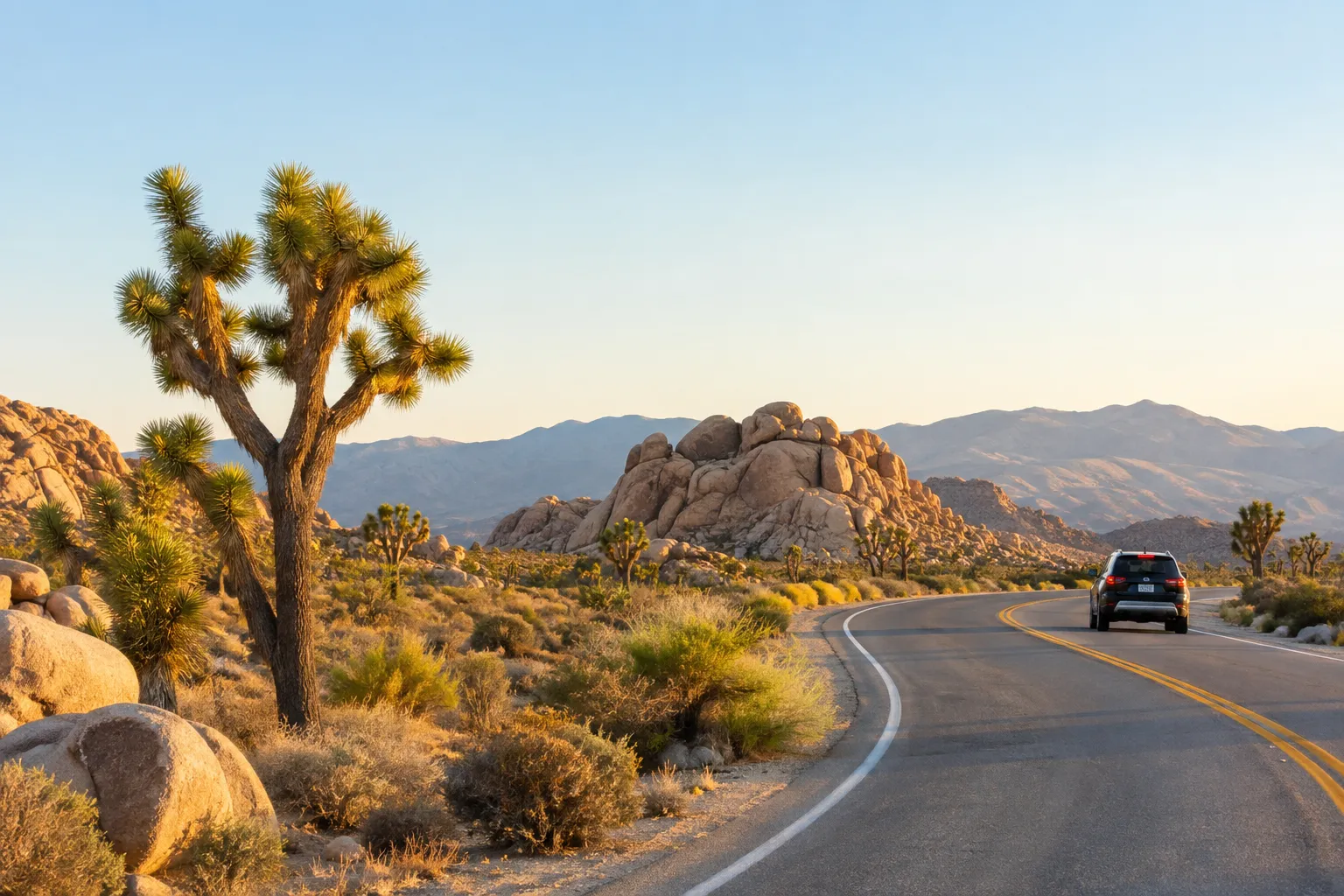
Desert routes offer a different experience from the coast: wide spaces, unusual rock formations, dark skies, and strong temperature swings. They can fit a short break, but distances and limited services require more preparation than a city itinerary.
Joshua Tree and Palm Springs
Joshua Tree and Palm Springs make one of the more manageable short road trips from Southern California. Palm Springs provides restaurants, accommodation, and a convenient base, while Joshua Tree offers desert scenery and park roads that can fill a full day.
Plan park exploration around the weather. In warmer periods, sunrise and late afternoon may be more comfortable than the middle of the day. In cooler periods, you may have more flexibility, but nights can still feel cold.
A simple three- or four-night structure might include:
- Arrival and an easy evening in Palm Springs.
- A full day in Joshua Tree, with fuel, food, water, and park access planned ahead.
- A second desert or town day, depending on interests and weather.
- Departure without adding a distant destination at the last minute.
Choose your overnight location based on the next day’s route. Staying in Palm Springs may provide more services, while staying nearer the park can reduce the morning drive. The right choice depends on accommodation availability and whether you prefer town convenience or earlier access to the landscape.
Do not assume every park stop is close together. Roads, viewpoints, walks, and unplanned photo stops add time. A short list of meaningful locations is usually more enjoyable than attempting to cover every marked point.
Adding Death Valley safely
Death Valley changes the scale of this trip. It is not a small add-on to Joshua Tree, and the distance between desert areas can create long driving days with limited services.
Before adding it, check the season, forecast, road conditions, fuel availability, and the specific areas you intend to visit. Extreme heat can make outdoor activity hazardous, while winter conditions can affect higher routes. Carry water and avoid relying on a phone signal or a last-minute fuel stop.
A Death Valley route is more realistic with additional nights and a deliberate overnight plan. You may need to choose between Joshua Tree and Death Valley on a short trip rather than trying to include both. For a longer itinerary, place Death Valley between suitable bases and avoid scheduling an ambitious park day immediately after a long cross-desert drive.
This is also a route where a rental vehicle’s fuel range matters. Fill up when practical, and do not treat remote driving as an opportunity to run the tank low. The scenery is the reason to take the route, so leave enough time to stop safely rather than racing between viewpoints.
California city and national park combinations
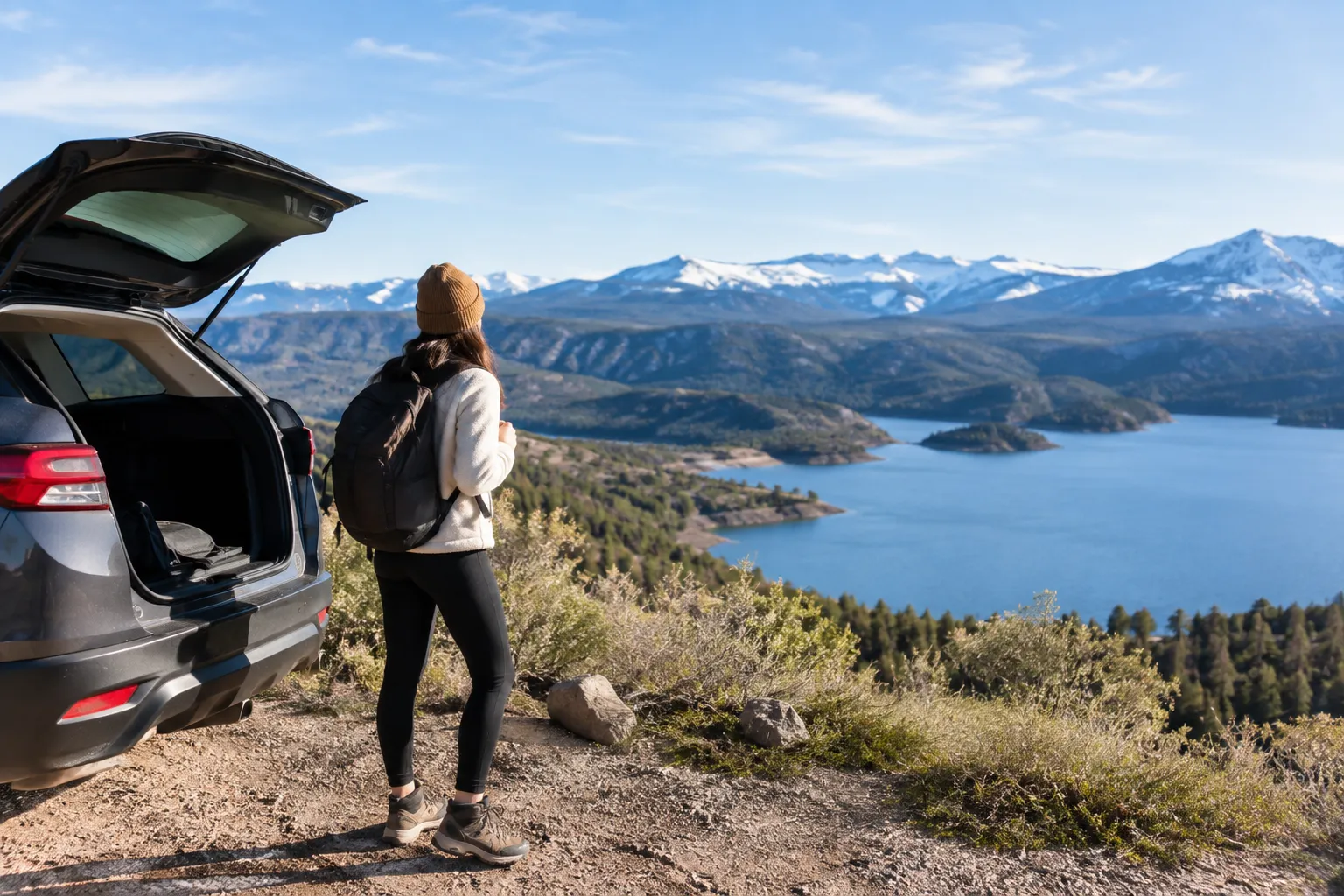
Combining a major city with a national park can give a trip more variety, but the park may be farther away than it appears. These routes work best when you choose one principal park and accept that some nearby destinations will remain for another trip.
Los Angeles, San Diego, and the Southern Coast
Los Angeles and San Diego can be combined for a city-and-beach trip, especially if you use the coast as the connecting theme. The route is more manageable when you choose a limited number of beach areas and avoid crossing both metropolitan regions repeatedly.
For four or five days, pick one city as the main base and give the other a shorter visit. A practical split might be several nights in Los Angeles with a focused San Diego stay, or the reverse. Trying to see every major attraction in both cities will leave little time for beaches, meals, or neighborhood exploration.
Travelers who want a gentler pace can add a coastal overnight rather than making the full journey as a day transfer. Before booking, compare the cost and convenience of changing hotels against the time saved by keeping one base.
This route is often more suitable for a short vacation than a city-plus-national-park plan because it avoids a long mountain detour. It can also work for road trips for couples who want restaurants, beaches, and flexible evenings rather than a schedule built around trailhead starts.
San Francisco and Yosemite
San Francisco and Yosemite are a popular combination, but they require seasonal planning and realistic driving expectations. Yosemite access can vary with snow, road conditions, congestion, and park procedures, so check current information before setting the route.
Give the park more than a quick pass if hiking, viewpoints, or valley exploration are central to the trip. A same-day journey from the Bay Area can leave little time after driving and parking, particularly if conditions slow the route.
If your trip is short, decide whether San Francisco or Yosemite is the priority. A city-focused visit can use nearby coastal or regional excursions, while a park-focused plan should reduce city sightseeing and protect nights near the park.
Book the key accommodation before filling the itinerary with optional stops. If lodging inside or near the park is unavailable, examine the extra driving from alternative bases and decide whether it still produces a worthwhile experience.
Los Angeles, Sequoia, and the Sierra
Travelers seeking forests and mountain scenery may prefer Sequoia and the Sierra to a full coastal drive. This route trades beaches and city variety for giant trees, mountain landscapes, and a more park-focused itinerary.
Access and drive times vary by route and season, so confirm which roads are open and suitable for your vehicle. Mountain roads can be slow, and a map estimate may not reflect the time needed for curves, elevation changes, stops, or weather.
Los Angeles can serve as the arrival or departure city, but avoid adding too many urban activities around the park days. A practical plan might use Los Angeles for the beginning or end, then devote several nights to the park and mountain region.
This option is strongest for travelers who want nature to define the trip. If beaches, city neighborhoods, and forests all matter equally, add nights rather than compressing the route into a few long transfers.
Driving times, reservations, and common planning mistakes
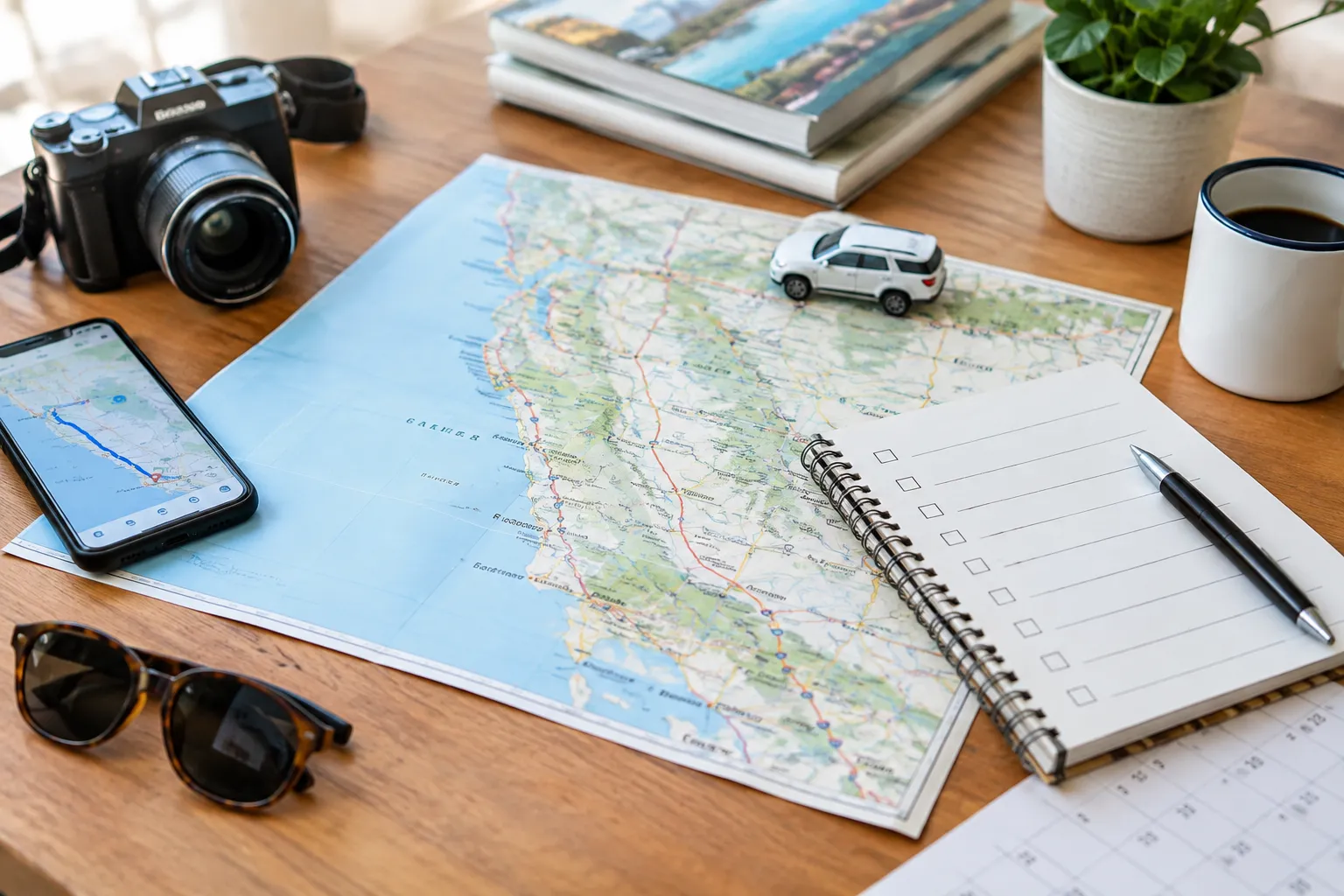
The route becomes workable when you plan overnight locations around actual travel conditions rather than connecting famous names on a map.
Estimate journeys by route segment, not map distance
Break every travel day into four parts:
- The expected driving time under ordinary conditions.
- Traffic, winding roads, or mountain delays.
- Planned stops for food, fuel, viewpoints, and walks.
- Arrival tasks, including parking, check-in, and finding dinner.
A route that looks like a few hours of driving may occupy most of the day once these elements are included. Coastal roads encourage frequent stops, city traffic can change throughout the day, and mountain roads require a slower pace.
Avoid assigning a major attraction to the same day as a long transfer unless the attraction is directly on the route and has flexible timing. If the attraction is the reason for the trip, arrive the previous evening when possible.
For road trips ideas that need to fit a four- or five-day break, choose one geographic area and count hotel changes. Each move takes more time than the drive alone because of packing, checkout, parking, and settling in again.
Book the stops that can sell out
Reserve the parts of the trip with limited supply first. This may include park lodging, campgrounds, popular coastal accommodation, rental cars, and activities with timed entry or limited capacity.
Then build the flexible elements around those fixed nights. Restaurants, viewpoints, and short walks can often be adjusted, but an unavailable park night may force a complete route change.
Check official sources for current reservation requirements and access rules. Policies can change, and a previous trip report may no longer reflect the conditions for your dates.
If you are traveling during a busy period, do not wait to reserve every stop until the route feels perfect. Choose a sensible framework, secure the essential nights, and leave some flexibility between them.
Where California itineraries commonly overreach
The most common mistake is combining too many regions. San Francisco, Yosemite, Los Angeles, Joshua Tree, San Diego, and Big Sur may all be appealing, but they do not form a relaxed short itinerary.
Other warning signs include:
- Driving from San Francisco to Los Angeles in one day while expecting to explore the coast.
- Adding Death Valley to a short Joshua Tree break without extra nights.
- Treating Yosemite or Sequoia as a quick side trip from a city.
- Booking a late arrival after a full day on a winding mountain route.
- Changing hotels every night to avoid “wasting” time.
- Planning outdoor activities at the hottest part of a desert day.
- Assuming a coastal road will be open because it was open on a previous visit.
The solution is usually simple: remove one region, add one night, or turn a sightseeing day into a transfer day. A shorter itinerary with time to stop is more useful than a longer list of places experienced through a car window.
California Road Trip FAQ
What are the best road trips to take from California?
The strongest options depend on your time: the Pacific Coast, Joshua Tree and Palm Springs, Los Angeles and San Diego, or a city-and-national-park route such as San Francisco and Yosemite.
What is the most scenic road to drive on in California?
The Pacific Coast route through Big Sur is a leading choice for coastal scenery, but conditions can change, so check current road access before planning it as a through-route.
How many days do you need for a California road trip?
Four or five days can cover one region, while a broader coast or city-and-park itinerary usually needs additional nights to avoid exhausting transfer days.
What is the best month for a California road trip?
There is no single best month for every route. Coastal, mountain, and desert conditions differ, so choose dates around your preferred region and check seasonal access before booking.
Do you need to reserve campsites and hotels in advance for California road trips?
Advance reservations are sensible for popular parks, campgrounds, coastal towns, and busy travel periods, particularly when your route depends on a specific overnight location.
Can you drive from Los Angeles to San Francisco in one day?
Yes, but a one-day transfer leaves little time for coastal sightseeing. If Big Sur and Central Coast stops matter, divide the journey across more than one day.
Are California national parks open year-round for road trips?
Some areas may remain accessible year-round, but roads, entrances, facilities, and high-elevation routes can face seasonal restrictions or closures; check current park information.
What kind of car is best for a California road trip?
Choose a reliable vehicle that fits your passengers and luggage while matching the route. A standard car suits many paved itineraries, but mountain weather and camping needs may change the decision.
Choose your California route and check conditions
Start with one route that matches your available days: coast, desert, southern cities, or a city-and-park combination. Then check current road conditions, park access, weather, accommodation availability, and any reservation requirements before committing to the rest.
Build each day around one meaningful destination and a realistic transfer. Leave room for traffic, parking, meals, viewpoints, and the unexpected stops that make a road trip feel like a trip rather than a transport schedule.
For another route comparison, explore our guide to road trips ideas for couples, or use the broader Florida travel guides for beaches, parks, and cities to compare California’s route styles with another U.S. destination.
[…] Stay in a mix of inns and budget motels, comparing locations before booking. If rain limits coastal walks, spend more time in San Francisco or Los Angeles. Agree in advance on a few must-see stops and leave the rest flexible. For more route choices, see our California road trip guide. […]