

New York is easier to navigate when you plan by area rather than trying to cross the city for every landmark. For most visitors, the best way to travel around New York City is to combine the subway for longer trips with buses and walking for shorter ones, checking current routes before each journey. A practical plan starts with where you’ll stay, what you want to see nearby, and how you’ll connect between those clusters.
Choose a home base that cuts down cross-city trips

For NYC city breaks, lodging location can shape your days as much as your sightseeing list. Before booking, put your main planned stops on a travel map of New York City and check the subway connections from possible places to stay. A new York City neighborhood map for tourists can help with orientation, but use a route planner to check the actual trip between your lodging and each attraction.
Read Manhattan’s numbered streets and avenues
In much of Manhattan, numbered streets run generally east to west, while avenues run generally north to south. The numbers can help you estimate whether a destination is uptown, downtown, or across town—and whether walking may make sense.
Don’t assume the grid applies everywhere. Lower Manhattan and parts of other boroughs have irregular street layouts. Check the destination’s address and walking route instead of relying on a street number alone.
Understand how the boroughs connect
New York City has five boroughs: Manhattan, Brooklyn, Queens, the Bronx, and Staten Island. Subway routes and other transit links connect many major destinations, but crossing from one borough or neighborhood to another can involve a transfer or a longer journey than the map suggests.
When comparing city breaks to New York City, look at the places you most want to visit and how they connect to your likely home base. Don’t choose lodging just because it is close to one famous landmark; check whether it also works for the rest of your plans.
Group sights near your lodging
Start with one nearby cluster rather than a long list of must-sees. For example, spend a morning at an attraction near your lodging, walk to a nearby lunch stop, then choose one more sight in the same area. Take transit only when you’re ready to move to a different cluster.
This simple approach reduces backtracking and leaves more room to enjoy each stop. For a sample short-trip structure, see our three-day New York City planning guide.
Plan your route before leaving

For each outing, compare subway, bus, and walking options. Check the journey from your actual starting point to your destination, not just the line or street that looks closest on a map.
Check the route and service status
Before setting out, check current directions and transit alerts. A familiar route can change because of service adjustments, transfers, or disruptions, so confirm the recommended train or bus and where to board.
Save your lodging address and the day’s main stops in your navigation tool. If a route changes, you’ll have the destination details ready to compare alternatives.
Choose a map that answers your question
Different maps serve different purposes. A subway map helps you understand rail connections; a street map helps with walking and addresses; and a borough overview shows how the city is laid out. Use the map that answers the question you have, then check live directions for the journey itself.
Our New York City travel map for first-time visitors offers a broader orientation. For neighborhood choices organized around interests, see New York City breaks for food, museums, and neighborhoods.
Use the subway for longer cross-city trips
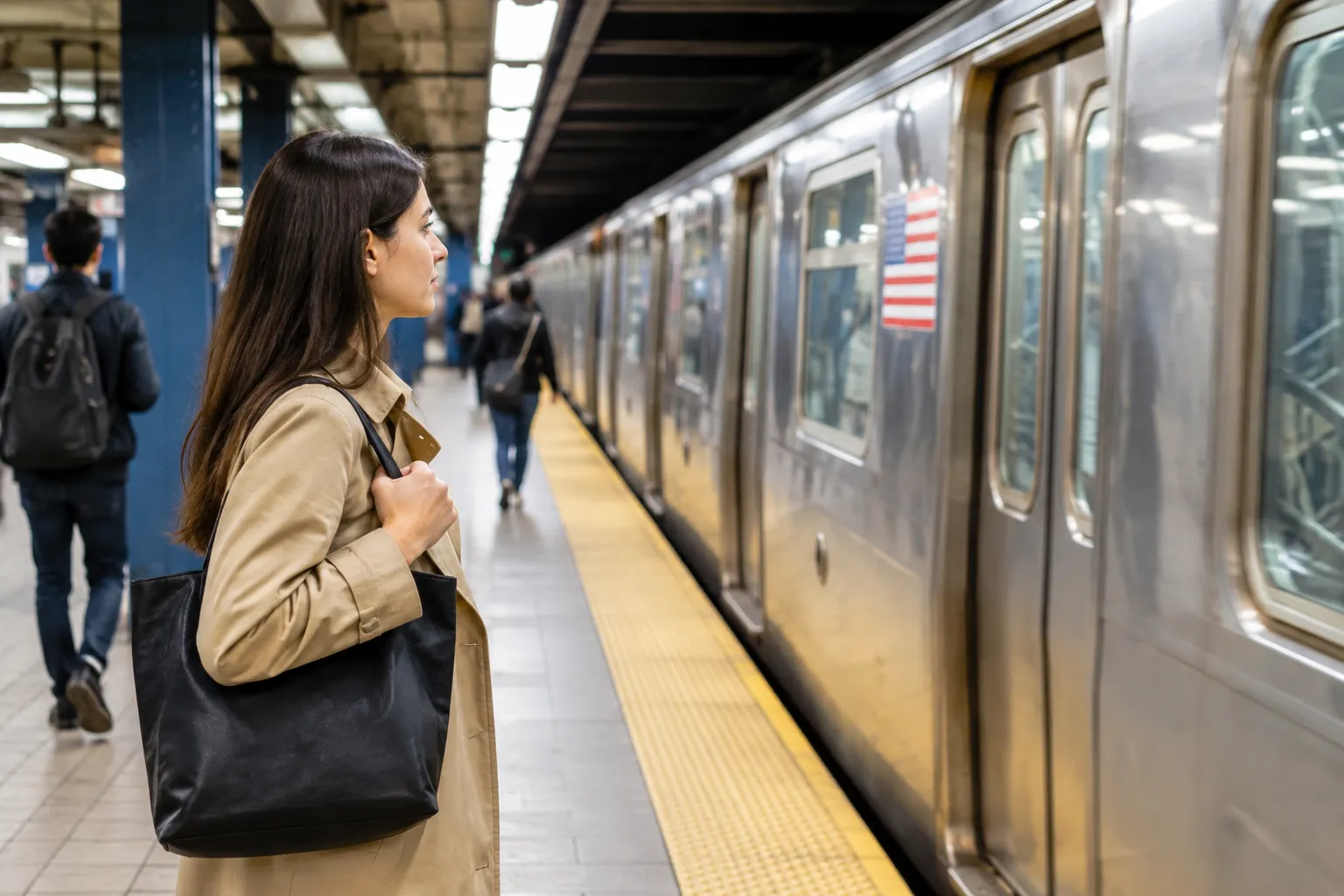
The subway is useful for covering longer distances without walking the full route. Before boarding, match the station, direction, and train service to your current route instructions.
Enter the right station and follow the train direction
Check that you’re entering the station for the direction you need. Stations serving opposite directions may have separate entrances or platforms, so confirm the entrance and platform before going through.
Once inside, follow signs for the train and direction shown in your route. If the instructions are unclear, pause to check the line and next stop rather than boarding and hoping it goes the right way.
Know when local and express trains differ
Some trains skip stops that local trains serve. Before boarding, check whether that train stops at your destination. If you’re unsure, follow the current trip directions or wait for a service that clearly serves your stop.
A common mistake is choosing a train because its line name looks right, then finding that it passes the intended station.
Plan transfers and step-free access
Allow time to follow transfer signs and reach another platform. A transfer shown on a map may involve more walking than you expect, so avoid scheduling activities too tightly around arrival times.
If you need step-free access, check the route and station elevator status before leaving. Don’t assume every station or entrance offers an accessible route, and check again close to your trip in case conditions change.
Use buses and walking for neighborhood-scale trips
The subway isn’t always the simplest choice for a short journey. A bus may provide a more direct above-ground route, while walking can be practical when the stops are close and the streets connect conveniently.
Take the bus when the route is more direct
Check the stop, direction, and live arrival information before boarding. Make sure the bus is heading toward your destination; routes can travel in different directions along the same street or corridor.
Buses also make it easier to see the city as you travel. Allow for slower journeys than a route estimate might suggest, especially when you have a timed activity afterward.
Walk between nearby stops and sights
Check the walking route rather than judging distance from how close two places look on a map. Street layouts, crossings, and the route around large blocks can affect how easy a walk feels.
Walking works well for linking nearby sights or covering the final stretch from a transit stop. If you’re tired or carrying bags, compare a bus or subway option instead of treating every short distance as a walk.
Choose an airport route that matches your arrival
The right airport connection depends on which airport you use, where you’re staying, how many transfers the route requires, and how much luggage you have. Compare the whole journey to your lodging before deciding.
Compare airport connections with your lodging location
Check current routes from JFK, LaGuardia, or Newark to your specific destination. Look at the number of connections and where transfers happen, not just the airport-to-city portion of the journey.
A route that is convenient for one neighborhood may be less useful for another. Use your lodging address to compare options, then recheck the directions on arrival day.
Allow for luggage and arrival-day uncertainty
Public transit may suit travelers with manageable luggage and a straightforward route. A taxi or rideshare may be more convenient if you have several bags, are traveling in a group, arrive late, or would need multiple transfers.
Compare the current trip options before choosing. Leave room for delays and extra time to find your pickup point or transit entrance.
Build a day plan around connected stops
Choose a small number of nearby sights for each part of the day, then use transit to move between areas. That is more workable than trying to check every landmark off a list.
Map one compact day of nearby attractions
A simple day plan might look like this:
- Choose a main morning attraction near your lodging or an easy transit connection.
- Add a nearby stop for lunch or a walk, checking the actual route between them.
- Choose one afternoon activity in the same area.
- If you want to visit a different part of the city, take transit there as a separate cluster rather than zigzagging between distant stops.
This keeps the plan focused while still leaving room to discover a stop you didn’t expect to enjoy.
Leave room for changes and rest
Avoid filling every hour with a timed reservation. Build in breaks for meals, route changes, and the time it takes to move between places. If a service disruption affects your plan, swap the order of nearby stops or skip one rather than rushing across town to preserve the original schedule.
More FAQs About Getting Around New York City
Is $1000 enough for 4 days in New York?
It may be enough for some trips, but lodging, transportation, meals, and activities can change the total substantially. Price the major costs first, especially lodging and travel to the city, before setting a daily budget.
What is the cheapest way to travel around New York?
Walking is free, and public transit is often a practical way to cover longer distances without paying for a car ride. Compare the current route options and fares for your trip before setting out.
Is it cheaper to taxi or Uber in New York?
There is no fixed cheaper choice for every ride; the total can vary with route, timing, demand, and fees. Compare the displayed fare options when you need a car.
Is $2000 enough for 5 days in New York?
It can work for some travelers, but the answer depends heavily on travel and lodging costs, group size, and activities. Build a trip-specific budget before booking, rather than treating the amount as a guarantee.
What not to do in New York as a tourist?
Don’t plan every sight in separate parts of the city on the same day without checking travel time. Group nearby stops, confirm routes before leaving, and leave space for breaks or service changes.
How much cash should I bring to New York for 4 days?
There is no single cash amount that suits every traveler; payment preferences and planned activities vary. Check what your planned venues accept and bring only the cash you expect to use.
How do I get from JFK, LaGuardia, or Newark to my hotel?
Use current directions from your arrival airport to your hotel address, comparing transfers, luggage needs, and arrival time. Recheck the route on travel day because connections and service can change.
Which New York City subway app or map should I use?
Use a current route planner for directions and service alerts, plus a subway map when you want to understand line connections. Check the route again before boarding rather than relying only on a saved map.
Set up your first day and adjust as you go
Choose a home base that works for the places you plan to visit, save a few key routes, and organize your first day around nearby stops. Check current directions before each trip, then adjust as needed.
The best way to travel around New York City is not one mode for every journey. Use the subway for longer connections, buses when they offer a more direct neighborhood route, and walking when the actual street route is manageable. A useful travel map gives you the overall picture; current directions help you make the next move.