
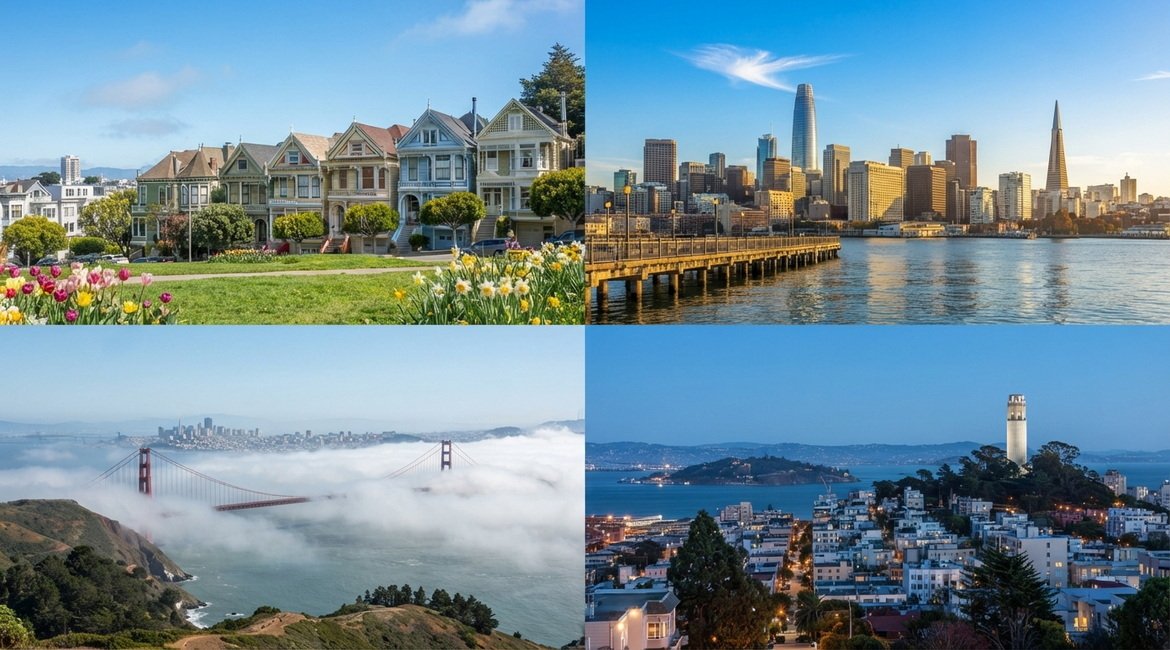
San Francisco is a year-round destination, but choosing the right month can significantly change your experience. Unlike many U.S. cities, San Francisco does not necessarily have its warmest weather in June or July. Its location between the Pacific Ocean and San Francisco Bay creates a mild marine climate with cool summers, changing fog and noticeable differences between neighborhoods. For many travelers, September and October provide one of the most appealing combinations of relatively warm afternoons, clearer skies and comfortable conditions for walking. Spring can also be excellent, especially if sightseeing matters more than warm evenings. Winter brings cooler temperatures and a greater chance of rain, but it can still be an attractive time for museums, food, neighborhoods and a quieter city experience.
When Is the Best Time to Visit San Francisco?
September and October are particularly attractive months for many first-time visitors. San Francisco’s seasonal pattern is unusual because late summer and early fall can be warmer and clearer than the beginning of summer. September is typically one of the warmest months of the year, while October can still provide mild afternoons and pleasant conditions for exploring neighborhoods, waterfront areas and viewpoints. April and May are another useful period. Spring temperatures are mild, rainfall generally decreases as the season progresses, and the city works well for walking and outdoor sightseeing. June, July and August are still popular travel months, but visitors expecting consistently hot California summer weather may be surprised. Cool ocean air, wind and fog can make mornings and evenings feel much colder than the calendar suggests. Winter is cooler and wetter but rarely experiences the severe cold associated with many other U.S. destinations.
San Francisco Weather at a Glance
San Francisco International Airport climate normals provide a useful general picture of the region’s unusual seasonal pattern. Exact conditions inside the city can differ because San Francisco has numerous microclimates.
| Month | Avg. High | Avg. Low | General Feel |
|---|---|---|---|
| January | 58°F / 14°C | 45°F / 7°C | Cool, wetter |
| February | 61°F / 16°C | 46°F / 8°C | Cool, changeable |
| March | 63°F / 17°C | 48°F / 9°C | Mild early spring |
| April | 66°F / 19°C | 49°F / 9°C | Mild, increasingly dry |
| May | 68°F / 20°C | 52°F / 11°C | Mild, mostly dry |
| June | 72°F / 22°C | 54°F / 12°C | Dry, cool near the coast |
| July | 73°F / 23°C | 55°F / 13°C | Dry, fog possible |
| August | 73°F / 23°C | 56°F / 14°C | Dry, gradually warmer |
| September | 75°F / 24°C | 56°F / 13°C | Warm, often clear |
| October | 72°F / 22°C | 53°F / 12°C | Mild, pleasant |
| November | 64°F / 18°C | 49°F / 9°C | Cooler, rain increasing |
| December | 58°F / 14°C | 45°F / 7°C | Cool, wetter |
These temperatures should be treated as a regional guide rather than a guarantee of what you will experience beside the Golden Gate Bridge or in Downtown San Francisco. Wind, elevation, fog and proximity to the Pacific can make the city feel considerably cooler.
Why San Francisco Weather Feels Different
San Francisco is famous for microclimates. Conditions can change noticeably as you travel from one neighborhood to another. Areas exposed to the Pacific Ocean often experience more wind and fog, while neighborhoods protected by hills may feel sunnier and warmer at the same time. The Golden Gate acts as a natural opening between the Pacific Ocean and San Francisco Bay, allowing cool marine air to move inland.
This helps explain one of the city’s most surprising characteristics: summer can feel cool. A sunny afternoon in one neighborhood can also turn into a windy evening near the waterfront. That is why layers are more useful than choosing clothes based only on the day’s forecast high.
January
January is one of San Francisco’s cooler months. Typical regional highs are around 58°F (14°C), while nights average around the mid-40s°F. It also falls within the wetter part of the year. That does not mean every day will be rainy. Winter weather can alternate between wet periods and crisp, clear days that are excellent for city views. January works particularly well for travelers interested in museums, restaurants, neighborhoods and indoor attractions who do not mind adjusting plans around the weather. Bring a waterproof outer layer and shoes that can handle wet sidewalks.
February
February remains cool and can still bring rain, but average daytime temperatures begin to rise slightly. Regional normal highs are around 61°F (16°C). A February itinerary should remain flexible. Plan a mixture of outdoor viewpoints and indoor attractions so a rainy morning does not disrupt the entire trip. Clear days can be excellent for photographing the skyline and Golden Gate Bridge. Evenings remain cool enough that a jacket is useful.
March
March marks the transition toward spring. Average highs rise into the low 60s°F, and daylight becomes more useful for longer sightseeing days. Rain is still possible, but conditions gradually become more favorable for walking-heavy itineraries. This can be a useful month for travelers who prefer sightseeing over warm-weather activities.
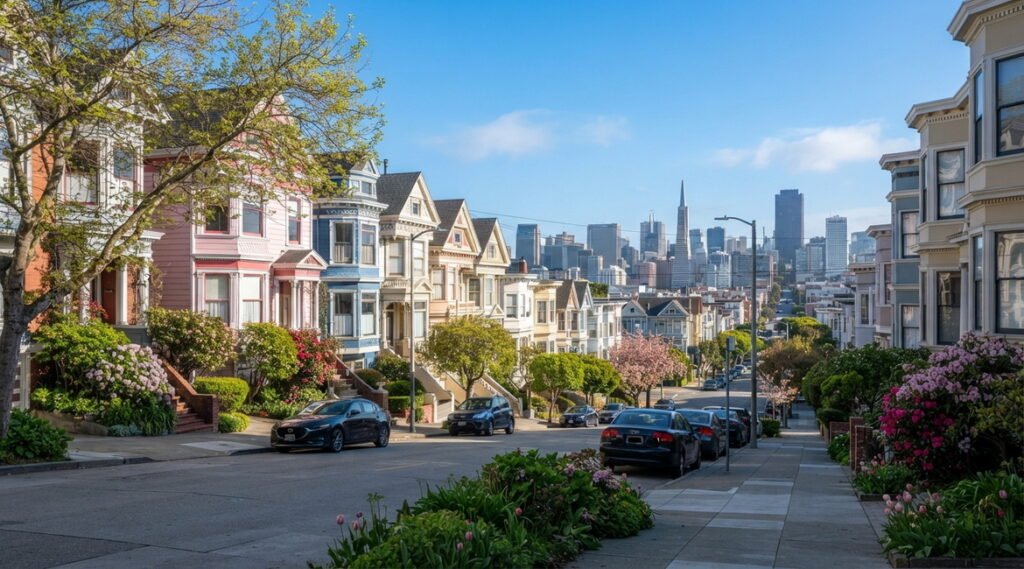
Golden Gate Park, waterfront neighborhoods and hilltop viewpoints can all fit comfortably into a March trip when conditions cooperate. Pack for both cool mornings and milder afternoons.
April
April is one of the more attractive spring months for a sightseeing-focused visit. Typical regional highs reach the mid-60s°F, while rainfall generally becomes less frequent than during winter. Walking through neighborhoods becomes particularly pleasant when the weather is dry. April can work well for Golden Gate Park, the Presidio, waterfront walks and exploring areas such as North Beach and Chinatown. The temperature difference between sunshine and shade can still feel substantial. Carry a light jacket even when the morning looks warm.
May
May brings mild temperatures and generally dry conditions. Average regional daytime highs are around 68°F (20°C). This is a useful period for visitors who want to spend most of their vacation outdoors without expecting hot weather. Parks, neighborhoods and waterfront sightseeing work particularly well.
However, the city’s marine influence remains important. A sunny afternoon can still be followed by a chilly evening, particularly near the water. Pack layers rather than relying on one heavy jacket.
June
June begins the traditional summer travel season, but it does not necessarily bring traditional summer weather. Regional daytime highs average in the low 70s°F. Rain is uncommon, making June useful for outdoor itineraries. The bigger issue is marine cloud cover, fog and wind. Coastal parts of San Francisco can feel cool, especially during the morning and evening. Visitors arriving from hotter inland California destinations are sometimes surprised by the temperature change. Do not pack for San Francisco as if it were Los Angeles. A sweater or light jacket remains useful every day.
July
July is dry but can still be surprisingly cool. Regional normal highs are around 73°F (23°C), although conditions in exposed parts of San Francisco may feel colder because of wind and fog. This is also a popular vacation period. Families traveling during school holidays should expect popular attractions and waterfront areas to be active.
July works well for travelers who prioritize long daylight hours and dry conditions rather than heat. If clear Golden Gate Bridge views are extremely important, build flexibility into your schedule instead of assigning one fixed hour to a viewpoint. Fog can move quickly.
August
August begins the transition toward San Francisco’s warmer late-summer period. Average regional highs are in the low 70s°F, and rain remains uncommon. Fog is still possible, particularly near the coast. However, August through October generally represents the city’s warmest period. This makes late August increasingly attractive for travelers who want dry weather while retaining long summer days. Even then, keep a jacket nearby. San Francisco weather can change considerably between afternoon and evening.
September
September is one of the most appealing months for a San Francisco vacation. Regional normal daytime highs reach about 75°F (24°C), making September the warmest month in the 1991–2020 climate normals for San Francisco International Airport. Inside San Francisco, individual neighborhoods can still be cooler or warmer. Late summer and early fall also tend to provide some of the city’s clearest, warmest evenings.
This can be particularly valuable for Golden Gate Bridge viewpoints, sunset walks and waterfront sightseeing. September is therefore an excellent month to consider if comfortable outdoor weather is one of your highest priorities.
October
October continues much of the appeal of September. Regional daytime highs average around 72°F (22°C), while nights remain relatively mild. Early and mid-October can provide excellent conditions for walking, neighborhoods and viewpoints. The city’s official visitor information highlights September and October as a period known for particularly warm and clear conditions. This does not mean every October day will be sunny. Weather systems can begin shifting toward the wetter part of the year as autumn progresses. Still, October deserves a place near the top of the list for travelers who have flexible dates.
November
November brings a noticeable seasonal transition. Average regional highs fall to around 64°F (18°C), and rainfall becomes more likely. Early November can still produce comfortable sightseeing conditions. Later in the month, travelers should be increasingly prepared for rain and cooler evenings.
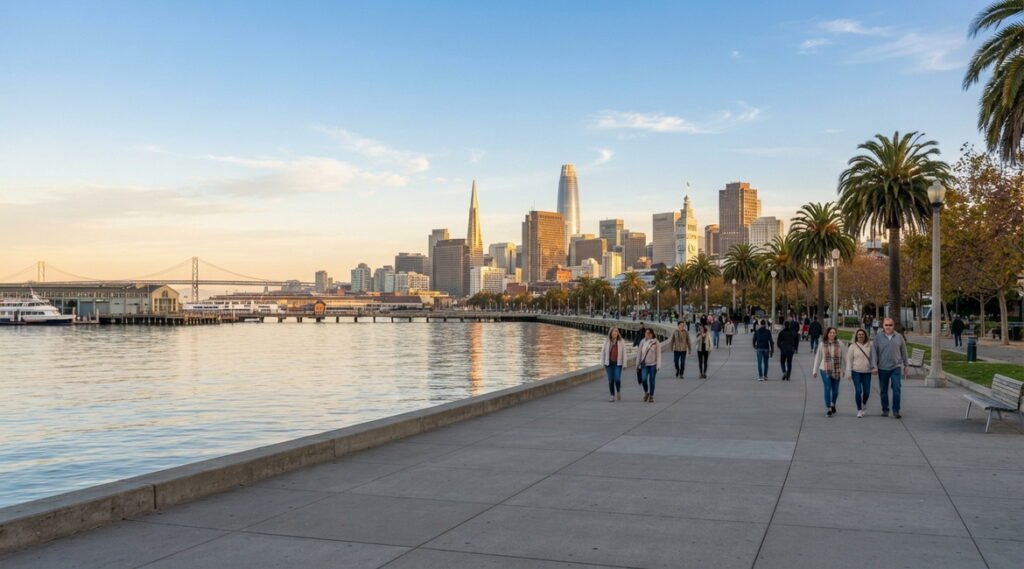
November can be useful for travelers who care more about museums, neighborhoods and food than maximizing warm outdoor hours. As always, layers remain essential.
December
December is cool and falls within San Francisco’s wetter season. Regional normal highs are around 58°F (14°C), with lows in the mid-40s°F. A winter visit works best with a flexible itinerary. Use clear periods for viewpoints, parks and waterfront exploration, then keep museums and indoor attractions available for wet weather. San Francisco rarely requires the kind of extreme winter preparation needed in colder U.S. cities, but wind and damp conditions can make the temperature feel cooler than expected. A waterproof layer is useful.
Best Time for Sightseeing
April, May, September and October are especially useful months for sightseeing. Spring provides mild temperatures and increasingly dry conditions. Early fall combines mild to warm weather with some of the city’s more favorable conditions for outdoor exploration. San Francisco is also a city where walking is part of the experience. Neighborhoods, hills, waterfront paths and parks make comfortable temperatures more valuable than extreme heat. If your itinerary includes several hours outside every day, mild conditions can be an advantage.
Best Time for Clear Views
No month can guarantee a completely clear Golden Gate Bridge. Fog is part of San Francisco’s coastal climate and can appear or disappear surprisingly quickly. However, September and October often provide particularly favorable conditions for clear views and sunsets. That makes early fall attractive for photographers and travelers who prioritize viewpoints.
Still, flexibility matters more than choosing one supposedly perfect day. If the bridge is completely hidden in fog one morning, move another activity forward and return later. Conditions may be very different several hours later.
Best Time for Families
Families can visit San Francisco throughout the year. Spring and early fall are particularly convenient when school schedules allow because temperatures are comfortable for walking and outdoor sightseeing. Summer remains practical for families tied to school vacation dates. The main adjustment is clothing. Do not assume children will be comfortable in shorts and T-shirts all day simply because the trip takes place in July.
A light jacket for each family member can make waterfront evenings much more comfortable. Families should also avoid overloading itineraries. San Francisco’s hills can make a day of walking more tiring than the distance alone suggests.
Best Time for Fewer Crowds
Crowds depend on holidays, school calendars, conventions and special events rather than weather alone. Summer vacation periods generally bring strong visitor activity to major attractions. Holiday weekends can also create spikes at any time of year. For travelers with flexible schedules, parts of late winter, spring and November can provide a different experience from peak vacation periods. Weekdays can also feel noticeably easier at some popular attractions than weekends. Do not choose a month solely because you expect the entire city to be quiet. Instead, check your exact travel dates for major events and school holidays.
Best Time for Lower Prices
There is no single month that guarantees the cheapest San Francisco vacation. Hotel prices can change substantially depending on events, conferences, holidays and day of the week. Winter can sometimes provide attractive accommodation rates outside major holiday periods, but weather is less predictable. Spring can offer a useful compromise between weather and cost on certain dates. Instead of searching only by month, compare several individual weeks. Moving a trip by a few days can sometimes matter more than changing the entire season. Also compare Sunday-through-Thursday stays with weekend-heavy trips.
When Is Fog Most Common?
Fog is one of San Francisco’s defining weather features. It is particularly associated with the summer pattern, when cool Pacific air interacts with warmer inland conditions. June and July can therefore surprise travelers expecting clear, hot California weather. The western side of the city and areas near the Golden Gate can experience very different conditions from neighborhoods farther east.
Fog also does not necessarily mean a ruined sightseeing day. It may clear, shift or remain concentrated in only part of the city. Sometimes it becomes part of the experience, creating one of the most recognizable San Francisco landscapes.
What to Pack
Layers are useful in San Francisco throughout the year. For most trips, bring comfortable walking shoes, long pants, T-shirts or other light base layers, a sweater or sweatshirt and a wind-resistant outer layer. During the wetter months, add a waterproof jacket. Even in summer, carrying a light jacket is sensible. The difference between a sunny afternoon in a sheltered neighborhood and a windy waterfront evening can be surprisingly large. Comfortable footwear is particularly important because many popular neighborhoods involve hills. Pack for changing conditions rather than one forecast temperature.
How Many Days Do You Need?
Three days provides a useful introduction to San Francisco. That gives first-time visitors enough time for several major neighborhoods, Golden Gate Bridge viewpoints, waterfront attractions and one or two museums. Four or five days creates a more comfortable trip. You can explore Golden Gate Park, spend more time in individual neighborhoods and avoid rushing between opposite sides of the city. Six or seven days provides room for slower exploration and nearby destinations.
| Trip Length | What It Allows |
|---|---|
| 2 days | Major highlights only |
| 3 days | Good first-time introduction |
| 4–5 days | Comfortable city exploration |
| 6–7 days | Slower pace + nearby destinations |
San Francisco’s relatively compact geography means you do not need as many days simply to overcome distance as you might in Los Angeles. However, extra time is useful because weather flexibility matters. If fog hides a viewpoint or rain affects an outdoor plan, a longer trip gives you another opportunity.
FAQ About Visiting San Francisco
What is the best month to visit San Francisco?
September is particularly attractive because it is typically one of the warmest months and often provides favorable conditions for outdoor sightseeing and clear views. October is another strong option, while April and May work well for travelers who prefer spring.
Is summer a good time to visit San Francisco?
Yes. June through August is generally dry and provides long daylight hours, but summer can be cool, windy and foggy near the coast. Visitors should bring layers instead of expecting consistently hot California weather.
When is San Francisco warmest?
Late summer and early fall are generally the warmest period. August through October are typically the warmest months, with September standing out in regional climate normals. Temperatures can still vary considerably between neighborhoods.
What is the rainy season in San Francisco?
Rain is concentrated mainly in the cooler part of the year, with late fall through winter generally wetter than summer. June through August are typically very dry. Individual years can vary, so check the forecast before traveling.
Do you need a jacket in San Francisco in summer?
A light jacket, sweater or wind-resistant layer is useful even in summer. Mornings and evenings can feel cool, particularly near the waterfront and Golden Gate, and conditions can change quickly between neighborhoods.
Recommended Next Steps
Start by deciding whether weather, crowds, price or school schedules matter most for your trip. For travelers with completely flexible dates, September and October are particularly attractive because San Francisco often experiences some of its warmest and clearest weather during early fall. April and May are excellent alternatives for a spring trip, with mild temperatures and increasingly dry conditions. Summer works well when school vacation dates are important, but pack for cool mornings, wind and fog rather than expecting consistently hot weather. Winter can still provide a rewarding San Francisco trip if museums, food and neighborhoods are major priorities and you are comfortable keeping the itinerary flexible around rain. For a first visit, plan at least three days. Four or five days provides a more relaxed experience and gives you extra flexibility if fog or rain affects one of your outdoor sightseeing days. Whatever month you choose, bring layers. San Francisco’s weather can change not only from morning to evening but also from one neighborhood to another.