

A useful travel guide should do more than make a destination sound appealing: it should help you decide where to go, what to do nearby, and how to shape those ideas into realistic travel days. When comparing the best travel guides online, look for clear update dates, practical logistics, meaningful local context, and honest limits—not just polished inspiration.
What makes the best travel guides online useful?
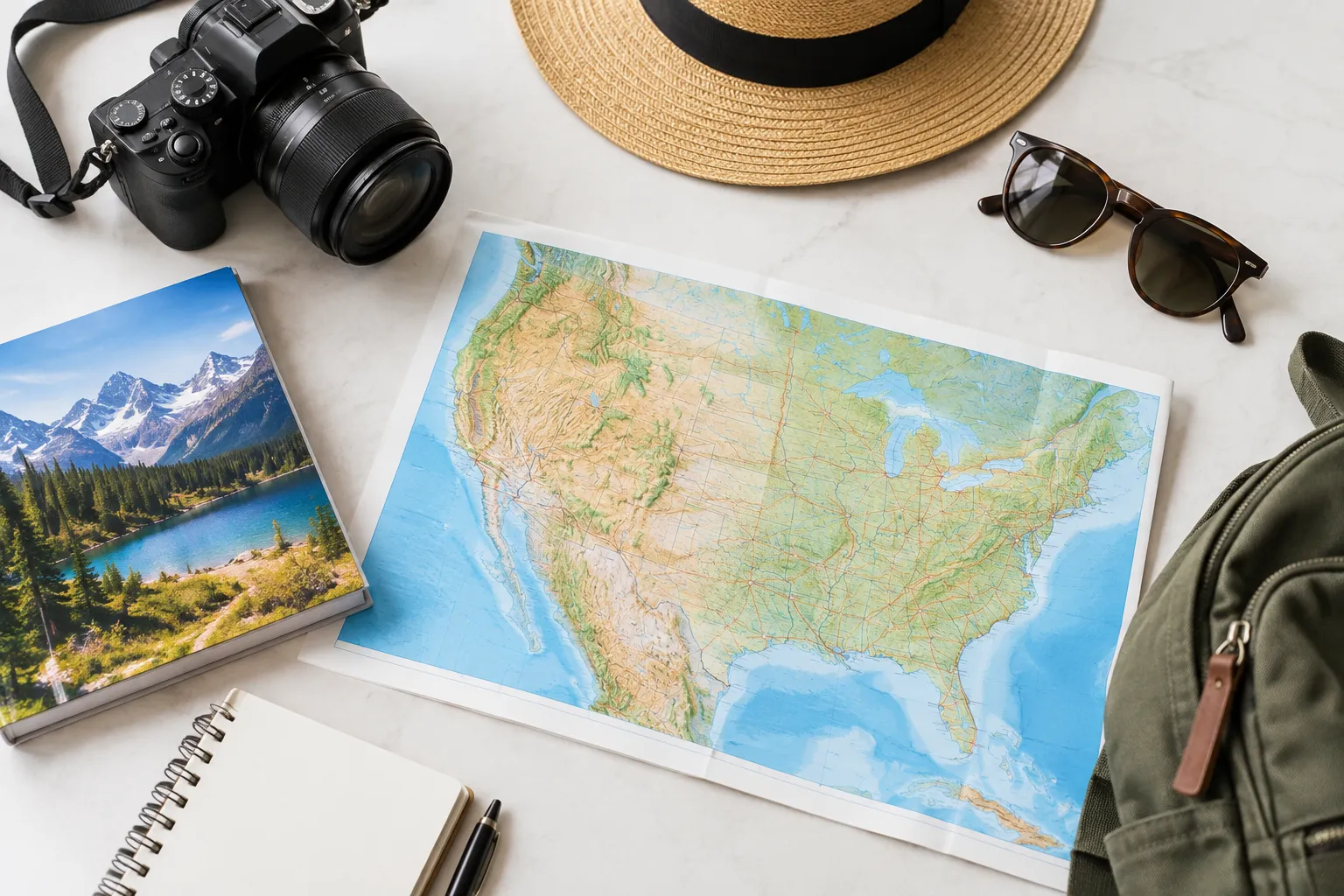
The strongest guide for your trip is the one that matches your route and planning needs, with enough detail to act on and clear signals about where its information comes from. This checklist works for free and paid online travel guides, including guides to destinations across the United States.
A guide’s main strengths may be its itinerary ideas, local history, maps, or practical details. Its limitations matter too: a broad national guide may not have room for neighborhood-level advice, while a focused destination guide may not help you plan across several states.
Check freshness, sourcing, and local detail
Look for a publication or update date, especially alongside information that can change, such as opening hours, road access, seasonal services, and transit options. A date is a useful starting point, not a guarantee that every detail is current; confirm time-sensitive information before setting out.
Dependable advice also gives you ways to judge its basis. Does it name local organizations, official park or transport resources, or other sources? Does it explain why a place is worth a stop, or simply list attractions? Specific context—such as how a site connects to regional history or culture—can make guidance more useful than a string of opinions.
For USA guides, check whether the detail matches your destination. A guide covering the entire country can help you choose a region, but it may not provide enough depth for a long stay or a multi-day route. Look for focused guidance on choosing a travel guide for a US trip if you are weighing national, regional, and destination-level coverage.
Look for practical and accessible trip details
A useful guide connects places to the decisions you need to make. For a road trip, that means more than naming attractions: look for nearby stops, sensible groupings by area, and enough route context to help you decide what fits into a day. Treat suggested travel times as planning estimates and check current driving conditions separately.
Accessibility information is another practical test. Does the guide mention stairs, terrain, accessible entrances, or the need to confirm access with a site? If it does not, note the gap rather than assuming a place will suit your needs.
Maps should help you understand location and sequence. Check whether you can see how stops relate to one another and whether the guide distinguishes a visual overview from turn-by-turn directions. Our guide to turning map pins into road-trip driving days explains how to move from a collection of places to a more workable route.
Notice sponsorship and recommendation limits
A recommendation is easier to assess when the guide explains its selection criteria and discloses paid placements, affiliate links, or other commercial relationships. Sponsorship does not automatically make advice unhelpful, but readers should be able to distinguish an advertisement from an editorial recommendation.
Also check what the guide leaves out. Does it cover only popular sights, a particular region, or a specific travel style? A clear scope is a strength: it helps you avoid treating a narrow guide as a complete plan. Be cautious when a page presents a list of “must-sees” without explaining who it suits, how to reach the places, or what else is nearby.
Where free digital guides help—and where they fall short
Free digital guides can be a strong starting point when they offer specific information, useful local context, and transparent limits. They are especially handy for comparing destinations or gathering ideas before choosing a route.
Their weaknesses are often about depth and upkeep. A short overview may not answer detailed questions about transport, accessibility, or the practical order of stops. Information that changes can become stale, so verify details such as hours, closures, and reservation requirements with the relevant local source.
For a longer trip, look for more than a list of highlights. Useful guidance should help you understand what makes a place distinctive, how to explore it, and what additional research remains. If a guide feels like a travel magazine—good at sparking interest but short on actionable information—pair it with focused destination resources and a route plan.
Compare guide formats for trips around the USA
Different formats solve different planning problems:
- Destination guides explain a place in more depth. They are a better fit when you want local context, sights, and practical details for a particular city, region, or park area.
- Editorial travel features can introduce ideas and explain why a destination might interest you. They may not provide enough logistics to plan a full trip on their own.
- Itineraries organize destinations into a sequence, often by day. Check whether the pacing feels realistic for your travel style and whether the route includes enough time for the stops that matter to you.
- Map-based resources help you see distance and location. They can clarify route shape, but a map alone may not explain what to do at each stop or whether details have changed.
For road trips, combining formats is often more useful than expecting one page to do everything. Use a destination guide for context, an itinerary as a planning framework, and a map to test the order of stops. See road-trip app features that help with planning for more on how digital tools can support a route.
Choose a guide that fits your trip
Start with the scope of your trip, then match the guide to the decisions you need to make.
- Define your area. For one city or park, start with a focused destination guide. For a cross-country or multi-state journey, use regional resources along with a broader overview rather than relying on one guide to cover every stop in depth.
- Decide what you need to plan. If you need day-by-day structure, look for an itinerary with nearby attractions and realistic pacing. If you are still choosing where to go, start with a guide that compares regions or destinations.
- Check the details that affect your travel. Review update dates, transport information, accessibility notes, map usefulness, and source links. Confirm anything time-sensitive before you commit.
- Mark the gaps. If a guide has little history, no practical route detail, or unclear recommendations, treat it as an idea source and add another resource to cover what is missing.
This approach suits travelers who want both useful detail and a clear sense of what remains to be checked. It is less helpful to expect one broad guide to answer every local, logistical, and accessibility question for a long trip.
Travel Guide FAQs
What company makes the best travel guides?
No single company makes the best guides for every traveler; compare the guide’s destination scope, update information, sourcing, local context, and practical detail against your trip needs.
What is the best website for travel guides?
The best website is one that gives relevant, well-scoped guidance and makes its sources, update information, and limitations clear. Check whether it answers your specific planning questions before relying on it.
Should I use a printed guidebook alongside an online guide?
Yes, using both can be helpful: a printed book can provide structured background, while online resources can help you check details that may change. Confirm current logistics before traveling.
Can I save a digital travel guide for offline use?
Sometimes; it depends on the website or app. Check whether the guide offers downloads or offline access, and save maps and essential trip details before entering areas with limited service.
How do I choose a guide for a multi-state road trip?
Choose a broad guide for route inspiration, then add focused guides for the states or destinations where you plan to spend time. Check that the combined advice covers realistic travel days and local logistics.
Are downloadable destination brochures useful for planning a longer trip?
They can help with local highlights, visitor information, and initial ideas, but may not provide enough depth for a long itinerary. Pair them with detailed route and destination research.
Can a travel guide help build a day-by-day itinerary?
Yes, if it connects nearby attractions and gives enough route context to plan a sensible sequence. Check travel distances and opening information separately before fixing each day’s schedule.
How many travel guides should I compare before choosing one?
Compare two or three guides for the same destination or route, using the same checks for freshness, detail, sourcing, logistics, and scope. Add another only if a planning gap remains.
Recommended next steps
Choose your destination scope first, then compare a small set of guides against the decisions you need to make. For a road trip, map the likely stops into driving days and flag details that need confirmation. Our road-trip app checklist can help you think through the planning tools that may support that process.