
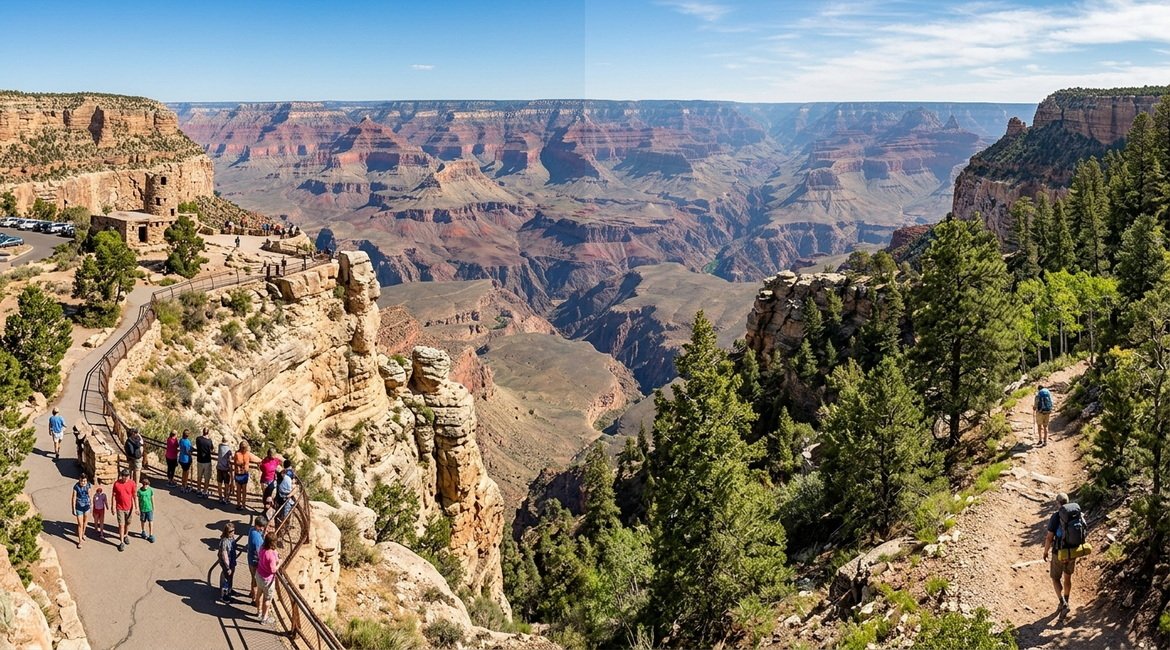
The South Rim and North Rim look across the same Grand Canyon, but visiting them can feel like taking two completely different trips. The South Rim is the classic choice. It stays open throughout the year, has the largest selection of viewpoints, hotels, restaurants and visitor services, and is the side most first-time travelers visit. The North Rim is higher, cooler, more remote and dramatically quieter. Instead of busy visitor centers and large hotel areas, the experience is centered around forests, scenic drives and viewpoints that receive only a fraction of the South Rim’s visitors. Neither rim is automatically better. The right choice depends on when you are traveling, where your road trip begins, how much time you have and whether you prefer convenience or solitude. There is also an important factor for travelers visiting in 2026. The North Rim reopened after the 2025 Dragon Bravo Fire, but services remain limited while recovery work continues. This South Rim vs. North Rim comparison explains exactly what you should know before choosing one.
South Rim vs. North Rim at a Glance
| Feature | South Rim | North Rim |
|---|---|---|
| Best For | First-time visitors | Quieter trips |
| Season | Open year-round | Usually May 15–Oct. 15 |
| Elevation | About 7,000 ft | About 8,000 ft |
| Crowds | Busier | Much quieter |
| Services | Extensive | Limited, especially in 2026 |
| Scenery | Wide classic panoramas | Forested, dramatic viewpoints |
| Las Vegas Trip | Better for classic first visit | Better as part of Utah/Arizona route |
| Family Convenience | Excellent | More planning required |
Quick answer: Choose the South Rim for your first Grand Canyon trip, year-round access, more viewpoints and easier logistics. Choose the North Rim if you are visiting during its short season and value fewer crowds, cooler temperatures and a more remote atmosphere.
What Is the Biggest Difference?
The biggest difference is not simply the view. It is the entire travel experience. The South Rim functions like the main visitor hub of Grand Canyon National Park. Grand Canyon Village includes lodging, restaurants, visitor centers, shops, museums and free shuttle transportation. You can arrive without knowing exactly which viewpoint you want to see and still organize the day relatively easily. The North Rim feels much more isolated. Forested roads lead toward viewpoints separated by large stretches of quiet landscape. Services are fewer, driving distances inside the North Rim area can be longer, and travelers need to arrive more prepared. That difference becomes even greater in 2026 because North Rim services remain reduced following the Dragon Bravo Fire. So think of the choice this way: South Rim = easier, busier and more developed. North Rim = quieter, more remote and more seasonal.
South Rim — Best for First-Time Visitors
For most travelers visiting the Grand Canyon for the first time, the South Rim is the stronger choice. It offers the classic panoramas most people imagine when they think about the Grand Canyon. Grand Canyon Village sits directly along the rim, and numerous viewpoints extend east and west from the central visitor area. One major advantage is flexibility. You can spend only a few hours at the South Rim or stay several days. The park’s free shuttle system makes it possible to park your vehicle and travel between many popular viewpoints and visitor areas without repeatedly moving the car. Desert View Drive also extends 23 miles east between Grand Canyon Village and Desert View and can be driven in a private vehicle throughout the year unless temporary weather conditions force a closure. Another major advantage is seasonality. The South Entrance near Tusayan and East Entrance at Desert View remain open 24 hours a day, seven days a week throughout the year. That makes the South Rim the practical choice for winter travel.
Choose the South Rim if:
- This is your first visit to the Grand Canyon.
- You want the largest selection of viewpoints.
- You are traveling with children.
- You want hotels, restaurants and visitor services nearby.
- You are visiting in winter.
- You are driving from Las Vegas, Flagstaff, Williams or Phoenix.
North Rim — Best for a Quieter Experience
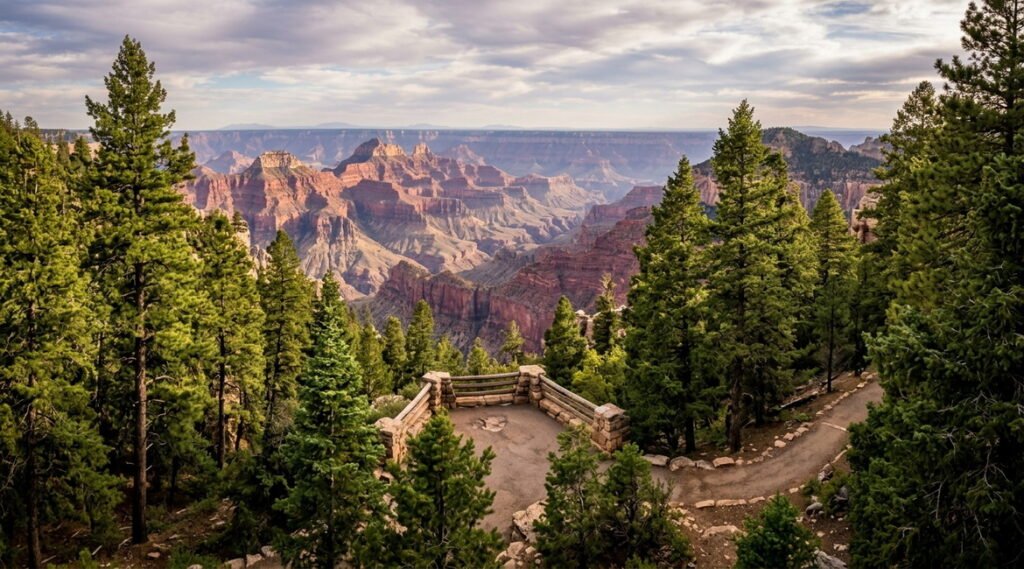
The North Rim offers another side of the Grand Canyon. At an average elevation of approximately 8,000 feet, it sits around 1,000 feet higher than the South Rim. The higher elevation creates a cooler environment and a greener landscape dominated by forests. It also changes the perspective into the canyon. Instead of looking across from large open developed areas, many North Rim viewpoints feel more isolated and surrounded by forest. The North Rim receives only a small fraction of the park’s overall visitors. That makes it especially appealing to travelers who have already experienced the South Rim or want to avoid the busiest areas of Grand Canyon National Park. Scenic roads provide access to viewpoints including Point Imperial, Cape Royal, Roosevelt Point, Walhalla Overlook and Angels Window. The experience, however, requires more preparation. The visitor season is short and services are much more limited than on the South Rim. This is especially important in 2026.
Choose the North Rim if:
- You have already seen the South Rim.
- You prefer fewer crowds.
- You enjoy forested mountain scenery.
- You are building a road trip through northern Arizona and southern Utah.
- You are visiting during the North Rim season.
- You are comfortable with limited services.
Which Rim Has Better Views?
There is no objective winner. Both rims overlook the same enormous canyon but provide different perspectives.
South Rim Views
The South Rim generally offers the iconic wide panoramas associated with classic Grand Canyon photography. Popular viewpoints extend across many miles of rim. Because the South Rim has more developed visitor infrastructure, it is also easier to experience several major viewpoints during one day. Sunrise and sunset can transform the canyon dramatically as shadows move across layers of cliffs. For first-time visitors, this variety is difficult to beat.
North Rim Views
The North Rim feels more intimate and less developed. Forest extends close to many overlooks, creating a strong contrast between green plateau landscapes and the red canyon below. Point Imperial provides a particularly expansive perspective from one of the highest viewpoints in the park. Cape Royal offers another classic North Rim experience, with dramatic formations spreading across a huge section of the canyon.
Our choice: For the most recognizable Grand Canyon experience, the South Rim wins slightly. For atmosphere and a sense of wilderness, the North Rim wins.
Which Rim Is Less Crowded?
The North Rim wins easily. National Park Service information notes that only about 10% of Grand Canyon visitors travel to the North Rim. The difference is noticeable. At the South Rim, popular viewpoints, shuttle stops and visitor areas can become crowded during summer weekends and holidays. That does not mean every part of the South Rim is crowded. Moving away from the most convenient central viewpoints often creates a quieter experience. But the North Rim generally feels less busy throughout the day. Fewer visitors also mean fewer services. This is an important tradeoff. The quieter destination requires more planning. If avoiding crowds matters more to you than having restaurants, hotels and frequent transportation nearby, the North Rim has a clear advantage.
Weather & Elevation
Elevation is one of the most important differences between the two rims. The South Rim averages around 7,000 feet above sea level. The North Rim averages around 8,000 feet. That extra elevation generally makes the North Rim cooler. During summer, daytime temperatures on the South Rim commonly reach the 80s°F, while North Rim highs are often in the 70s°F. Even in summer, mornings and evenings can be cool at both rims. Weather also changes quickly. Thunderstorms are possible during the summer monsoon season, while winter can bring snow and ice. The North Rim’s higher elevation contributes to its shorter visitor season.
Visitors should also remember that both rims are at substantial elevation. If you are arriving directly from a much lower location such as Las Vegas, take your time when walking and stay hydrated.
Getting to the South Rim vs. North Rim
The canyon may separate the two rims by only about 10 miles on average as the crow flies. By road, they are much farther apart. The drive between South Rim Village and the North Rim is approximately 212 miles and normally takes around 4.5 hours. There is no bridge across the Grand Canyon connecting them directly.
Getting to the South Rim
The South Rim is generally easier to incorporate into a Southwest trip. It is about:
- 60 miles north of Williams.
- Roughly 80 miles from Flagstaff.
- About 4–4.5 hours from Las Vegas under normal conditions.
The South Entrance near Tusayan is the main arrival point for many visitors. The East Entrance at Desert View is another excellent option when arriving from northern Arizona.
Getting to the North Rim
The North Rim requires more planning. The entrance lies around 30 miles south of Jacob Lake on Highway 67, and the actual rim is another approximately 14 miles beyond the park entrance. This location makes the North Rim particularly convenient when your road trip already includes places such as southern Utah or Page. For a trip starting and ending in Las Vegas, the South Rim generally creates a more straightforward classic Grand Canyon itinerary.
Hotels, Food & Visitor Services
The South Rim has a major advantage here. Grand Canyon Village and nearby Tusayan provide multiple lodging options, restaurants, groceries and visitor services. Free park shuttle buses connect major areas around Grand Canyon Village. This infrastructure makes the South Rim significantly easier for first-time visitors and families. The North Rim normally offers a much smaller selection even during a standard season. In 2026, services are particularly limited while the park continues recovery after the Dragon Bravo Fire. There is no overnight lodge accommodation on the North Rim during the 2026 season. The North Rim Campground reopened on June 1 and is currently taking reservations through October 15. However, water and RV hookups are unavailable. A General Store operates near the campground and sells food supplies and bottled water. Fuel is available at the North Rim Service Station through 24-hour pay-at-the-pump service. Most importantly, visitors should not arrive expecting the same level of infrastructure they would find on the South Rim.
South Rim vs. North Rim With Kids
For most families, choose the South Rim. The reason is not that the scenery is more suitable for children. It is logistics. The South Rim provides more convenient parking, restrooms, food, accommodations, visitor centers and shuttle transportation. Families can also adjust the day more easily. If children become tired, you can shorten the itinerary without being far from services. The North Rim can still be an excellent family destination, particularly for families taking a longer road trip and comfortable with remote travel. But in 2026, the reduced services require additional preparation. Bring the food and water you expect to need and check current facility information immediately before your trip. For younger children or a first Grand Canyon vacation, the South Rim is the simpler choice.
Best Rim for a Las Vegas Road Trip
For most travelers starting in Las Vegas, choose the South Rim. It fits naturally into the classic route: Las Vegas → Hoover Dam → Kingman → Route 66 → Williams → Grand Canyon South Rim. This turns the drive into part of the trip rather than simply transportation. The South Rim also has considerably more accommodation available, making an overnight road trip easier to organize. The North Rim makes more sense if your itinerary continues toward southern Utah. For example: Las Vegas → Zion → North Rim → Page → Bryce Canyon can create an excellent larger Southwest loop. In other words: South Rim: better for a dedicated Las Vegas-to-Grand-Canyon trip. North Rim: better when the Grand Canyon is one stop on a northern Arizona and Utah road trip.
Can You Visit Both Rims?
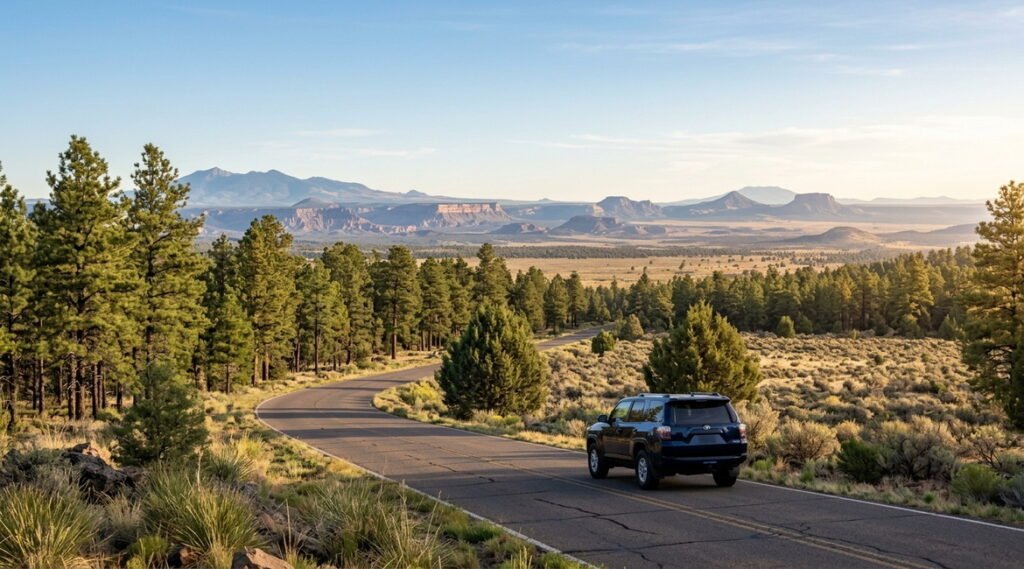
Yes, but do not treat the two rims as neighboring attractions. Driving between them takes roughly 4.5 hours and covers about 212 miles. That means visiting both works best as part of a multi-day road trip. A practical itinerary might look like: Day 1: Arrive at South Rim. Day 2: Explore South Rim and stay overnight. Day 3: Drive around the canyon toward the North Rim region. Day 4: Visit North Rim viewpoints. Trying to see both rims in a single day would turn most of the experience into driving. For a short trip, choose one rim and explore it properly.
Best Time to Visit Each Rim
South Rim
The South Rim is open throughout the year. Spring and fall offer a good balance between temperatures and visitor levels. Summer provides long daylight hours but is also one of the busiest periods. Winter can be beautiful, especially when snow highlights the canyon formations, but snow and ice can affect roads and walking areas.
North Rim
The North Rim has a much shorter season. Its normal season is approximately May 15 through October 15, depending on weather and road conditions. Summer brings cooler temperatures than the South Rim. Early fall can also be especially attractive as the forest begins changing color. But do not build an off-season trip around North Rim access without checking current conditions first.
Important North Rim Changes for 2026
The 2026 North Rim season is unusual. The area reopened on May 15 following the Dragon Bravo Fire of 2025. All paved roads reopened, including Highway 67, Cape Royal Road and Point Imperial Road. That restored vehicle access to many of the North Rim’s major viewpoints. However, services remain limited while recovery work continues. As of September 2026:
- The North Rim is open for the 2026 season.
- There is no overnight lodge accommodation on the North Rim.
- The North Rim Campground is open through October 15.
- Potable water is not generally available through the usual North Rim water system.
- Visitors should arrive with adequate drinking water and supplies.
- The General Store sells bottled water and basic supplies.
- The fuel station provides 24-hour pay-at-the-pump service.
There is also a new temporary issue. Following significant flash flooding on August 29, 2026, the entire North Kaibab Trail is currently closed, along with Phantom Ranch, Bright Angel Campground and the Black and Silver bridges in the inner canyon. There is currently no announced reopening date for those flood-affected areas. This does not mean the North Rim itself is closed. The major scenic roads and rim viewpoints remain accessible. But travelers should check the latest National Park Service conditions immediately before visiting because the recovery situation can change.
Which Rim Should You Choose?
| If You Want… | Choose… |
|---|---|
| Your first Grand Canyon trip | South Rim |
| The classic canyon views | South Rim |
| Fewer crowds | North Rim |
| More hotels and restaurants | South Rim |
| Cooler summer temperatures | North Rim |
| A Las Vegas road trip | South Rim |
| A Utah + Arizona road trip | North Rim |
| A winter visit | South Rim |
| A more remote atmosphere | North Rim |
| Easier trip with children | South Rim |
For most readers planning their first trip, the answer is simple: Visit the South Rim first. The North Rim is an excellent second Grand Canyon experience or a strong choice when your route naturally passes through northern Arizona and southern Utah.
Common Planning Mistakes to Avoid
Assuming the two rims are close by road. They may face each other across the canyon, but driving between them requires roughly 212 miles. Planning a North Rim trip in winter. The North Rim is highly seasonal. Use the South Rim for a standard winter Grand Canyon visit. Expecting South Rim services at the North Rim. Even in a normal year, the North Rim is much less developed. In 2026, services are even more limited. Ignoring the elevation. Both rims are high enough that temperatures and physical conditions can feel very different from Las Vegas or Phoenix. Trying to see both rims on a short trip. With only one or two days, choose one side. Using old North Rim information in 2026. Fire recovery and the August flash flood have changed services and trail access. Always check current conditions before traveling.
FAQ About the South Rim vs. North Rim
Which side of the Grand Canyon is better?
The South Rim is better for most first-time visitors because it offers year-round access, more viewpoints, more lodging, restaurants and visitor services. The North Rim is better for travelers who value fewer crowds, cooler temperatures and a more remote experience.
Which rim is better for first-time visitors?
Choose the South Rim for a first visit. It combines classic Grand Canyon panoramas with easier transportation, more services and a wider selection of viewpoints.
How far apart are the South Rim and North Rim?
The average distance across the canyon is only around 10 miles, but the driving distance between the South Rim and North Rim is approximately 212 miles. Expect around four and a half hours of driving under normal conditions.
Which rim is less crowded?
The North Rim is significantly quieter. National Park Service information indicates that only about 10% of Grand Canyon visitors travel to the North Rim.
Is the North Rim open in winter?
The regular North Rim visitor season is generally from May 15 through October 15, depending on conditions. For a standard winter Grand Canyon trip, choose the South Rim, which remains open year-round.
Can you drive from the South Rim to the North Rim?
Yes, but there is no direct road across the canyon. The driving route around the canyon is about 212 miles and normally takes roughly four and a half hours, so visiting both rims works best as a multi-day road trip.
Recommended Next Steps
If this is your first Grand Canyon visit, plan your trip around the South Rim. Spend at least one night near Grand Canyon Village or Tusayan so you can experience the canyon during both evening and morning light. If you have already visited the South Rim and want a completely different experience, consider the North Rim during its operating season. The higher elevation, forested landscape and much smaller visitor numbers create a noticeably different atmosphere. For a trip from Las Vegas, the strongest first-time route is: Las Vegas → Hoover Dam → Route 66 → Williams → Grand Canyon South Rim. For a larger Southwest trip through southern Utah, consider: Las Vegas → Zion → North Rim → Page → Bryce Canyon. And if your schedule allows several days, you can visit both rims. Just remember that they are not two nearby viewpoints on opposite sides of the road. They are two distinct Grand Canyon experiences separated by more than 200 miles of driving. For convenience, variety and a first visit, choose the South Rim. For solitude, forest scenery and a more remote second visit, choose the North Rim.