
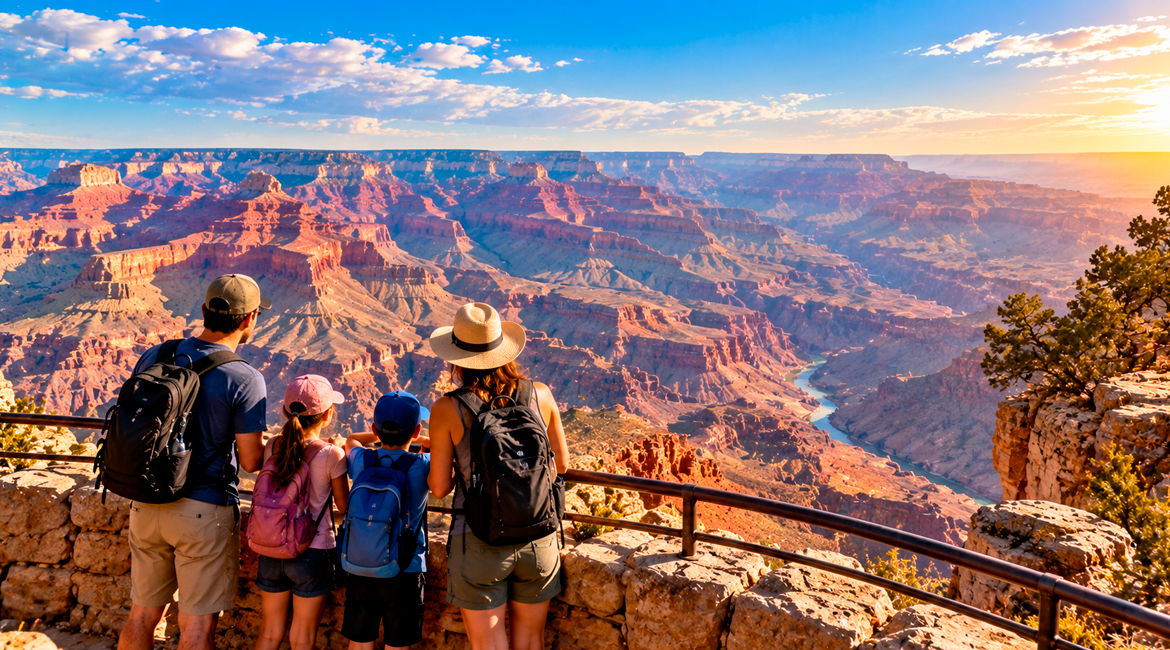
Seeing the Grand Canyon for the first time is one of those travel experiences that photographs never completely prepare you for. The enormous scale, layers of colorful rock and constantly changing light make it fascinating for adults, but the Grand Canyon can also be an excellent destination for families. You do not need to take children on a difficult hike into the canyon to make the trip memorable. Families can visit spectacular viewpoints, walk manageable sections of the Rim Trail, ride free shuttle buses, learn about geology, participate in ranger activities and watch the landscape change around sunrise or sunset. The key is planning the Grand Canyon differently when traveling with kids. Instead of measuring success by how far you hike, focus on variety, manageable distances and giving children enough time to actually experience the canyon.
Is the Grand Canyon Good for Kids?
Yes. The Grand Canyon may look like an adventure destination designed primarily for serious hikers, but hiking deep below the rim is only one way to experience the national park. Families can build a visit around:
- Scenic overlooks
- Short walks
- Geology and nature
- Wildlife viewing
- Visitor centers
- Ranger programs
- Sunrise and sunset
- Free shuttle rides
- Photography
- Scenic drives
Children also have an opportunity to experience a landscape unlike almost anything they see in everyday life. The canyon can turn subjects such as geology, erosion, wildlife and conservation into something they can see directly rather than simply reading about them. However, parents should remember that this is a natural environment rather than a controlled theme-park attraction. Stay together around viewpoints and cliff edges and follow all posted safety guidance.
Choose the South Rim for a First Family Visit
For many first-time family visitors, the South Rim is the easiest place to start. It provides access to major viewpoints, visitor facilities, Grand Canyon Village, shuttle transportation and sections of the Rim Trail. The South Rim sits at approximately 7,000 feet above sea level. That elevation matters. Even families arriving from another warm Southwestern destination may notice that conditions at the rim feel completely different. Take your time on the first day and do not immediately plan strenuous activity after a long drive.
South Rim vs. North Rim with kids
Both sides provide spectacular canyon scenery, but they should not be treated as interchangeable entrances to the same visitor area. They are separated by the canyon itself, and traveling between them by road requires a substantial drive. For a first family vacation, keeping the itinerary centered on one rim is generally much easier than trying to experience both. The South Rim has the advantage of extensive visitor infrastructure and shuttle transportation. Do not choose your accommodation on one rim while planning most of your activities on the other without carefully checking driving distances.
Start at the Grand Canyon Visitor Center
Starting at the Visitor Center gives families an opportunity to understand the park before rushing from viewpoint to viewpoint. Check current conditions, shuttle information and any ranger programs available during your visit. This is also a good moment to decide how ambitious the rest of the day should be. Weather can change plans. Trail conditions can change plans. Children’s energy levels can definitely change plans. A flexible itinerary will usually work better than a minute-by-minute schedule. From the Visitor Center area, families can also reach some of the South Rim’s most recognizable scenery without immediately committing to a long hike.
See the Canyon From Mather Point
For many visitors, Mather Point provides the first dramatic view into the Grand Canyon. That first view deserves some time. Instead of arriving, taking a photograph and immediately moving to another overlook, let children actually look across the landscape. Ask them to notice:
- The different colors in the rock
- How far they can see
- Changing shadows
- Rock formations
- Birds and other wildlife
- How the canyon changes with the light
This turns a viewpoint into an experience rather than simply another photo stop. You also do not need to visit every overlook. After several hours, younger children may not find the fifth viewpoint as impressive as the first. Choose quality over quantity.
Walk a Family-Friendly Section of the Rim Trail
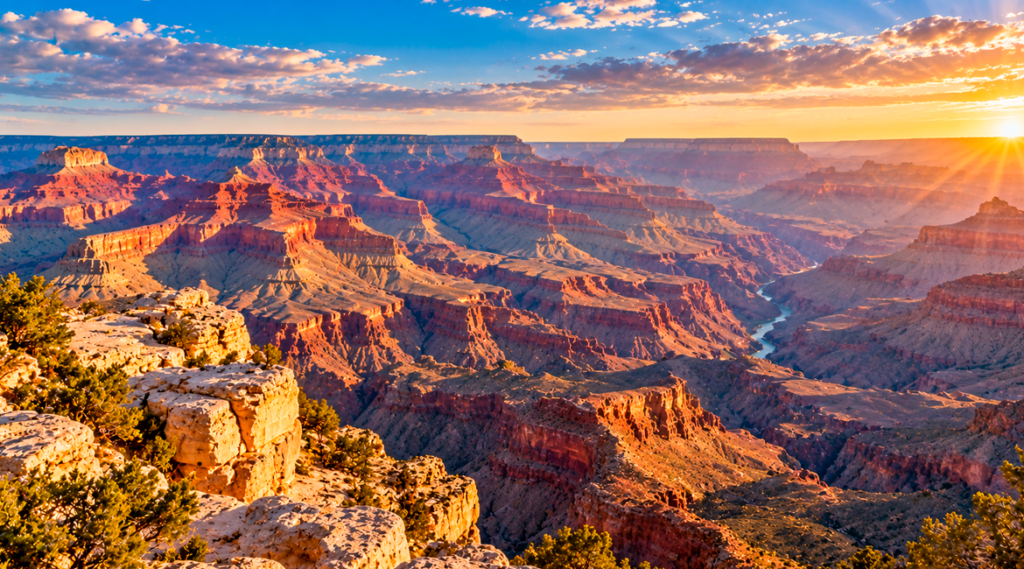
One of the easiest ways to combine scenery with physical activity is to walk part of the Rim Trail. The South Rim has rim and greenway trails with spectacular canyon views, including paved sections. You do not have to walk the entire route. Pick a manageable section based on your children’s ages, weather conditions and how much walking the family has already done. A shorter walk can provide more than enough time to enjoy the scenery. Stop regularly. Look into the canyon. Take photographs. Watch for wildlife from a respectful distance. The goal is not to cover as many miles as possible.
Do you need to hike below the rim?
No. A family can have an excellent Grand Canyon experience without hiking below the rim at all. Trails descending into the canyon become considerably more demanding because every downhill step at the beginning eventually has to be regained on the climb back. The National Park Service specifically warns that there are no easy trails into or out of the Grand Canyon. For a first trip with younger children, rim viewpoints and appropriate rim walks can provide a much simpler experience. Never attempt to hike from the rim to the Colorado River and back in one day.
Ride the Free South Rim Shuttle
The shuttle system can make exploring the South Rim considerably easier. Instead of repeatedly moving your vehicle and searching for parking, families can use park buses to connect visitor areas and viewpoints. The shuttle service is included with park admission. Routes and schedules change seasonally. During summer 2026, for example, the Village Route connects the Visitor Center with lodges, campgrounds, the Backcountry Information Center and Market Plaza. Other routes provide access to scenic areas such as Yaki Point and Hermit Road. For children, the shuttle can also provide a useful break from walking. Plan the day around several stops rather than trying to exit at every possible viewpoint.
Visit Yavapai Geology Museum
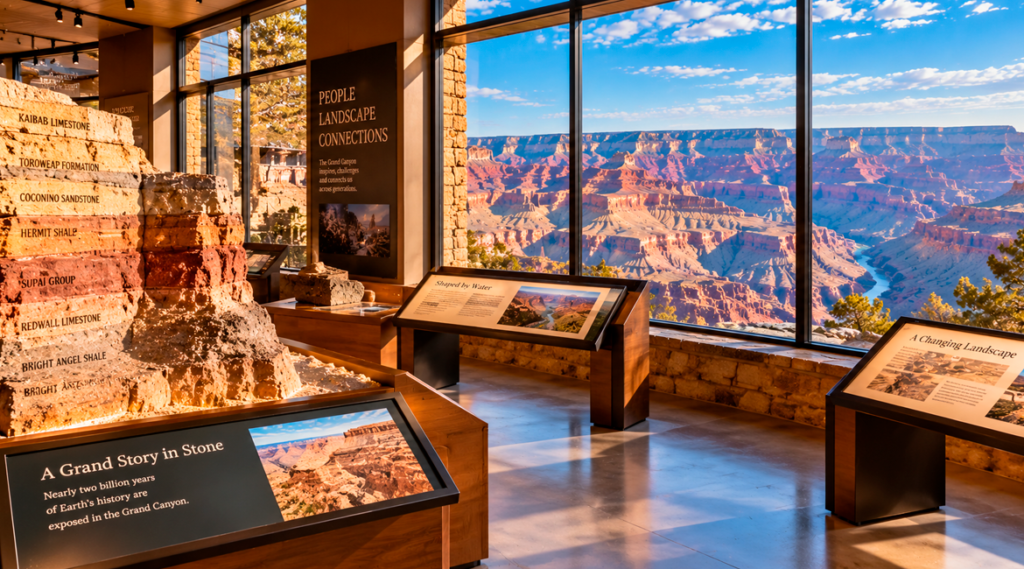
The Grand Canyon becomes even more interesting when children understand what they are looking at. A geology-focused stop can help explain the layers of rock, the age of the landscape and the natural processes that shaped the canyon. This gives families an opportunity to combine sightseeing with learning without turning the day into a classroom lesson. Let the landscape do most of the work. Look at the canyon through the windows, compare what you see with exhibits and then head outside again. Older children may become interested in identifying individual rock layers or understanding how dramatically elevation changes from the rim to the river.
Try the Junior Ranger Program
National parks become much more interesting to some children when they have something specific to investigate. The Junior Ranger program can provide that structure. Instead of simply following adults between overlooks, children can learn about the park while completing age-appropriate activities. This can encourage them to notice details they might otherwise overlook. Depending on current programming, families may also find ranger talks or other educational activities. Check what is available when you arrive because schedules can change throughout the year. Do not make completion of every activity the goal. Use the program as a way to make the park more engaging.
Watch a Grand Canyon Sunrise or Sunset
The Grand Canyon changes dramatically as the sun moves across the sky. Rock formations that appear muted during one part of the day can turn orange, red and gold as the light changes. That makes sunrise or sunset one of the simplest memorable experiences families can add to a visit. Sunrise may work particularly well for families whose children naturally wake early. Sunset can be easier to combine with a full sightseeing day. Either way, remember that temperatures can change quickly after the sun disappears. Bring layers rather than assuming the temperature you experienced in the afternoon will continue into the evening. Arrive with enough time to find an appropriate viewing location without rushing.
Drive to Desert View
If your family has more time, exploring beyond the central Grand Canyon Village area can add variety. Desert View provides another perspective on the canyon and surrounding landscape. The journey itself can become part of the experience because the scenery changes as you travel along the rim. Rather than stopping at every overlook, choose several. Children can quickly become tired of repeatedly getting in and out of the car for very similar views. A better strategy is to select stops that offer something different. Use the drive as a slower sightseeing day rather than another checklist. Before leaving, check current road conditions and facility information.
How Many Days Do You Need With Kids?
You can see the Grand Canyon on a day trip, but spending at least one night nearby changes the experience. A single full day can include:
- Visitor Center
- Mather Point
- A section of the Rim Trail
- Several shuttle-accessible viewpoints
- A geology stop
- Sunset
With two days, the pace becomes considerably more relaxed. For example:
- Day 1: Visitor Center, Mather Point, Rim Trail, geology and sunset
- Day 2: Scenic viewpoints, Junior Ranger activities and Desert View
Two days also give you some flexibility if weather interferes with part of the first day. Families incorporating the Grand Canyon into a longer Arizona, Utah or Las Vegas road trip should resist the temptation to schedule too much driving immediately before and after the visit.
When to Visit the Grand Canyon With Kids
There is no single perfect month because the Grand Canyon changes dramatically throughout the year. Spring and fall can provide comfortable conditions for sightseeing, although weather can still vary. Summer brings long days and popular travel periods. Temperatures on the South Rim are generally much cooler than deep inside the canyon because of the difference in elevation. Winter can completely transform the landscape, with snow possible along the rim. Whatever the season, check the current forecast shortly before visiting. Do not use the weather forecast for Las Vegas or another nearby road-trip destination as a substitute for the Grand Canyon forecast. Elevation makes a major difference. Pack for the actual conditions at the rim.
What to Pack for a Family Visit
You do not need expedition equipment for a normal family sightseeing day along the South Rim. You do need to be prepared for weather, sun and walking. Useful items can include:
- Refillable water bottles
- Comfortable walking shoes
- Sun protection
- Hat
- Weather-appropriate layers
- Snacks
- Small backpack
- Rain protection when showers are possible
- Extra warm layer for early morning or evening
Carry water even if temperatures at the rim feel comfortable. The climate is dry and the elevation may affect visitors who are not accustomed to it. If you are driving through the Southwest, keep water in the vehicle as well. Distances between services can be greater than visitors expect.
Important Safety Tips for Families
The Grand Canyon is spectacular because it is a wild natural landscape, and families should treat it accordingly. Stay on designated paths and behind barriers where provided. Keep younger children close around overlooks and cliff edges. Never climb onto rocks or structures for photographs. Weather is another important consideration. Conditions at the rim and inside the canyon can be dramatically different. During summer, temperatures deep inside the canyon can exceed 100°F (38°C), even when conditions at the South Rim feel much more comfortable. The National Park Service strongly discourages strenuous inner-canyon hiking during the hottest part of summer days. Families with young children do not need to descend into the canyon to experience the park. Rim walks, viewpoints and visitor areas can provide a full Grand Canyon experience with much less physical demand. Also remember the elevation. The South Rim is approximately 7,000 feet above sea level. Take your time, drink water and allow everyone to adjust rather than immediately beginning strenuous activity.
FAQ About Visiting the Grand Canyon With Kids
What age is good for visiting the Grand Canyon?
Children of many ages can enjoy the Grand Canyon because a family visit does not require difficult hiking. Viewpoints, short rim walks, ranger activities and shuttle rides can be adapted to different ages.
Is one day enough at the Grand Canyon with kids?
One full day can provide an excellent introduction to the South Rim. Staying for two days gives families a slower pace, more viewpoints and greater flexibility for weather and children’s energy levels.
Can children hike at the Grand Canyon?
Children can enjoy suitable walks based on age, ability and conditions. Rim trails are generally a more practical starting point for families than demanding routes below the rim. Choose conservatively and always check current trail and weather conditions.
Do you need reservations to enter the Grand Canyon?
As of 2026, Grand Canyon National Park does not require a reservation or timed-entry reservation simply to enter the park. Separate reservations may still be needed for lodging, campgrounds and certain activities.
Can you use a stroller at the Grand Canyon?
Some developed and paved areas along the South Rim may work with a stroller, but not every trail or viewpoint route is stroller-friendly. Check the specific route before setting out and never take a stroller onto unsuitable hiking trails.
What should kids wear at the Grand Canyon?
Comfortable walking shoes and seasonally appropriate layers are a good starting point. Sun protection is important, while mornings and evenings at the rim can feel much cooler than visitors expect.
Recommended Next Steps
For a first Grand Canyon family trip, keep the plan simple. Choose the South Rim and decide whether you have one or two full days. A relaxed two-day itinerary might look like this:
- Day 1 morning: Visitor Center + Mather Point
- Day 1 afternoon: Short Rim Trail walk + Yavapai Geology Museum
- Day 1 evening: Sunset viewpoint
- Day 2 morning: Junior Ranger activities + shuttle-accessible viewpoints
- Day 2 afternoon: Scenic drive toward Desert View
- Day 2 evening: Relax or return to a favorite viewpoint
If you only have one day, do not try to compress two days into twelve exhausting hours. Keep Mather Point, a short section of the Rim Trail, a few viewpoints and sunset. That is already enough to give children several different ways to experience the canyon. If you are combining the Grand Canyon with Las Vegas, remember that the canyon should not be treated as just another Las Vegas attraction. It deserves enough time to account for the drive, weather, elevation and the scale of the park. As of 2026, regular park entry does not require a timed-entry reservation. However, lodging and campgrounds can require advance booking, and shuttle routes, road access, trail conditions and facility hours change throughout the year. Always check current National Park Service conditions shortly before your visit.