
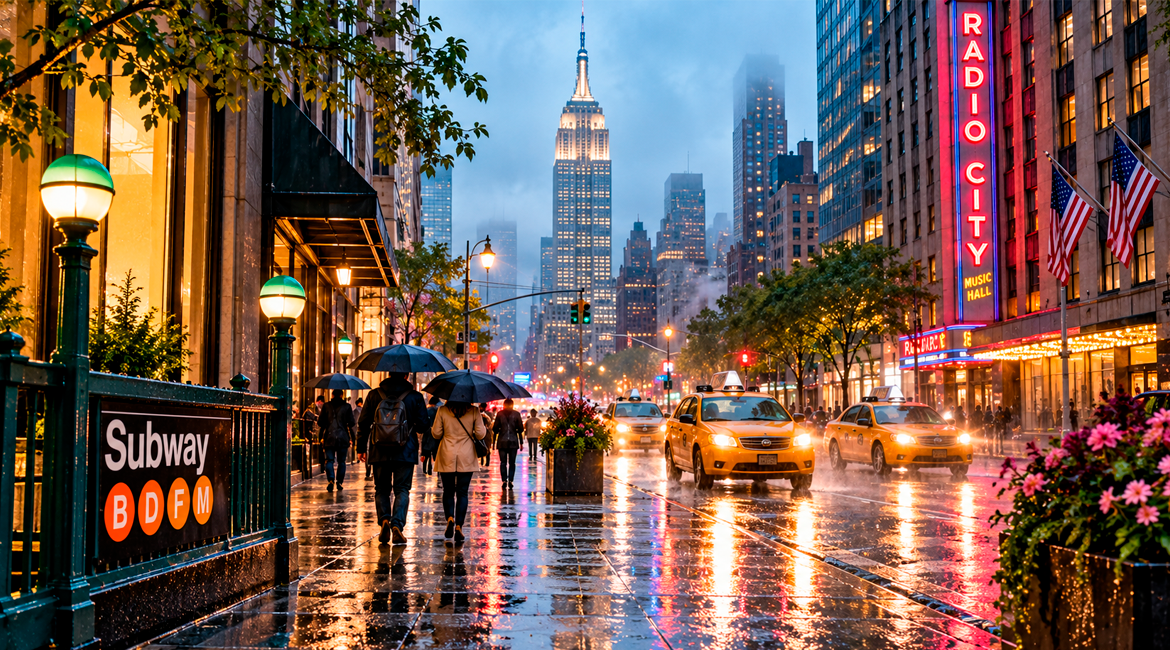
Rain in New York City does not have to mean losing a day of your vacation. In fact, NYC is one of the easiest major destinations in the United States to explore when the weather turns wet. The city has enormous museums, historic train stations, indoor observation experiences, libraries, theaters, food halls, shops and countless places where you can spend several hours without depending on sunshine. Some of the most enjoyable things to do in NYC when it rains include exploring the American Museum of Natural History, discovering the city’s transportation history at the New York Transit Museum, walking through Grand Central Terminal, seeing a Broadway show and using the subway to move between indoor attractions. The biggest mistake is assuming that rain means you need to cancel everything. Instead, reorganize your day. Move outdoor activities to clearer periods and use the wettest hours for attractions you would probably have visited anyway.
Is NYC Still Worth Exploring in the Rain?
Absolutely. New York is not a destination that depends entirely on beaches, hiking trails or outdoor attractions. Many of the experiences people travel to NYC for are indoors. A rainy-day itinerary can include:
- World-famous museums
- Interactive exhibitions
- Historic buildings
- Indoor markets
- Libraries
- Broadway shows
- Observation experiences
- Restaurants and food halls
- Transit-related attractions
- Shopping
Rain can even change the atmosphere of the city in interesting ways. Reflections from signs and skyscrapers appear across wet streets, taxis move through the rain and places such as Times Square can look completely different from a bright summer afternoon. You do not necessarily need a separate rainy-day vacation plan. You simply need enough flexibility to change the order of your existing plans.
Spend Hours at the American Museum of Natural History
The American Museum of Natural History is almost made for a rainy New York day. Instead of moving between several attractions in bad weather, you can spend a large part of the day inside one enormous museum. Its permanent collection extends across more than 40 galleries covering animals, dinosaurs, oceans, human cultures, biodiversity, gems and minerals, space and other subjects. The museum’s famous blue whale model and dinosaur fossils are among the experiences that can make it particularly appealing to families. As of September 2026, the museum is open daily from 10 a.m. until 5:30 p.m., although individual halls can temporarily close. That makes checking the current schedule before arriving worthwhile.
How to plan a rainy museum day
Do not try to see everything simply because you have escaped the rain. A huge museum can become exhausting when you treat every gallery as mandatory. Choose several priority areas. For example:
- Dinosaurs
- Ocean life
- Space
- Gems and minerals
- Animals
- One interactive or ticketed experience
Then allow yourself to explore whatever catches your attention between those priorities. Families with children ages 4–12 can also look into the Discovery Room, a hands-on learning space. Access is included with museum admission, but timed passes are limited and the room is closed on Tuesdays. Strollers are generally welcome throughout the museum, although some spaces have specific restrictions.
Discover the New York Transit Museum
A museum located inside a decommissioned subway station feels particularly appropriate on a rainy New York day. The New York Transit Museum in Downtown Brooklyn explores the history of the subway, buses and transportation systems that helped shape the city. Instead of simply displaying photographs of old trains, the setting itself becomes part of the experience. Visitors can encounter historic subway cars and transportation exhibits in an environment that feels very different from a traditional museum. As of September 2026, the Brooklyn museum is open Wednesday through Sunday from 10 a.m. until 4 p.m. Advance reservations are strongly encouraged.
Why kids may especially enjoy it
Children who are already fascinated by trains, buses and the NYC subway may find this museum more engaging than a traditional art gallery. The physical setting helps. Instead of asking a child to imagine what old New York transportation looked like, the museum provides a much more direct experience. It also works nicely with the theme of a New York trip. After visiting, children may start noticing details on actual subway trains and stations that they previously ignored. Keep in mind that the main entrance involves stairs, although a wheelchair-accessible entrance is available.
Explore Grand Central Terminal
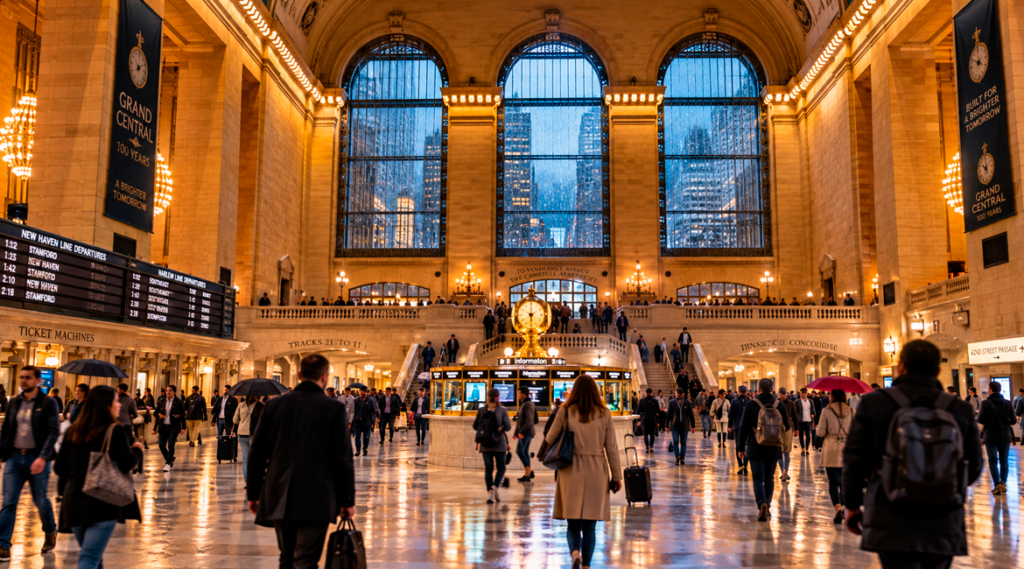
Grand Central Terminal is more than somewhere to catch a train. Its Main Concourse, architecture, famous clock, celestial ceiling, shops and dining options make it an easy indoor sightseeing stop when the streets are wet. Grand Central is currently open to the public daily from 5:15 a.m. until 2 a.m., although individual businesses have their own schedules. Spend time looking at the architectural details rather than simply walking through. One interesting feature is the use of oak leaf and acorn motifs throughout the terminal, symbols associated with the Vanderbilt family. The terminal also contains a New York Transit Museum Gallery & Store. As of September 2026, admission to this smaller gallery is free. That means Grand Central can combine architecture, transportation history and a meal or snack under one roof.
Choose an Indoor Observation Experience
An observation deck may not seem like an obvious rainy-day attraction, but it can work when conditions are right. The important question is visibility. Light rain with dramatic clouds can create a completely different view of Manhattan. Heavy fog or low cloud cover can make paying for an observation deck much less worthwhile. Check the weather immediately before committing. If visibility is reasonable, an indoor observation experience gives you a chance to see Manhattan while staying protected from the rain. Watching weather move across the skyline can itself be interesting. But remain flexible. If skyscrapers disappear into the clouds, move the observation deck to another day rather than forcing the original schedule.
Visit an Indoor Market or Food Hall
Rain provides a good excuse to turn lunch into part of the sightseeing day. Instead of quickly eating near the next attraction, choose an indoor market or food hall and spend some time exploring. This can be particularly useful for families or groups because everyone does not necessarily have to choose the same type of food. A longer lunch also creates a natural break between museums. That matters more than it might seem. Spending six or seven consecutive hours moving through indoor attractions can become just as tiring as walking outdoors. Use meals to slow the day down. Dry jackets, check the forecast and decide what makes sense for the afternoon.

Spend Time in a New York Library
Libraries can provide another quieter alternative when rain changes your plans. Instead of treating every indoor stop as a major paid attraction, mix museums with free or lower-key spaces. A library visit can provide architecture, books, exhibitions and a break from crowded tourist attractions. This is particularly useful during a long trip. Not every rainy afternoon needs to become an expensive replacement activity. Families can also look for children’s spaces and programs appropriate to the ages of their kids. Schedules and visitor access vary, so check the location you plan to visit rather than assuming every part of every library building is open to sightseeing.
Turn the Subway Into Part of the Experience
On a rainy day, the subway becomes even more useful. Instead of walking twenty blocks through heavy rain, use underground transportation to move between indoor attractions. The trick is to plan geographically. Choose several destinations near convenient subway connections rather than spending the entire day transferring between distant parts of the city. For example, you might build the day around one museum, one indoor sightseeing location and dinner nearby. Keep umbrellas and wet outerwear organized before boarding. Stations and trains can become crowded, and trying to manage several bags, umbrellas and children at the last moment makes transportation more stressful than necessary. Remember that some walking outdoors will still be required. A subway station rarely places you directly inside your destination.
See a Broadway or Family-Friendly Show
Rainy weather can be a good opportunity to move an evening theater plan earlier in your priorities. Broadway gives visitors several hours completely indoors while still providing an experience strongly associated with New York. If you are traveling with children, choose a production based on age, attention span and interests rather than simply selecting the most famous show. Check:
- Recommended minimum age
- Running time
- Intermission information
- Performance schedule
- Current ticket availability
A long evening performance after a full museum day may be too much for younger children. In that case, consider a matinee and keep the evening relaxed.
Explore NYC Between Showers
A rainy forecast does not necessarily mean continuous heavy rain. There may be periods of light rain or complete breaks between showers. Use those windows. New York can look particularly photogenic immediately after rain. Wet streets reflect lights, buildings and yellow taxis, while cloudy skies can create a completely different atmosphere from a sunny sightseeing day. Times Square is an obvious example. The huge digital displays reflect across wet pavement, creating a scene that many visitors never experience in clear weather.
What to do when the rain becomes lighter
Keep a few short outdoor activities available. Instead of starting a two-hour walk, choose something you can easily abandon if the rain returns. Possibilities include:
- A short neighborhood walk
- Times Square
- Photography
- A quick landmark stop
- Walking between nearby indoor attractions
- Getting coffee or food nearby
Watch the weather rather than following the original itinerary mechanically. Flexibility is the biggest advantage you can give yourself on a rainy New York day.
Build a Rainy-Day NYC Itinerary
A rainy-day plan works best when you minimize outdoor travel. One example could look like this:
- Morning: Spend several hours at a major museum.
- Lunch: Choose an indoor food hall, restaurant or café.
- Early afternoon: Visit another nearby indoor attraction.
- Late afternoon: Explore briefly outside if the rain becomes lighter.
- Evening: See a show, have dinner or return to the hotel.
Another option is a Midtown-focused day:
- Morning: Explore Grand Central Terminal.
- Late morning: Visit an indoor attraction nearby.
- Lunch: Stay in Midtown.
- Afternoon: Choose an indoor observation experience if visibility is good.
- Evening: Times Square and a theater performance.
For families particularly interested in transportation, consider a Brooklyn day centered around the New York Transit Museum followed by another nearby indoor activity. The exact itinerary matters less than avoiding unnecessary journeys across the city.
What to Pack for a Rainy Day in New York
A little preparation makes a significant difference. Consider carrying:
- A compact umbrella
- A lightweight waterproof outer layer
- Comfortable water-resistant shoes
- Extra socks for children
- A small waterproof or water-resistant bag for electronics
- A reusable water bottle
- Weather-appropriate layers
Footwear deserves particular attention. Even if you plan mostly indoor attractions, you will probably still walk between subway stations, restaurants and entrances. Wet shoes can make the rest of a long sightseeing day uncomfortable. Avoid carrying more than necessary. You will repeatedly enter museums, trains, restaurants and other crowded spaces, so a small organized bag is usually easier than several large ones.
Mistakes to Avoid When NYC Gets Rainy
The first mistake is abandoning the entire itinerary because rain appears in the forecast. Check when and how heavily rain is expected. The second is trying to replace every outdoor activity with a paid indoor attraction. That can make an already expensive New York vacation considerably more costly. Mix major attractions with free or inexpensive indoor stops. The third mistake is traveling too far between destinations. A rainy day is not the ideal time to repeatedly cross Manhattan and Brooklyn because you found five unrelated indoor attractions online. The fourth is ignoring reservations. Other visitors will also move indoors when weather becomes poor, so popular museums and shows may become busier. Finally, do not try to “make up” for the rain by packing more activities into the day. A slower itinerary can still be a memorable one.
FAQ About Rainy Days in NYC
What can you do in NYC when it rains?
Museums, Grand Central Terminal, indoor markets, libraries, theaters and other indoor attractions can fill an entire rainy day. When the rain becomes lighter, add short outdoor walks or sightseeing stops between indoor destinations.
What can families do in NYC on a rainy day?
Families can explore the American Museum of Natural History, visit the New York Transit Museum, spend time in children’s library spaces, see an age-appropriate show or combine an indoor attraction with a relaxed meal.
Are NYC museums good rainy-day activities?
Yes. Large museums can occupy several hours, making them particularly useful when heavy rain is expected for much of the day. Check current opening hours and ticket availability before traveling to the museum.
Is Times Square worth visiting in the rain?
It can be. Wet pavement reflects the area’s enormous illuminated signs and creates a different visual atmosphere. For comfort, a short visit during lighter rain usually works better than spending a long period outside during a heavy downpour.
Should you use the subway when it rains?
The subway can reduce the amount of outdoor walking required between destinations. You will normally still need to walk between stations and attractions, so organize your itinerary around destinations that are relatively close together.
Do you need to change your entire NYC itinerary because of rain?
Usually not. Move weather-dependent attractions to another time and bring museums or other indoor activities forward. If the rain is intermittent, use clearer periods for short outdoor sightseeing stops.
Recommended Next Steps
Before your New York trip, identify two or three indoor attractions you would genuinely want to visit even if the weather were perfect. That is much better than creating a list of emergency activities you are not particularly interested in. If rain appears in the forecast, reorganize the itinerary around those attractions. For example:
- Light rain: Continue sightseeing with shorter outdoor walks and more indoor breaks.
- Intermittent rain: Visit a museum during the wettest period and explore outside between showers.
- Heavy rain: Build most of the day around one large museum, a long lunch and another nearby indoor experience.
If you are traveling with children, the American Museum of Natural History or New York Transit Museum can become the main attraction rather than simply a backup plan. Most importantly, do not judge a New York vacation by whether every photograph has a blue sky. Rain changes the city. Museums become more appealing, streets look different, lights reflect across wet pavement and you may discover places you would otherwise have walked past. Keep the schedule flexible, stay reasonably close to subway connections and save the most weather-dependent experiences for a clearer part of the trip. Before heading out, check current attraction hours, temporary closures, ticket availability and the day’s weather conditions.