
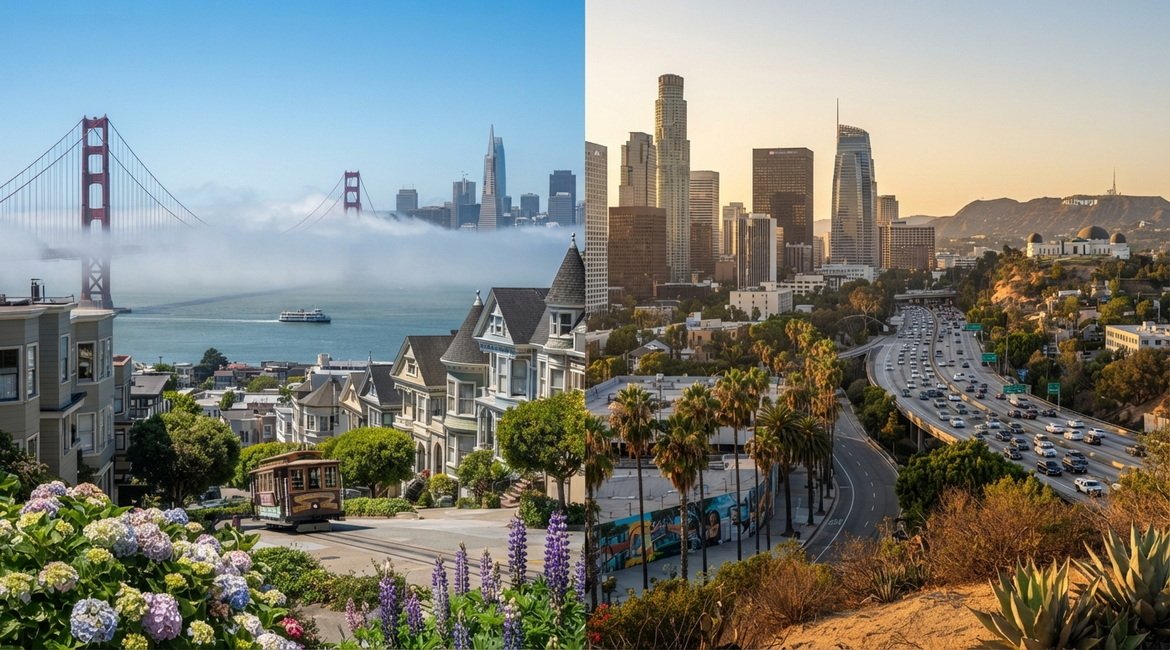
San Francisco and Los Angeles are two of California’s most famous cities, yet visiting them can feel like taking two completely different vacations. San Francisco is compact, hilly and strongly defined by its neighborhoods, waterfront and iconic landmarks. Cable cars climb steep streets, Victorian houses line residential blocks, and the Golden Gate Bridge is visible from viewpoints around the city. Los Angeles operates on a much larger scale. Beaches, movie-related attractions, museums, shopping districts and neighborhoods stretch across an enormous metropolitan area. The difference affects almost every part of a trip. In San Francisco, you can often combine several neighborhoods and attractions in one day using walking and public transportation. In Los Angeles, successful itineraries usually depend on grouping activities geographically. Los Angeles also offers warmer beach weather and a much larger variety of experiences spread across the region, while San Francisco provides a more concentrated city experience with distinctive architecture and dramatic Bay Area scenery. Understanding those differences makes it much easier to decide which city fits your California itinerary.
San Francisco vs Los Angeles at a Glance
The easiest way to compare San Francisco and Los Angeles is to think about the type of trip each city creates. San Francisco works particularly well for travelers who want a compact sightseeing trip where neighborhoods, landmarks and public transportation become part of the experience. Los Angeles works well for travelers who want maximum variety and do not mind covering greater distances between different parts of the city.
| Travel Factor | San Francisco | Los Angeles |
|---|---|---|
| City feel | Compact, historic, neighborhood-focused | Huge, varied, spread out |
| Major sights | Iconic and concentrated | Extremely varied |
| Beach experience | Scenic and cool | More traditional beach vacation |
| Summer weather | Cooler, windy, possible fog | Warmer and sunnier overall |
| Public transportation | Useful for many visitor areas | Useful on selected corridors |
| Car-free trip | Straightforward with planning | Possible with careful location choices |
| Typical first visit | 3–5 days | 4–6 days |
Overall Travel Experience
San Francisco feels like a city designed to be explored neighborhood by neighborhood. You can begin around Fisherman’s Wharf, continue toward North Beach and Chinatown, ride public transportation across town and finish at a completely different part of the city without necessarily needing a car. The hills, architecture and bay views make moving around part of the sightseeing experience. Los Angeles works differently. Instead of one compact urban center, visitors encounter a collection of major neighborhoods and destinations spread across a vast region. Hollywood, Downtown Los Angeles, Santa Monica, Venice, Beverly Hills and other visitor areas each provide different experiences. This gives Los Angeles enormous variety, but it also means that choosing what to do each day requires more planning.
Attractions & Sightseeing
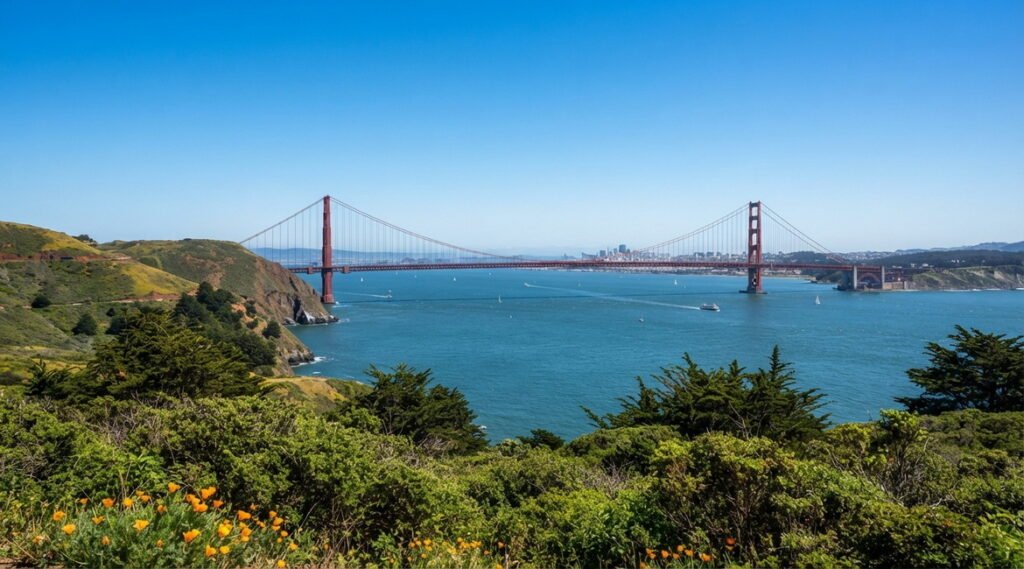
San Francisco’s most recognizable attractions are closely connected to the identity of the city. The Golden Gate Bridge, Alcatraz Island, cable cars, Fisherman’s Wharf, Chinatown, Lombard Street and the Painted Ladies all provide experiences that feel distinctly San Francisco. Golden Gate Park adds museums, gardens and outdoor spaces to the mix. Many of these attractions can be organized into geographically logical sightseeing days.
Los Angeles offers a broader spectrum of attractions. Griffith Observatory provides city views and astronomy exhibits. Hollywood introduces movie history and entertainment. Exposition Park contains major museums, while the Getty Center combines art, architecture, gardens and elevated city views. The coast creates another entire category of sightseeing through Santa Monica, Venice and nearby beach communities. Los Angeles therefore provides more dramatically different types of days. One day can revolve around movies, another around museums and another entirely around the Pacific coast. San Francisco provides a more concentrated collection of landmarks within a smaller geographic area.
Neighborhoods & City Atmosphere
Neighborhoods are one of San Francisco’s defining features. North Beach, Chinatown, the Mission, Haight-Ashbury, Nob Hill, the Marina and other districts each create noticeably different environments within relatively short distances. Architecture also plays a major role. Victorian and Edwardian homes, steep streets and compact blocks give much of San Francisco an instantly recognizable appearance.
Los Angeles neighborhoods can feel even more different from one another, but the distances are much greater. Santa Monica feels like a coastal city. Hollywood is strongly associated with entertainment. Downtown contains skyscrapers, cultural institutions and historic areas, while neighborhoods elsewhere across LA offer completely different food, architecture and street life. San Francisco encourages spontaneous neighborhood exploration. Los Angeles rewards choosing several specific neighborhoods that match your interests and giving each enough time.
Beaches & Coastline
The two cities offer very different interpretations of the California coast. San Francisco’s coastline is dramatic, cool and highly scenic. Ocean Beach stretches along the western edge of the city, while Baker Beach provides famous Golden Gate Bridge views. But San Francisco beaches are generally better approached as places for walking, scenery and photography than as traditional warm beach-vacation destinations. The Pacific is cold, and coastal weather can be windy or foggy even during summer. Los Angeles provides the more familiar Southern California beach experience.
Santa Monica combines sand with a pier and walkable city area. Venice provides a lively beachfront environment, while Malibu adds cliffs, coves and dramatic coastal scenery. South Bay destinations such as Manhattan Beach and Hermosa Beach create a more traditional beach-town atmosphere. If beaches are a major part of your California vacation, consider where you stay in Los Angeles. A hotel near Santa Monica creates a very different trip from one based far inland.
Weather
Weather is one of the clearest differences between the two cities. Los Angeles generally has warmer conditions and more of the climate travelers associate with Southern California. Summer is warm and dry, while winters remain mild. Coastal neighborhoods can be cooler than inland Los Angeles, particularly during periods of marine cloud cover. San Francisco is considerably cooler. Summer can bring fog, wind and surprisingly chilly conditions near the Pacific and Golden Gate Bridge. September and October often provide some of San Francisco’s most pleasant weather.
This means packing for the two cities can be surprisingly different even during the same California trip. A warm afternoon in Los Angeles does not mean you will want the same clothing beside San Francisco Bay several days later. Layers are useful in both cities, but they are particularly important in San Francisco.
Getting Around
San Francisco’s compact geography makes public transportation especially useful for visitors. Muni buses, Metro, historic streetcars and cable cars cover much of the city, while BART provides regional transportation and connections with San Francisco International Airport. Walking is practical in many visitor neighborhoods, although the hills can make short distances more demanding than they appear. Los Angeles has invested substantially in rail transportation, and several important visitor destinations can be reached by Metro. The E Line connects central Los Angeles with Santa Monica, while the B Line serves Hollywood and Universal City. However, Los Angeles remains far more geographically spread out. Even when public transportation is available, travel between distant destinations can consume a significant part of the day. A rental car can increase flexibility in Los Angeles, but traffic and parking then become part of the planning.
Which City Is Easier Without a Car?
San Francisco is particularly well suited to a car-free city trip. Staying around Union Square, the Embarcadero, Fisherman’s Wharf or another well-connected neighborhood allows visitors to combine walking with Muni, BART and cable cars.
Los Angeles can also be explored without a rental car, but accommodation location becomes much more important. A hotel near a useful Metro station can simplify the trip considerably. Car-free visitors should group Los Angeles attractions around transit corridors rather than attempting to cross the metropolitan area repeatedly. For example, Santa Monica can anchor a coastal day, while Hollywood and Universal City can form another geographically logical group. Both cities can work without a car, but San Francisco generally allows visitors to reach a larger share of classic tourist areas through a combination of walking and public transportation.
San Francisco vs Los Angeles for Families
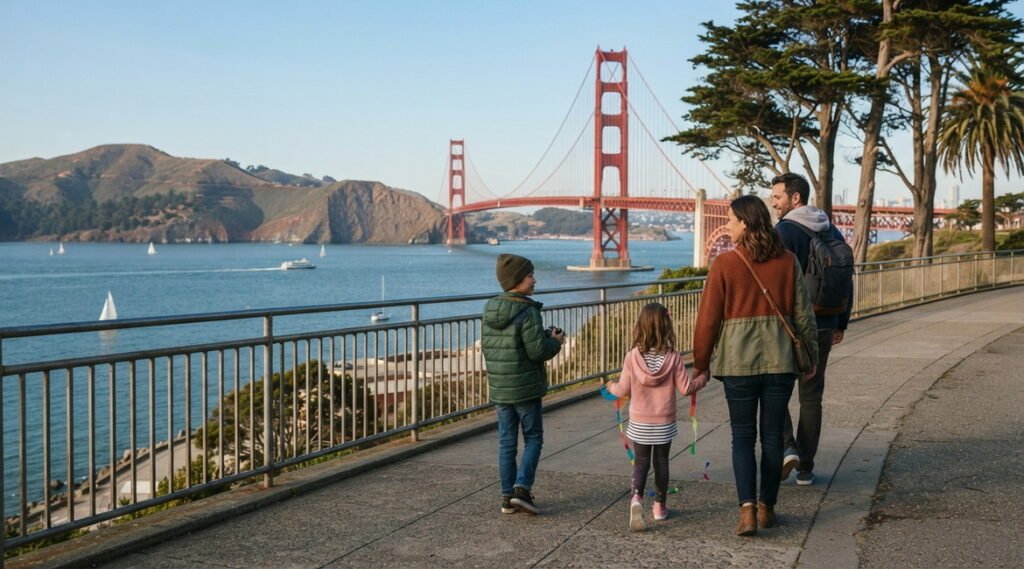
Both cities provide strong family attractions, but the trips feel different. San Francisco offers the California Academy of Sciences, Exploratorium, cable cars, Golden Gate Park and waterfront attractions within a relatively compact city. Simply riding a cable car or seeing the Golden Gate Bridge can become part of the experience for children.
Los Angeles provides a larger range of major family entertainment. Griffith Observatory, the California Science Center, Natural History Museum, beaches and large entertainment attractions can create completely different days. The tradeoff is transportation. Families visiting Los Angeles should be especially careful about scheduling attractions on opposite sides of the city during the same day. San Francisco can be easier for families who prefer compact sightseeing, while Los Angeles provides more variety for families willing to plan around distances.
Museums & Culture
San Francisco has an impressive concentration of cultural attractions for its size. The California Academy of Sciences, de Young Museum and other institutions around Golden Gate Park make it possible to build a museum-focused day without crossing the city. SFMOMA adds a major contemporary art destination in SoMa, while the Exploratorium provides interactive science exhibits along the waterfront. Los Angeles provides even greater variety but spreads its institutions across a larger region. The Getty Center combines art with architecture and gardens. Exposition Park provides several major institutions in one area, while Museum Row and other cultural districts add additional options.
Travelers strongly interested in museums can build excellent trips in either city. The practical difference again comes down to geography: San Francisco makes it easier to combine cultural attractions with nearby neighborhoods, while Los Angeles rewards more deliberate daily planning.
Food & Dining
Both cities are excellent destinations for travelers who enjoy exploring through food. San Francisco’s compact neighborhoods make it particularly easy to combine dining with sightseeing. North Beach, Chinatown, the Mission and other districts have distinctive culinary identities, and walking between restaurants and nearby attractions is often practical. Los Angeles offers extraordinary culinary diversity across a much larger geographic area. Different neighborhoods can provide completely different dining experiences, reflecting communities and cuisines from around the world. The challenge is distance. A restaurant that looks relatively close on a map may be inconvenient if it requires crossing the city during a busy part of the day. In Los Angeles, build restaurant choices around the neighborhood you are already visiting rather than repeatedly traveling across the city for individual meals.
Outdoor Activities & Scenery
San Francisco places dramatic scenery directly around the city. The Golden Gate Bridge, Presidio, Crissy Field, Lands End, Golden Gate Park and waterfront provide numerous opportunities to combine sightseeing with outdoor time. Bay views, hills and coastal fog give the landscape a distinctive character.
Los Angeles provides a completely different landscape. Griffith Park and other elevated areas offer enormous city views, while the Pacific coast provides beaches and cliffs. Malibu extends the coastal experience into a more natural landscape of mountains meeting the ocean. Los Angeles also gives visitors access to warmer beach conditions than San Francisco. San Francisco’s scenery is closely integrated into the compact city experience. Los Angeles offers a greater range of landscapes, but reaching them may require more travel.
Costs & Budget
Neither city should automatically be treated as the cheaper destination. Hotel prices vary substantially according to neighborhood, season, weekday, conventions and major events. Transportation also changes the calculation. A San Francisco visitor may be able to avoid renting a car entirely, reducing expenses related to parking and fuel. In Los Angeles, a rental car may be useful for some itineraries, but hotel parking can add significantly to the daily cost. On the other hand, both cities provide many free experiences. Walking across or viewing the Golden Gate Bridge, exploring neighborhoods and visiting parks can fill significant parts of a San Francisco itinerary without admission fees. Los Angeles offers beaches, Griffith Observatory general admission, parks and several other free sightseeing opportunities. Instead of comparing cities only by hotel rates, calculate the complete trip: accommodation, transportation, parking, attractions and meals.
How Many Days Do You Need?
San Francisco can be introduced effectively in three days. That provides enough time for the Golden Gate area, waterfront and several major neighborhoods. Four or five days gives you a more comfortable pace and room for Golden Gate Park, museums and additional neighborhoods. Los Angeles generally benefits from additional time because attractions are spread farther apart. Three days can cover selected highlights, but four to six days provides much more flexibility.
| Trip Style | San Francisco | Los Angeles |
|---|---|---|
| Quick introduction | 2–3 days | 3 days |
| First trip | 3–5 days | 4–6 days |
| Relaxed exploration | 5–6 days | 6–7 days |
The ideal duration also depends on whether you plan day trips. Adding nearby destinations can easily justify a longer stay in either region.
Can You Visit Both Cities?
Yes, and San Francisco and Los Angeles fit naturally into a longer California itinerary. However, they are far enough apart that they should not be treated as neighboring cities. Driving directly between them takes most of a travel day once stops and real-world traffic are considered. A California road trip turns that distance into part of the experience.
Travelers can break the journey with destinations along California’s coast or use a faster intercity travel option when the goal is simply to experience both cities. For a trip containing only San Francisco and Los Angeles, seven days is possible but selective. Nine or ten days provides a much more comfortable introduction to both. A longer road trip works particularly well when the journey itself is one of the main reasons for visiting California.
Which City Fits Different Types of Travelers?
San Francisco fits travelers who want a concentrated urban trip with famous landmarks, distinctive neighborhoods and extensive opportunities to explore without driving. It also works well for visitors who enjoy architecture, city views, waterfronts and moving between neighborhoods throughout the day. Los Angeles fits travelers looking for a larger menu of experiences. The city can combine beaches, entertainment, museums, shopping, neighborhoods and major attractions within one vacation. For a beach-centered trip, Los Angeles offers more options for building warm-weather coastal days into the itinerary. For a trip focused on walking through a distinctive city and experiencing famous landmarks relatively close together, San Francisco offers a different kind of experience. Families should think about pace as well. San Francisco can simplify logistics, while Los Angeles provides more variety if the family is comfortable planning around greater distances. Travelers who have enough time do not necessarily need to choose between them. Experiencing both cities provides two very different perspectives on California.
FAQ
Is San Francisco or Los Angeles easier for first-time visitors?
San Francisco is more compact, allowing many famous attractions and neighborhoods to be connected through walking and public transportation. Los Angeles offers a wider variety of experiences but requires more careful geographic planning because destinations are spread across a much larger area.
Which city has better beaches?
Los Angeles offers a more traditional Southern California beach experience through areas such as Santa Monica, Venice, Malibu and the South Bay. San Francisco beaches are generally cooler and better suited to scenery, walking and coastal views than a warm beach vacation.
Can you visit San Francisco and Los Angeles without a car?
A car-free San Francisco trip is relatively straightforward when staying in a central neighborhood. Los Angeles can also be visited without a rental car, but accommodation location and grouping attractions around useful transit corridors become much more important.
How many days do you need in each city?
Three to five days works well for many first-time San Francisco trips. Los Angeles generally benefits from four to six days because of its larger geographic scale and the number of different visitor areas.
Can you combine San Francisco and Los Angeles in one trip?
Yes. Seven days can provide a selective introduction to both cities, while nine or ten days creates a more comfortable itinerary. Travelers planning a California road trip should allow additional time for stops between the two cities.
Recommended Next Steps
Start by deciding what you want your California city trip to emphasize. Choose San Francisco when your itinerary centers on the Golden Gate Bridge, Alcatraz, cable cars, distinctive neighborhoods, waterfront scenery and exploring a relatively compact city. Choose Los Angeles when your itinerary centers on beaches, entertainment, major museums, movie-related attractions and experiencing several very different parts of Southern California within one destination. If you do not want to rent a car, San Francisco can be especially practical. Los Angeles is still possible without one, but choose your accommodation around the places you actually intend to visit. For a first San Francisco trip, plan approximately three to five days. For Los Angeles, four to six days provides more room to account for distances between attractions. If your California vacation is long enough, consider including both. Rather than providing two versions of the same California city experience, San Francisco and Los Angeles complement each other: one offers a compact city of hills, bay views and iconic neighborhoods, while the other provides an enormous Southern California mix of beaches, entertainment, museums and distinct urban districts. That contrast is exactly what makes combining them in one California itinerary so interesting.