
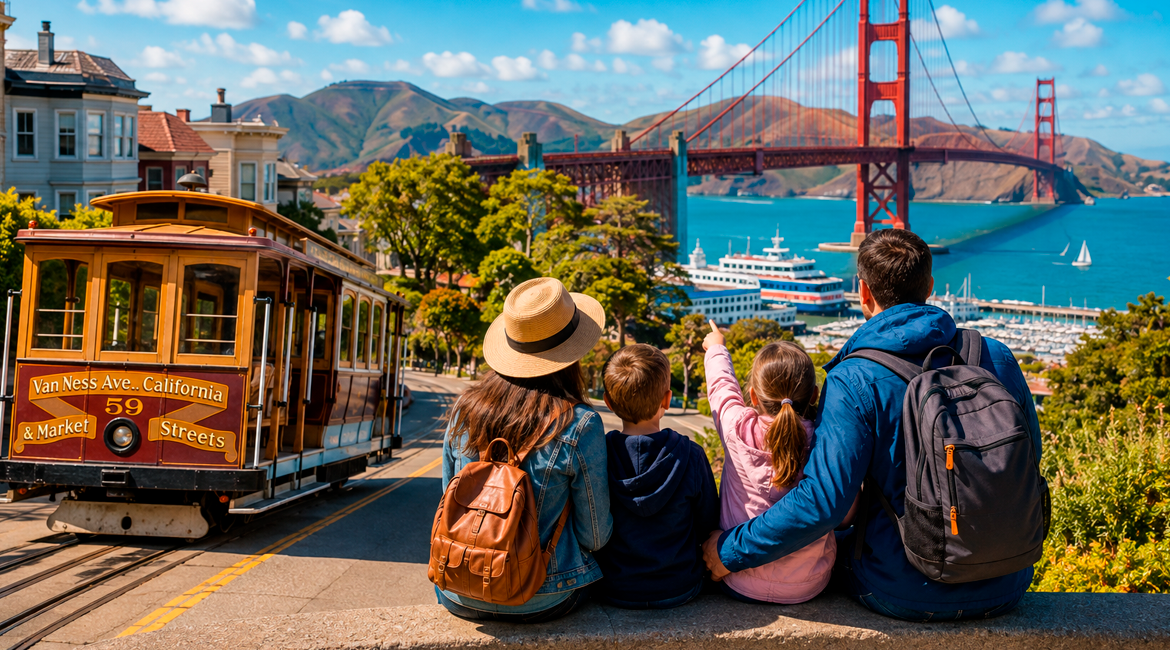
San Francisco can feel like a giant outdoor adventure when you visit with children. Historic cable cars climb steep streets, sea lions gather along the waterfront, enormous parks provide space to play, and one of America’s most recognizable bridges appears between hills and patches of fog. Some of the most enjoyable things to do in San Francisco with kids include riding a cable car, exploring Golden Gate Park, experimenting with hands-on exhibits at the Exploratorium, seeing the Golden Gate Bridge, walking along the waterfront and watching the famous sea lions near Pier 39. The city does require a little more planning than a traditional beach destination. Hills can make seemingly short walks surprisingly tiring, temperatures can change quickly, and attractions are spread across several neighborhoods. The solution is not to pack more into each day. It is to organize your itinerary geographically and let transportation, parks and waterfront walks become part of the experience.
Why San Francisco Works So Well for Families
San Francisco offers something that children often appreciate more than adults expect: the journey between attractions can be interesting too. A cable car ride is transportation, but for a child it can also be one of the highlights of the trip. A waterfront walk might begin as a way to reach another attraction and end with boats, sea lions and views across the bay. Families can build a trip around:
- Historic transportation
- Hands-on science
- Animals and marine wildlife
- Large urban parks
- Playgrounds
- Waterfront sightseeing
- Famous landmarks
- Picnics and outdoor time
- Neighborhood exploration
Another advantage is the mix of paid and free experiences. You can spend money on a major museum one day and build much of the next around parks, playgrounds, viewpoints and walking. The biggest challenge is geography. San Francisco looks compact on a map, but hills and traffic can make a poorly organized itinerary tiring. Choose one or two areas each day instead of crossing the city repeatedly.
Ride a San Francisco Cable Car
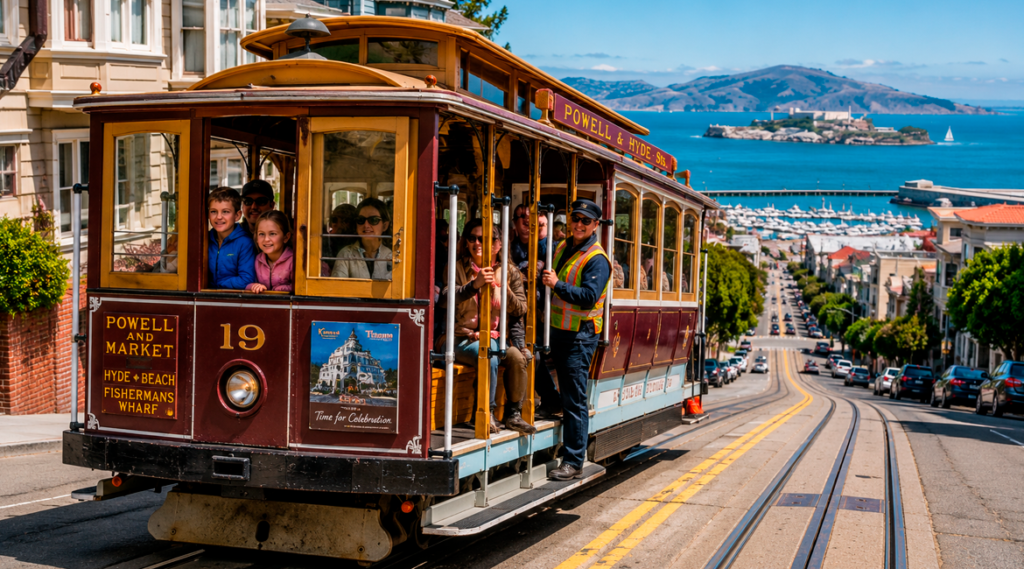
For many children, riding a cable car is more memorable than simply seeing one. San Francisco’s historic cable cars turn an ordinary journey through the city into an attraction of its own. The experience combines steep streets, city views, historic transportation and the sounds of the cable car system. Instead of trying to use cable cars for every journey, consider choosing one ride specifically for the experience. This is especially useful if your children are old enough to appreciate the novelty but young enough that a long day of walking becomes tiring. As of September 2026, a single cable car ride costs $9 and does not include transfers. Children age four and under ride free. Fare policies can change, so verify the current price before your trip.
Tips for riding with children
Popular boarding locations can become busy, so build some flexibility into the schedule. At Powell & Market, Bay & Taylor and Hyde & Beach, fares must currently be purchased before boarding between 8 a.m. and 5 p.m. daily. Families planning several rides should compare a single ticket with the available visitor transportation passes before purchasing. A few practical ideas:
- Avoid planning the ride immediately before a fixed reservation.
- Keep younger children close while waiting and boarding.
- Have your fare ready before reaching the front of the line.
- Use the ride as part of your route rather than immediately returning the same way.
- Check current service information on the day you travel.
If the line is particularly long, remember that the cable car does not need to be your family’s only transportation experience in San Francisco.
Explore Golden Gate Park
Golden Gate Park is one of the easiest places to balance adult sightseeing with children’s need to move and play. The park covers more than 1,000 acres and includes gardens, lakes, museums, playgrounds, meadows and recreational areas. :contentReference[oaicite:1]{index=1} That size means you should not think of Golden Gate Park as a single attraction. Instead, choose a small part of the park based on what your family wants to do. A family day might combine:
- A museum
- A playground
- A picnic
- A short walk
- Gardens
- Open lawn time
- A lake or scenic area
Families with younger children should deliberately include unstructured play between scheduled attractions. After an hour or two inside a museum, a playground may be much more appealing than another exhibit.
Make time for the playgrounds
Golden Gate Park contains several playgrounds rather than a single children’s area. Koret Children’s Quarter is particularly notable. The site traces its history to 1888 and includes climbing areas, famous concrete slides and a historic carousel nearby. :contentReference[oaicite:2]{index=2} Other options include Fulton Street Playground, Mother’s Meadow Playground and the ocean-themed 45th Avenue Playground. :contentReference[oaicite:3]{index=3} Fulton Street Playground can be especially convenient if your family is visiting museums around the Music Concourse because it provides somewhere for children to play between more structured activities. Do not underestimate the value of these breaks. An hour at a playground can make the rest of a sightseeing day considerably easier with younger children.
Discover Science at the Exploratorium
For children who prefer touching, experimenting and discovering things for themselves, the Exploratorium can become one of the strongest indoor attractions on a San Francisco itinerary. Rather than functioning like a museum where families simply walk past objects, the experience is centered on experimentation and observation. This makes it particularly useful for school-age children who may lose interest in traditional galleries. Give your family enough time to explore without trying to complete every exhibit. Children often become absorbed in a particular experiment, and constantly asking them to move on can work against the reason you chose an interactive museum in the first place. The Exploratorium is also useful as a weather-flexible attraction. If fog, wind or rain makes your original outdoor plan less appealing, an indoor science day can keep the itinerary moving without feeling like a backup choice.
See the Golden Gate Bridge
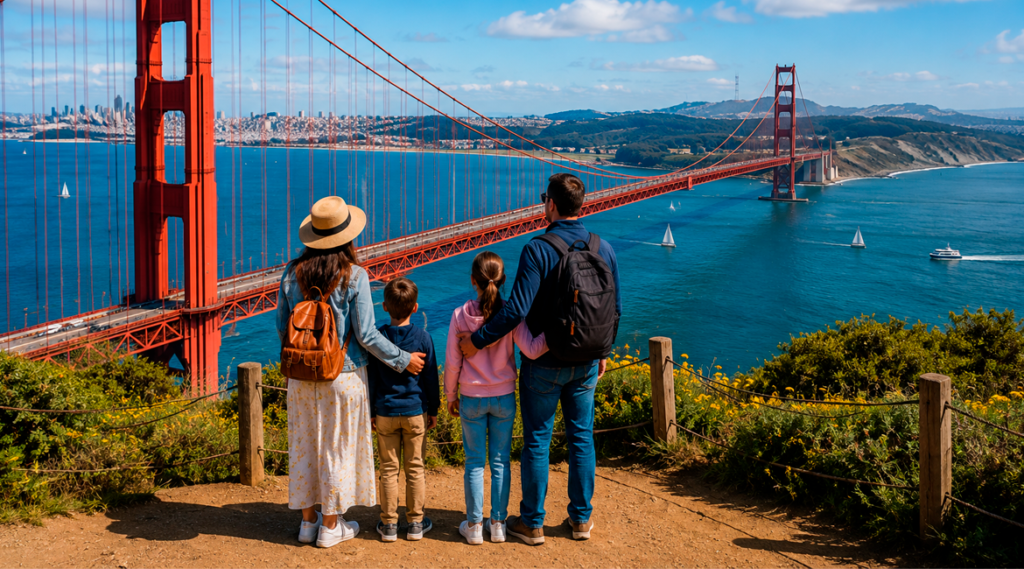
Children may recognize the Golden Gate Bridge before they know much else about San Francisco. Seeing it in person gives families one of those classic travel moments that does not require an elaborate activity. The important thing is not to build your entire schedule around getting one perfect photograph. San Francisco weather changes quickly, and fog can partially or completely change the view. Treat the weather as part of the city’s character. A bridge emerging through fog can be just as memorable as a completely clear view.
Where to enjoy the bridge with kids
Think about what your children actually enjoy before choosing a viewpoint. A long hike to a dramatic overlook may sound perfect to adults but may not be the right choice for a toddler after a full morning of sightseeing. For families, convenience can matter more than finding the most photographed location. Choose a viewpoint or nearby public space where children can safely take a break and where your family does not need to rush. Bring an extra layer even if the rest of the city feels comfortable. Conditions around the bridge and waterfront can feel noticeably cooler and windier.
Spend Time Along the Waterfront
The waterfront is an excellent example of why San Francisco works well for families. You do not necessarily need a ticketed attraction to make the area interesting. Children can watch boats, look across the bay, explore public spaces and simply experience the busy waterfront environment. Instead of thinking of the waterfront as one attraction, use it as a route connecting several parts of the day. Stop for food when needed. Sit down when children become tired. Spend longer somewhere that catches their attention. This flexible style of sightseeing can work much better than moving between reservations all day. The waterfront can also be combined with the Exploratorium or Pier 39 depending on how much energy the family has.
Watch the Sea Lions at Pier 39
Animals have a way of turning a simple sightseeing stop into something children remember. The sea lions around Pier 39 provide an opportunity to watch marine mammals while already exploring San Francisco’s waterfront. You do not need to turn the stop into an all-day activity. Spend enough time for children to watch the animals, take photos and enjoy the waterfront atmosphere, then continue when everyone is ready. Wildlife numbers and activity naturally vary. Do not promise children that they will see a specific number of animals or a particular behavior. Part of wildlife viewing is accepting that the animals decide what happens.
Have a Picnic at Mission Dolores Park
A family itinerary benefits from having at least one activity that does not involve tickets, lines or a fixed schedule. Mission Dolores Park can fill that role. The park offers open lawns, recreational facilities and views toward the San Francisco skyline. :contentReference[oaicite:4]{index=4} Pick up lunch or bring a picnic and let the schedule slow down. For children, the chance to move freely can be more valuable than adding another attraction. For parents, it creates a break from coordinating transportation, admission times and museum visits. How long you stay does not matter. If everyone is enjoying the park, stay longer. If the weather changes or children are ready to continue, move on. That flexibility is exactly what makes parks useful during family travel.
Plan a Family Day in San Francisco
The easiest way to plan San Francisco with kids is to group activities rather than choosing attractions individually. A waterfront day could look like this:
- Morning: Explore the Exploratorium.
- Lunch: Take a proper break near the waterfront.
- Afternoon: Walk toward another waterfront attraction at a comfortable pace.
- Later: Watch the sea lions around Pier 39.
- Evening: Keep dinner and the rest of the schedule flexible.
Another day could focus almost entirely on Golden Gate Park. Choose one major museum or attraction, add a playground and leave time for a picnic or walk. A third day can combine the Golden Gate Bridge with nearby sightseeing. The exact itinerary matters less than reducing unnecessary travel across the city.
What to Do on a Rainy or Foggy Day
Fog is part of San Francisco rather than a reason to cancel your plans. In fact, some famous city views can become more atmospheric when fog moves through. Rain requires a little more adjustment. Keep at least one indoor attraction available as a flexible option. The Exploratorium and museums around Golden Gate Park can help turn a poor-weather day into a full sightseeing day. Do not automatically move every indoor attraction onto the first cloudy morning, however. Check the actual conditions. San Francisco weather can vary between neighborhoods, and a gray morning does not necessarily mean the entire day will be unsuitable for outdoor activities. Layers are useful because temperatures can change as you move between sunny, shaded, windy and waterfront areas.
Getting Around San Francisco With Kids
San Francisco is one of those cities where renting a car is not automatically the easiest option for every family. Public transportation can become part of the sightseeing experience, while parking can add another task to an already busy day. Muni includes buses, light rail, historic streetcars and cable cars. As of September 2026, SFMTA lists 1-, 3- and 7-day Visitor Passports that include unlimited Muni, Muni Metro, historic streetcar and cable car rides. :contentReference[oaicite:5]{index=5} Do not automatically purchase a pass simply because one exists. Compare the current price with your actual itinerary. If you plan to spend most of one day walking through Golden Gate Park, for example, you may use transportation much less than on a day when you move between several neighborhoods. Families should also remember that San Francisco’s hills change walking calculations. A route that appears short on a map may involve a steep climb.
Tips for Visiting San Francisco With Younger Children
The most useful family travel strategy in San Francisco is to leave more time than you think you need. Moving between neighborhoods, waiting for transportation and walking uphill can make a packed itinerary difficult. Keep these practical ideas in mind:
- Dress children in layers.
- Bring comfortable walking shoes.
- Carry water and basic snacks when appropriate.
- Check stroller accessibility before visiting attractions.
- Use playgrounds as deliberate itinerary stops.
- Allow extra time for transportation.
- Avoid scheduling major attractions back-to-back all day.
- Keep at least one indoor option available.
Families using a stroller should also look at elevation rather than distance alone when planning walking routes. Sometimes taking public transportation for what looks like a short distance can save enough energy to make the rest of the day much more enjoyable. Finally, do not assume every famous San Francisco attraction needs to interest your children. Choose the experiences that fit your family.
FAQ About San Francisco With Kids
Is San Francisco a good family vacation?
Yes. San Francisco offers interactive museums, parks, playgrounds, historic transportation, wildlife viewing and famous landmarks. The city works particularly well when families organize activities by neighborhood and avoid overloading each day.
How many days do families need in San Francisco?
Three to four full days is a useful starting point for a first family trip. This provides time for Golden Gate Park, the waterfront, a major museum and the Golden Gate Bridge without requiring several large attractions every day.
What can toddlers do in San Francisco?
Toddlers can enjoy playgrounds in Golden Gate Park, short cable car rides, waterfront walks, parks and age-appropriate museum experiences. Keep individual activities shorter and leave room for naps and unstructured play.
Are there free things to do in San Francisco with kids?
Yes. Families can enjoy public parks, playgrounds, waterfront areas, Golden Gate Bridge viewpoints and other outdoor spaces without purchasing attraction admission. Transportation, parking or optional activities may still cost money.
Do families need a car in San Francisco?
Not necessarily. Many visitors use Muni, cable cars and walking instead of driving within the city. Whether you need a car depends on where you stay and whether your itinerary includes destinations outside central San Francisco.
What should you pack for children in San Francisco?
Layers are particularly useful because temperatures and wind can change throughout the day. Comfortable walking shoes, water, sun protection and a light outer layer can make family sightseeing easier.
Recommended Next Steps
Start your San Francisco family itinerary by choosing one major experience for each day rather than creating a long list of attractions. For a first visit, a simple four-day structure could be:
- Day 1: Waterfront + Exploratorium + Pier 39 sea lions
- Day 2: Golden Gate Park + museum + playground
- Day 3: Golden Gate Bridge + cable car experience + relaxed city sightseeing
- Day 4: Favorite neighborhood + park + anything you missed
If you only have three days, remove an entire group of activities rather than trying to compress four days into three. Also plan around your children’s energy instead of assuming every day needs to last from breakfast until bedtime. San Francisco’s hills, public transportation and changing weather can make even a relatively short sightseeing day feel full. Before traveling, check current attraction hours, reservations, transit service and fares. In particular, San Francisco has approved transportation fare changes beginning in January 2027, so prices quoted for a 2026 trip should not be treated as permanent. :contentReference[oaicite:6]{index=6}