

New York City can feel enormous when you first start planning a family vacation. There are famous landmarks in every direction, dozens of museums, huge parks, observation decks, neighborhoods to explore and enough attractions to fill several weeks. The good news is that you do not need to see everything. Some of the most memorable things to do in NYC with kids are surprisingly simple: exploring Central Park, seeing dinosaurs at the American Museum of Natural History, riding a ferry across New York Harbor, watching the lights of Times Square and spending an afternoon playing beside the Manhattan skyline in Brooklyn Bridge Park. The secret to a successful New York family trip is not squeezing the maximum number of attractions into every day. It is choosing a few memorable experiences, grouping them by neighborhood and leaving enough time for food, playgrounds, transportation and unexpected discoveries.
Why NYC Is an Amazing Family Destination
New York is often imagined as a destination for adults, but many of the city’s most famous experiences work surprisingly well for children. Kids can encounter enormous dinosaur fossils, run through Central Park, ride underground trains, watch boats crossing New York Harbor, see skyscrapers from above and experience neighborhoods that look completely different from one another. A family trip can combine:
- World-famous museums
- Parks and playgrounds
- Skyscraper views
- Ferry rides
- Famous landmarks
- Interactive exhibits
- Neighborhood exploration
- Waterfront parks
- Broadway and live entertainment
- Free outdoor activities
Another advantage is that transportation becomes part of the experience. For a child visiting from somewhere without an extensive subway system, simply taking a train underneath Manhattan can feel like an adventure. The biggest challenge is scale. NYC is walkable in many areas, but families can easily underestimate distances. A route that looks manageable on a map can become exhausting after a museum visit and several subway transfers. Plan geographically rather than attraction by attraction.
Explore Central Park
Central Park gives families something extremely valuable during a New York vacation: space. After navigating crowded sidewalks, subway stations and museums, children can run around, play and explore outdoors. The park is also large enough to be treated as a destination rather than simply a place to walk through. Instead of trying to cross the entire park, choose a section that works with the rest of your itinerary. A morning or afternoon in Central Park can provide a welcome contrast to skyscrapers and indoor attractions.
What to do in Central Park with kids
The right activities depend on your children’s ages and the season. A relaxed family visit might include:
- Visiting a playground
- Having a picnic
- Walking around one of the park’s lakes or ponds
- Looking for birds and wildlife
- Exploring bridges and paths
- Finding open areas where children can play
- Taking photos of the Manhattan skyline
Do not try to transform every minute in the park into organized sightseeing. For younger children, spending forty minutes at a playground may become more enjoyable than walking to another famous landmark. Central Park also combines naturally with the American Museum of Natural History because the museum sits along the park’s western side. That makes the two particularly easy to place on the same day.
See Dinosaurs at the American Museum of Natural History
The American Museum of Natural History is one of the easiest major New York museums to recommend for families. Its collections cover dinosaurs, animals, oceans, space, human cultures and the natural world, giving children several completely different experiences within one building. For many younger visitors, the dinosaur halls are the obvious highlight. Other children may be more interested in enormous marine animals, gems, space or immersive exhibits. As of September 2026, the museum is open daily from 10 a.m. to 5:30 p.m., except Thanksgiving and Christmas. :contentReference[oaicite:1]{index=1} The museum also has a Discovery Room designed for children ages 4–12. Access is included with museum admission, but timed passes are limited and the room is closed on Tuesdays. :contentReference[oaicite:2]{index=2}
Tips for visiting the museum with children
Do not attempt to see every gallery. The museum is large enough that trying to complete everything can turn an exciting experience into a tiring one. Instead:
- Ask children what they most want to see.
- Choose several priority halls.
- Take breaks before everyone becomes tired.
- Allow extra time for exhibits children particularly enjoy.
- Check temporary closures before visiting.
- Consider getting tickets ahead of time.
Stroller parking is available, and the museum’s visitor information also recommends its Explorer app for finding accessible routes with elevators. :contentReference[oaicite:3]{index=3} A good family museum visit is not measured by the percentage of the building you manage to complete.
Experience Times Square
Times Square can be overwhelming, crowded and extremely touristy. It can also be fascinating for children seeing New York for the first time. Huge digital screens, bright signs, traffic, theaters and crowds create a city environment unlike almost anywhere else. You probably do not need several hours here. For many families, Times Square works better as a shorter sightseeing stop rather than the centerpiece of an entire day. Walk around, take photos, let children experience the scale of the area and then continue to another activity. If your children dislike crowds or loud environments, keep the visit particularly short. Families with younger children should also stay together closely because pedestrian traffic can become dense.
Ride the Staten Island Ferry
Not every memorable New York experience requires an attraction ticket. The Staten Island Ferry travels between Whitehall Terminal in Lower Manhattan and St. George Terminal on Staten Island. The ferry is free, operates every day throughout the year and takes approximately 25 minutes in each direction. :contentReference[oaicite:4]{index=4} For children, the attraction is partly the simple experience of being on a large ferry. For adults, the ride provides a different perspective on New York Harbor and the city skyline. It is an easy way to give everyone a break from walking while still sightseeing.

Why the ferry works well for families
The ferry is useful because it provides sightseeing without requiring children to walk for another hour. It can also become part of a Lower Manhattan day. For example:
- Explore part of Lower Manhattan.
- Head toward Whitehall Terminal.
- Ride across the harbor.
- Take a break from walking.
- Return and continue only if the family still has energy.
Schedules can change, so check the current departure information before building the day around a specific ferry.
Play at Brooklyn Bridge Park
Brooklyn Bridge Park is one of the strongest places to include when children need a break from traditional sightseeing. The waterfront park offers Manhattan and Brooklyn Bridge views while also providing spaces designed specifically for play. Entry to the park is free, and its playgrounds are generally open from sunrise to sunset. :contentReference[oaicite:5]{index=5} Pier 6 has several distinctive play areas, including Water Lab, Slide Mountain, Swing Valley and Sandbox Village. Other playgrounds are spread throughout the park. :contentReference[oaicite:6]{index=6} That gives families an opportunity to combine a famous New York view with something children actually want to do. Instead of asking children to spend an entire afternoon looking at landmarks, let them play while adults enjoy the waterfront. During warmer weather, the water-play areas can be especially appealing, so bringing spare clothes for younger children can be useful.
Walk Across the Brooklyn Bridge
Walking across the Brooklyn Bridge is one of those classic New York experiences that can fit naturally into a family itinerary. However, whether you should cross the entire bridge depends on your children’s ages and how much walking they have already done. A bridge walk should feel like sightseeing, not a test of endurance. Families can combine the bridge with Brooklyn Bridge Park and nearby waterfront areas rather than treating each as a completely separate destination. The views change as you move across the bridge, giving older children plenty to look at and photograph. With younger children, consider whether everyone genuinely needs to walk the full distance. Sometimes exploring part of the bridge and then spending more time in the park below creates a better family experience.
See New York From Above
New York looks completely different from high above the streets. An observation deck can help children understand just how large Manhattan really is. From above, streets become lines, skyscrapers that seemed enormous from the sidewalk appear side by side, and landmarks become easier to place geographically. NYC has several observation experiences, so you do not need to visit all of them. Choose one based on:
- Location
- Current admission price
- Indoor versus outdoor viewing
- Expected crowds
- Your children’s ages
- Which landmarks you want to see
If you plan to pay for only a few major attractions, an observation experience can be worth considering because it provides something fundamentally different from walking at street level. Weather matters. Low clouds or poor visibility can significantly change the experience, so check conditions before heading to the observation deck.
Explore New York by Subway
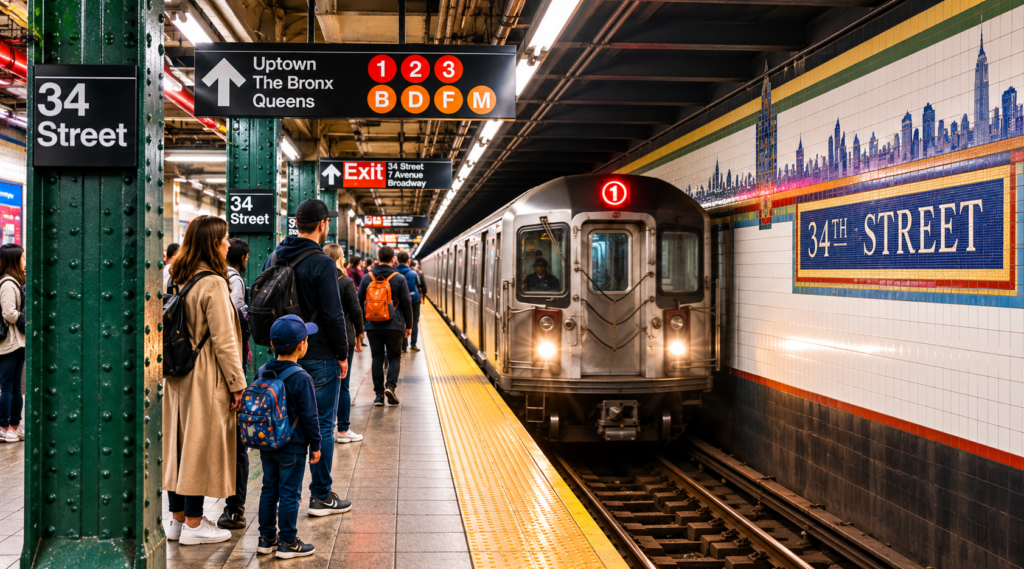
Adults may think of the subway simply as a way to get from one attraction to another. Children may experience it completely differently. Walking into a station, hearing trains arrive and traveling underneath Manhattan can become part of the adventure. The subway is also important for a practical reason: New York is too large to walk everywhere with children. Use it strategically. If a journey saves the family a long walk, the energy you preserve can be used at the destination instead. Before each trip:
- Check which station entrance you need.
- Confirm the direction of travel.
- Allow extra time with strollers.
- Keep children close on platforms.
- Do not block train doors while organizing bags or strollers.
You do not need to master the entire subway system. You only need to understand the routes relevant to that day’s itinerary.
Plan a Family Day in NYC
One of the biggest mistakes families make is choosing attractions without considering where they are located. New York becomes much easier when each day focuses on one part of the city. For example, an Upper West Side family day could look like this:
- Morning: American Museum of Natural History
- Lunch: Proper food break rather than rushing to another attraction
- Afternoon: Central Park
- Later: Playground, walk or relaxed outdoor time
- Evening: Dinner and an early finish if children are tired
A Brooklyn and Lower Manhattan day could include:
- Brooklyn Bridge Park
- A playground break
- Brooklyn Bridge
- Lower Manhattan
- A ferry ride if everyone still has energy
A Midtown day might combine Times Square with one or two nearby attractions. The important rule is simple: do not cross Manhattan repeatedly just because individual attractions look exciting.
What to Do in NYC When It Rains
Rain does not have to ruin a New York family vacation. The city has enough indoor attractions that a rainy day can simply become museum day. The American Museum of Natural History is an obvious choice because families can spend several hours inside. Other museums and indoor experiences can also be kept as backup options. The important strategy is to identify those alternatives before the trip. Do not wait until everyone is standing under umbrellas on a rainy sidewalk to begin researching what to do. Keep one or two indoor possibilities available for each major area of your itinerary. At the same time, avoid immediately abandoning outdoor plans because of a short shower. Check the forecast and decide whether changing the entire day is actually necessary.
Getting Around New York With Kids
For most families visiting the main tourist areas, a car is unnecessary and can make parts of the trip more complicated. Walking and public transportation usually make more sense. The challenge is knowing when to walk and when to take transportation. Adults may happily walk another twenty blocks. A tired six-year-old who has already spent three hours in a museum may have a very different opinion. Use transportation before children become exhausted rather than afterward. A few planning principles help:
- Group attractions by neighborhood.
- Check subway routes before leaving the hotel.
- Do not underestimate walking distances.
- Allow extra time when using a stroller.
- Build food and restroom stops into the day.
- Use ferries when they make geographic sense.
- Avoid unnecessary trips back and forth across Manhattan.
New York rewards efficient planning more than aggressive planning. Seeing fewer places with less travel between them often produces a better vacation.
Tips for Visiting NYC With Younger Kids
New York can be exciting for younger children, but the city creates a lot of stimulation. Noise, crowds, walking and constantly changing surroundings can become tiring faster than parents expect. Keep the itinerary simple. One major attraction plus one flexible activity is often enough for a day with toddlers or preschoolers. Useful things to bring include:
- Comfortable walking shoes
- Weather-appropriate layers
- Refillable water bottles
- Small snacks when appropriate
- A compact rain layer
- A stroller if your child still regularly needs one
- A small change of clothes for younger children
Playgrounds can also be extremely valuable. Children may enjoy museums and famous landmarks, but they still need opportunities to move without being told where to stand or what to look at. Central Park and Brooklyn Bridge Park can help break up sightseeing-heavy days. Also leave room for unexpected discoveries. A child may become fascinated by a subway ride, street scene, park or boat that was never included in your original itinerary. Those moments are part of the trip too.
FAQ About Visiting NYC With Kids
Is New York City good for a family vacation?
Yes. NYC offers parks, playgrounds, museums, ferry rides, famous landmarks, observation decks and interactive attractions for many different ages. The key is keeping each day geographically focused and allowing children enough downtime.
How many days do you need in NYC with kids?
Four to five full days is a useful starting point for a first family trip. That gives you enough time to experience several neighborhoods and major attractions without trying to see everything in one rushed weekend.
What can toddlers do in New York?
Central Park, playgrounds, short ferry rides, waterfront parks and selected museum experiences can work particularly well for toddlers. Keep days shorter and leave time for naps, meals and unstructured play.
Are there free things to do in NYC with children?
Yes. Central Park, many playgrounds, Brooklyn Bridge Park, walking the Brooklyn Bridge and riding the Staten Island Ferry are examples of activities that do not require a standard attraction admission ticket.
Do families need a car in NYC?
Most families visiting major attractions in Manhattan and nearby parts of Brooklyn can rely on walking and public transportation. A car is generally not necessary for a typical city sightseeing itinerary.
What should families pack for New York?
Comfortable walking shoes are essential. Pack clothing appropriate for the season, a reusable water bottle and practical layers. Families with younger children may also benefit from a compact stroller and spare clothing.
Recommended Next Steps
Start planning your NYC family trip by choosing one major attraction or experience for each day. Then build nearby activities around it rather than creating a list of famous places first and worrying about transportation later. For a first family visit, a five-day starting itinerary could look like this:
- Day 1: Central Park + American Museum of Natural History
- Day 2: Midtown + Times Square + one major attraction
- Day 3: Brooklyn Bridge Park + Brooklyn Bridge + DUMBO
- Day 4: Lower Manhattan + Staten Island Ferry
- Day 5: Observation deck + favorite neighborhood + flexible time
If you have fewer days, remove an entire day’s group rather than trying to compress everything. Also leave at least one open block in the itinerary. Children may want to return to Central Park. Weather may change. A museum may take twice as long as expected. Or the family may simply need a slower morning. That flexibility is especially important in New York because there will always be another attraction you could theoretically add. A successful family trip is not about seeing all of NYC. It is about giving children enough variety to experience what makes the city memorable without turning every day into a race between landmarks. Before traveling, verify current opening hours, ticket policies, subway service and any reservations required for major attractions. These details can change throughout the year.