

Choosing among travel guides for Texas is easier when you start with the trip you actually want: a city break, a Hill Country loop, desert hiking, or time on the coast. Texas is large enough that combining distant regions can turn a holiday into long driving days, so use a guide to narrow the map before filling in the itinerary.
How to use Texas travel guides to shape your route
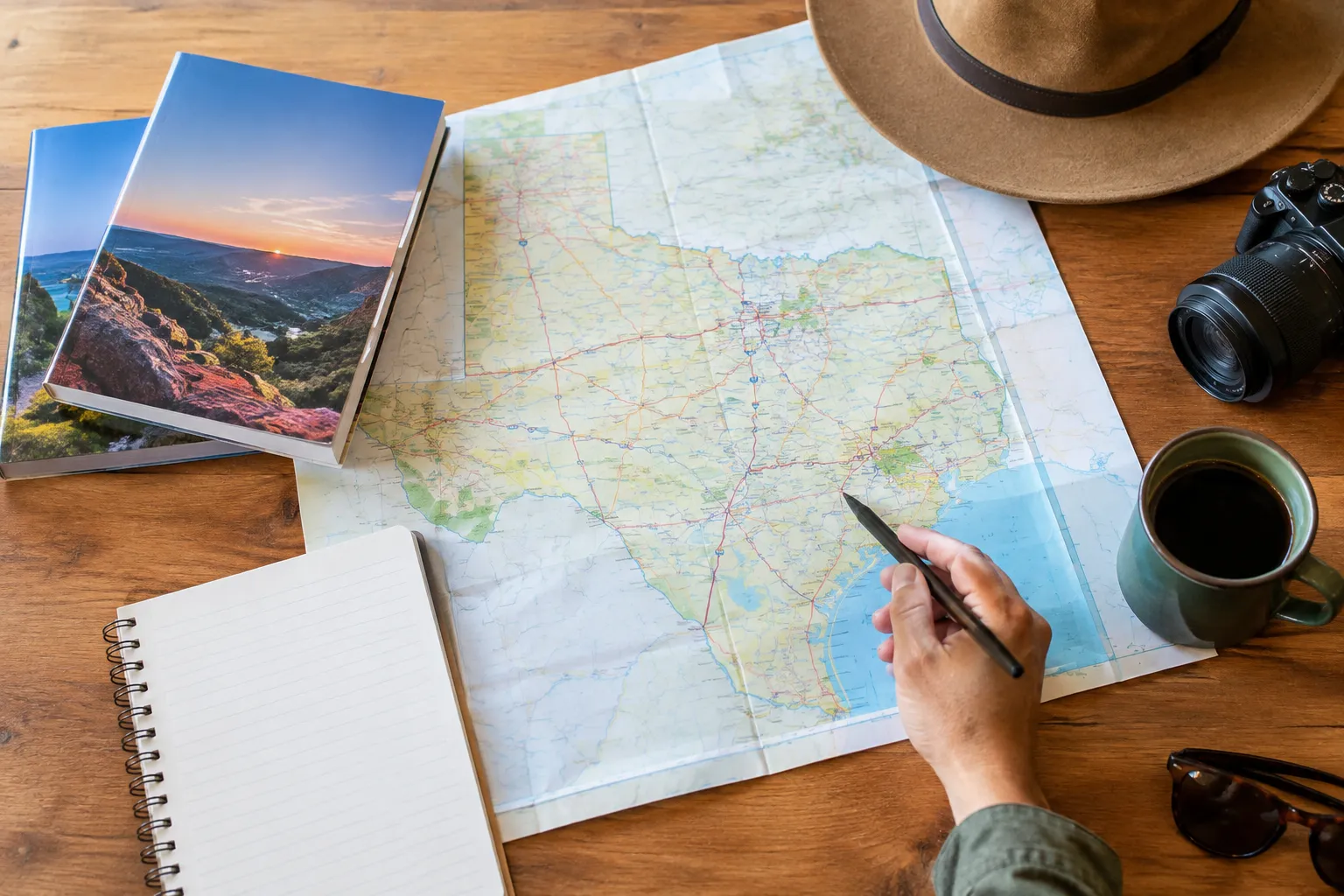
A useful guide should help you answer three questions: which region fits your interests, how much time to allow between stops, and what needs checking before you go. Use maps and suggested itineraries to spot clusters of nearby places, then verify current opening details and access with the relevant local or park sources.
If you are weighing different kinds of road trips in the United States, begin with a broad shortlist and then narrow it to one region. Our guide to road trip ideas for every travel style can help you compare the kind of trip you want before you commit to a Texas route.
Match guide recommendations to your travel style
A guide may include more sights than you can fit into one trip. Pick the experiences that matter most, then treat the rest as optional. For example, a traveler drawn to food, music, and historic sites might give Austin and San Antonio more time, while someone focused on open landscapes may prefer a West Texas plan.
Look for practical details, not just a list of attractions: where stops sit in relation to one another, how much time to leave for them, and whether they suit your group. A quirky roadside stop can make a travel day memorable, but it should fit the route rather than add a major detour you do not have time for.
Check distances and opening details before committing
A map can make two destinations look close even when the drive takes a large part of the day. Check the route and estimated driving time for your dates, then allow extra time for meals, traffic, fuel, and unplanned breaks.
Opening hours, entry rules, road access, and tour schedules can change. Before building a day around a specific stop, confirm its current details through an official or local source. This small check helps turn ideas for road trips into plans you can actually follow.
Texas road trip ideas from cities to coastlines

Rather than trying to cover the whole state, choose a route with a clear center of gravity. These combinations offer different kinds of travel days; the right one depends on how much time you have and what you want to do between overnight stops.
Connect Austin and San Antonio
Austin and San Antonio make a straightforward city-focused pairing, with the option to add one or two stops along the way. Give each city time of its own instead of treating both as quick checkboxes. In Austin, choose a small number of neighborhoods, food stops, or cultural attractions; in San Antonio, leave room for the historic center and other interests that suit your group.
If you want a stop between the cities, choose it before departure and check how much time it adds. The direct drive is manageable compared with crossing the state, but attractions, meals, and traffic can still fill the day. Avoid stacking too many scheduled activities onto a transfer day.
Explore the Hill Country at a slower pace
The Hill Country works best as a flexible loop rather than a race between towns. Choose a base or a small group of overnight stops, then use local roads to connect scenery, town centers, and outdoor activities. A guide can help you identify places that cluster together, but leave space to pause when a town or landscape catches your interest.
Build in unhurried time for meals and short walks, and check seasonal conditions for outdoor plans. If you are already visiting Austin or San Antonio, a Hill Country detour may fit naturally; the exact route depends on where you start and how many nights you can spare.
Plan separate trips for Big Bend and the Gulf Coast
Big Bend and the Gulf Coast are very different trip choices, and combining them can mean substantial time on the road. Big Bend suits travelers prioritizing desert landscapes and outdoor exploration; the Gulf Coast is a better fit for beach time and coastal stops. Choose one if your schedule is limited, then plan the other as a separate trip.
For either region, check distances between overnight stops and confirm access, lodging, and activity details in advance. The West Texas route also calls for careful planning around supplies and services between destinations. A regional guide is more useful here than a statewide list that does not explain the travel days.
Plan around Texas distances and driving time
Texas travel guides can help you see the shape of a route, but do not assume that several regions fit neatly into one itinerary. Group nearby destinations: pair Austin and San Antonio with selected Hill Country stops, or focus a separate trip on Big Bend or the coast. Your starting airport, overnight locations, and pace all affect what is realistic.
Plan around door-to-door travel, not just the time shown for driving. Allow for check-in, food, fuel, traffic, and breaks, and avoid scheduling a demanding activity immediately after a long drive. If the route looks crowded on paper, remove a stop or add a night rather than relying on every day going perfectly.
For a closer look at route planning across the state, see Travel Guides for Texas: Routes Across a Huge State. It can help you think through the distances before you settle on a particular combination.
Prepare for heat, reservations, and regional differences
Texas is not one uniform travel experience. The weather, activities, food, and local character can shift considerably between cities, Hill Country, desert, and coast. Check conditions for your specific dates and destinations, and use a guide for context rather than assuming every recommendation will suit every season.
Choose timing and activities with the weather in mind
Heat can affect how comfortable outdoor plans feel, particularly when an itinerary includes long walks or exposed areas. Check the forecast close to departure, consider scheduling outdoor activities for cooler parts of the day, and keep an indoor or low-exertion alternative available.
Seasonal conditions vary by region, so do not rely on a single statewide assumption. Confirm local weather and any relevant park or trail notices before setting out, and bring the water and sun protection appropriate for your planned activities.
Book high-demand stays and activities ahead
Where you need to reserve depends on the destination, dates, and activity. Popular lodging, park entry, tours, or special experiences may have limited availability, so identify the essential parts of your itinerary and check their booking requirements early.
Keep flexible stops separate from must-do bookings. That way, if a reservation is unavailable or conditions change, you can adjust the day without having to rebuild the entire route. Always confirm current rules directly with the park, accommodation, or activity provider.
Leave room for local food and culture
A route is more than the distance between attractions. Local food, historic places, music, and town events can give each region a distinct character. A little unplanned time makes it easier to linger over a meal, explore a downtown area, or follow a recommendation that fits your interests.
For longer trips, look beyond short attraction descriptions. Useful context about a place’s history and culture can help you decide which stops deserve more time and which are not a fit. Keep your research specific to the communities and regions on your route.
Build a flexible itinerary from your Texas guide
Turn your research into a simple plan before adding optional stops:
- Choose one main region or a closely connected pair.
- Mark the places you most want to visit, then group them by location.
- Set overnight stops that avoid unnecessarily long driving days.
- Check opening details, weather, access, and reservation requirements.
- Add a few optional attractions that can be dropped if the day runs long.
Keep the route and key confirmation details accessible offline in case service is limited. Recheck important information shortly before travel, since a guide can provide a planning framework but may not reflect every current change.
If you are still deciding between regions or trip styles, browse more road trip ideas and compare the pace each one requires. Travelers considering another state can also use our Florida travel guides for beaches, parks, and cities to see how a region-specific guide can narrow the choices.
Texas Route Planning FAQs
What’s the best month to travel to Texas?
There is no single best month for every region or activity. Compare expected local weather with your plans, then check conditions and opening details for the places on your route.
Where can I get the best free Texas travel guide by mail?
Check the official tourism or visitor-information websites for the Texas destinations you plan to visit; they can state whether printed guides are available and how to request them.
Do I need a car to travel between Texas destinations?
A car is usually the most practical way to connect multiple regions and smaller destinations on a road trip. For a city-only visit, compare local transportation options before deciding whether to drive.
Is it easy to rent a car for a Texas road trip?
Rental availability and requirements depend on your pickup location, dates, and provider. Compare airport and city pickup options, and confirm driver, payment, insurance, and cross-location return terms before booking.
How do toll roads work in Texas?
Toll arrangements vary by road and route. Check your planned roads and ask your rental provider how tolls are handled before you drive, since payment options and fees can differ.
Do Texas state parks require reservations or entry passes?
Requirements vary by park, date, and activity. Check the specific park’s current entry, reservation, and camping information before travel, especially if your schedule depends on a particular visit.
Is public transportation practical for getting around Texas cities?
It depends on the city and the places you want to reach. Check local routes and service times for your itinerary; public transportation may work for some city plans but not for connecting distant regions.
Which airport is best for starting a Texas road trip?
Choose an airport based on your first region and the route you intend to drive. Compare flight options, rental-car availability, and whether you can avoid backtracking by starting and ending at different airports.
Recommended next steps
Pick the region that best matches your available days, then map the overnight stops before collecting extra attractions. Use travel guides for Texas to compare routes and understand local context, but verify current details for every essential stop. A focused plan is more likely to leave time for the places, food, and unexpected discoveries that make road trips in the United States worthwhile.